
The Standard Treatment and Why It Fails
If you have been through a round of plantar fasciitis treatment, you know the protocol: rest, ice, calf stretches, plantar fascia stretches, maybe orthotics, maybe a night splint. Maybe cortisone.
And you probably know that it helps, until it does not. The pain reduces, you resume activity, and it returns. Some people have been managing plantar fasciitis episodically for years.
The reason this cycle continues is that the treatment is directed at the foot, and the foot is not where the problem originates.
What the Plantar Fascia Is Actually Doing
The plantar fascia is a thick band of connective tissue running from the heel bone to the toes. It supports the arch and helps manage the tensile forces of walking and running. Under normal loading conditions, it handles these forces without problem.
Plantar fasciitis occurs when the fascial load exceeds the tissue's capacity to recover. The tissue degrades faster than it regenerates, producing the characteristic morning heel pain and pain after rest that describes the condition.
The question is: what is overloading the plantar fascia?
The standard answer is tight calves and heel cord tension pulling on the attachment point. This is accurate as far as it goes. The calves are involved. But they are tight and overloaded for a reason, and that reason is located further up the chain.
The Hip Connection
When the glutes are inhibited, which is the central feature of lower cross syndrome and one of the most consistent findings in people with plantar fasciitis, the pelvis becomes unstable during single-leg loading. Every step involves a moment of single-leg stance. During that moment, the stance-side hip abductors and extensors are responsible for maintaining pelvic level.
When the glutes fail to control the pelvis, the pelvis drops on the swing side (Trendelenburg pattern). This causes the stance-side femur to adduct and internally rotate as a compensation. The tibia follows the femur. The foot pronates in response to the internal tibial rotation. Overpronation loads the medial arch and the plantar fascia at the medial calcaneal attachment, which is exactly where plantar fasciitis most commonly presents.
The calves tighten to try to control the excessive pronation from below. They are doing the job the glutes should be doing, and they are not designed for it. The result is chronic calf tension and plantar fascia overload.
Stretching the calves provides temporary relief because the immediate tissue tension is reduced. But the next walk, run, or standing shift reloads the same pattern because the glutes are still not controlling the pelvis.
Free - 60 seconds
Not sure which program you need?
Take the free posture quiz and get a personalized recommendation based on your pain and goals.
The Lumbar Connection
Anterior pelvic tilt, the forward rotation of the pelvis that comes with tight hip flexors and inhibited glutes, changes the angle of the entire lower extremity. The femur angles forward slightly, the tibia follows, and the foot compensates through increased pronation to maintain contact with the ground.
People with significant anterior pelvic tilt are essentially pronating their feet structurally, not because of foot anatomy or calf tightness, but because the pelvis above is tilted. Orthotics can support the arch against this force, which is why they provide relief. But the force driving the pronation continues, and when the orthotics are removed, the problem returns.
What Resolves It Durably
Durable resolution of plantar fasciitis requires addressing the proximal drivers: hip extensor activation, pelvis stabilization, and anterior chain release.
Restore Glute Function
Single-leg glute bridges, performed with attention to pelvic level throughout the movement, begin to re-establish glute activation in the movement pattern most relevant to walking. The clamshell exercise targets the hip abductors specifically, which are responsible for preventing the pelvic drop during stance.
Release the Hip Flexors and Anterior Chain
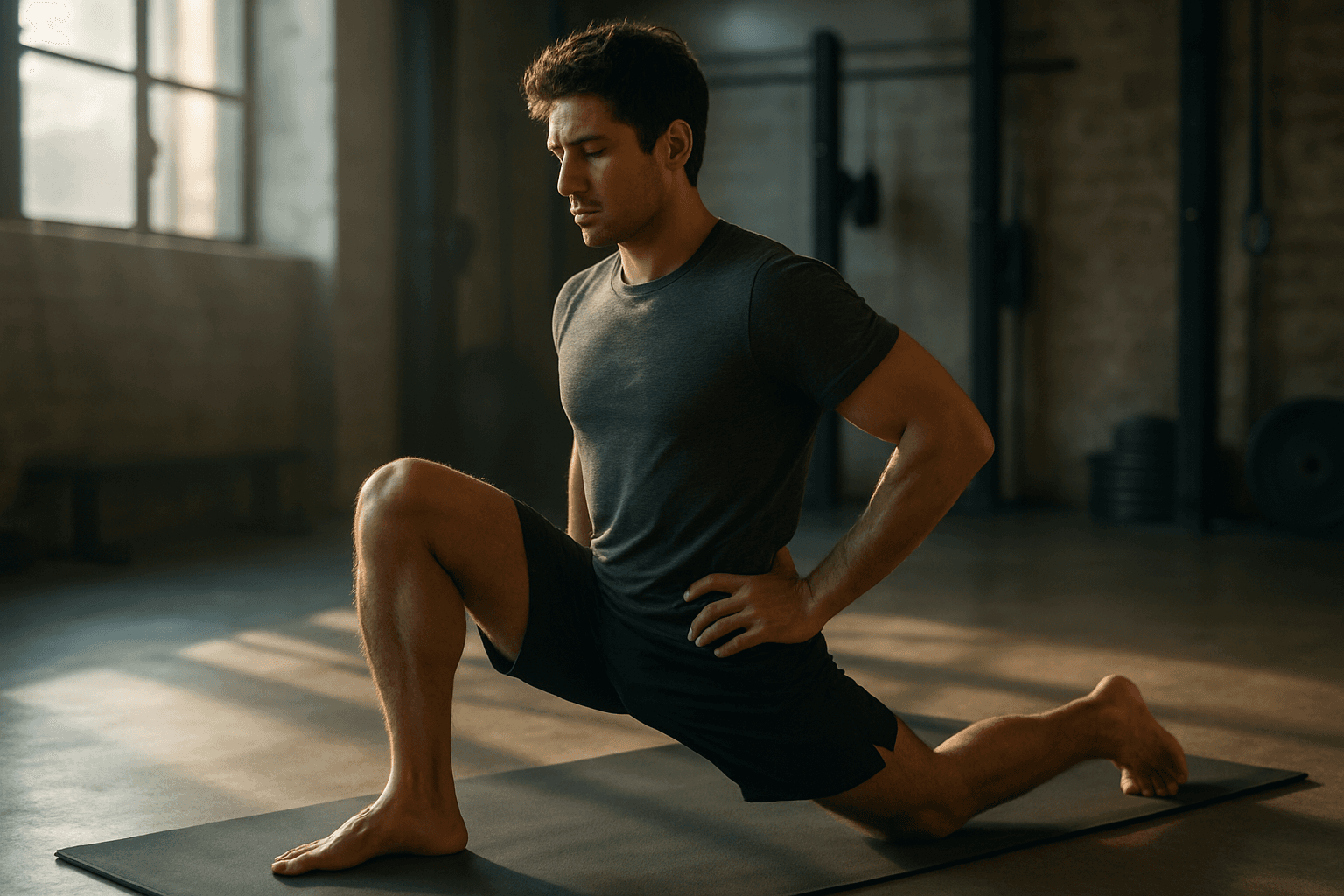
The anterior pelvic tilt that drives the chain of compensation starts with hip flexor shortening. Static back and kneeling hip flexor stretches, performed consistently, begin to reduce the anterior tilt and the downstream pronation it produces.
Address the Local Tissue
Calf stretching and plantar fascia stretching remain relevant as adjunct treatment. Reducing local tissue tension while addressing the proximal driver accelerates recovery. The key is understanding that local treatment is adjunct, not primary.
Air bench, an isometric corrective exercise performed against a wall at approximately 90 degrees of knee flexion, is particularly effective for plantar fasciitis because it simultaneously loads the calf isometrically, trains hip alignment, and builds lower extremity tolerance without dynamic impact on the irritated tissue.
Most people with chronic plantar fasciitis notice significant improvement within four to six weeks when the hip and pelvic dysfunction driving the pattern is addressed. The Foot, Ankle & Plantar Fasciitis Fix program addresses the full kinetic chain from hip to foot, which is the reason results last rather than cycling through the same temporary relief.
Mike Boshnack
Corrective Exercise Specialist · Posture Guy Mike
Mike Boshnack grew up skateboarding and surfing, trained MMA, and rode road bikes competitively. A shoulder injury put him on a path to discover corrective exercise. He has since helped thousands of people fix the structural patterns causing their pain, without surgery or passive treatments.
Keep Reading
Conditions & Pain
Dentists and Hygienists: Your Neck Is Paying for Every Patient You Lean Over
4 min read
Conditions & Pain
Why Your Neck Cracks When You Turn Your Head (And What It's Really Telling You)
4 min read
Conditions & Pain
Levator Scapulae Pain: Why That Knot Between Your Neck and Shoulder Blade Won't Quit
4 min read
Free tool
See where your posture stands right now.
Upload a photo and get an instant AI-powered posture analysis with personalized recommendations. Free, no account required.
Try the Free Posture CheckTake the next step
Fix the structural root cause, not just the symptom.
Mike's programs apply this corrective method to your specific condition. No gym, no equipment. Just a floor and 15 minutes. Buy once, own forever.
Discussion
Discussion is a Pro member feature. Visit the community for more.