
Exercise Library
95 Posture Exercises
Every exercise Mike uses across all programs, with instructions, benefits, and video walkthroughs. Organized by body area.
Neck
12 exercises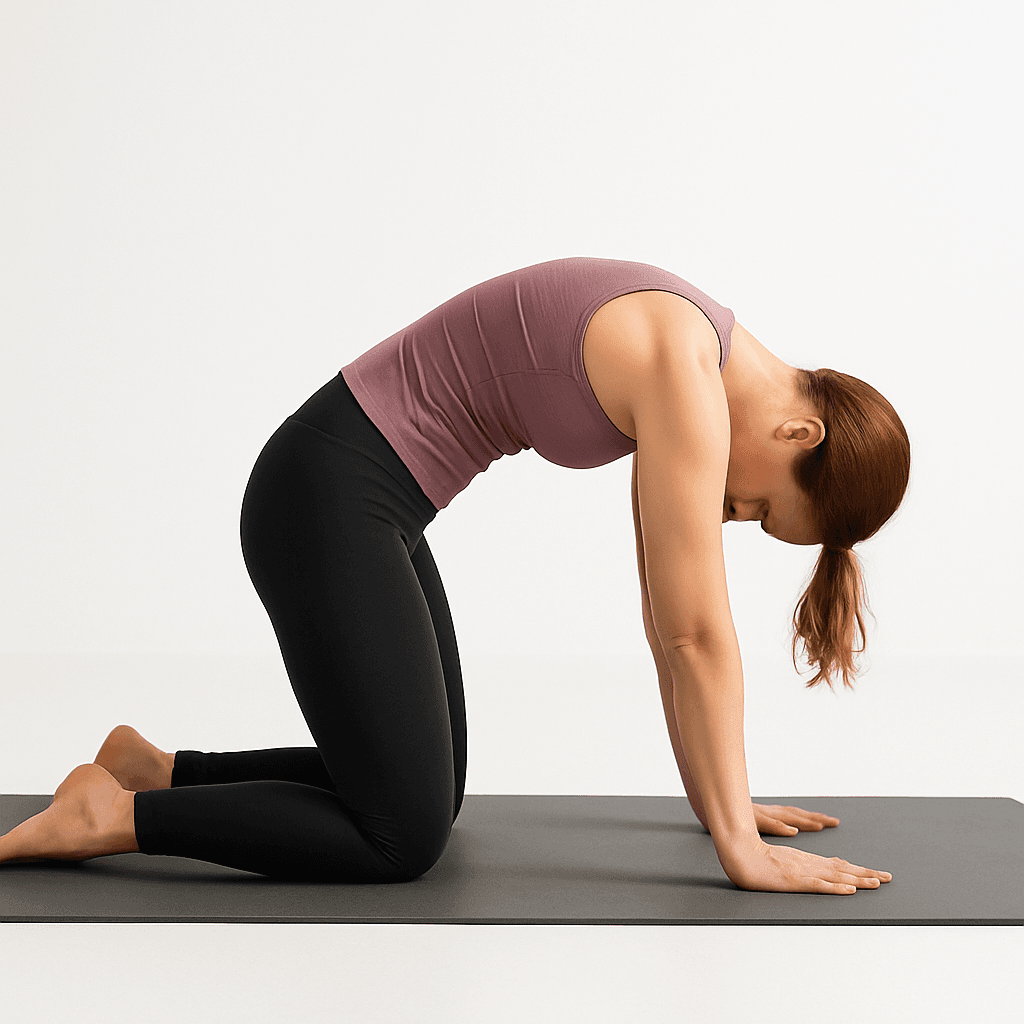
Cat-Cow
A gentle spinal mobility flow that works the entire spine from sacrum to skull.
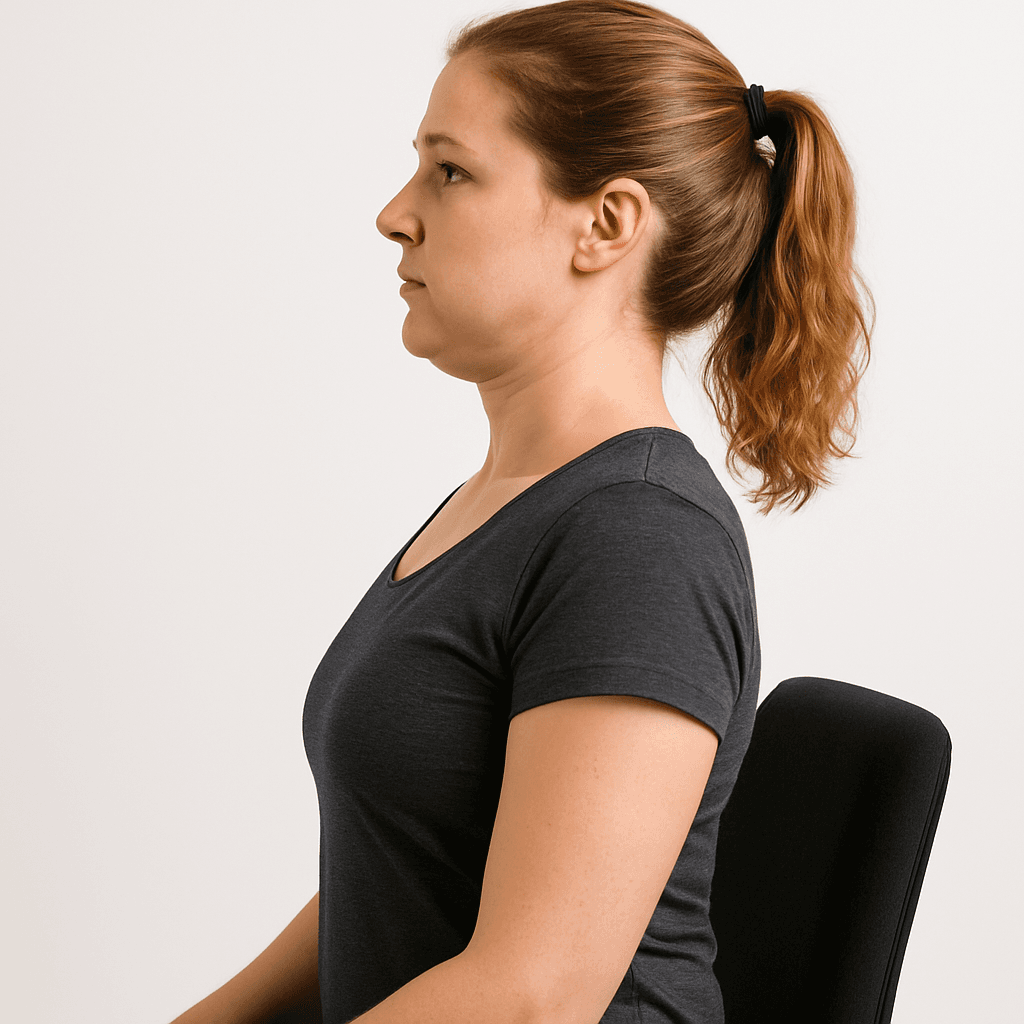
Cervical Retraction
Starting from a neutral seated or standing position, you glide your head straight back — not tilting — to bring the ear directly over the shoulder and the cervical spine into its natural lordosis.
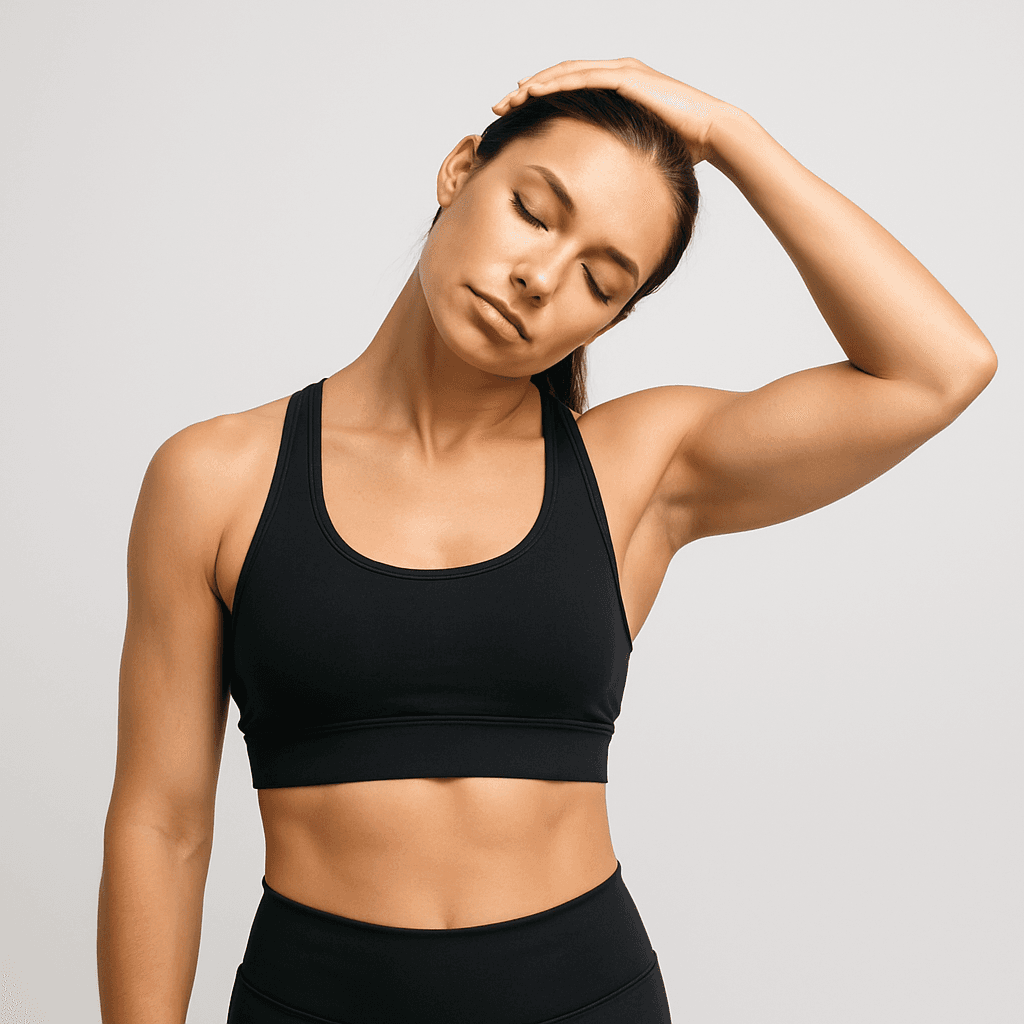
Cervical Side Bend
A gentle lateral flexion stretch for the cervical spine that addresses the upper trapezius, scalenes, and sternocleidomastoid on the side being stretched.
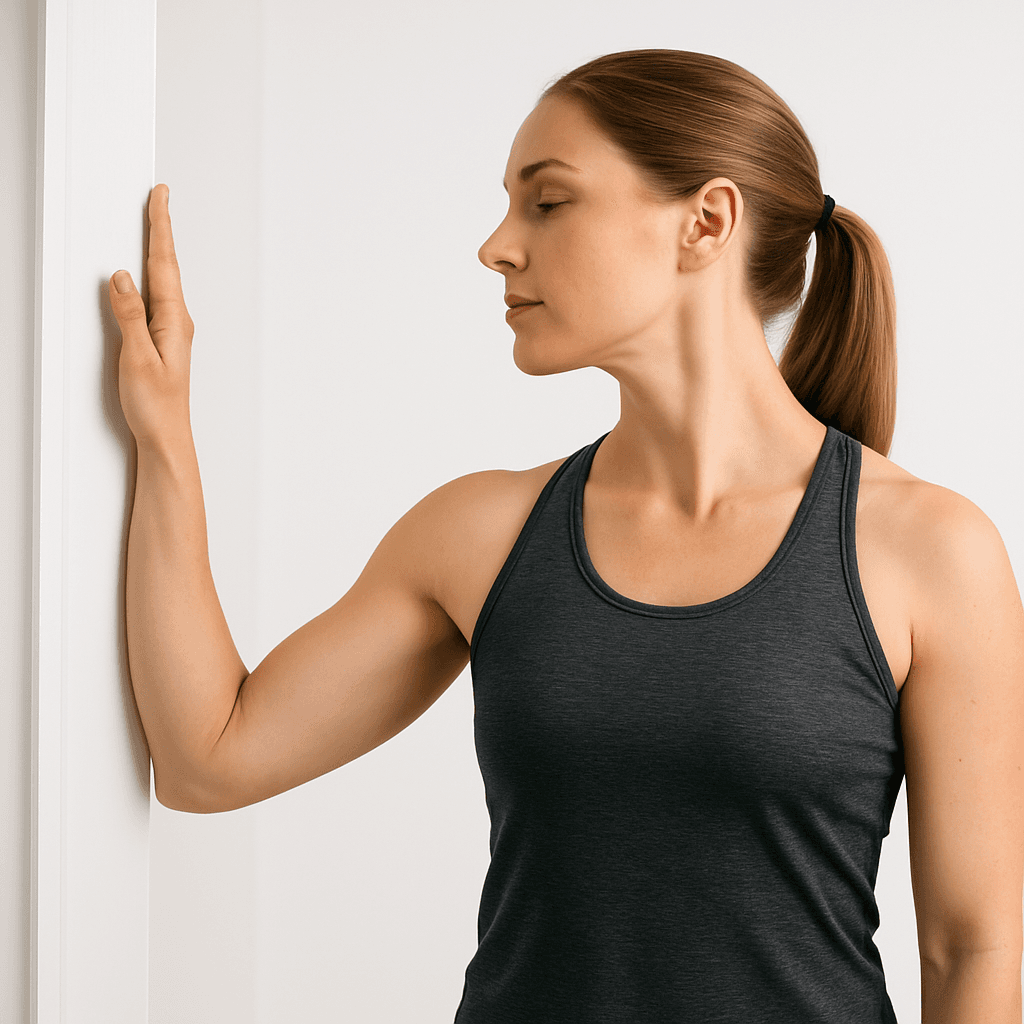
Doorway Neck Stretch
Standing in a doorway, you anchor one hand against the frame, turn your head away, and apply gentle lateral traction to the scalene and levator scapula.
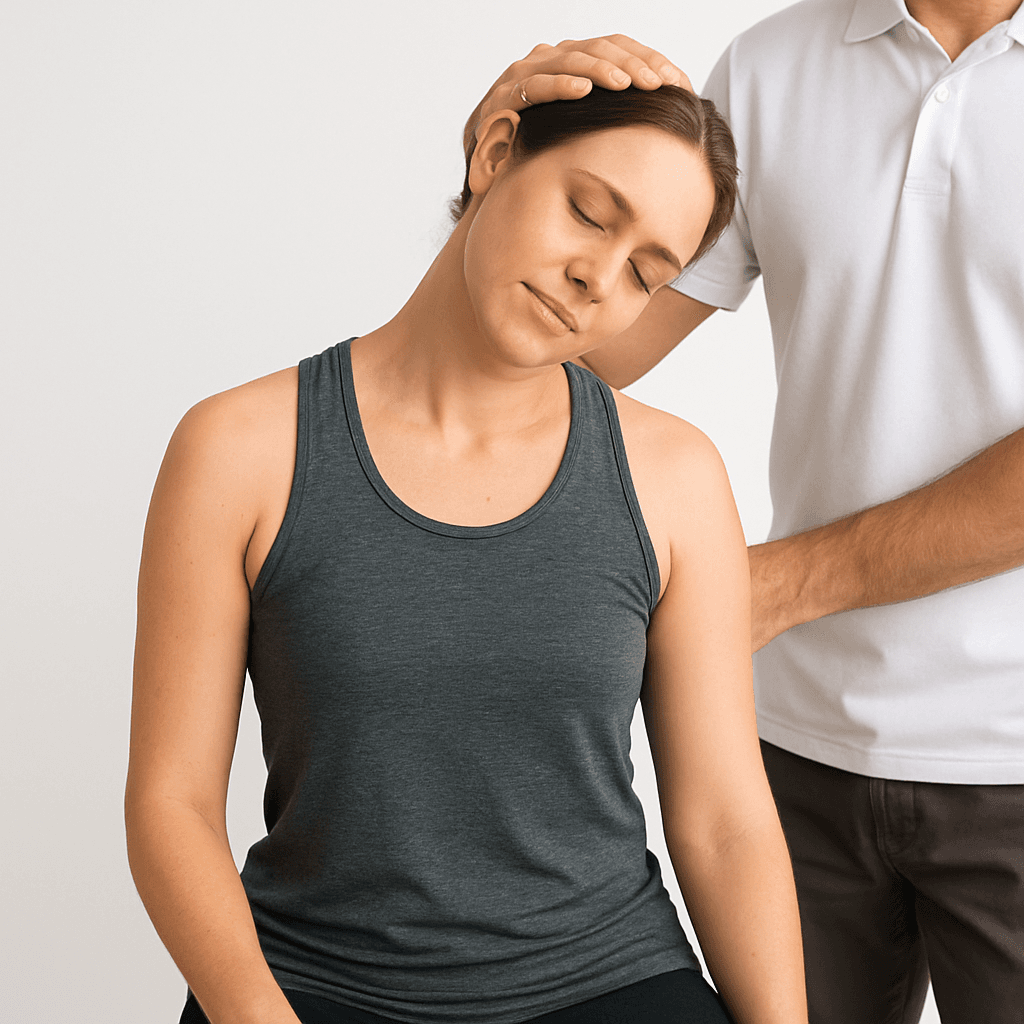
Ear to Shoulder Stretch
With the shoulders relaxed and square, you slowly tilt one ear toward the same-side shoulder and hold, lengthening the opposite upper trapezius and scalene muscles.
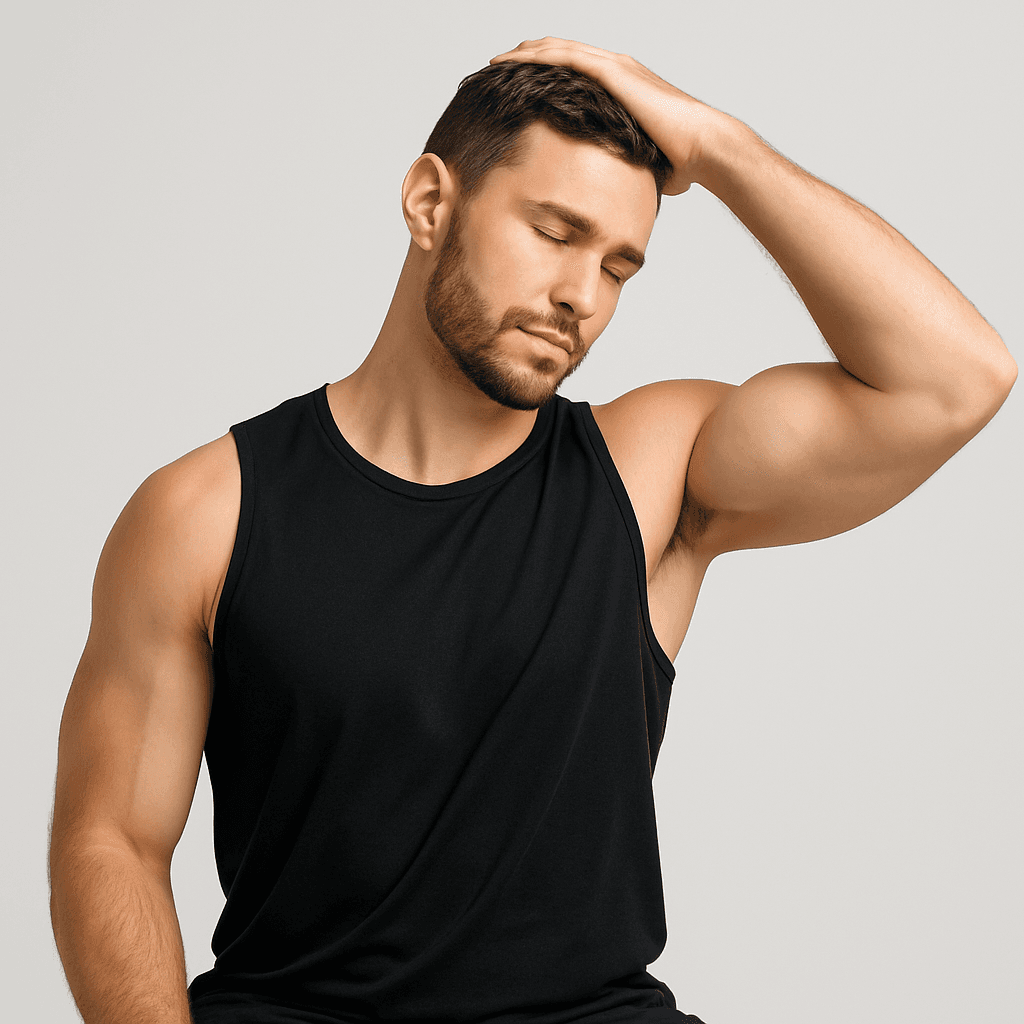
Levator Scapulae Stretch
Targets the levator scapulae — a muscle that runs from the upper corner of the shoulder blade to the upper cervical spine and is almost always tight in desk workers and people with forward head posture.
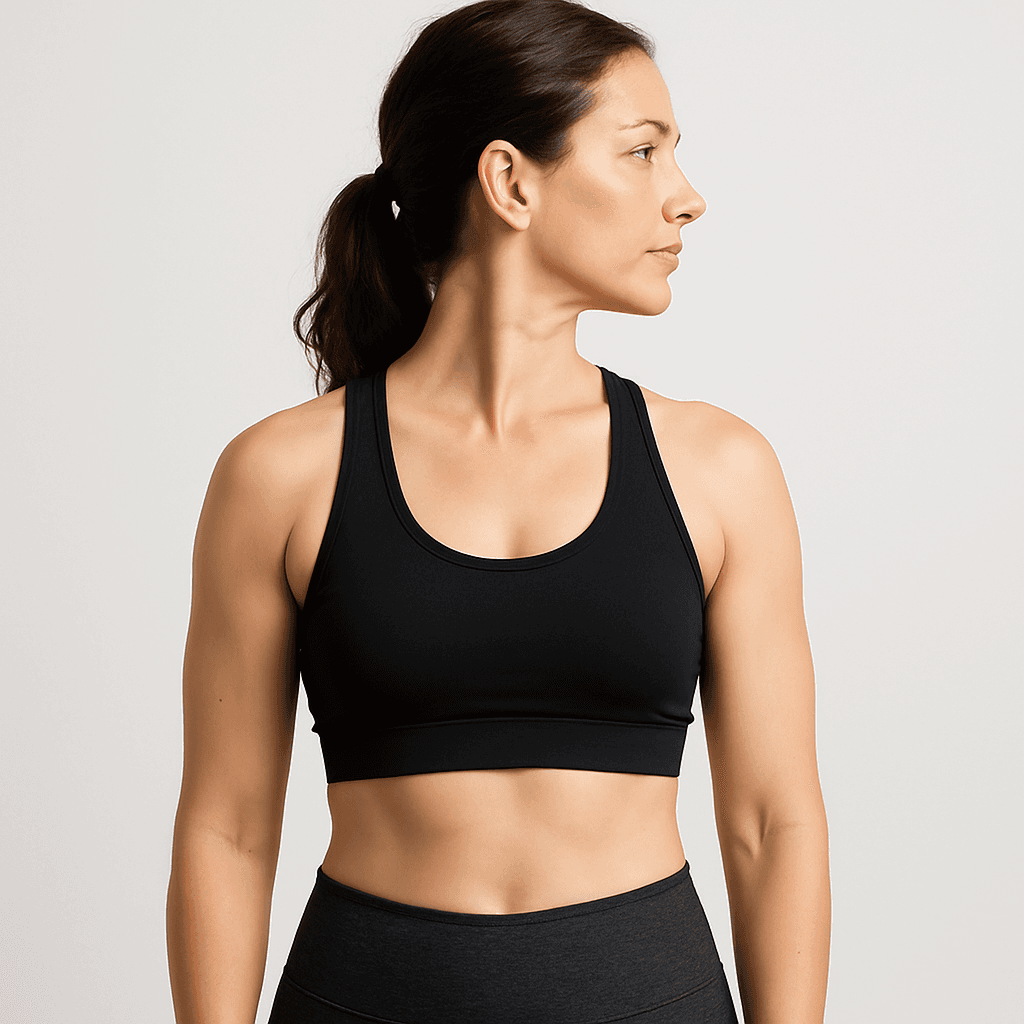
Neck Rotation (Gentle)
A simple cervical rotation mobility exercise that maintains or restores the rotational range of motion in the neck.
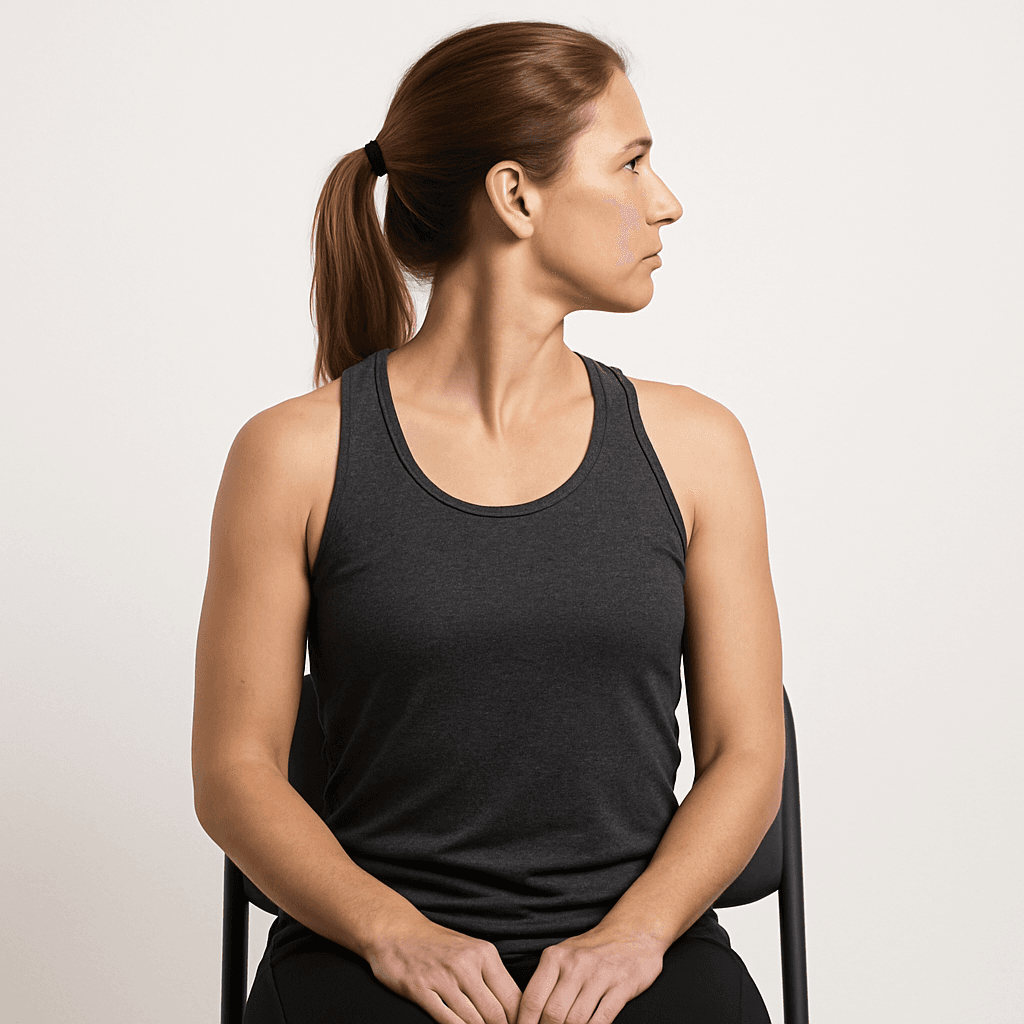
Neck Rotation Mobility
Slow, controlled cervical rotation — turning the head side to side through full pain-free range — lubricates the facet joints, mobilizes the cervical intervertebral discs, and improves proprioceptive signaling so the nervous system can accurately place the head over the shoulders.
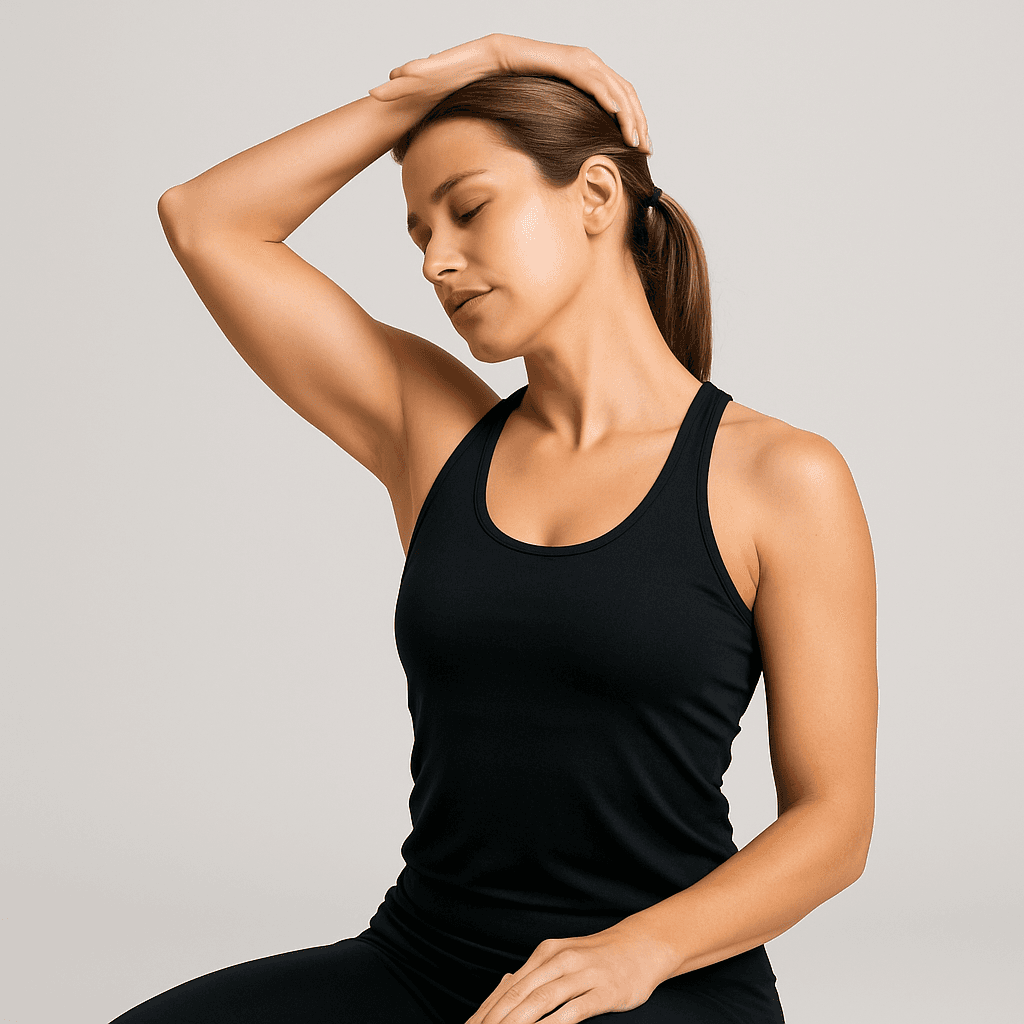
Scalene Stretch
The scalenes are anterior neck muscles that tighten with forward head posture and shallow chest breathing — when chronically short, they can compress the brachial plexus and cause arm tingling.
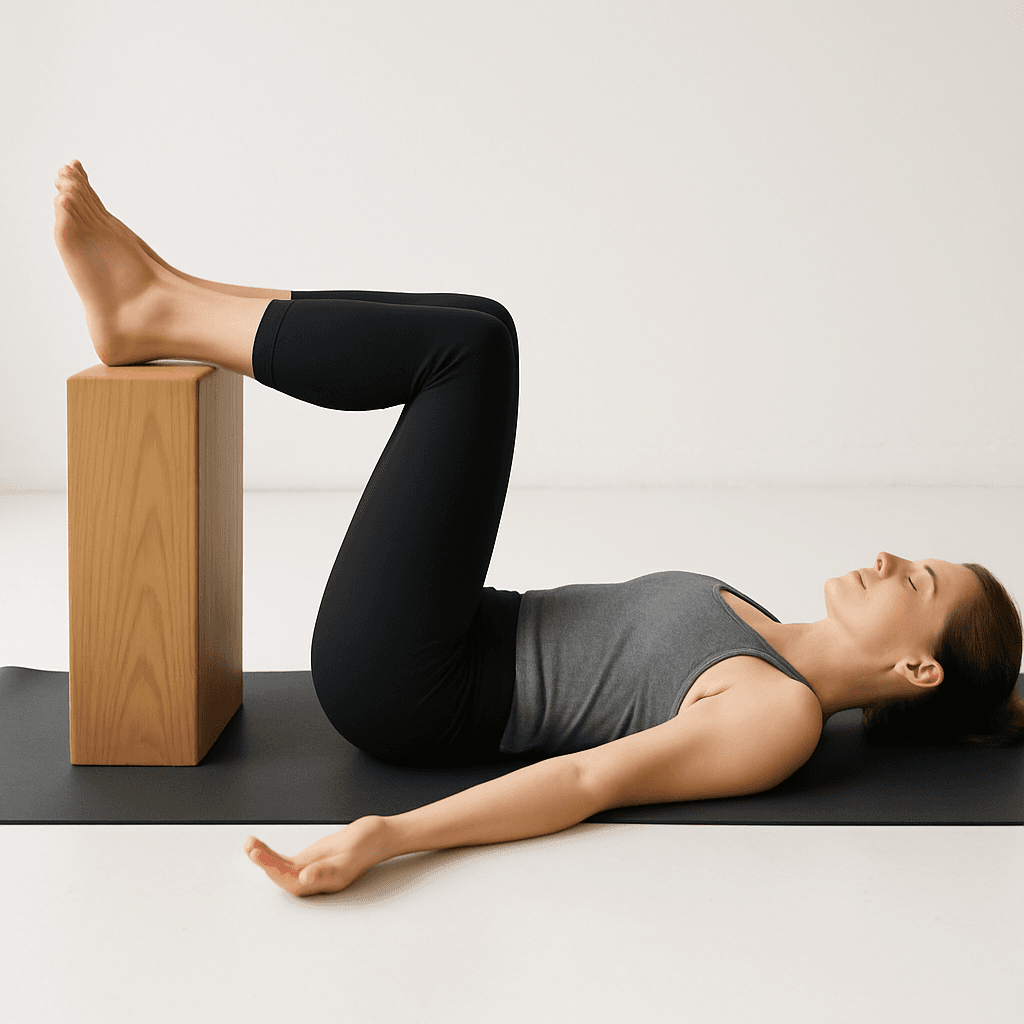
Static Back Neck Release
Lying on your back with hips and knees at 90 degrees over a block or chair, you allow gravity to decompress the cervical spine and reset the natural lordotic curve.
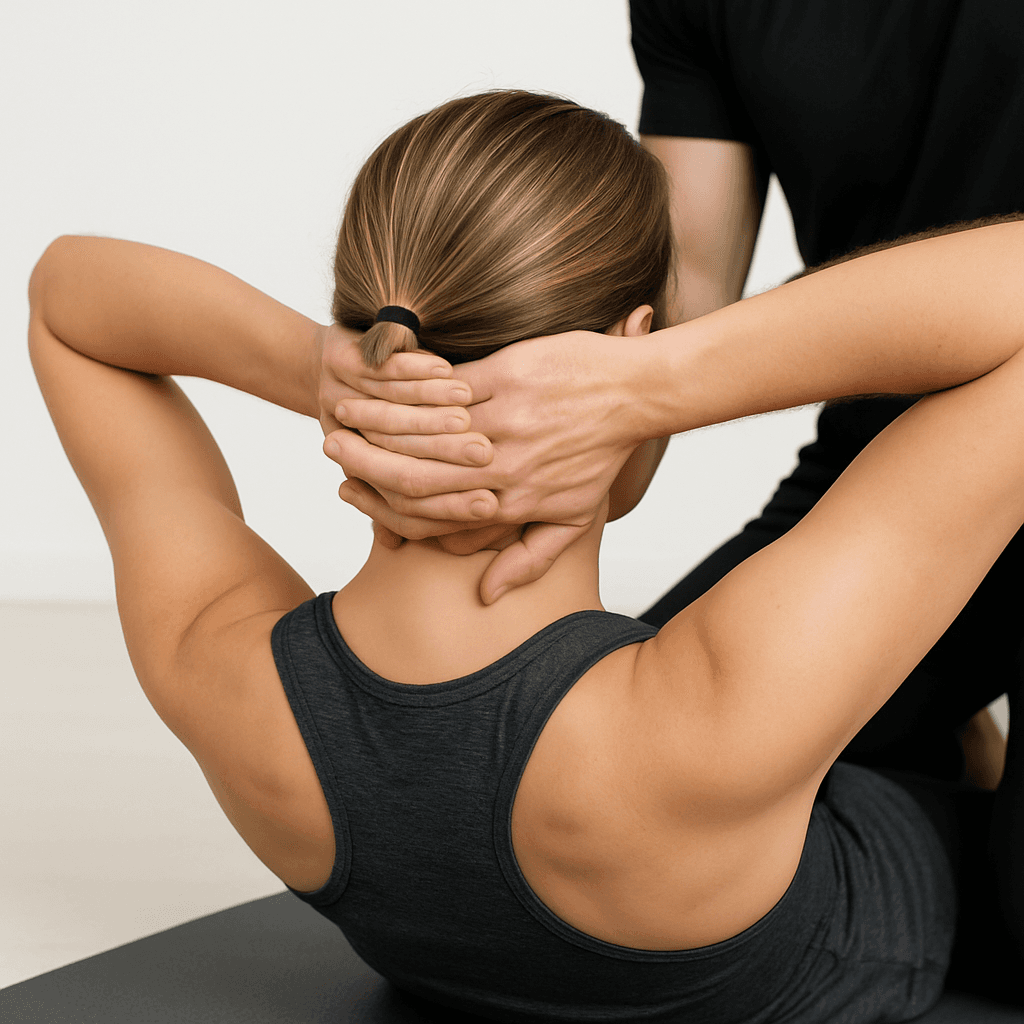
Suboccipital Release (Head on Ball)
A self-myofascial release technique for the suboccipital muscles at the base of the skull — the most common source of tension headaches, eye strain, and upper cervical stiffness.
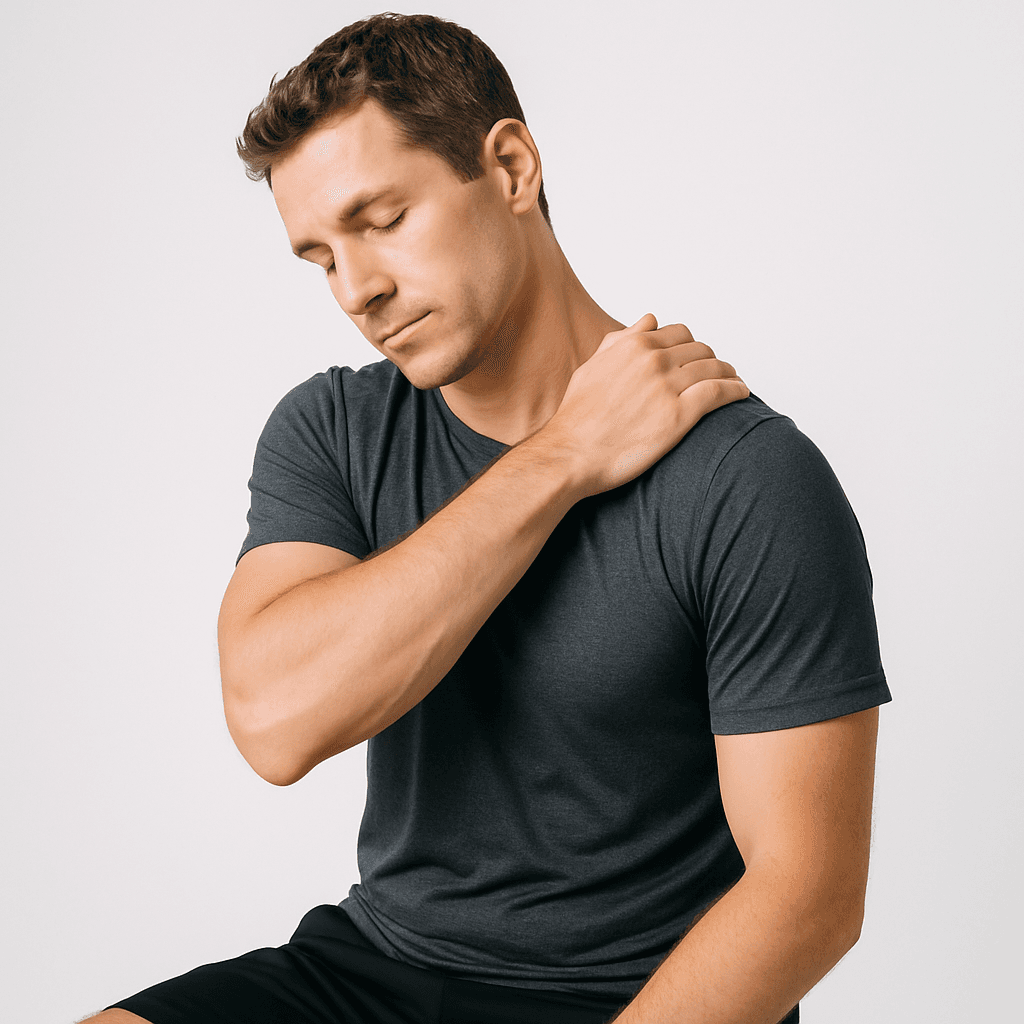
Upper Trap Release
A gentle release for the chronically tight upper trapezius.
Upper Back
27 exercises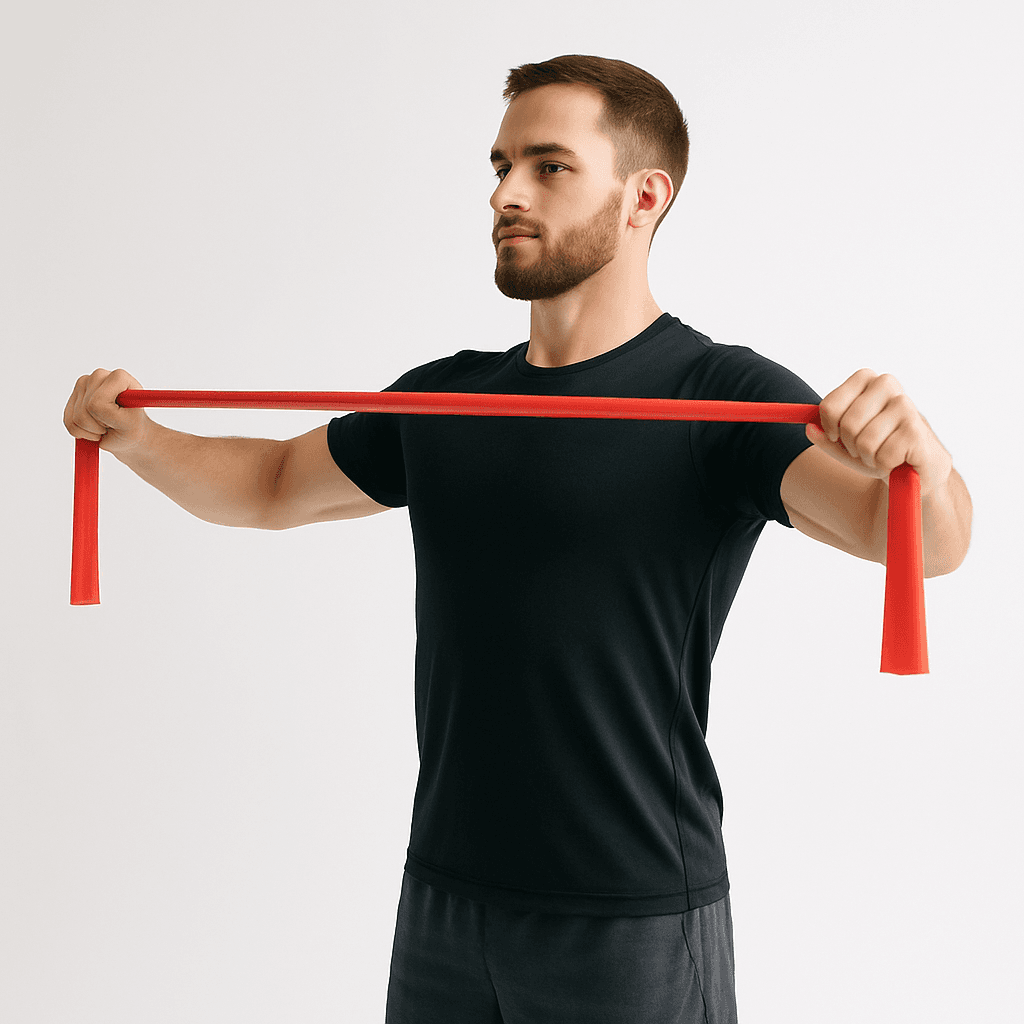
Band Pull-Apart
A simple but highly effective resistance band exercise that strengthens the posterior deltoids, rhomboids, and mid-trapezius through horizontal pulling.
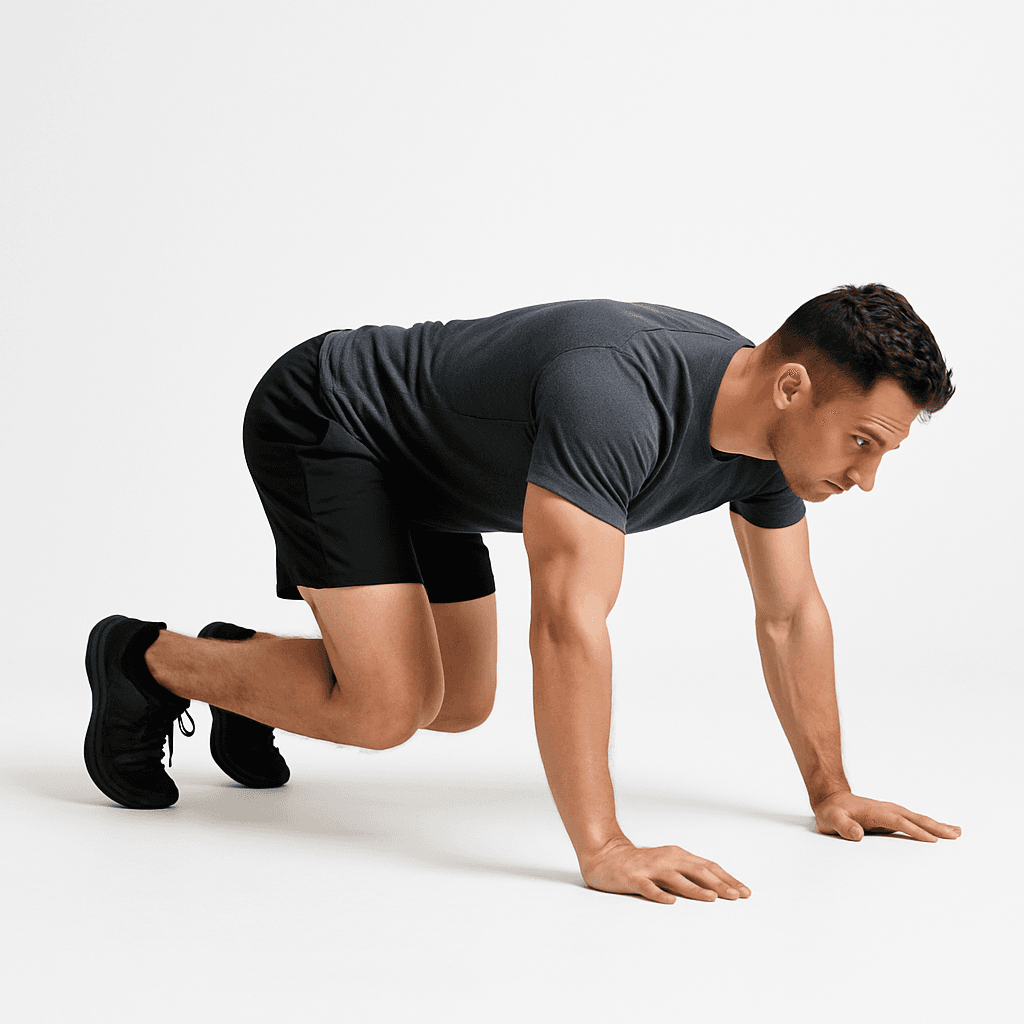
Bear Crawl (Modified)
A developmental movement pattern that trains contralateral coordination, core stability, and shoulder strength simultaneously.
Cat-Cow
A gentle spinal mobility flow that works the entire spine from sacrum to skull.
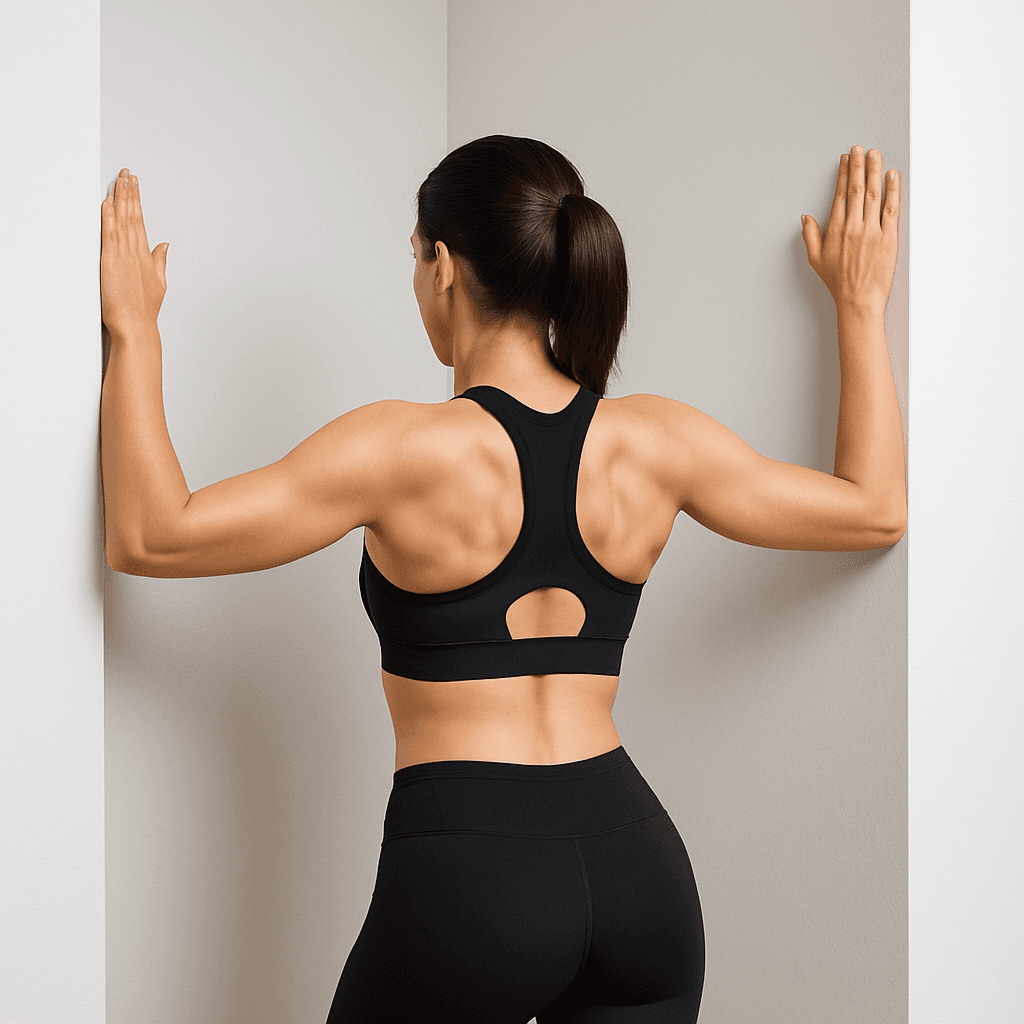
Corner Stretch (Pec Opener)
A bilateral chest and anterior shoulder stretch done in a room corner that allows both arms to be supported simultaneously while the torso leans in.
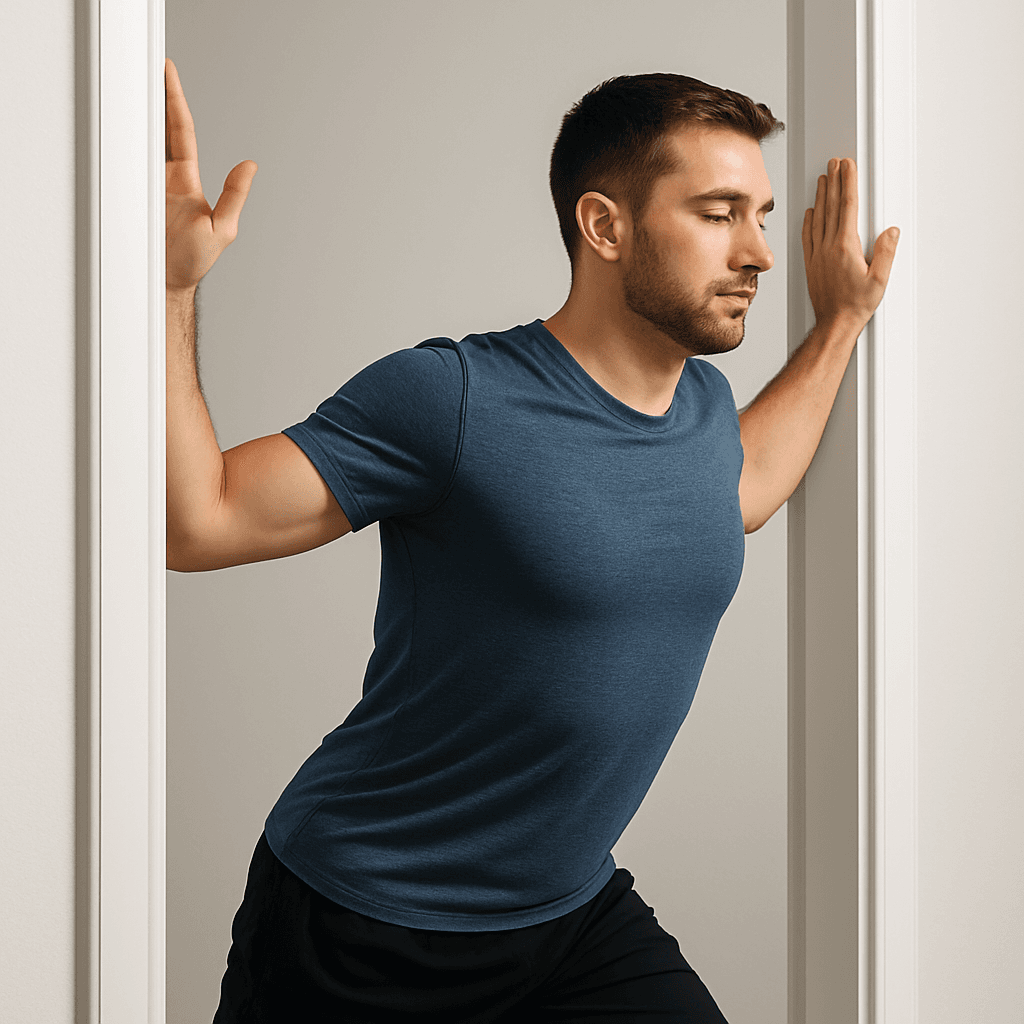
Doorway Chest Stretch
A passive stretch that opens the tight pectorals and anterior shoulders that get shortened by years of forward posture.
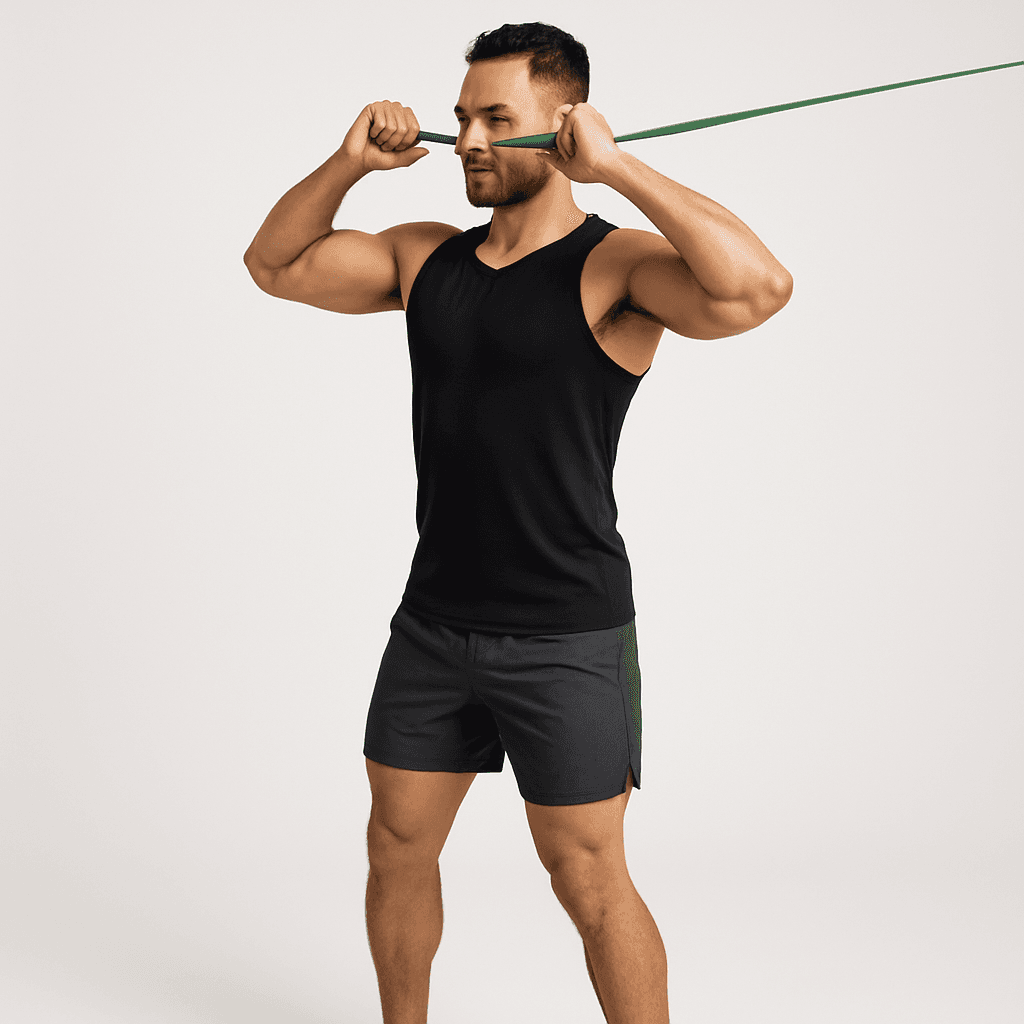
Face Pulls (Resistance Band)
A resistance band exercise that targets the external rotators of the shoulder and rear deltoids — the muscles most responsible for keeping the shoulders from rolling forward.
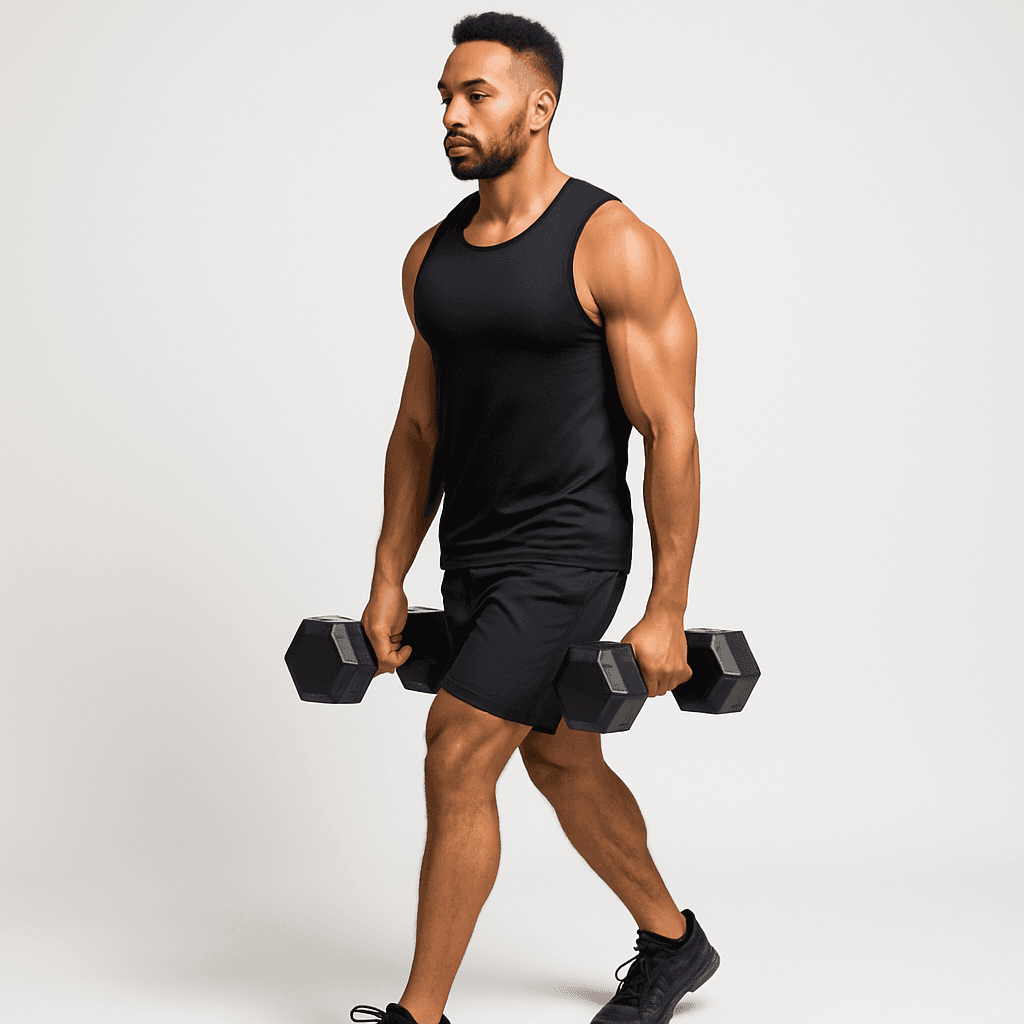
Farmer's Carry
A fundamental loaded carry exercise that trains the body to maintain postural alignment under real-world loading conditions.
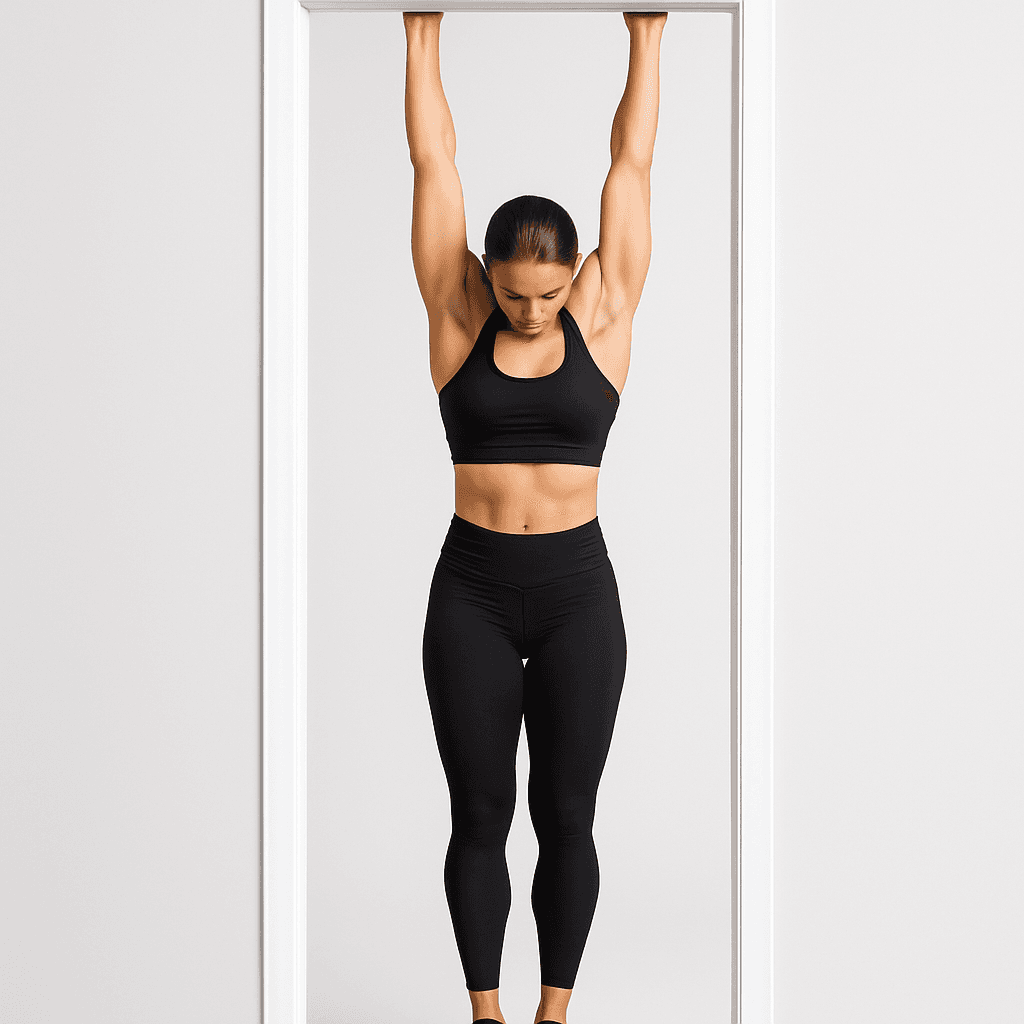
Gravity Drop (Doorway Hang)
A spinal decompression exercise using a doorframe or pull-up bar to allow gravity to gently traction the spine and release the lats, hip flexors, and paraspinals simultaneously.
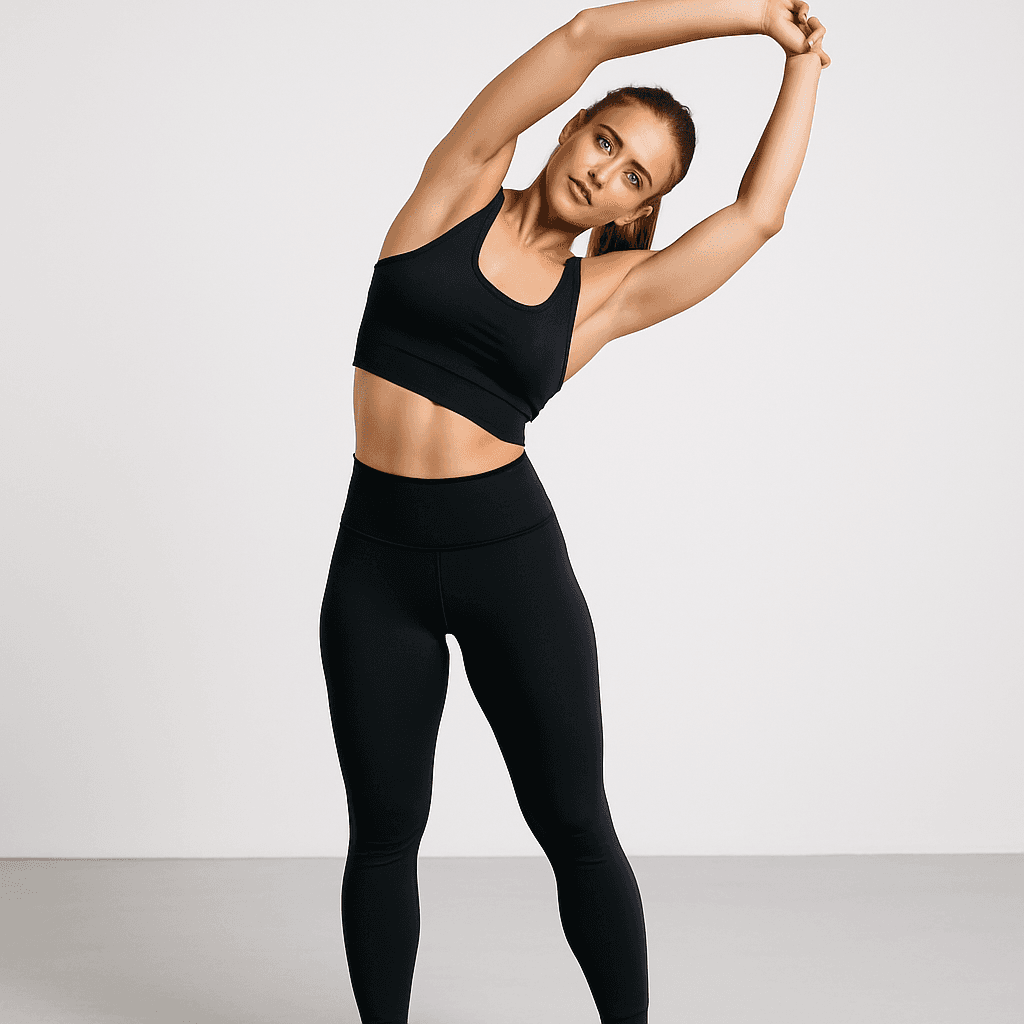
Lat Stretch (Arm Overhead Side Lean)
The lats are one of the most overlooked contributors to poor posture — when tight, they internally rotate the shoulders and compress the lumbar spine.
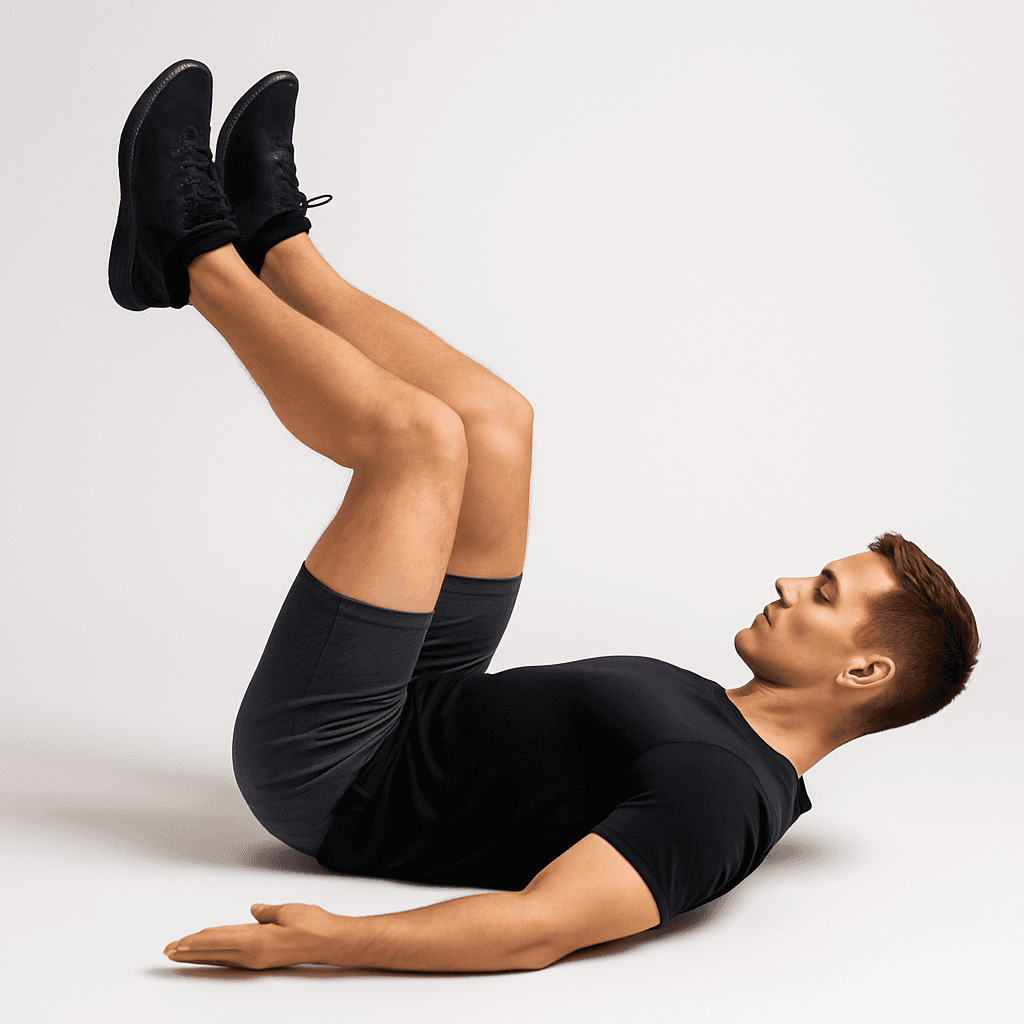
Legs Elevated Scapular Contractions
A supine exercise combining elevated legs with deliberate scapular retraction to simultaneously address lower back and upper back dysfunction.
Levator Scapulae Stretch
Targets the levator scapulae — a muscle that runs from the upper corner of the shoulder blade to the upper cervical spine and is almost always tight in desk workers and people with forward head posture.
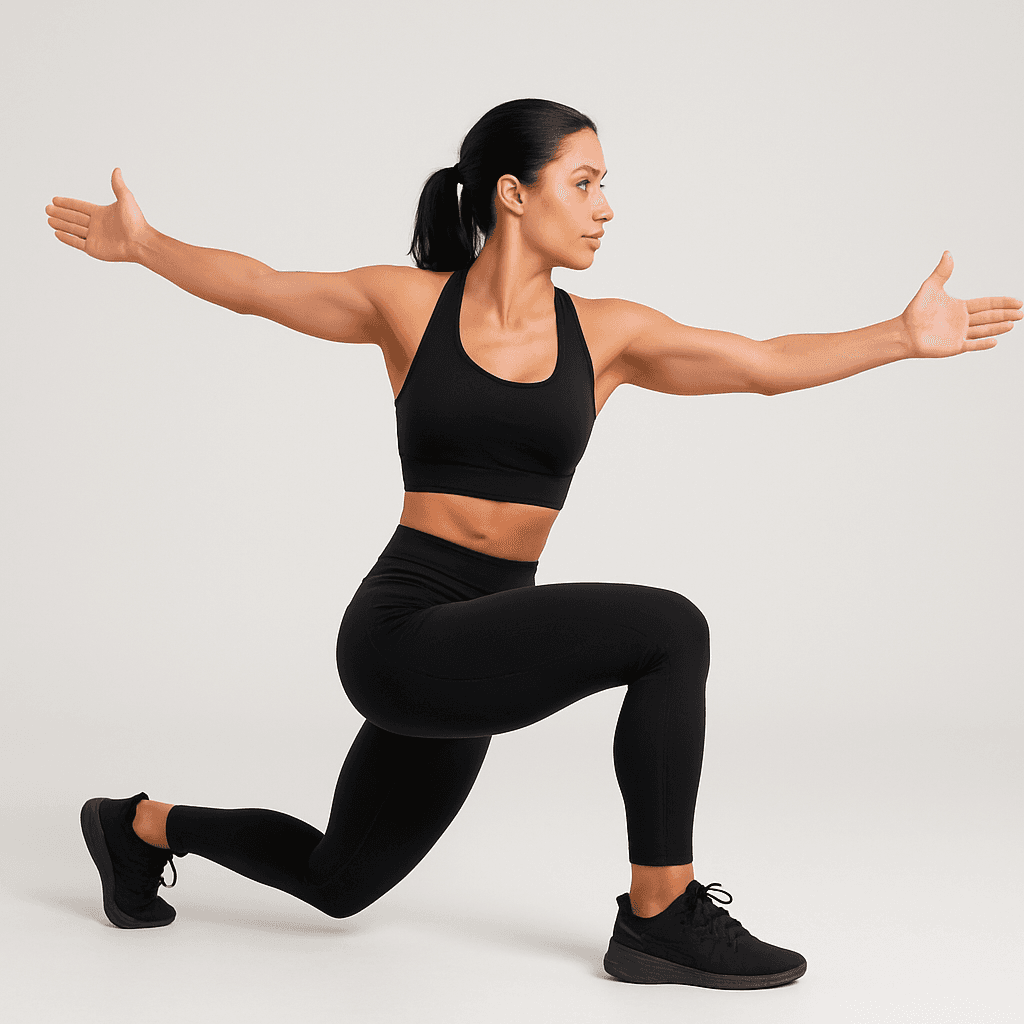
Lunge with Thoracic Rotation
A dynamic exercise that combines lower body stability with thoracic mobility — two of the most commonly restricted areas in people with poor posture.
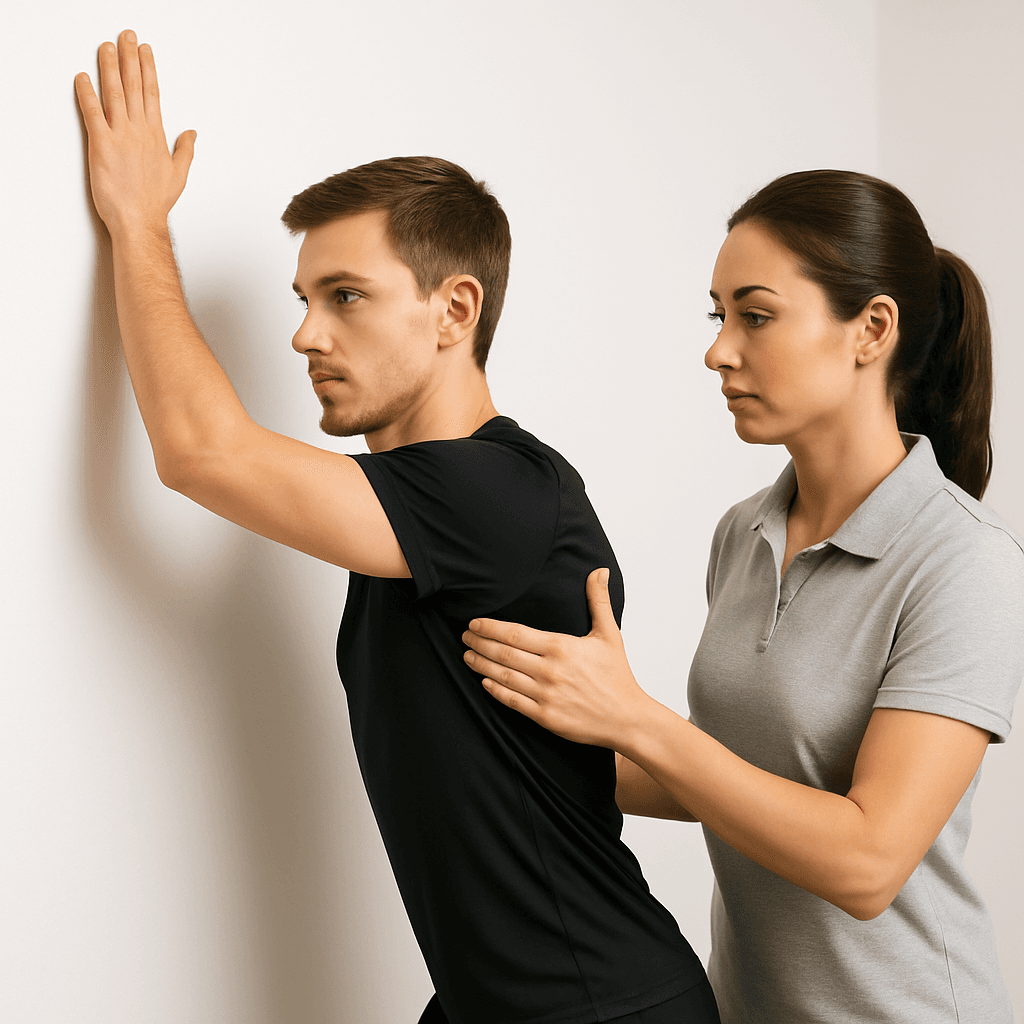
Pec Minor Stretch
Using a doorframe or wall corner, you position the arm at a higher angle to stretch the pec minor from its coracoid process to its rib attachments.
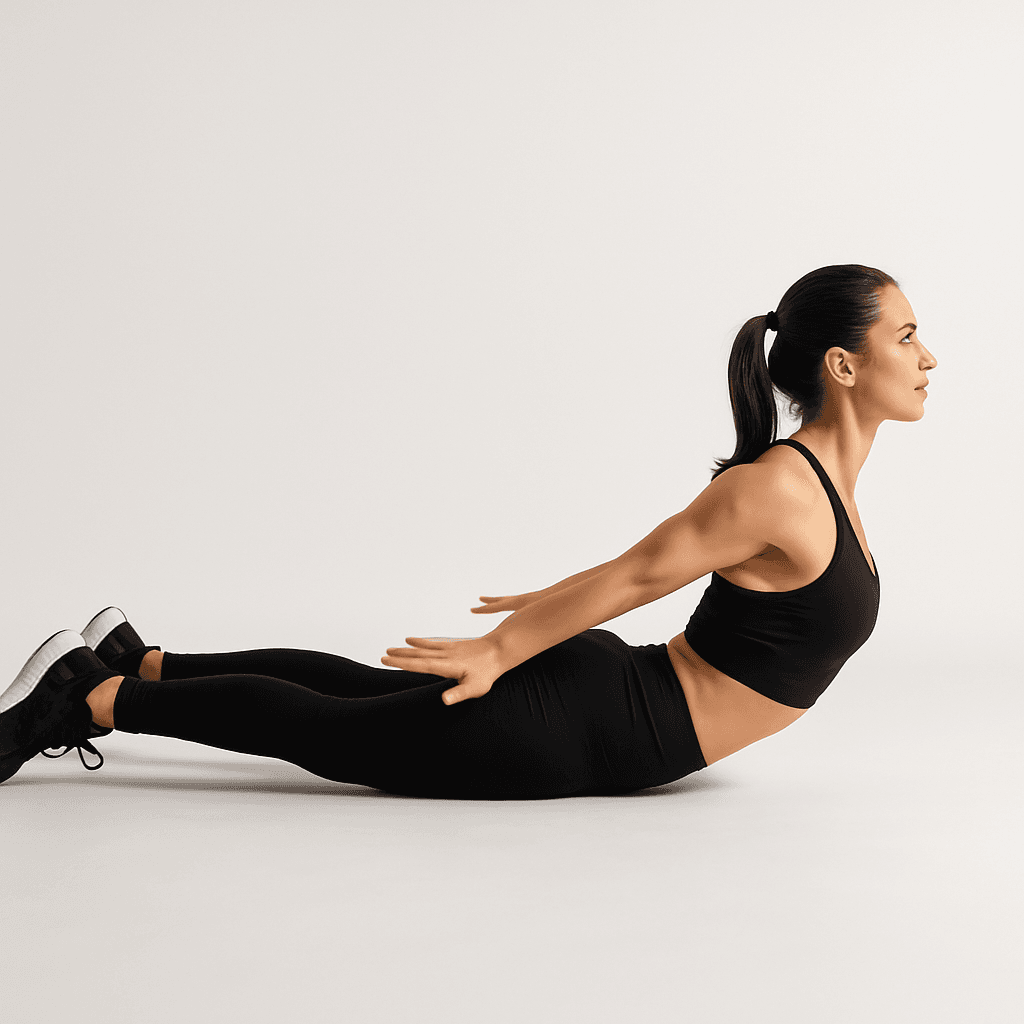
Prone Cobra
A bodyweight back extension exercise that strengthens the entire posterior chain from the glutes through the upper back and shoulders.
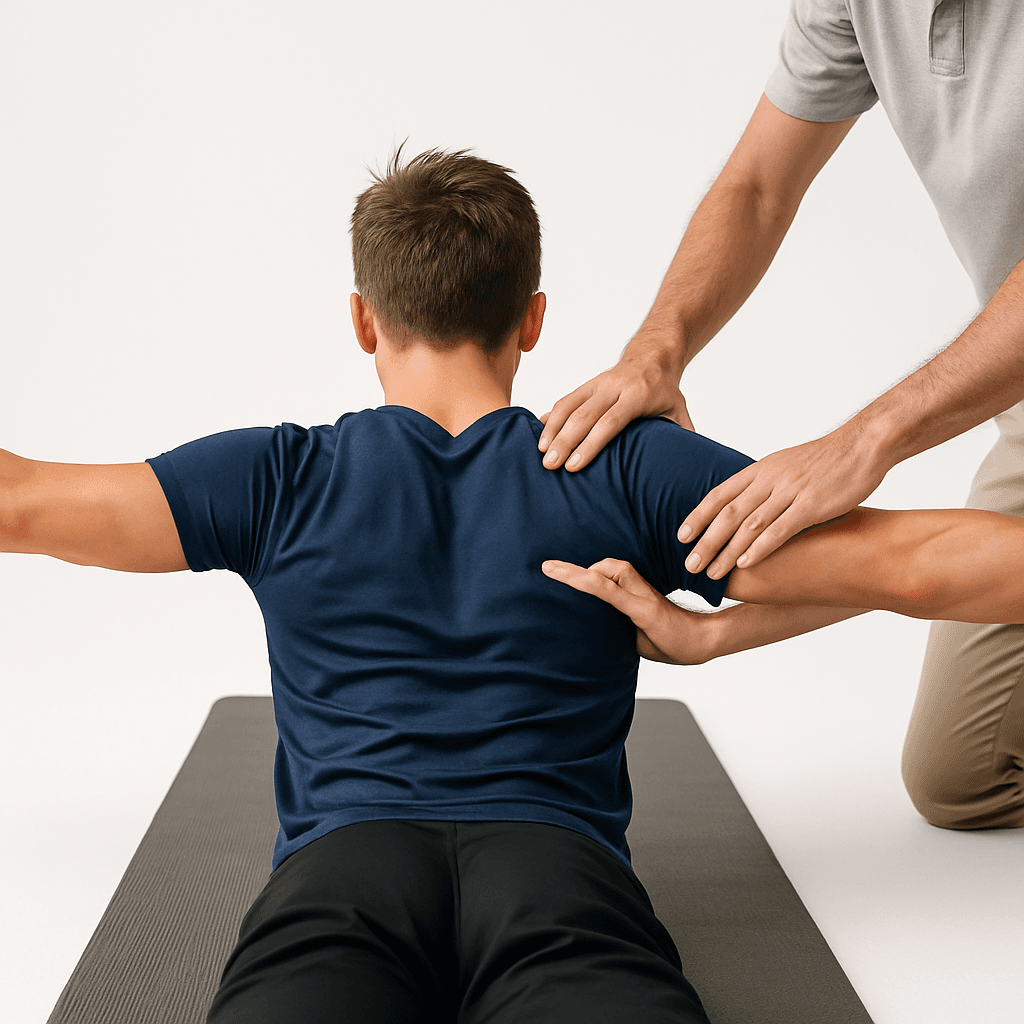
Prone T Raise
Lying face down with arms extended directly out to the sides in a T shape, you lift both arms by squeezing the mid-traps and rhomboids.
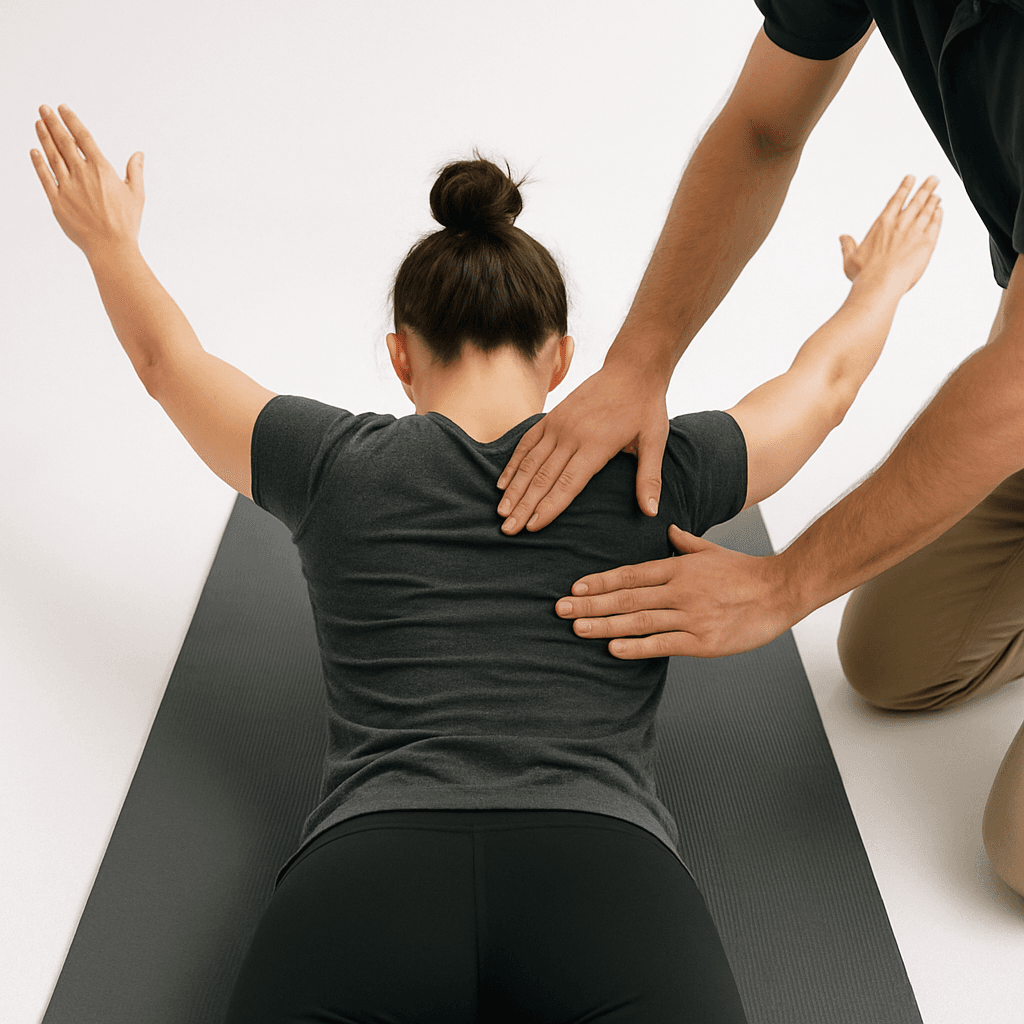
Prone Y Raise
Lying face down with arms raised diagonally into a Y shape, you lift both arms off the floor by squeezing the lower trapezius and depressing the shoulder blades downward.
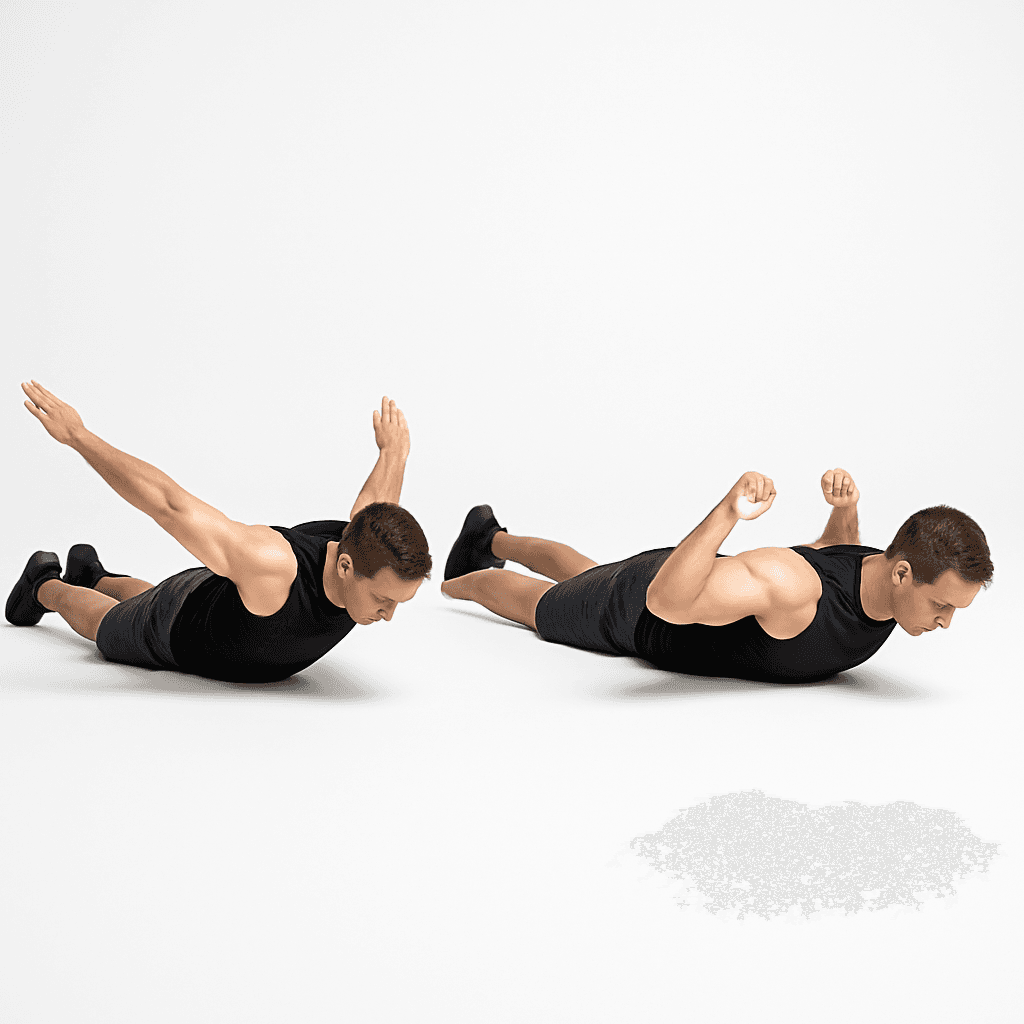
Prone Y-T-W
Three positions performed lying face-down that activate the lower and mid trapezius from multiple angles.
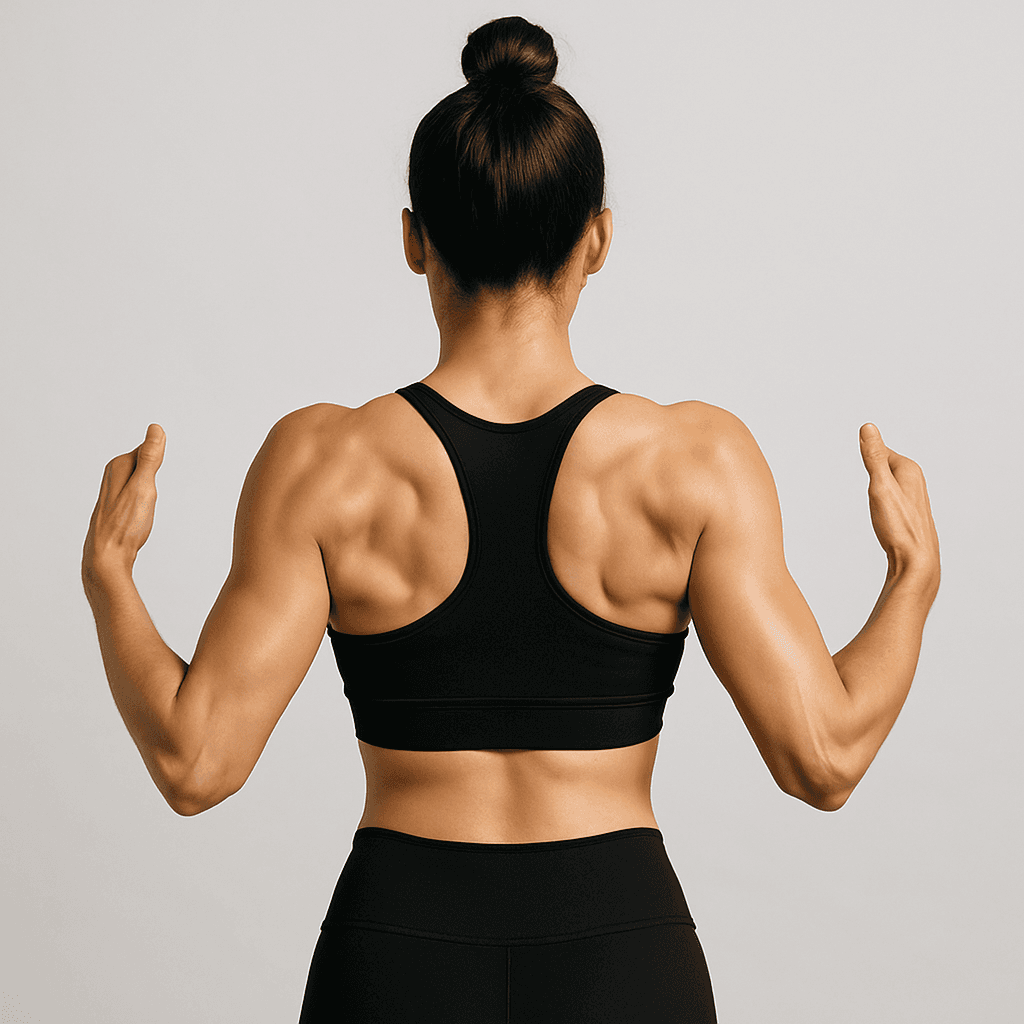
Scapular Retraction and Depression
Directly targets the middle and lower trapezius — the muscles that hold your shoulder blades back and down.
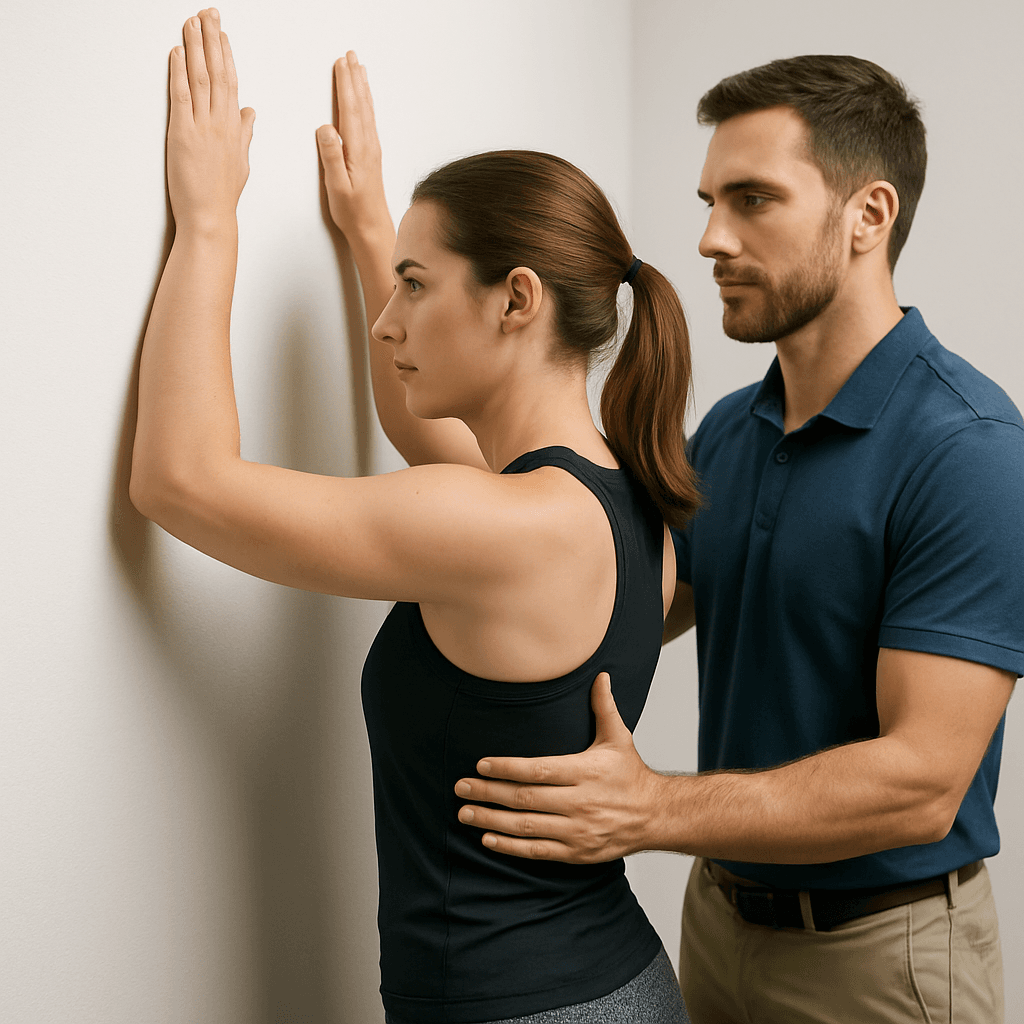
Scapular Wall Slides
Standing with your forearms flat against a wall (elbows at 90 degrees), you slide the arms upward while actively pressing the forearms into the wall and keeping the lower back from arching.
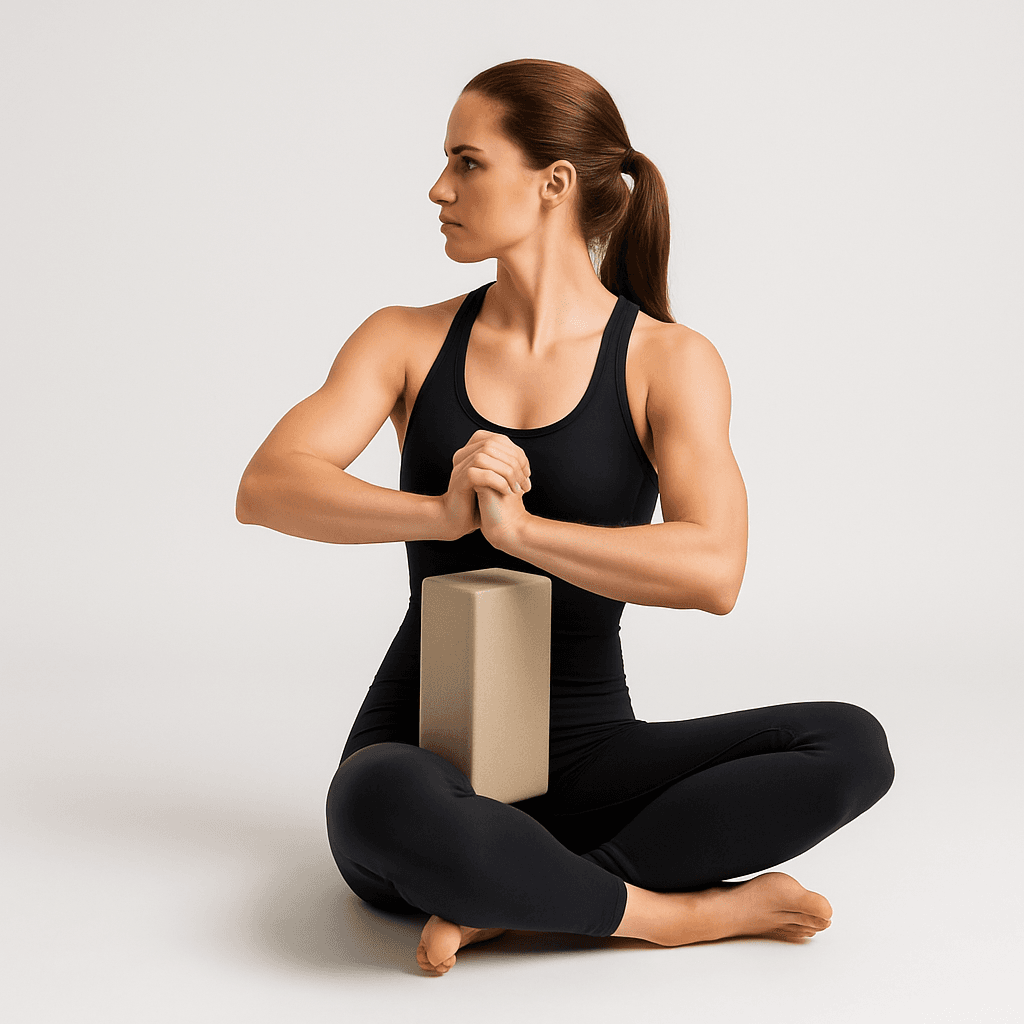
Sitting Rotation with Posture Block
A seated thoracic rotation exercise using a posture block to maintain spinal alignment.
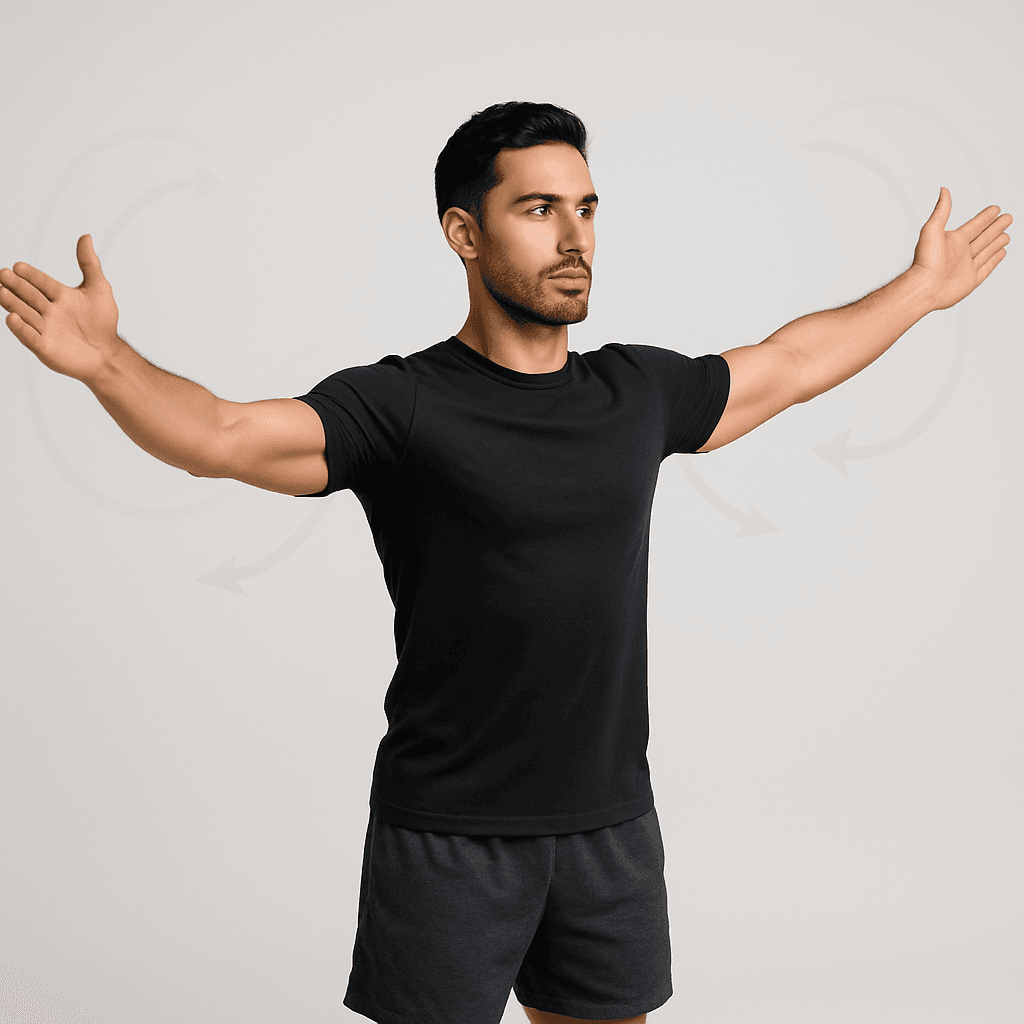
Standing Arm Circles
A deceptively simple exercise that resets shoulder function and thoracic position through repeated arm circles done in an exact sequence.
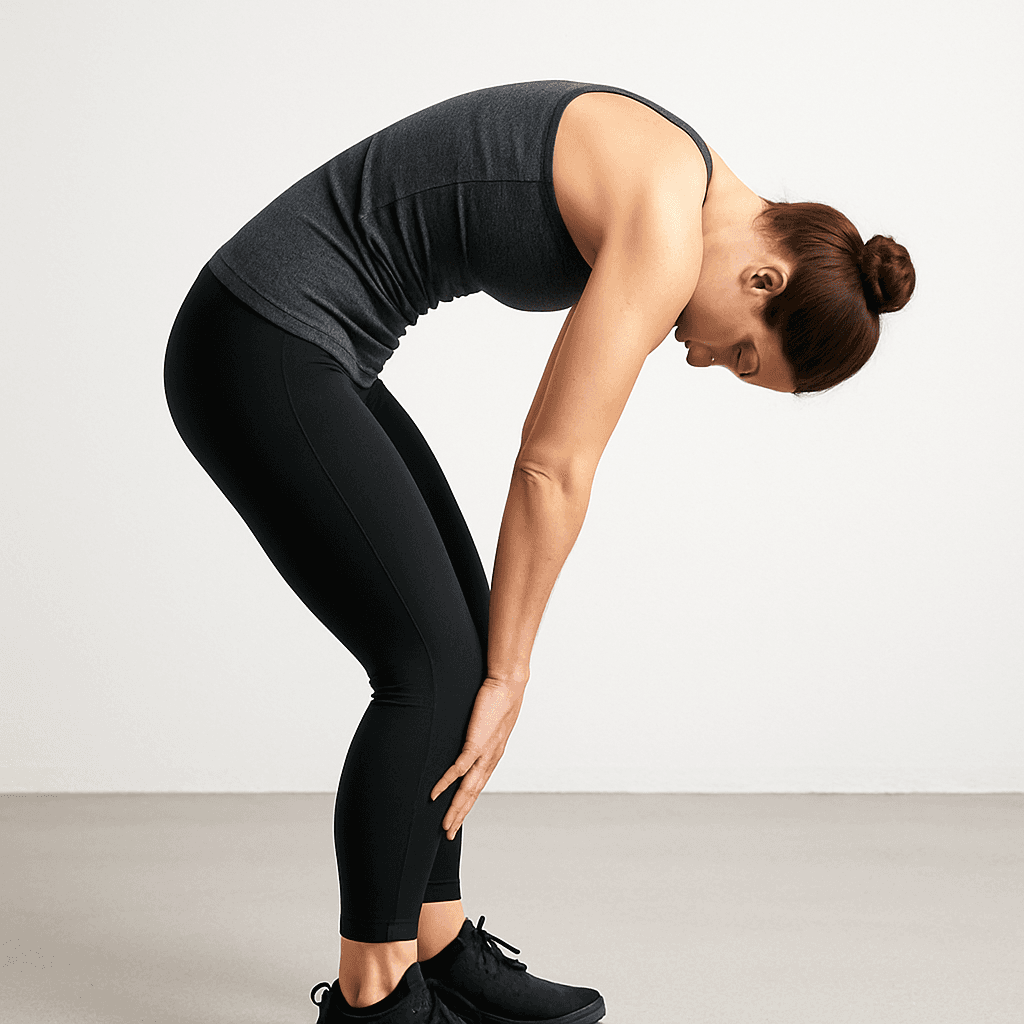
Standing Cat-Cow
Standing with knees slightly bent and hands on thighs, you move through spinal flexion and extension in the same pattern as floor cat-cow but in a loaded, upright position.
Static Back Neck Release
Lying on your back with hips and knees at 90 degrees over a block or chair, you allow gravity to decompress the cervical spine and reset the natural lordotic curve.
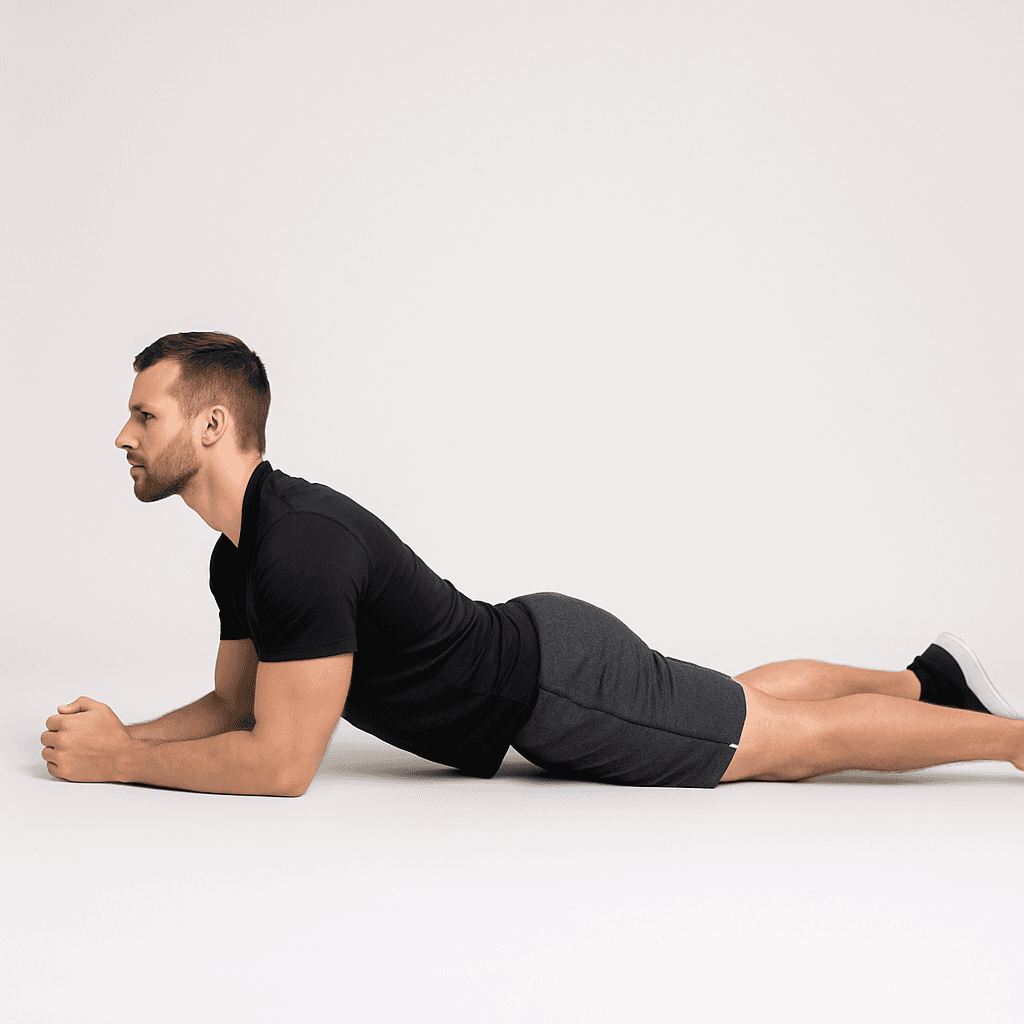
Static Extension Position (Prone on Elbows)
A prone exercise that reverses thoracic kyphosis and activates the posterior chain by using a sustained extension position on the elbows.
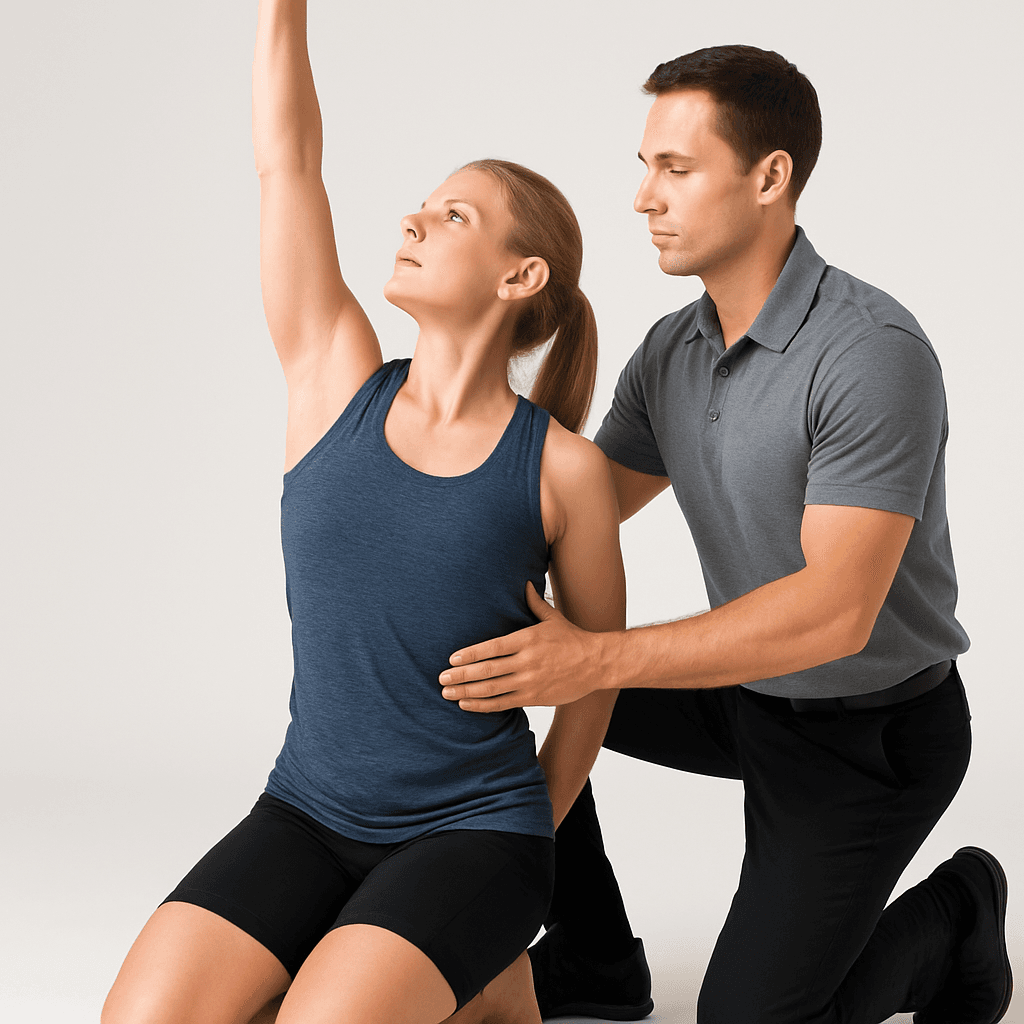
T-Spine Rotation
In a half-kneeling or seated position with the hips stable, you rotate the thoracic spine as far as possible in each direction, reaching the far hand toward the ceiling at end range.
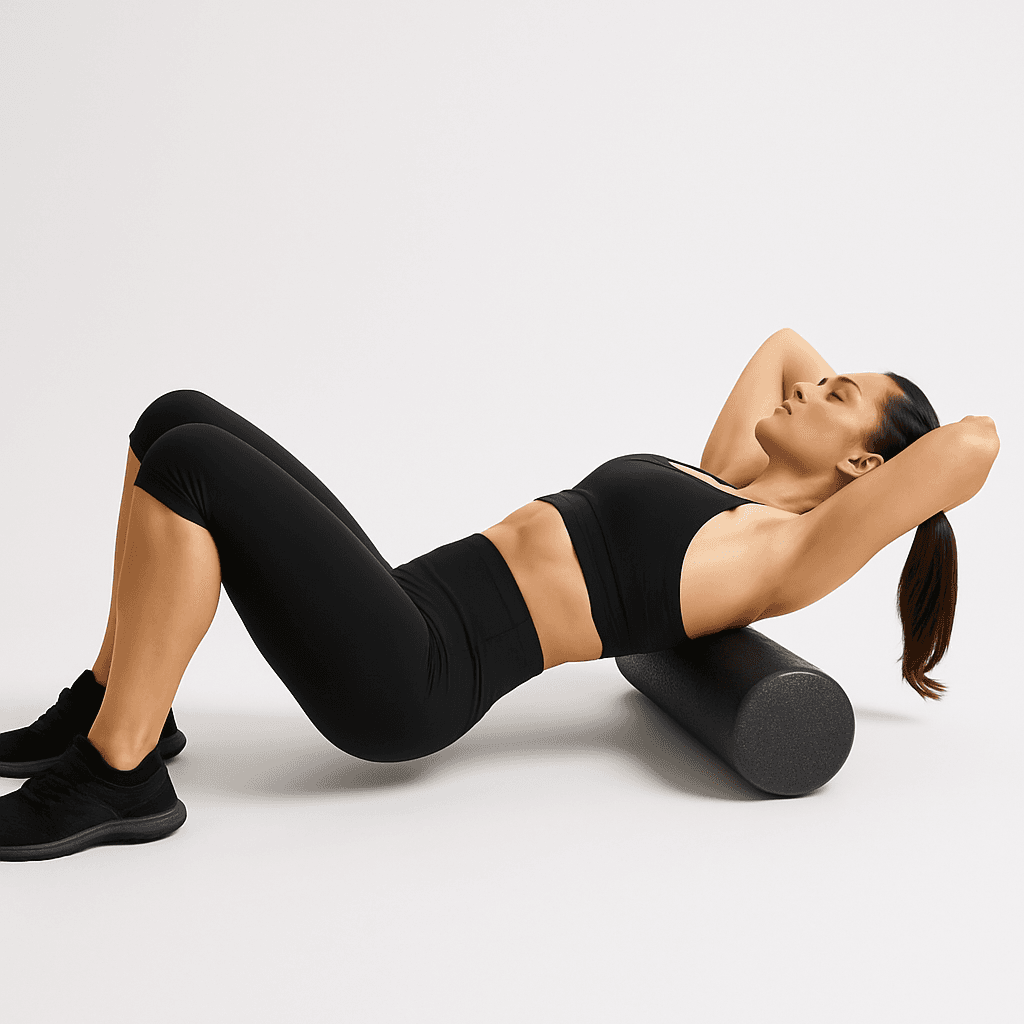
Thoracic Extension (Foam Roller)
The most direct way to mobilize a stiff mid-back.
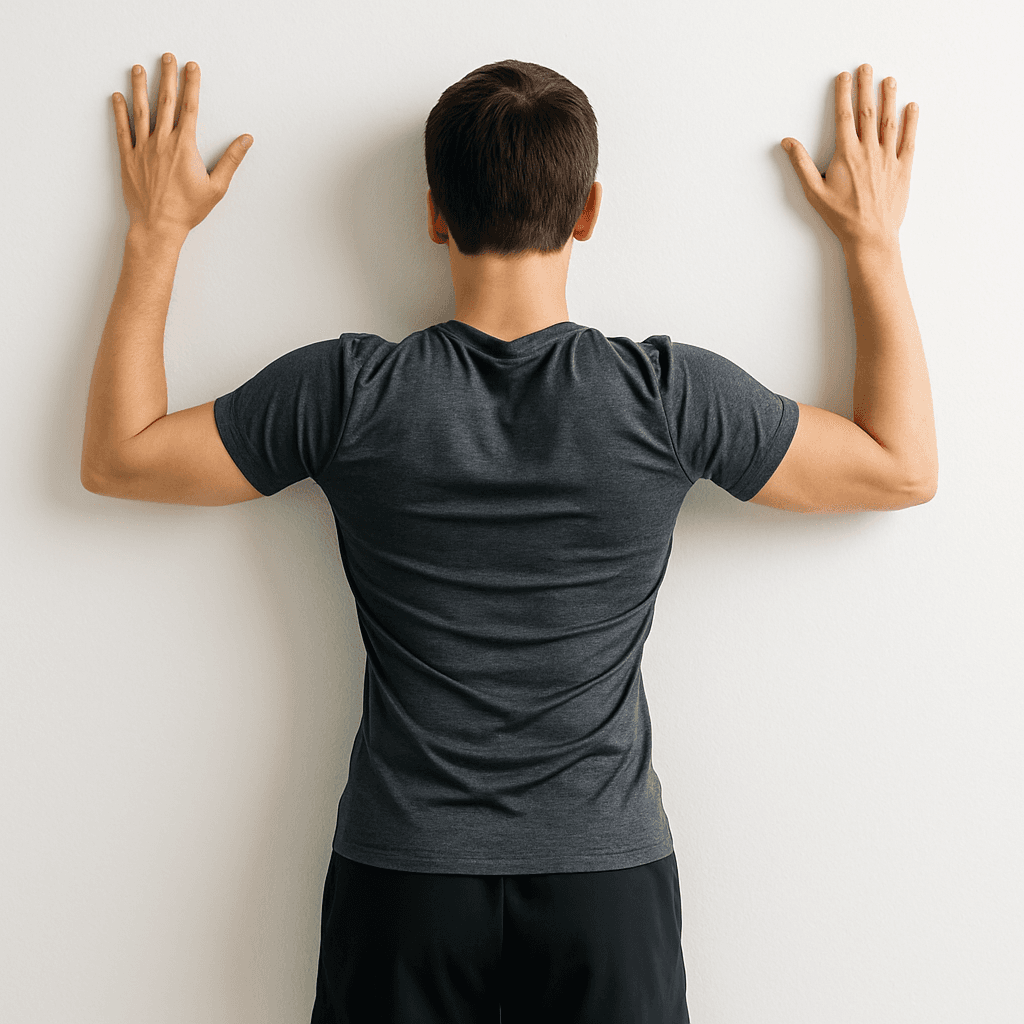
Wall Angels
A full upper body postural reset done standing against a wall.
Shoulders
25 exercisesBand Pull-Apart
A simple but highly effective resistance band exercise that strengthens the posterior deltoids, rhomboids, and mid-trapezius through horizontal pulling.
Bear Crawl (Modified)
A developmental movement pattern that trains contralateral coordination, core stability, and shoulder strength simultaneously.
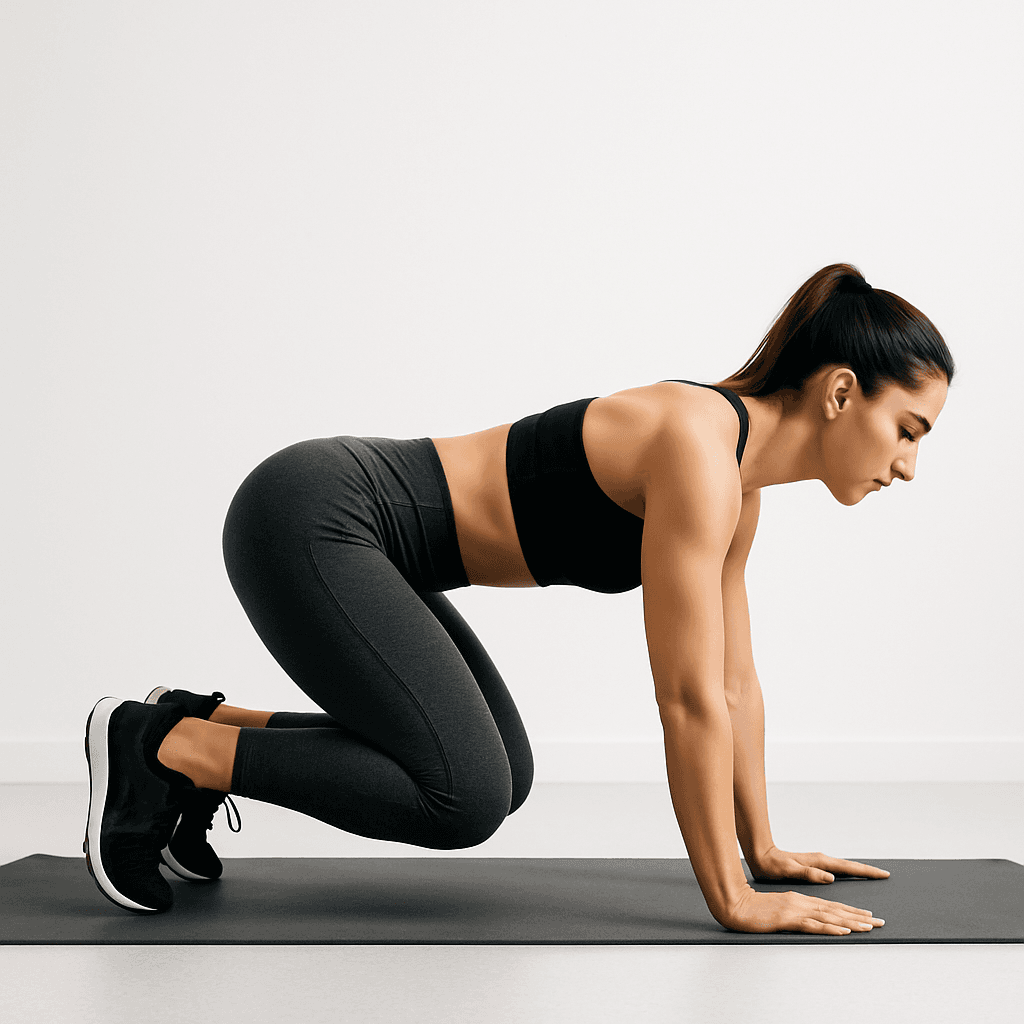
Bear Crawl Position
On all fours with knees hovering just one inch off the floor, you hold the quadruped position — or slowly crawl forward and backward — building deep shoulder stability, hip flexor endurance, and full-body neuromuscular coordination.
Corner Stretch (Pec Opener)
A bilateral chest and anterior shoulder stretch done in a room corner that allows both arms to be supported simultaneously while the torso leans in.
Doorway Chest Stretch
A passive stretch that opens the tight pectorals and anterior shoulders that get shortened by years of forward posture.
Doorway Neck Stretch
Standing in a doorway, you anchor one hand against the frame, turn your head away, and apply gentle lateral traction to the scalene and levator scapula.
Ear to Shoulder Stretch
With the shoulders relaxed and square, you slowly tilt one ear toward the same-side shoulder and hold, lengthening the opposite upper trapezius and scalene muscles.
Face Pulls (Resistance Band)
A resistance band exercise that targets the external rotators of the shoulder and rear deltoids — the muscles most responsible for keeping the shoulders from rolling forward.
Farmer's Carry
A fundamental loaded carry exercise that trains the body to maintain postural alignment under real-world loading conditions.
Gravity Drop (Doorway Hang)
A spinal decompression exercise using a doorframe or pull-up bar to allow gravity to gently traction the spine and release the lats, hip flexors, and paraspinals simultaneously.
Lat Stretch (Arm Overhead Side Lean)
The lats are one of the most overlooked contributors to poor posture — when tight, they internally rotate the shoulders and compress the lumbar spine.
Legs Elevated Scapular Contractions
A supine exercise combining elevated legs with deliberate scapular retraction to simultaneously address lower back and upper back dysfunction.
Levator Scapulae Stretch
Targets the levator scapulae — a muscle that runs from the upper corner of the shoulder blade to the upper cervical spine and is almost always tight in desk workers and people with forward head posture.
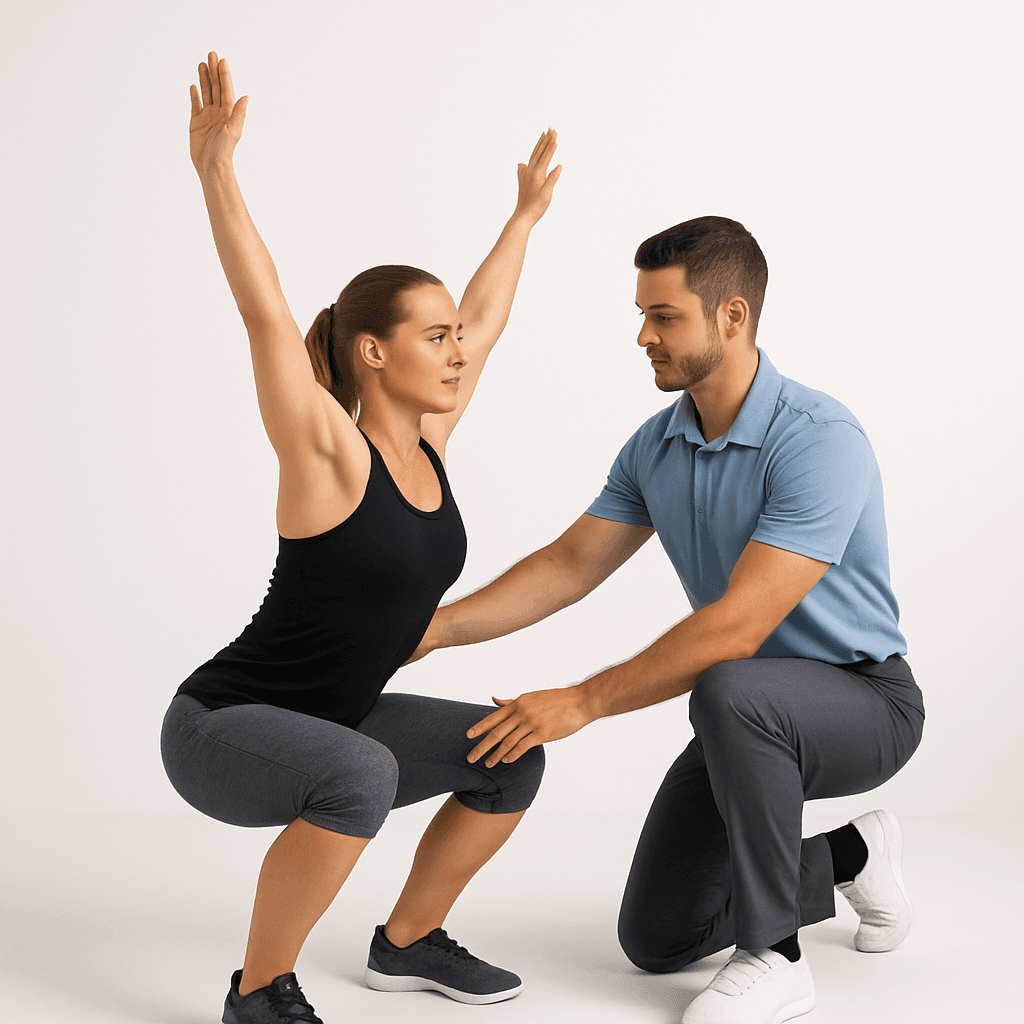
Overhead Reach with Squat
Standing with feet shoulder-width apart, you reach both arms overhead as you descend into a squat — maintaining a neutral spine, open chest, and arms in line with your ears at the bottom.
Pec Minor Stretch
Using a doorframe or wall corner, you position the arm at a higher angle to stretch the pec minor from its coracoid process to its rib attachments.
Prone Cobra
A bodyweight back extension exercise that strengthens the entire posterior chain from the glutes through the upper back and shoulders.
Prone T Raise
Lying face down with arms extended directly out to the sides in a T shape, you lift both arms by squeezing the mid-traps and rhomboids.
Prone Y Raise
Lying face down with arms raised diagonally into a Y shape, you lift both arms off the floor by squeezing the lower trapezius and depressing the shoulder blades downward.
Prone Y-T-W
Three positions performed lying face-down that activate the lower and mid trapezius from multiple angles.
Scapular Retraction and Depression
Directly targets the middle and lower trapezius — the muscles that hold your shoulder blades back and down.
Scapular Wall Slides
Standing with your forearms flat against a wall (elbows at 90 degrees), you slide the arms upward while actively pressing the forearms into the wall and keeping the lower back from arching.
Standing Arm Circles
A deceptively simple exercise that resets shoulder function and thoracic position through repeated arm circles done in an exact sequence.
T-Spine Rotation
In a half-kneeling or seated position with the hips stable, you rotate the thoracic spine as far as possible in each direction, reaching the far hand toward the ceiling at end range.
Upper Trap Release
A gentle release for the chronically tight upper trapezius.
Wall Angels
A full upper body postural reset done standing against a wall.
Lower Back
40 exercises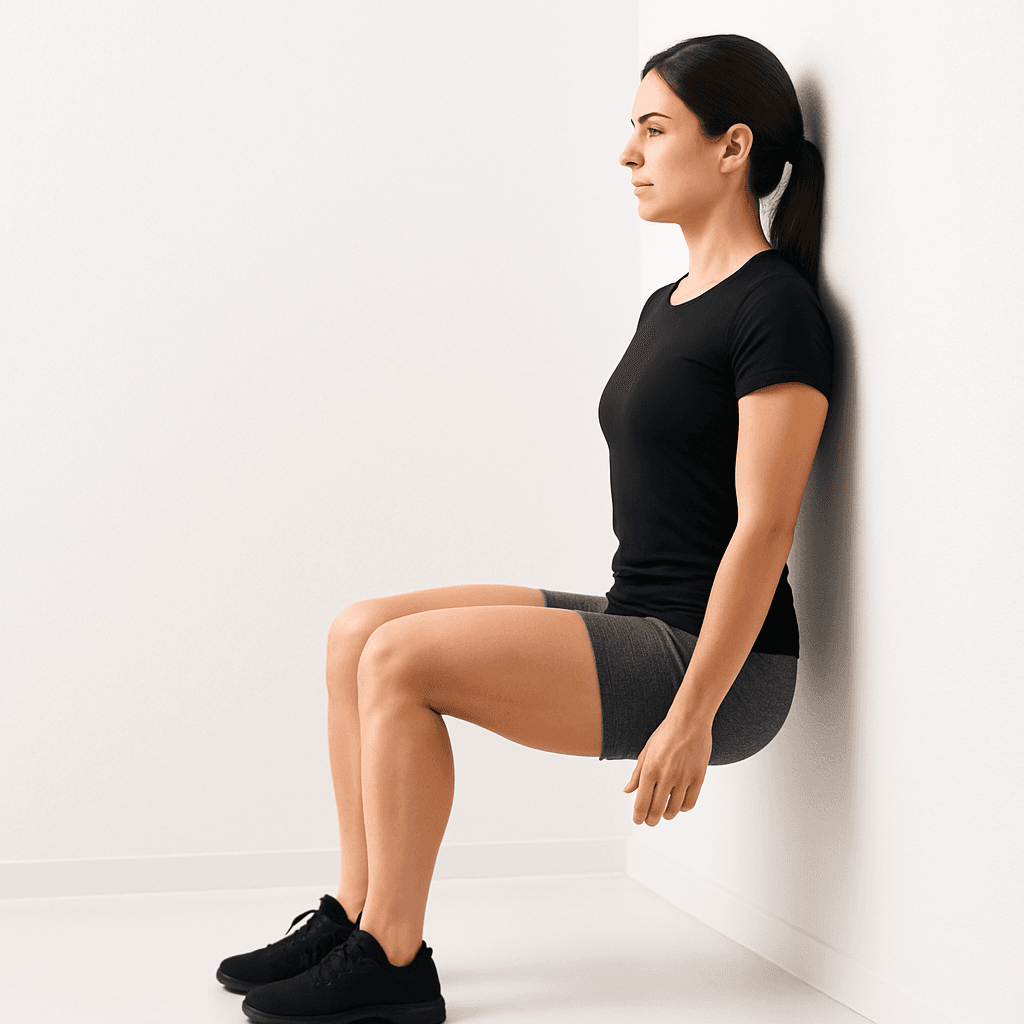
Air Bench
A wall exercise that places the hips, knees, and ankles at 90 degrees simultaneously to correct load-joint alignment and reduce knee and lower back pain.
Bear Crawl (Modified)
A developmental movement pattern that trains contralateral coordination, core stability, and shoulder strength simultaneously.
Bear Crawl Position
On all fours with knees hovering just one inch off the floor, you hold the quadruped position — or slowly crawl forward and backward — building deep shoulder stability, hip flexor endurance, and full-body neuromuscular coordination.
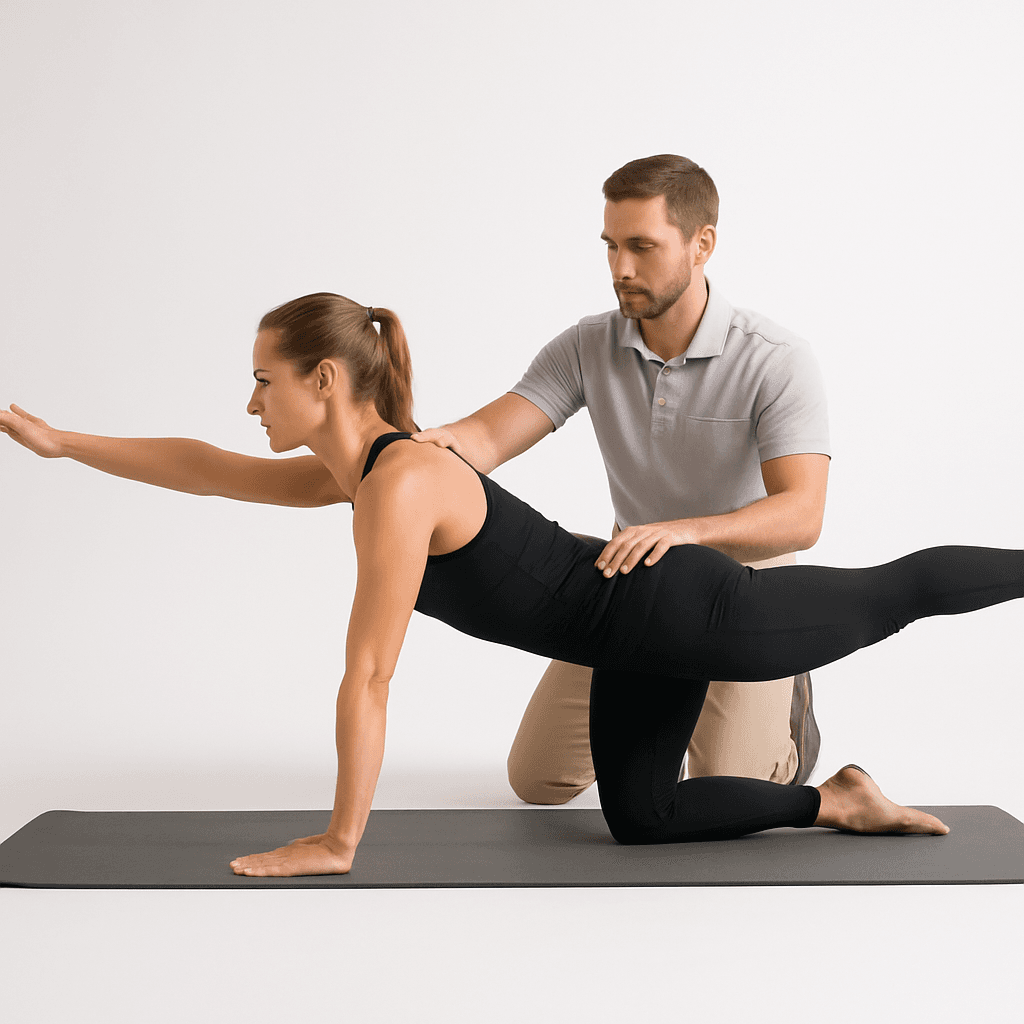
Bird Dog
A foundational posterior chain exercise that builds lumbar stability and coordination between the opposite arm and leg.
Cat-Cow
A gentle spinal mobility flow that works the entire spine from sacrum to skull.
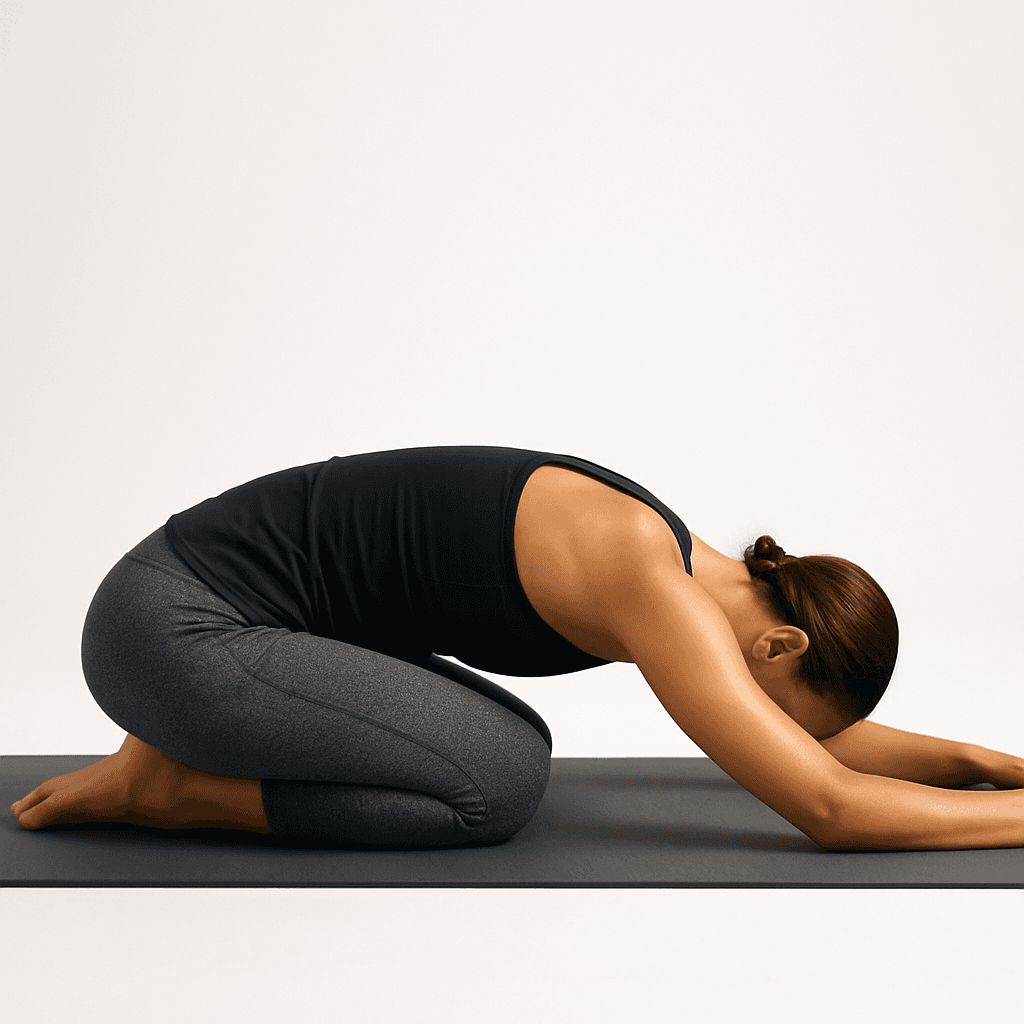
Child's Pose
Kneeling and folding forward with arms extended in front of you, the child's pose gently tractions the lumbar spine, stretches the thoracolumbar fascia, and provides a full-length decompression of the spine in a position that is completely safe even for significant lower back pain.
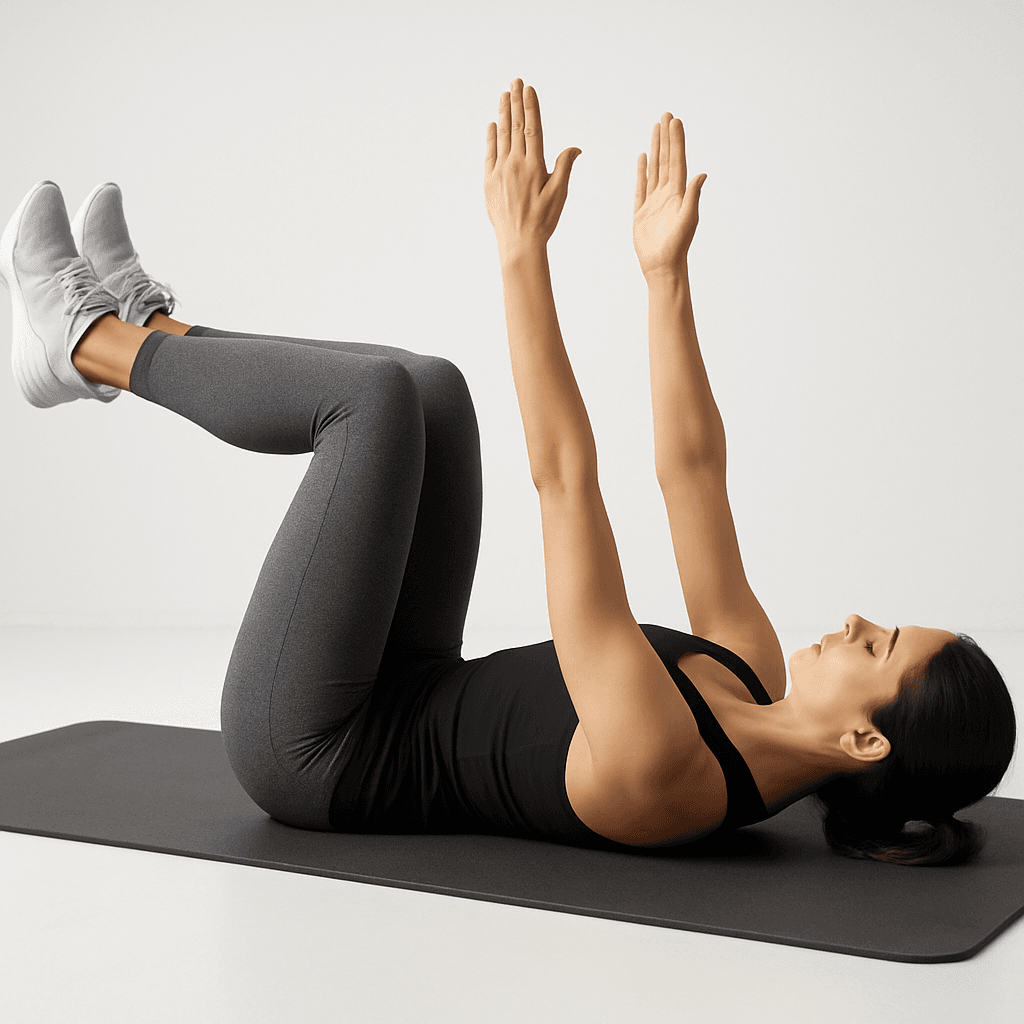
Dead Bug
A highly effective core stability exercise that teaches the lower back to remain neutral while the arms and legs move independently.
Farmer's Carry
A fundamental loaded carry exercise that trains the body to maintain postural alignment under real-world loading conditions.
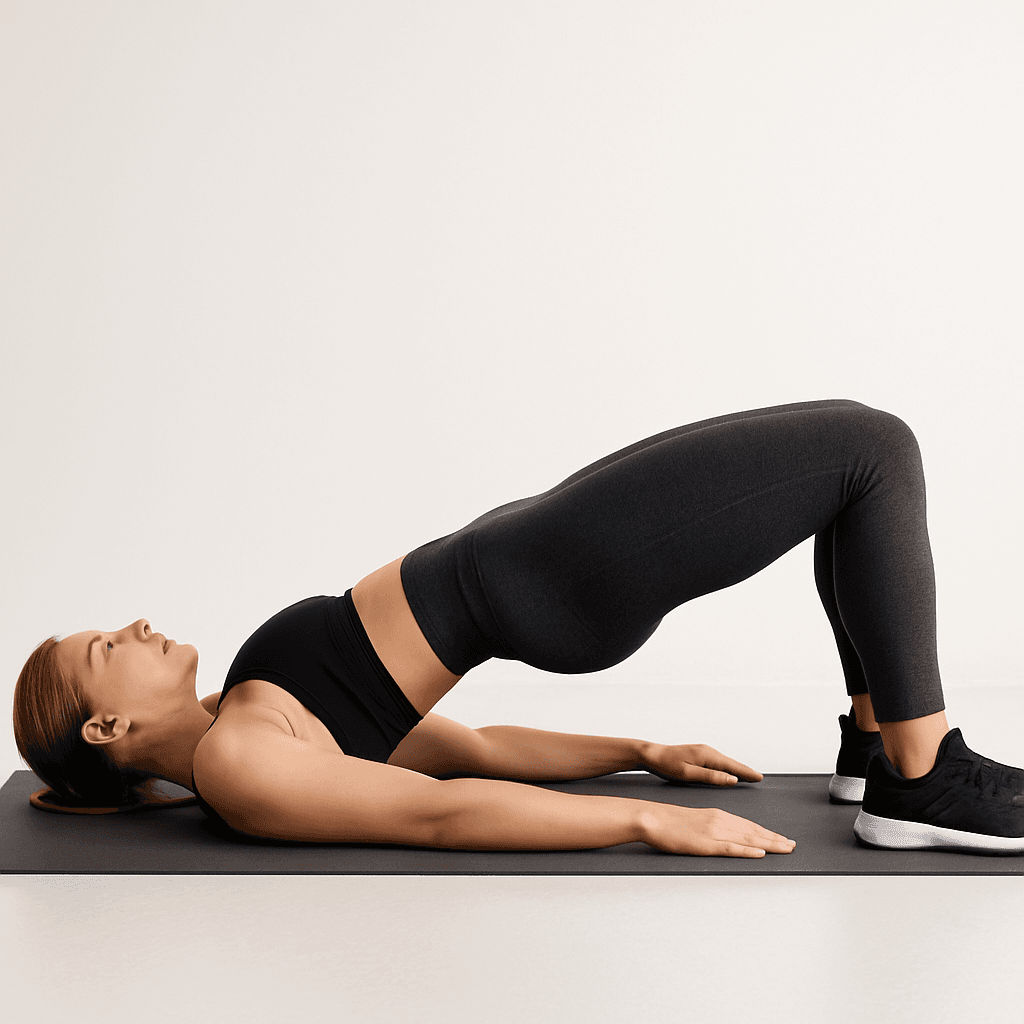
Glute Bridge
A fundamental glute activation exercise that also teaches the hip extension pattern needed to counteract the chronic hip flexor tightness caused by prolonged sitting.
Gravity Drop (Doorway Hang)
A spinal decompression exercise using a doorframe or pull-up bar to allow gravity to gently traction the spine and release the lats, hip flexors, and paraspinals simultaneously.
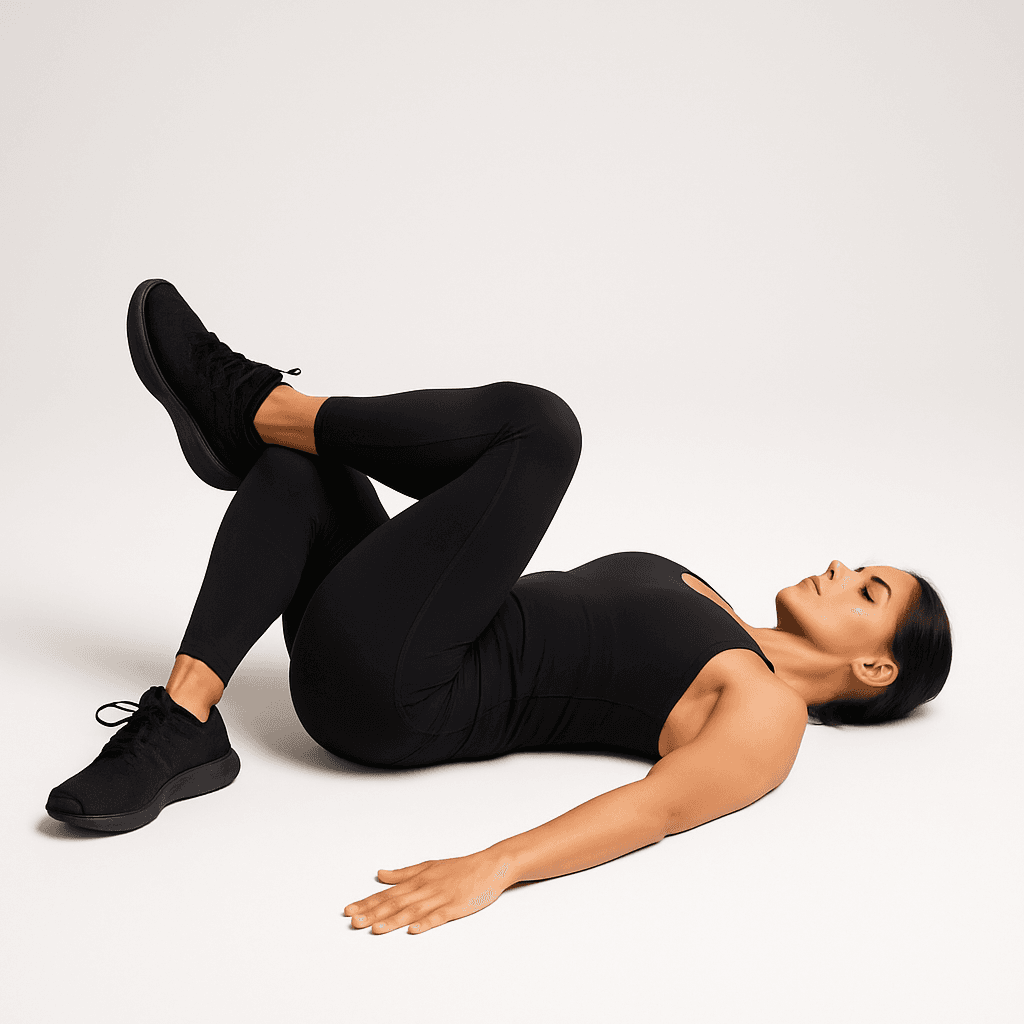
Hip Crossover Stretch
A floor exercise that addresses hip rotation imbalances by using a precise crossed-leg position.
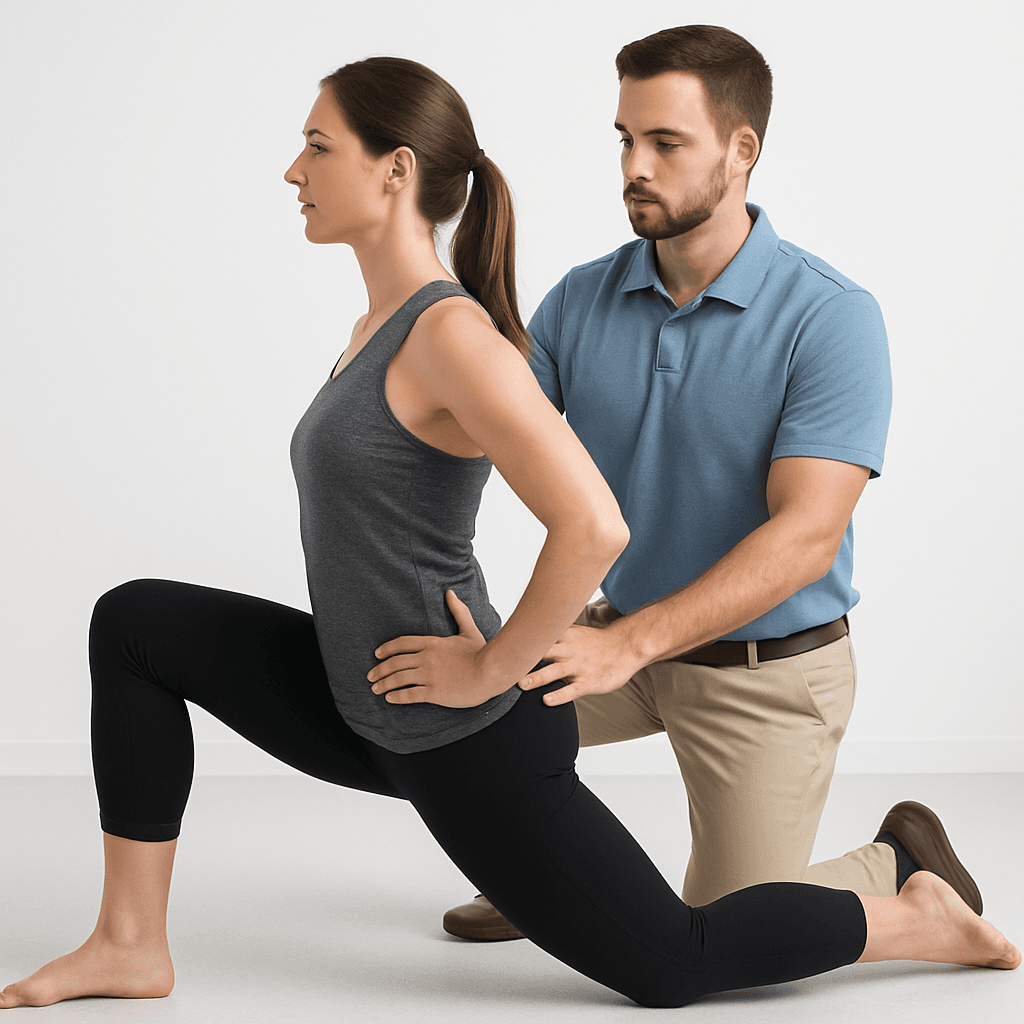
Hip Flexor Lunge Stretch
In a kneeling lunge position with the rear knee on the ground, you drive the hips forward and slightly tuck the pelvis to bring the iliopsoas and rectus femoris to end range.
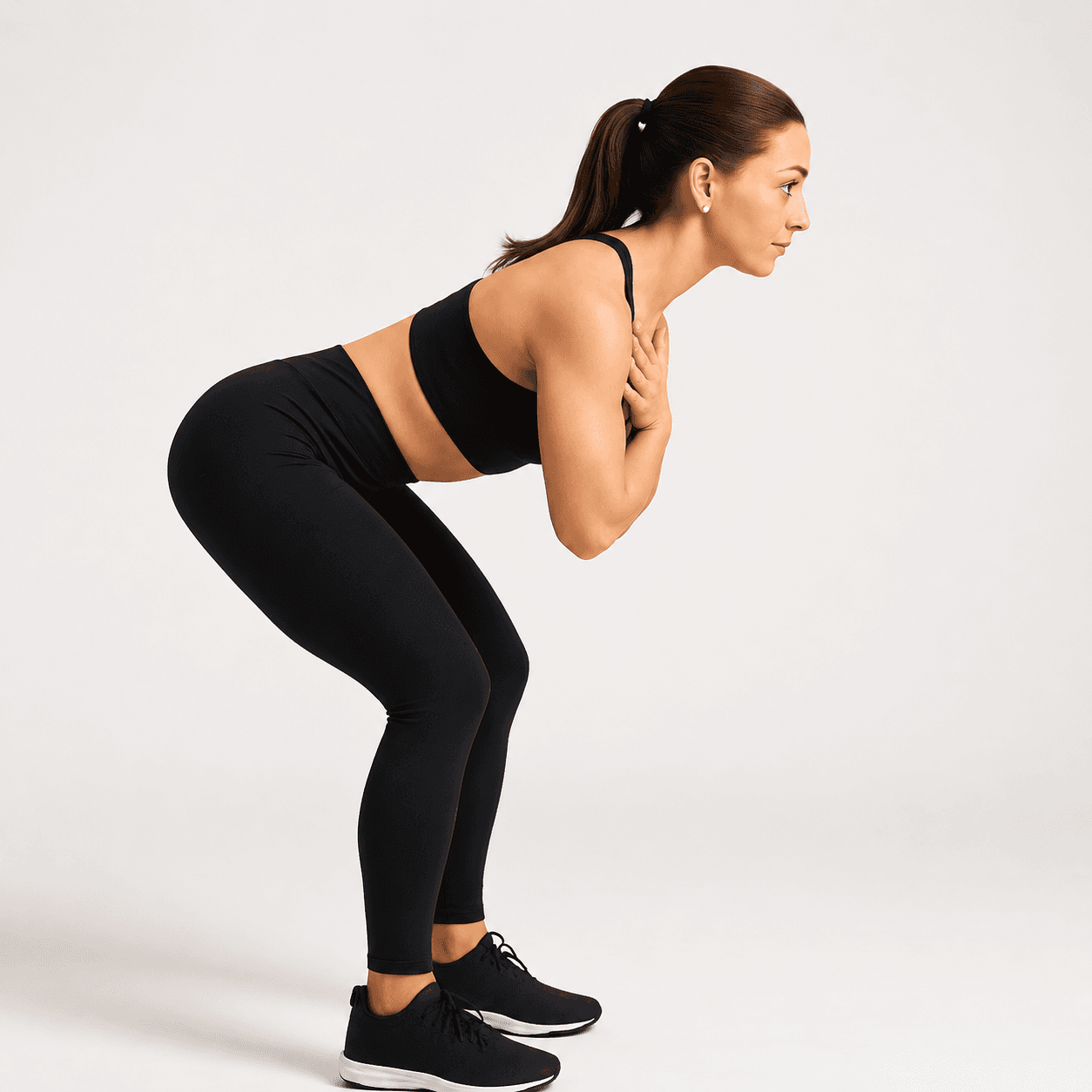
Hip Hinge (Bodyweight Deadhinge)
The most important movement pattern most people have never been properly taught.
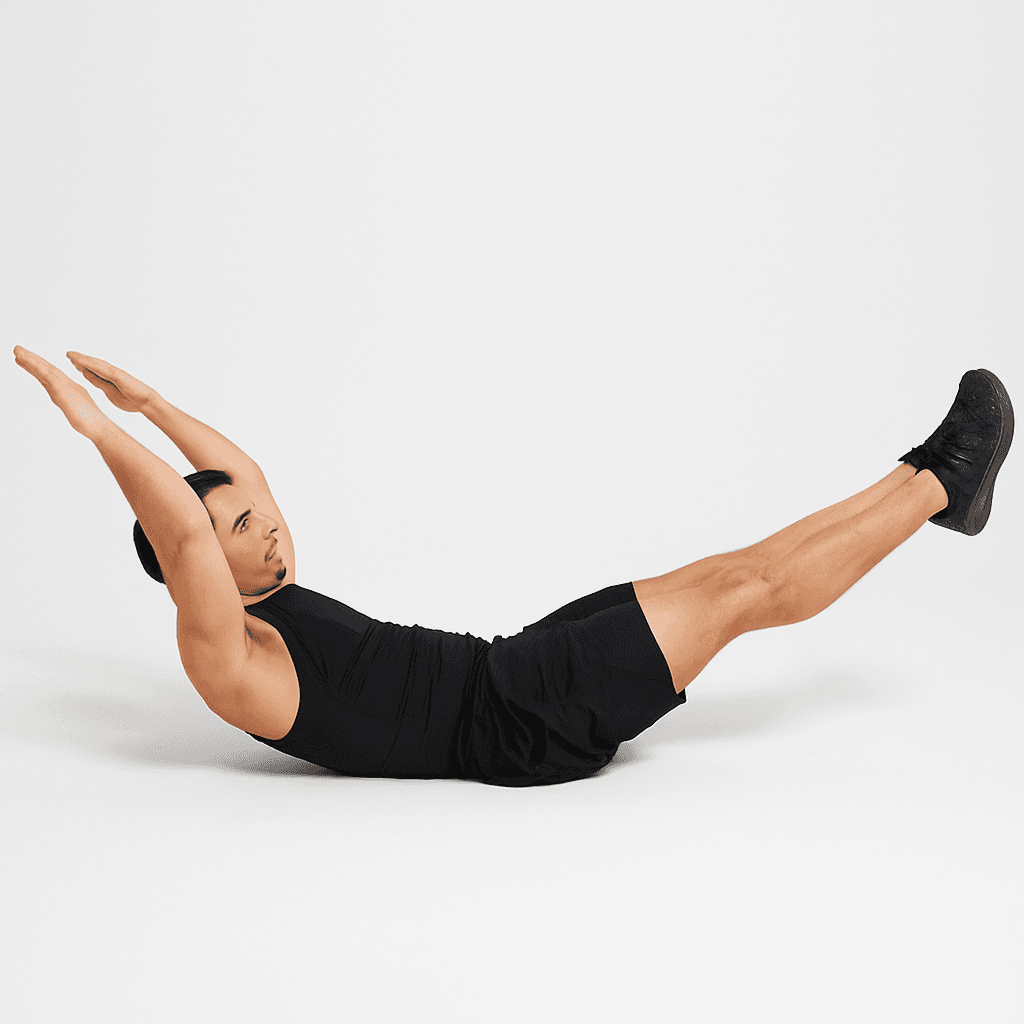
Hollow Body Hold
A fundamental gymnastics-derived core exercise that builds full-body tension and anterior core strength in a lengthened position.
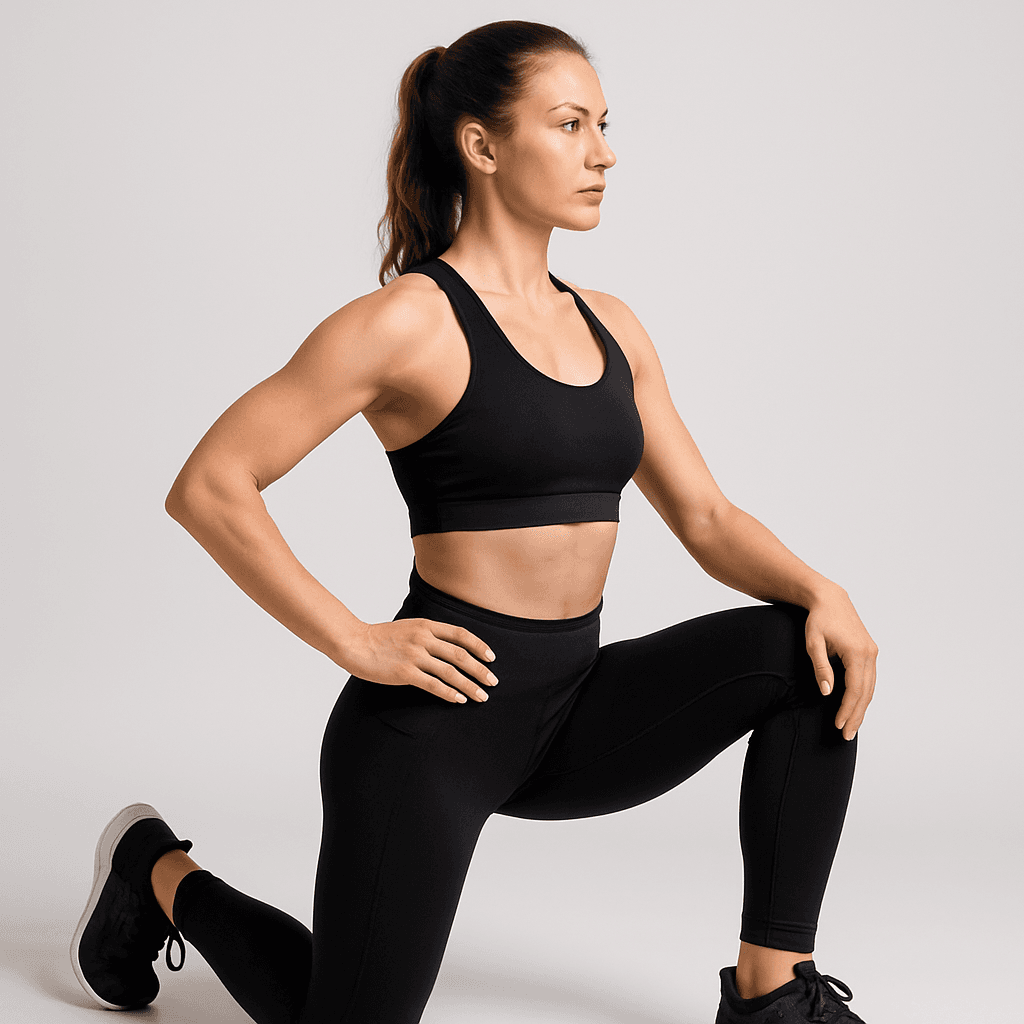
Kneeling Hip Flexor Stretch
Directly targets the psoas and iliacus — two muscles that get chronically shortened in anyone who sits for long periods.
Lat Stretch (Arm Overhead Side Lean)
The lats are one of the most overlooked contributors to poor posture — when tight, they internally rotate the shoulders and compress the lumbar spine.
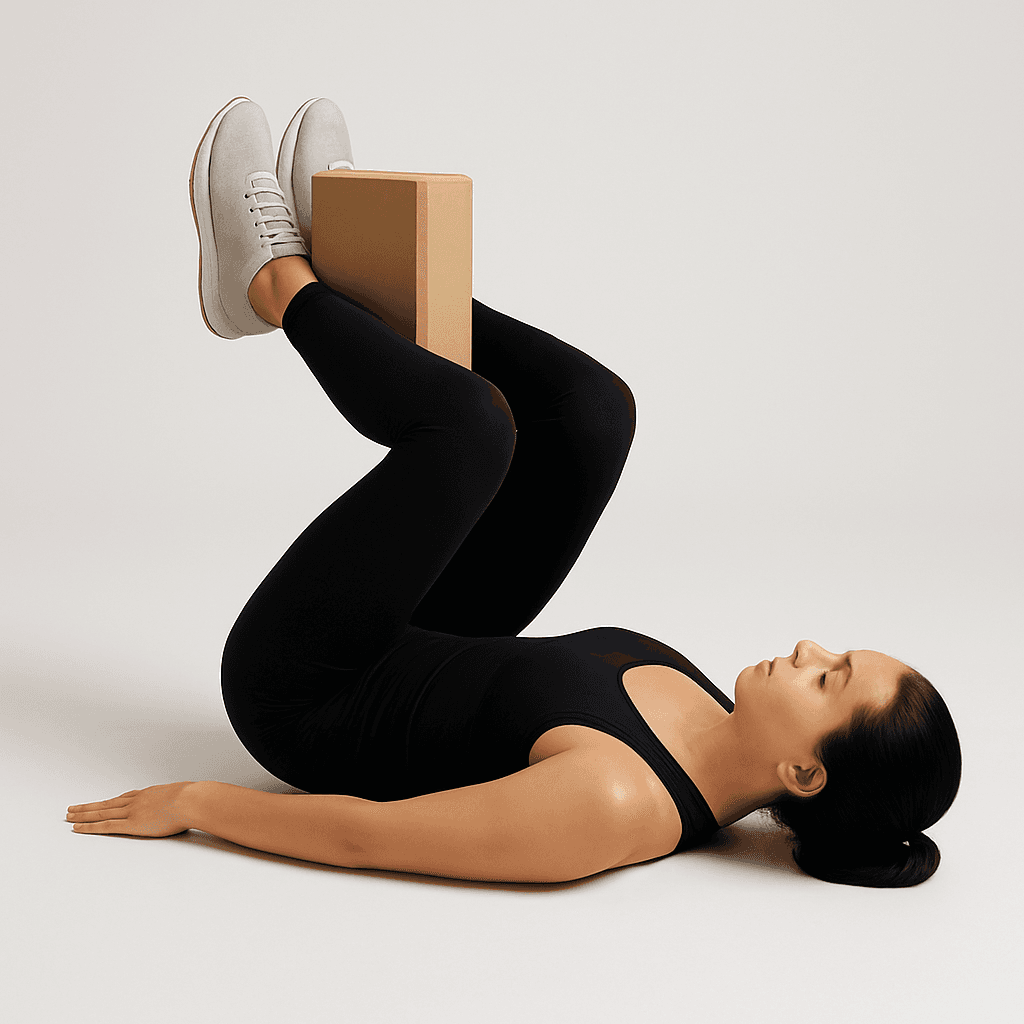
Legs Elevated Block Squeezes
Performed lying on your back with legs elevated and a block between the knees, this exercise activates the adductors while the hips decompress.
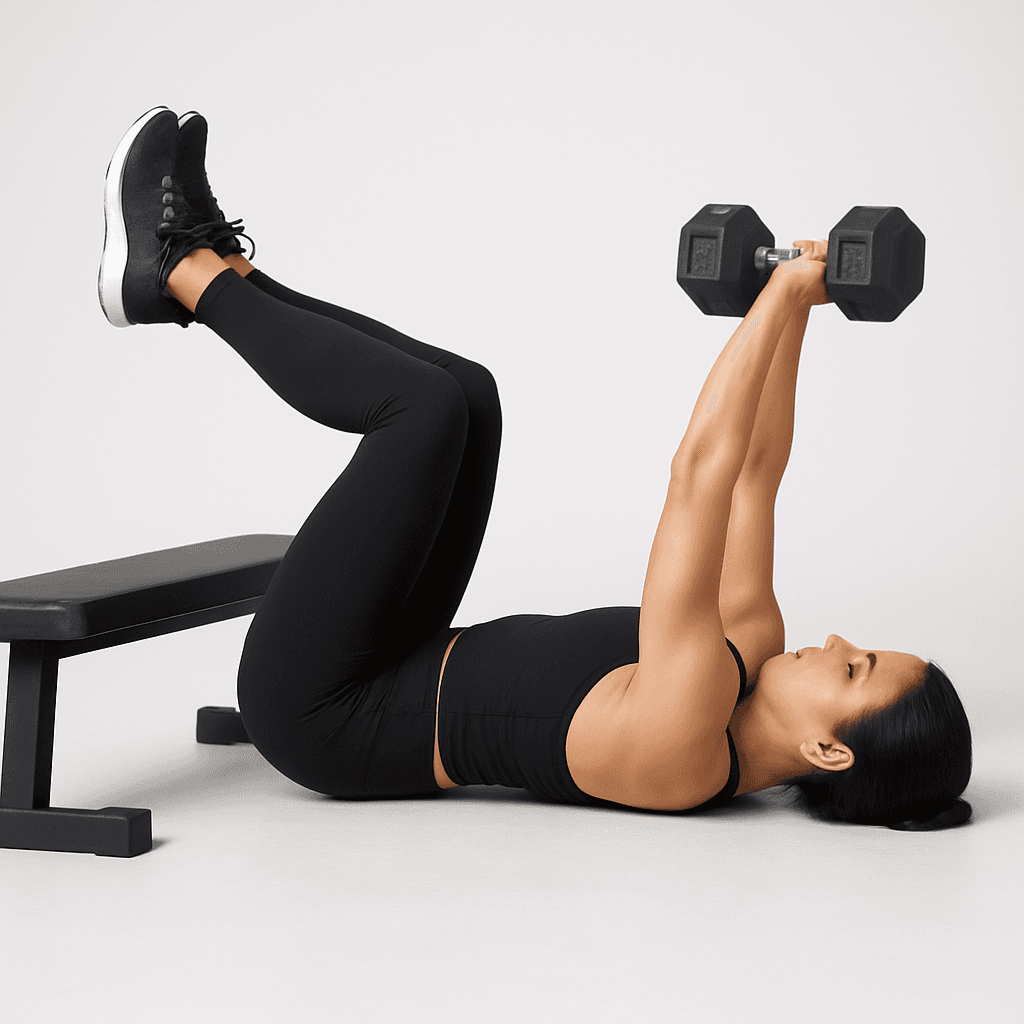
Legs Elevated Pullovers
A supine exercise with legs elevated that combines a lat and chest stretch with diaphragmatic breathing.
Legs Elevated Scapular Contractions
A supine exercise combining elevated legs with deliberate scapular retraction to simultaneously address lower back and upper back dysfunction.
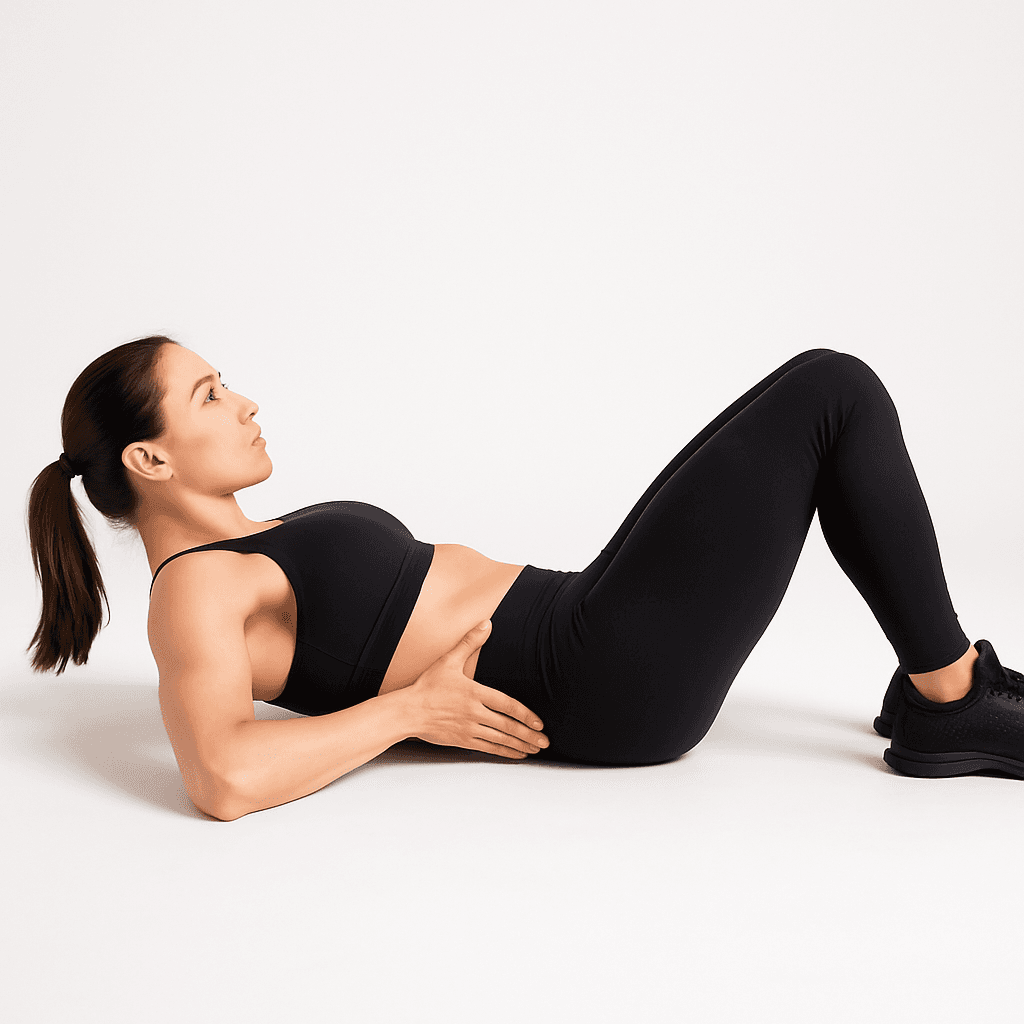
McGill Curl-Up
Developed by spine researcher Dr.
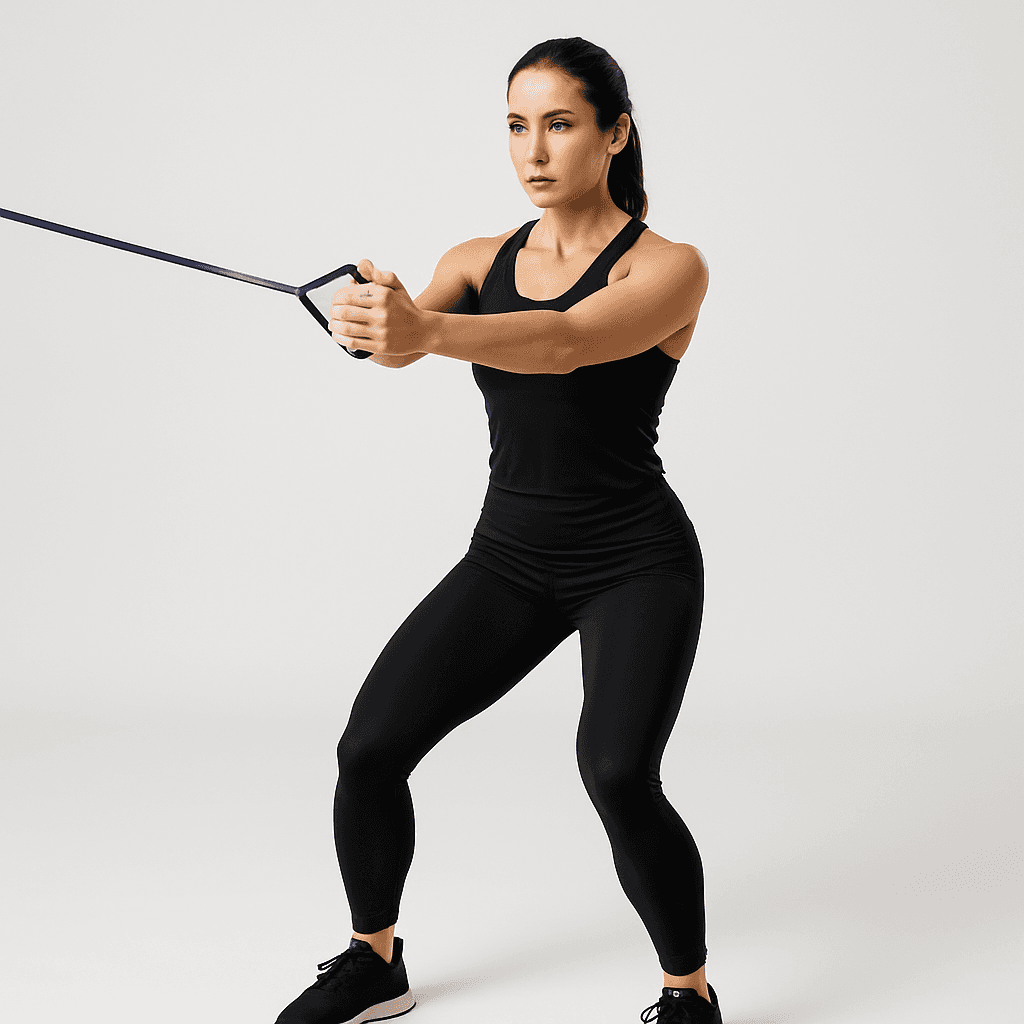
Pallof Press (Anti-Rotation Core)
A resistance band core exercise that trains the core to resist rotation — one of its primary functions in real life.
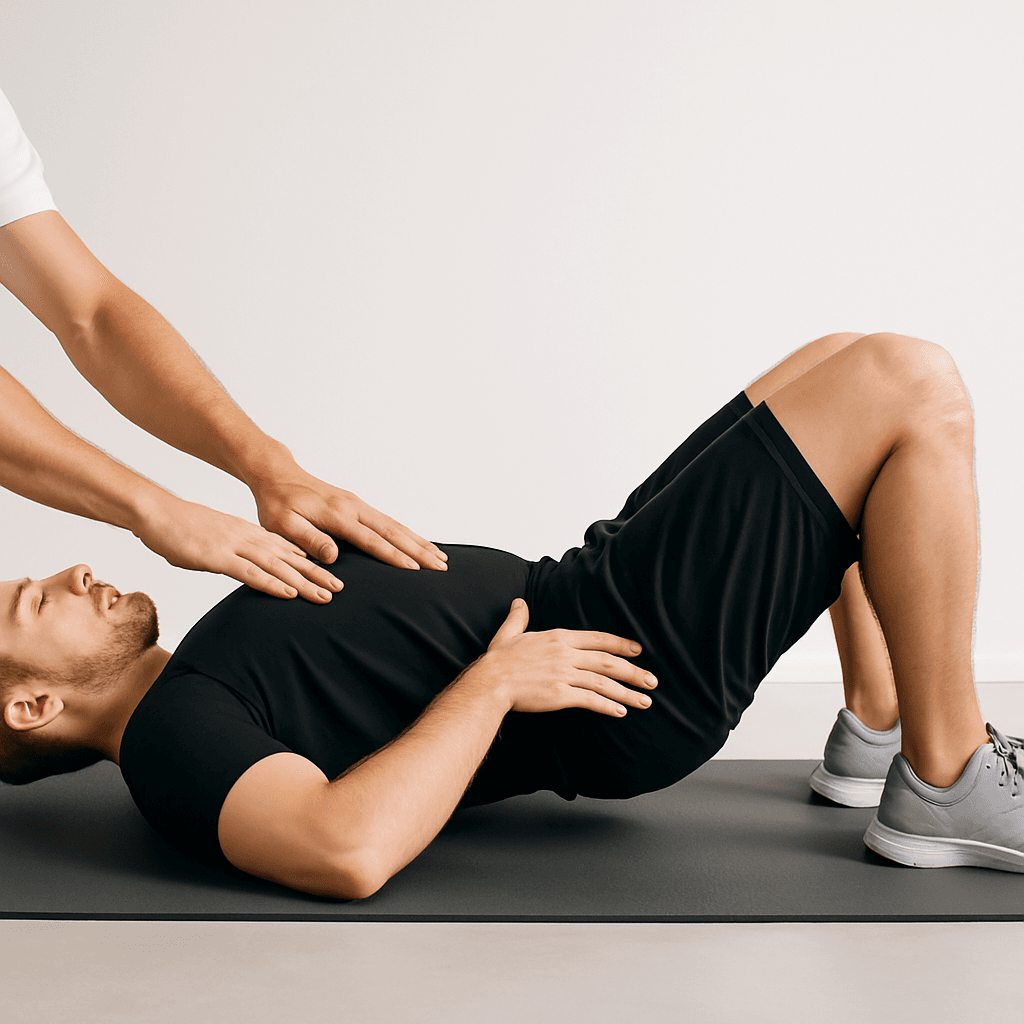
Pelvic Tilts
The foundational exercise for learning pelvic control.
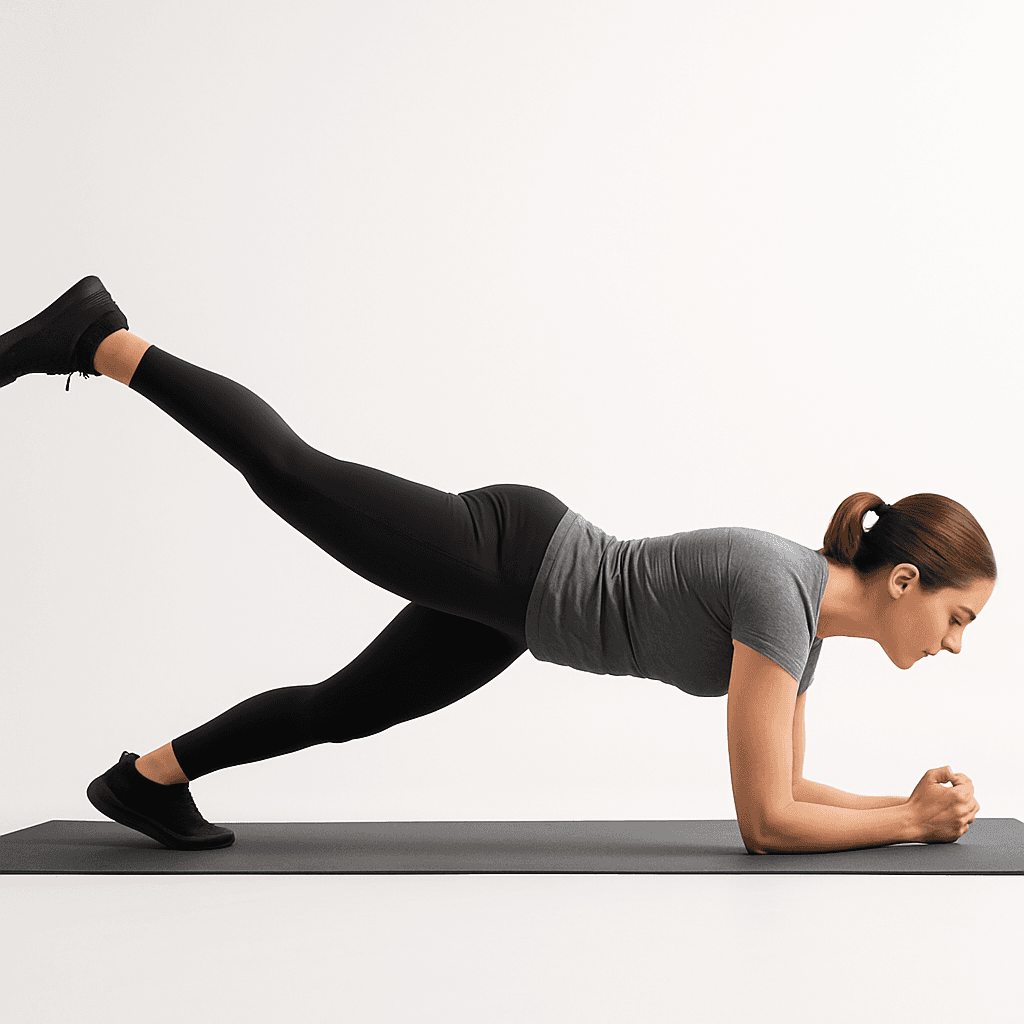
Plank with Hip Extension
From a forearm plank position with the lumbar spine neutral, you slowly lift one leg into hip extension without allowing the pelvis to rotate or the lower back to arch.
Prone Cobra
A bodyweight back extension exercise that strengthens the entire posterior chain from the glutes through the upper back and shoulders.
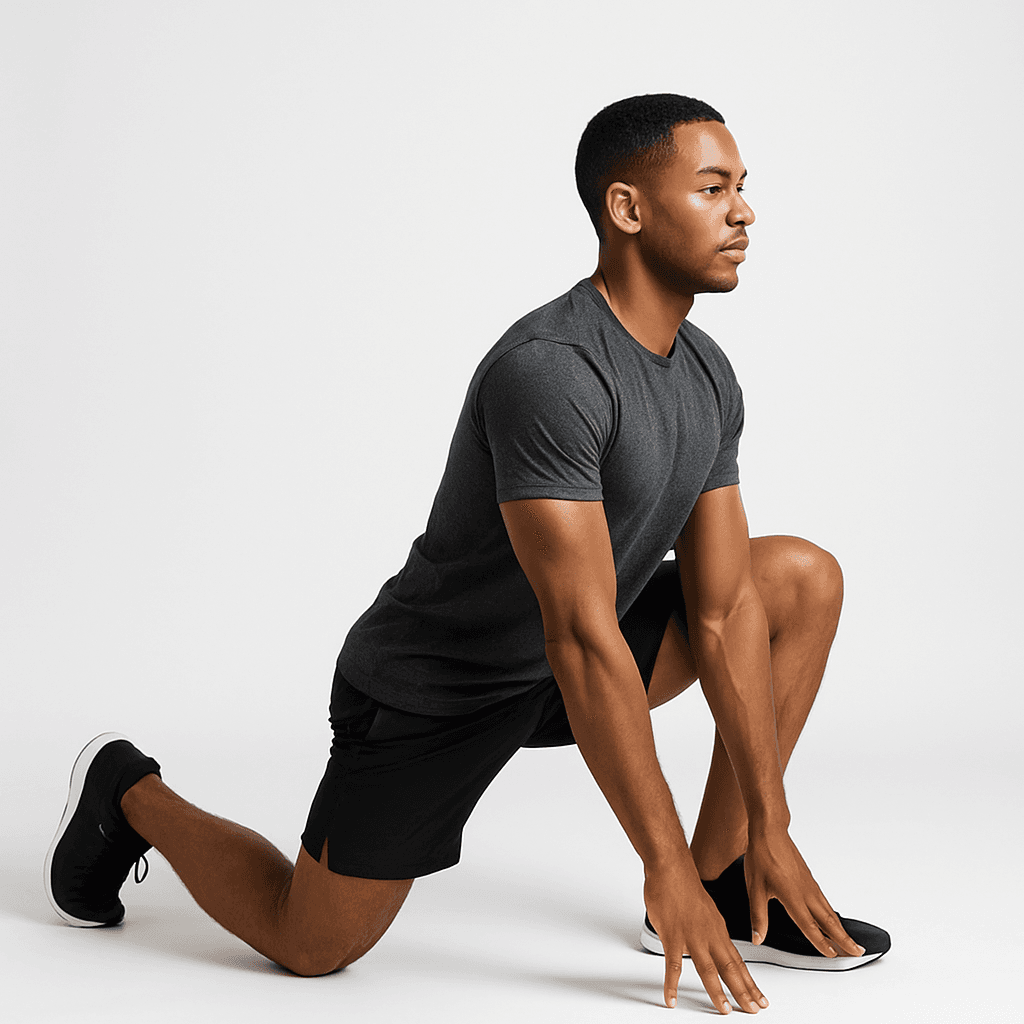
Runner's Stretch
A kneeling lunge position that uses gravity over time to restore hip flexor length and pelvic position.
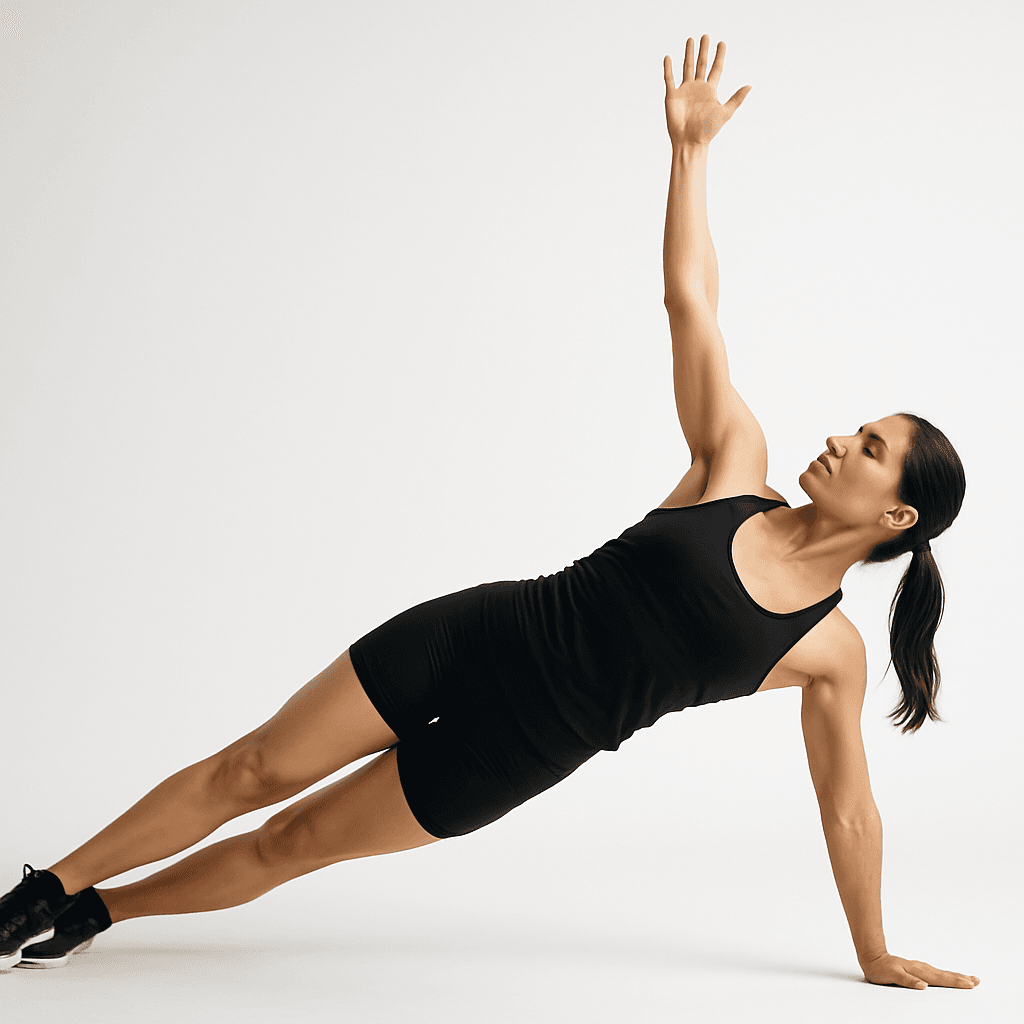
Side Plank
Supported on one forearm and the side of the foot, you hold a lateral body bridge that trains the quadratus lumborum, lateral hip, and obliques to prevent lateral spine bending.
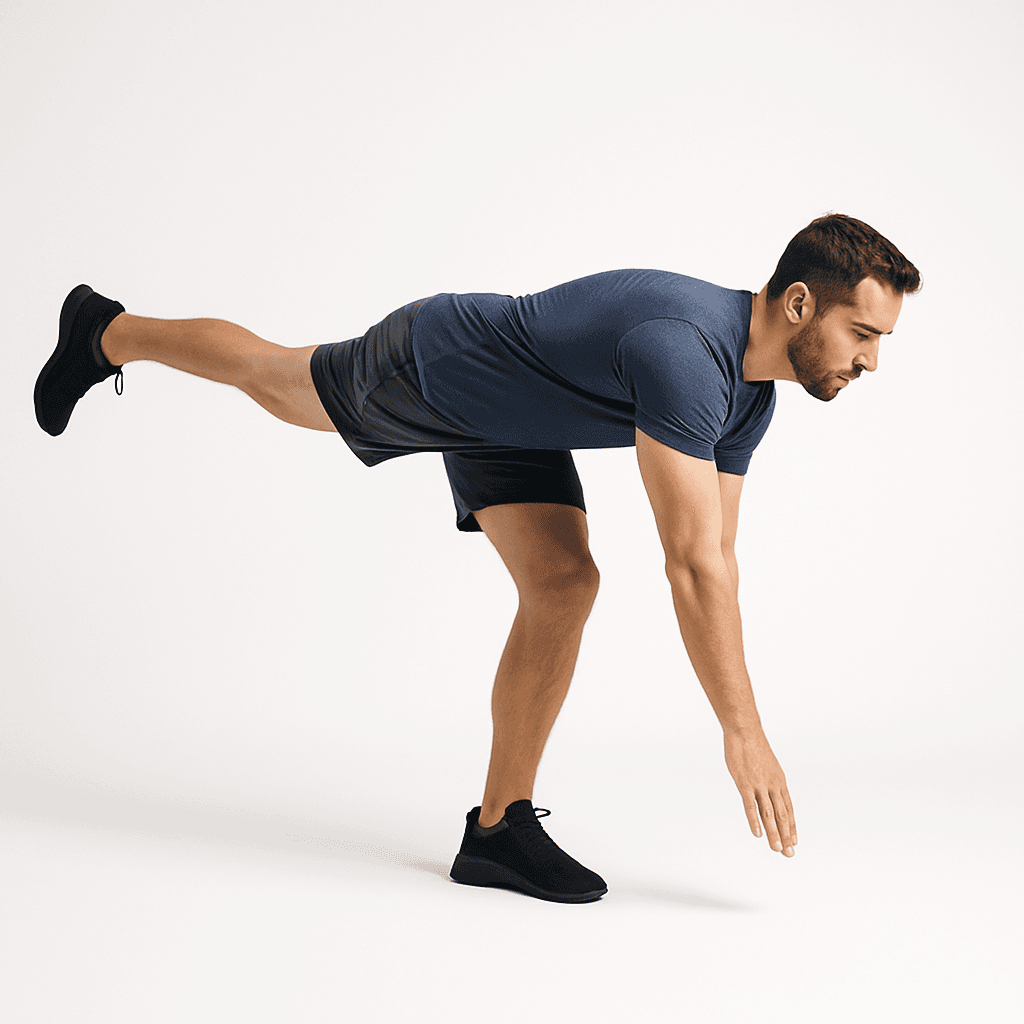
Single-Leg Deadlift
A functional balance and posterior chain exercise that combines hip hinge mechanics with single-leg stability demands.
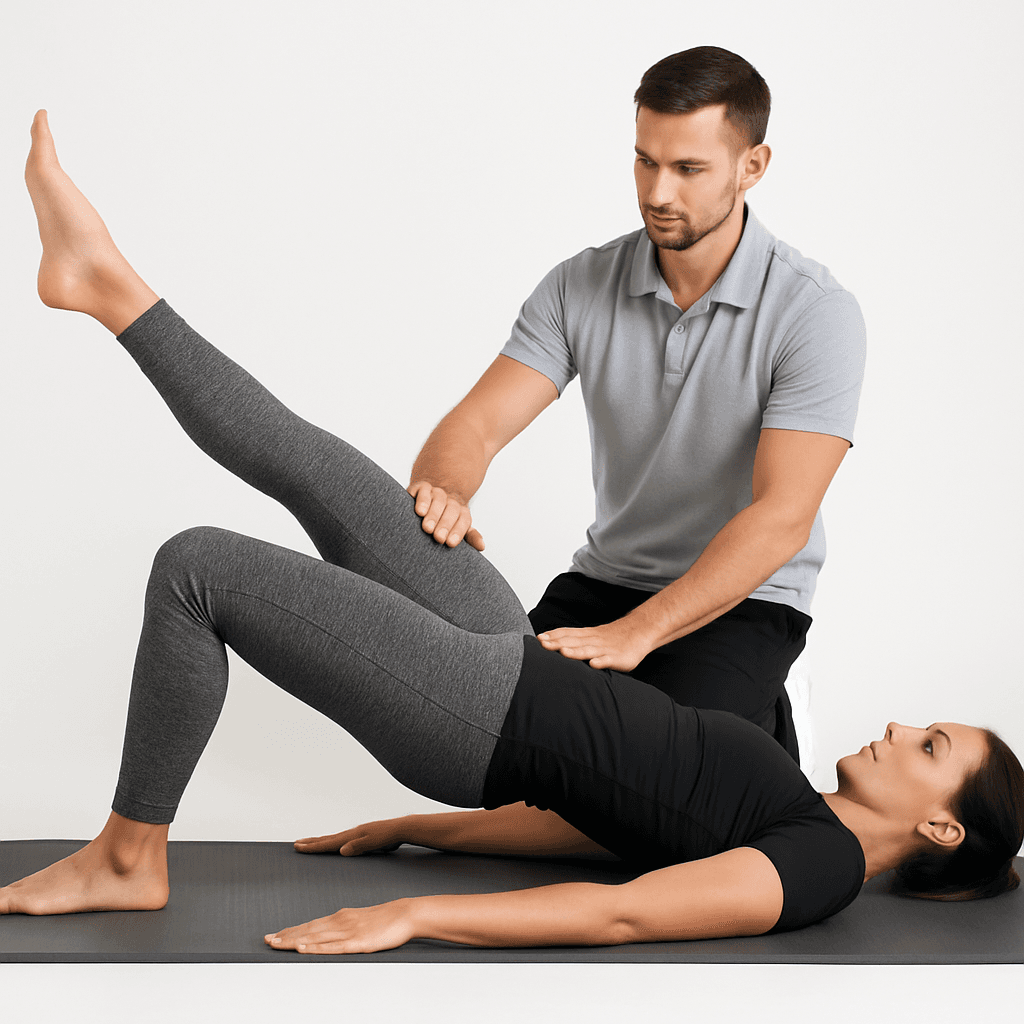
Single-Leg Glute Bridge
A progression of the standard glute bridge that eliminates compensation between sides and dramatically increases the demand on each glute independently.
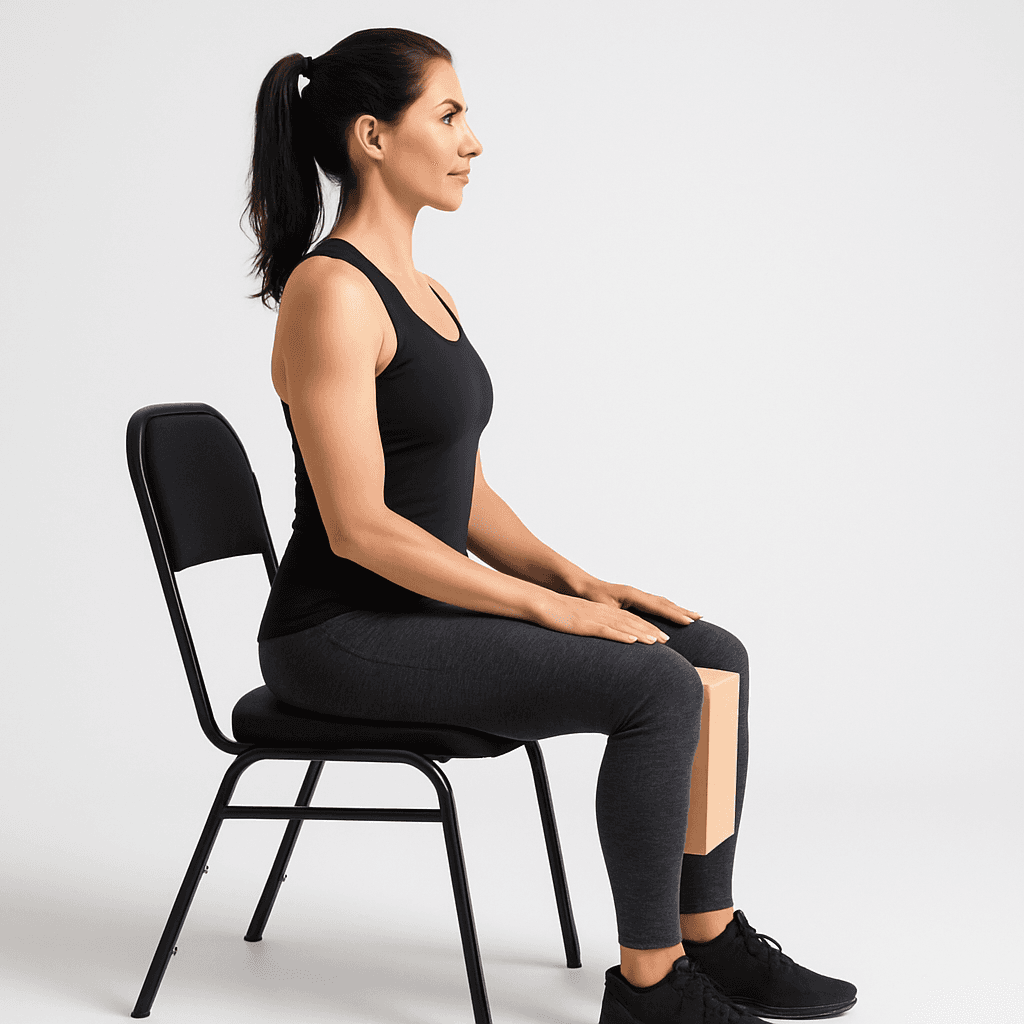
Sitting Block Squeezes
An exercise performed seated with a block between the knees to activate the adductors and stabilize the pelvis.
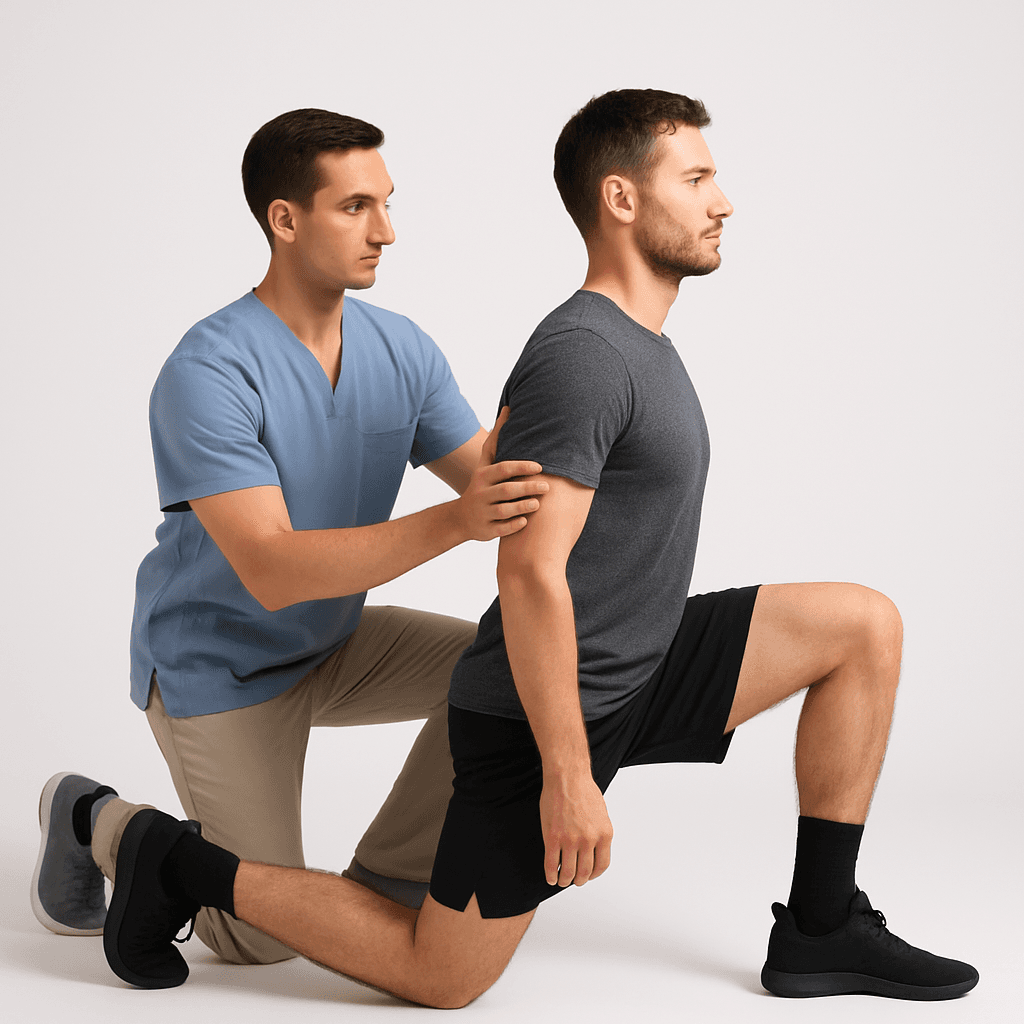
Split Squat
In a staggered stance with feet hip-width apart front-to-back, you lower the rear knee toward the floor while keeping the front shin vertical and the torso upright.
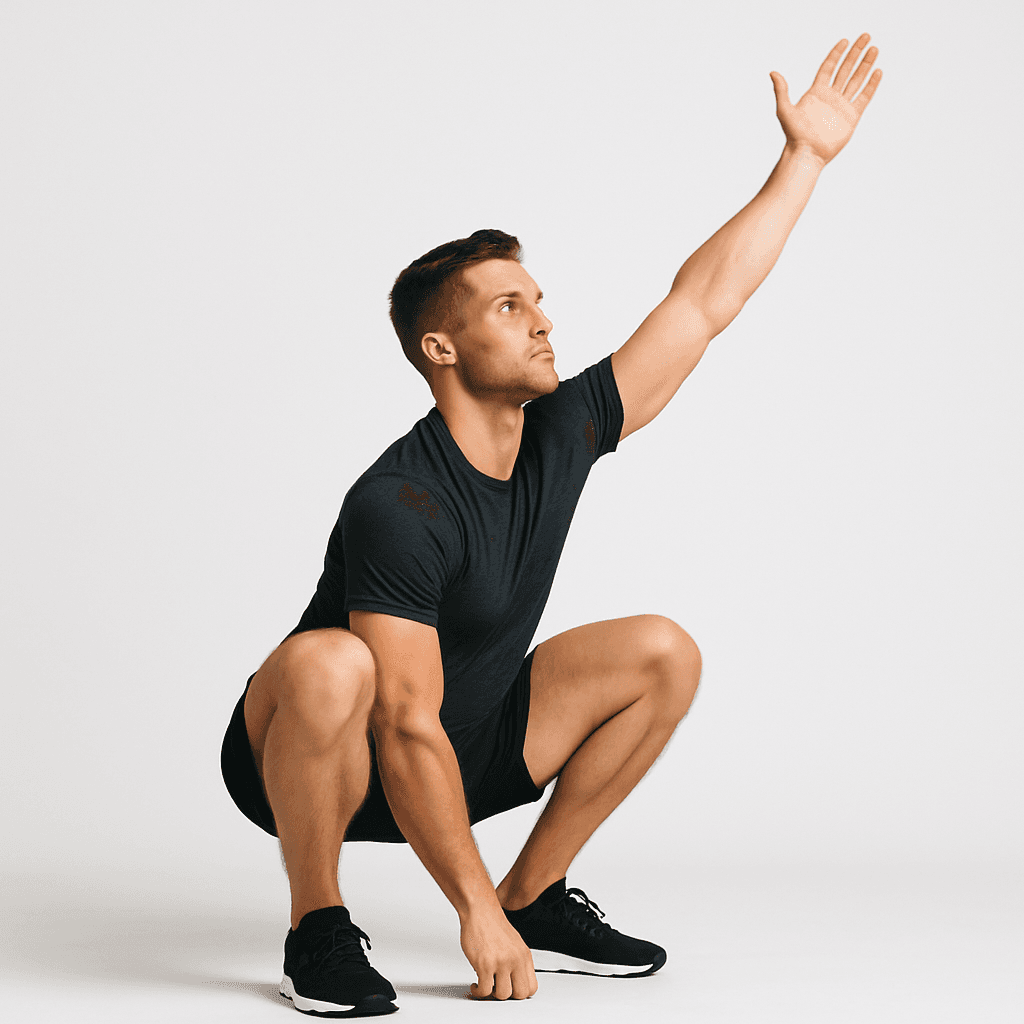
Squat to Stand
A dynamic mobility drill that simultaneously works ankle dorsiflexion, hip flexion, hamstring length, and thoracic extension in one flowing movement.
Standing Cat-Cow
Standing with knees slightly bent and hands on thighs, you move through spinal flexion and extension in the same pattern as floor cat-cow but in a loaded, upright position.
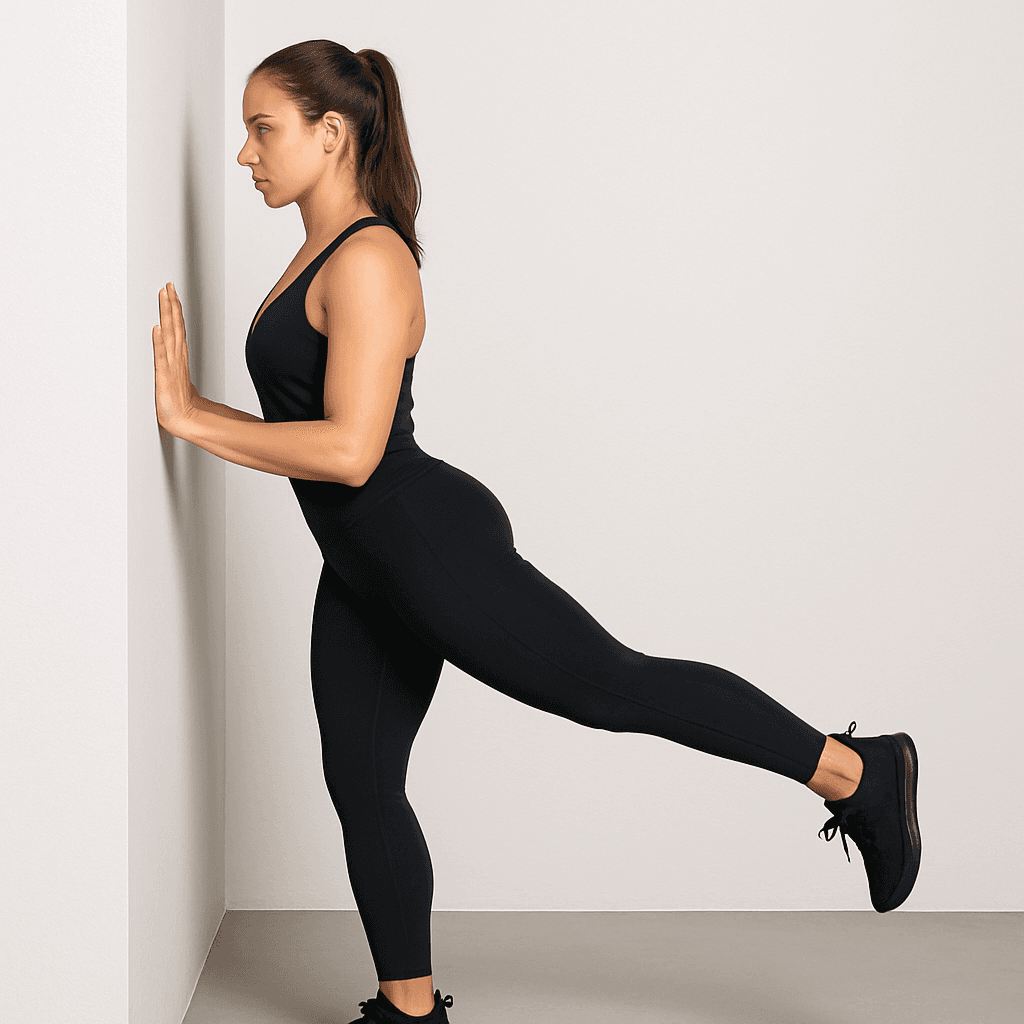
Standing Hip Extension (at Wall)
A simple but powerful glute activation exercise that teaches the hip extension pattern in standing — the same pattern that drives walking and prevents the hip flexor dominance of prolonged sitting.
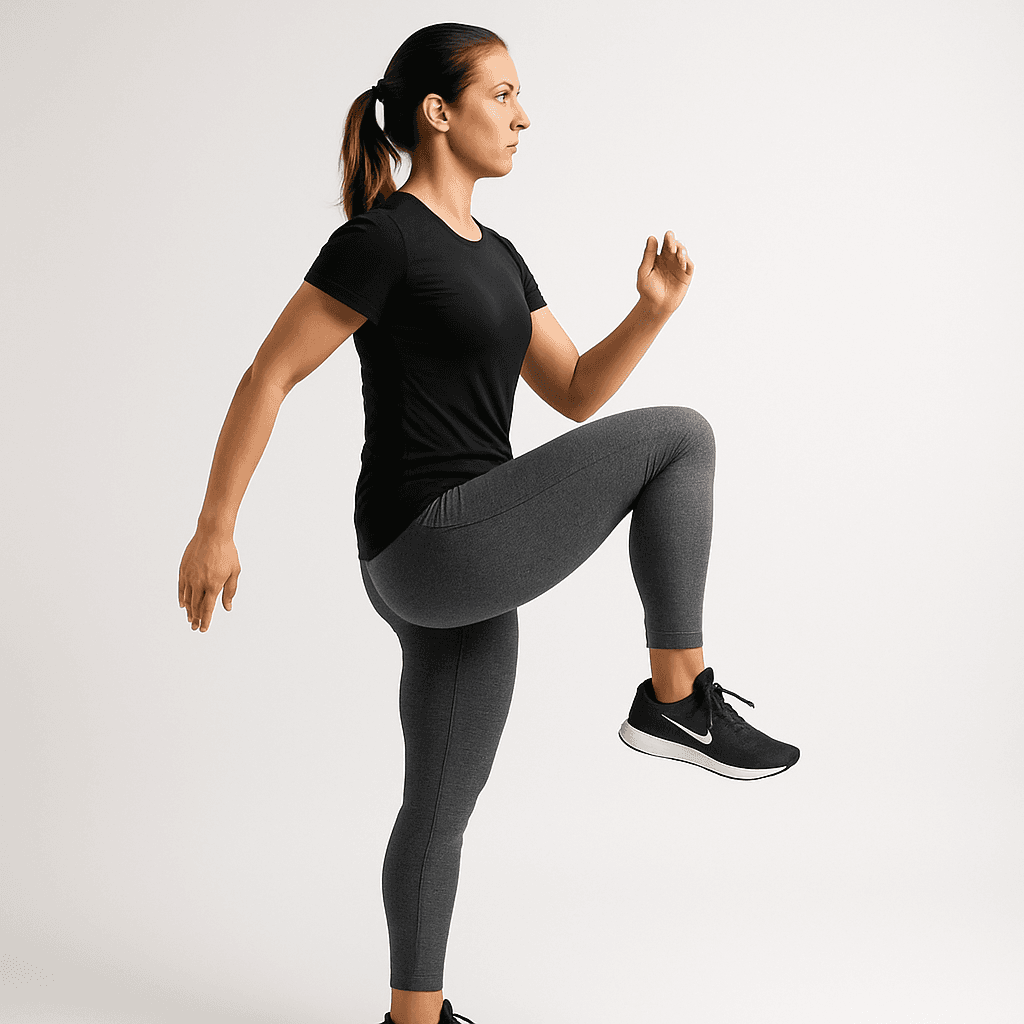
Standing Hip Flexor March
Standing tall with hands at your sides, you alternately drive each knee upward toward your chest in a slow, controlled marching motion — emphasizing hip flexion strength and pelvis stability on the stance leg simultaneously.
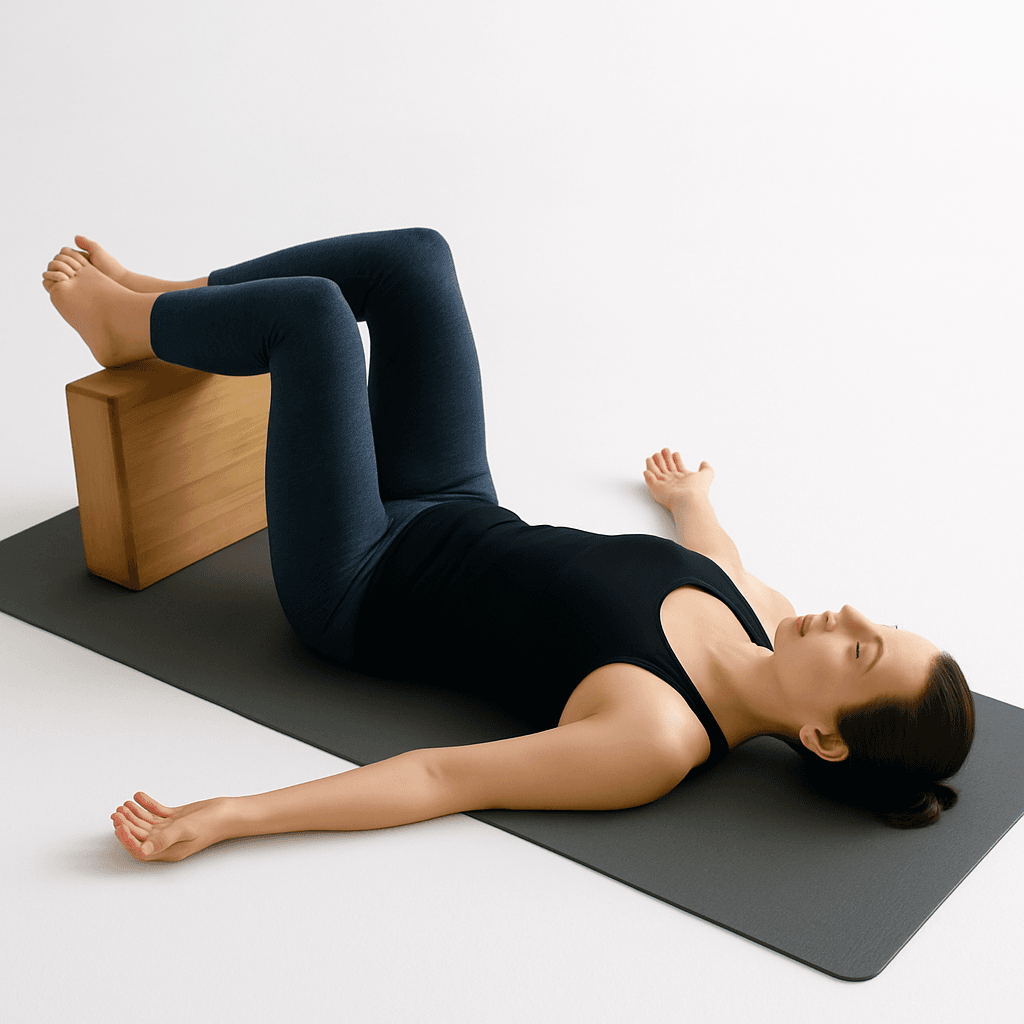
Static Back
The foundational reset position: lying on your back with calves resting on a block or chair seat, knees and hips at 90 degrees, arms out to the sides at 45 degrees with palms up.
Static Extension Position (Prone on Elbows)
A prone exercise that reverses thoracic kyphosis and activates the posterior chain by using a sustained extension position on the elbows.
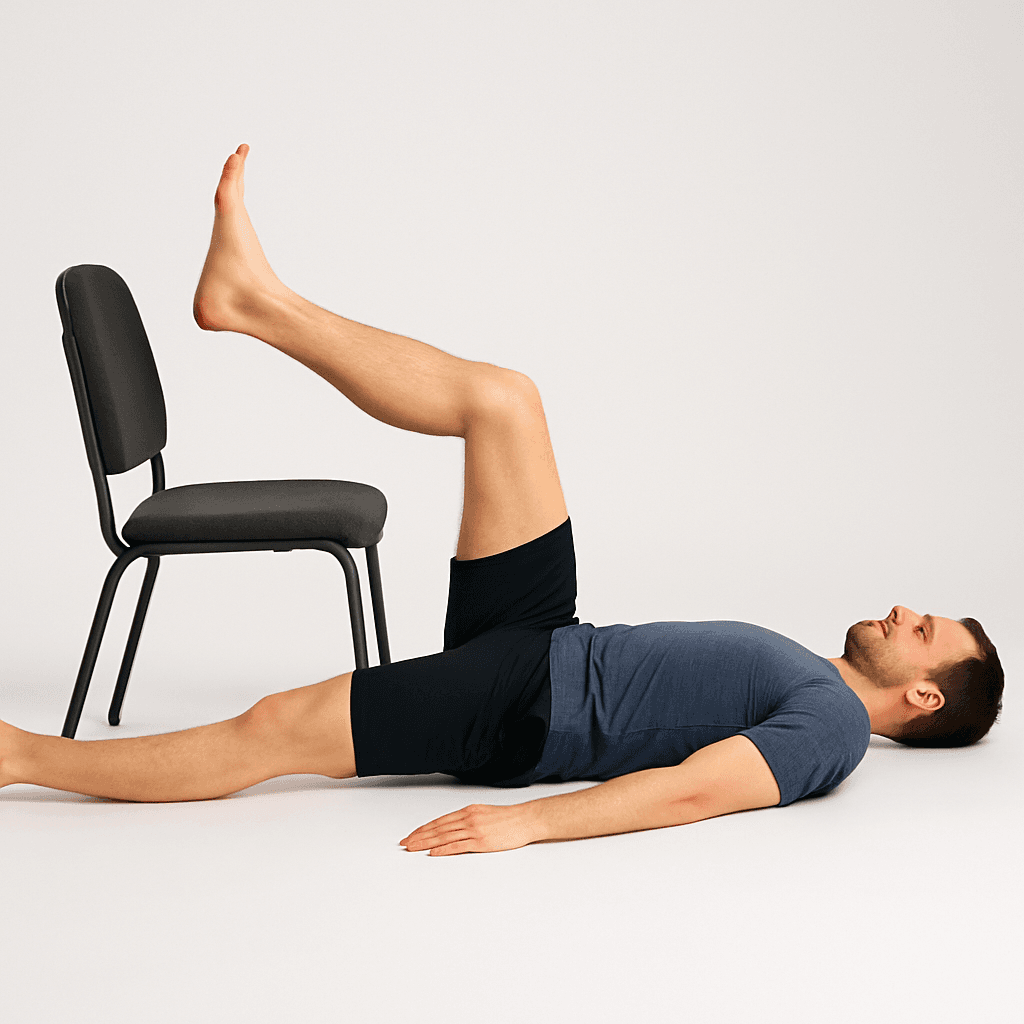
Supine Groin Progressive
A foundational exercise that uses gravity and time to release the hip flexors and restore pelvic symmetry.
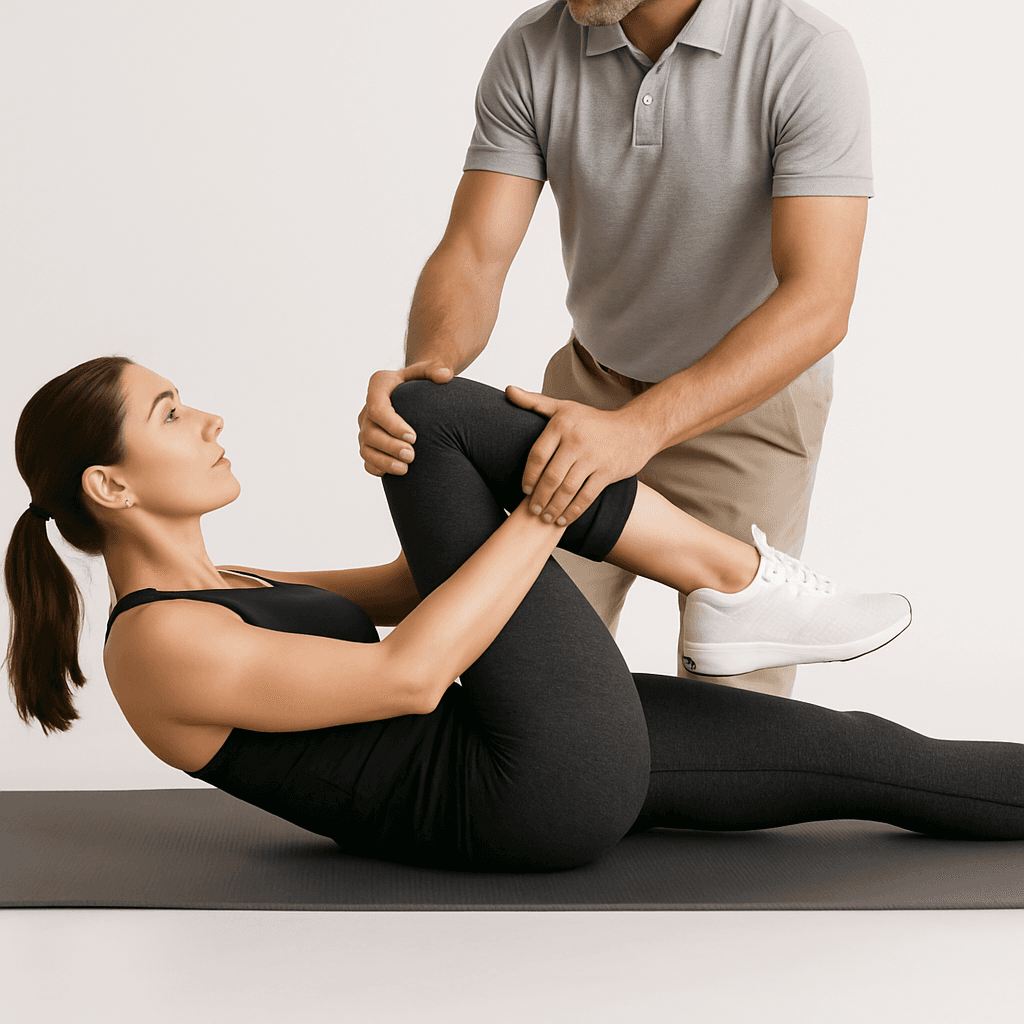
Supine Hip Flexor Release
Lying on your back with one leg extended flat on the floor and the other knee pulled to the chest, the extended leg's hip flexor is placed in a sustained stretch by gravity alone.
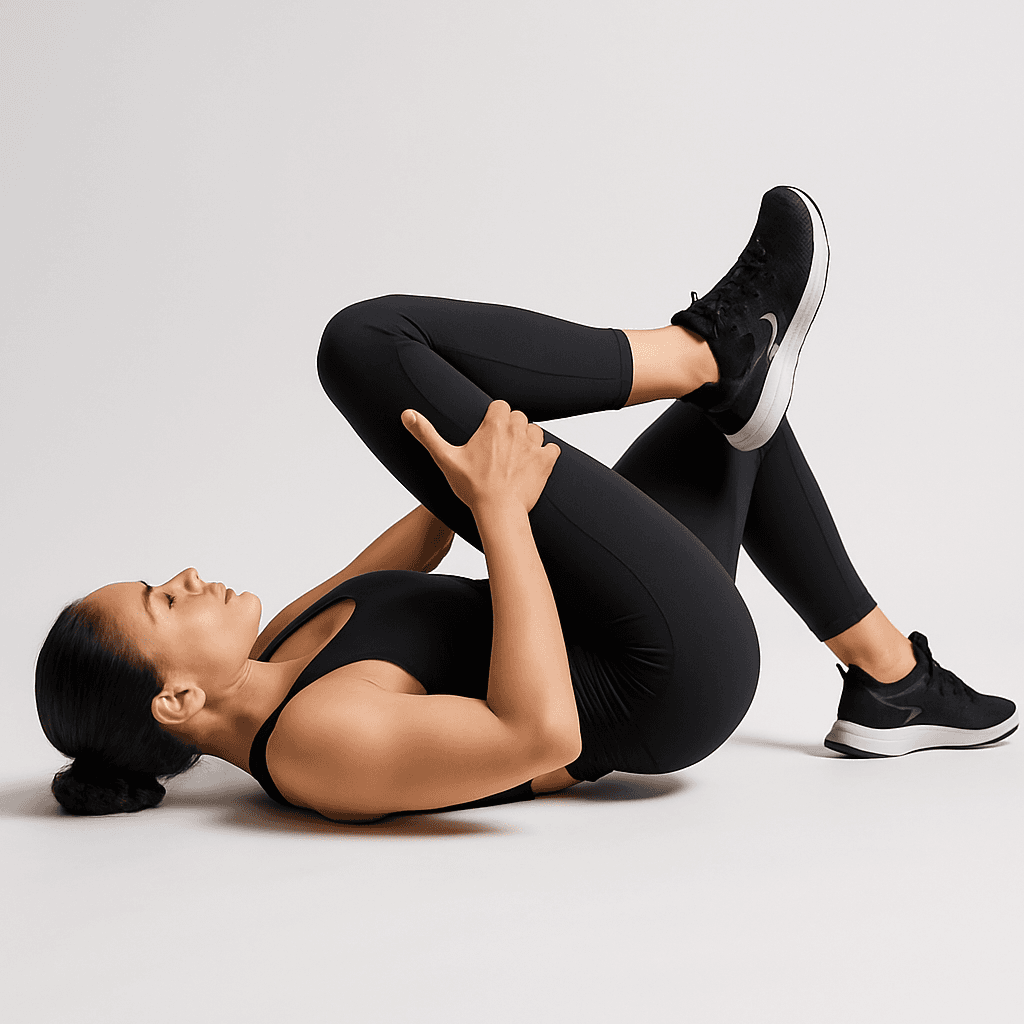
Supine Hip Stretch (Thread the Needle)
A gentle supine hip and lower back stretch that combines rotation with hip flexion to release the outer hip, glute, and the deep spinal rotators simultaneously.
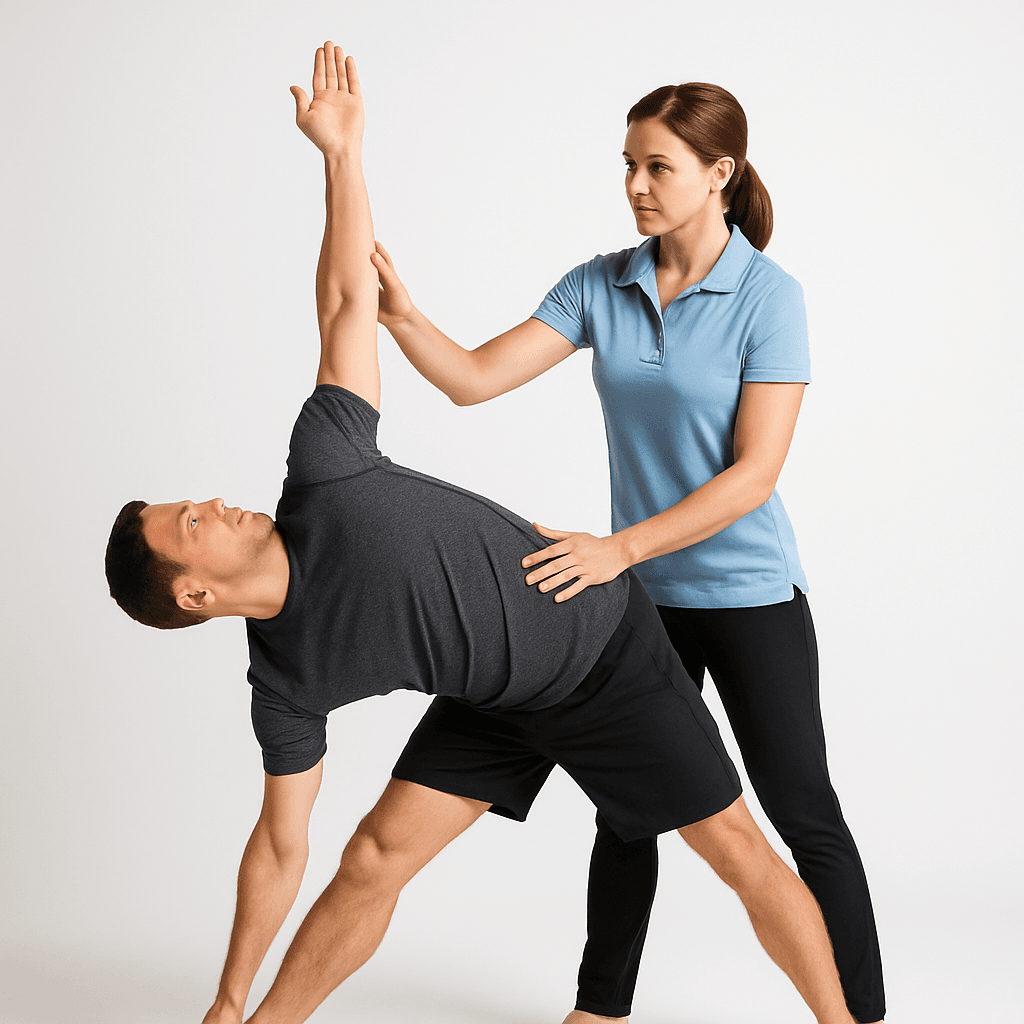
Triangle Pose
A lateral trunk stretch in a wide-stance position with one hand reaching toward the ankle and the other arm extended to the ceiling.
Hips & Pelvis
42 exercises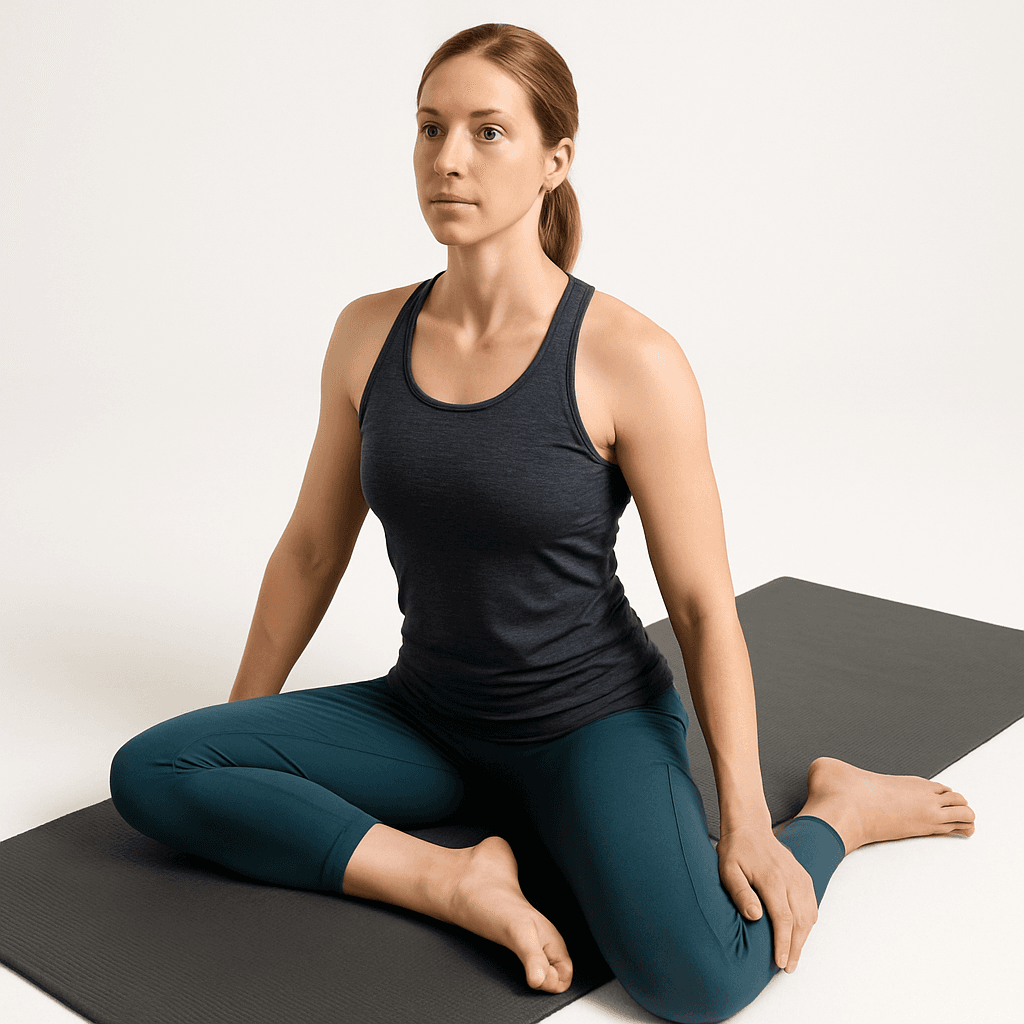
90/90 Hip Stretch
The gold standard for hip internal and external rotation.
Air Bench
A wall exercise that places the hips, knees, and ankles at 90 degrees simultaneously to correct load-joint alignment and reduce knee and lower back pain.
Bear Crawl Position
On all fours with knees hovering just one inch off the floor, you hold the quadruped position — or slowly crawl forward and backward — building deep shoulder stability, hip flexor endurance, and full-body neuromuscular coordination.
Bird Dog
A foundational posterior chain exercise that builds lumbar stability and coordination between the opposite arm and leg.
Child's Pose
Kneeling and folding forward with arms extended in front of you, the child's pose gently tractions the lumbar spine, stretches the thoracolumbar fascia, and provides a full-length decompression of the spine in a position that is completely safe even for significant lower back pain.
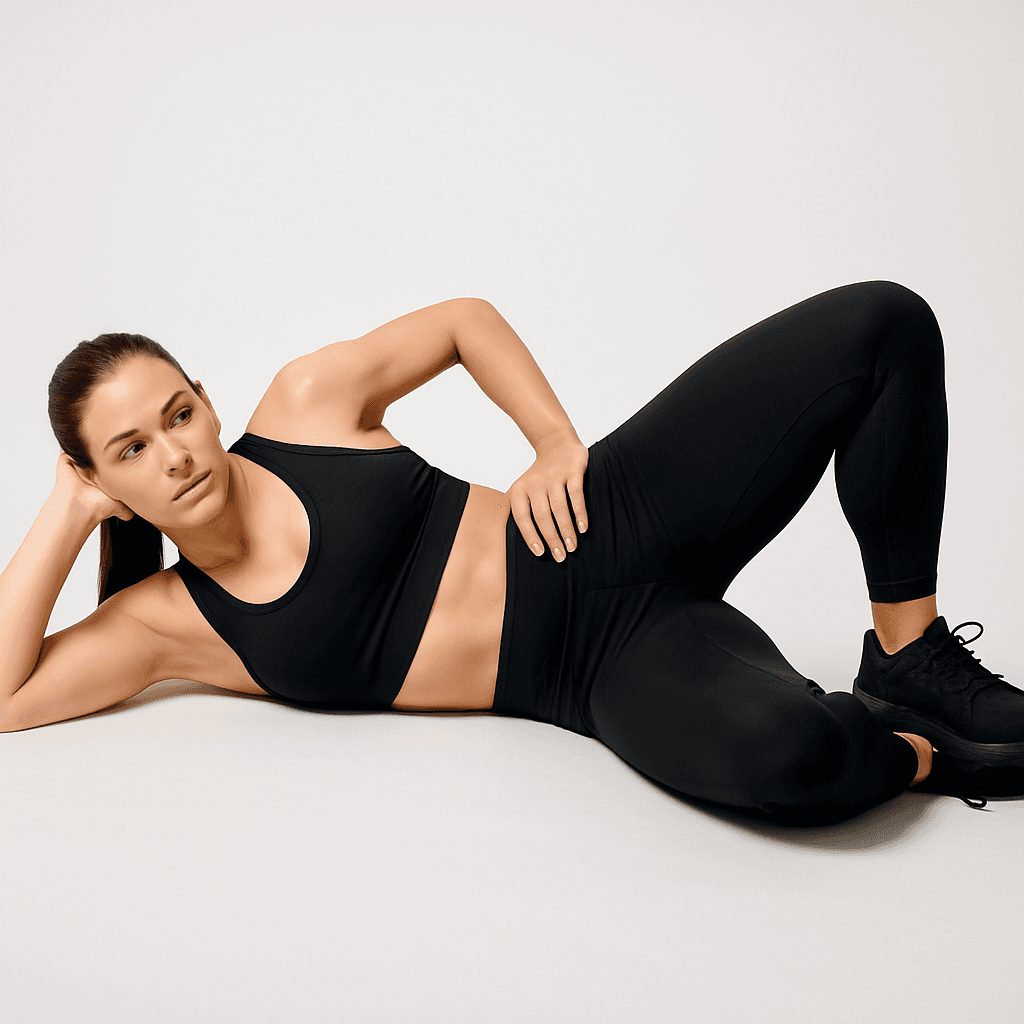
Clamshells
Isolates the gluteus medius — the hip stabilizer that controls lateral pelvis movement.
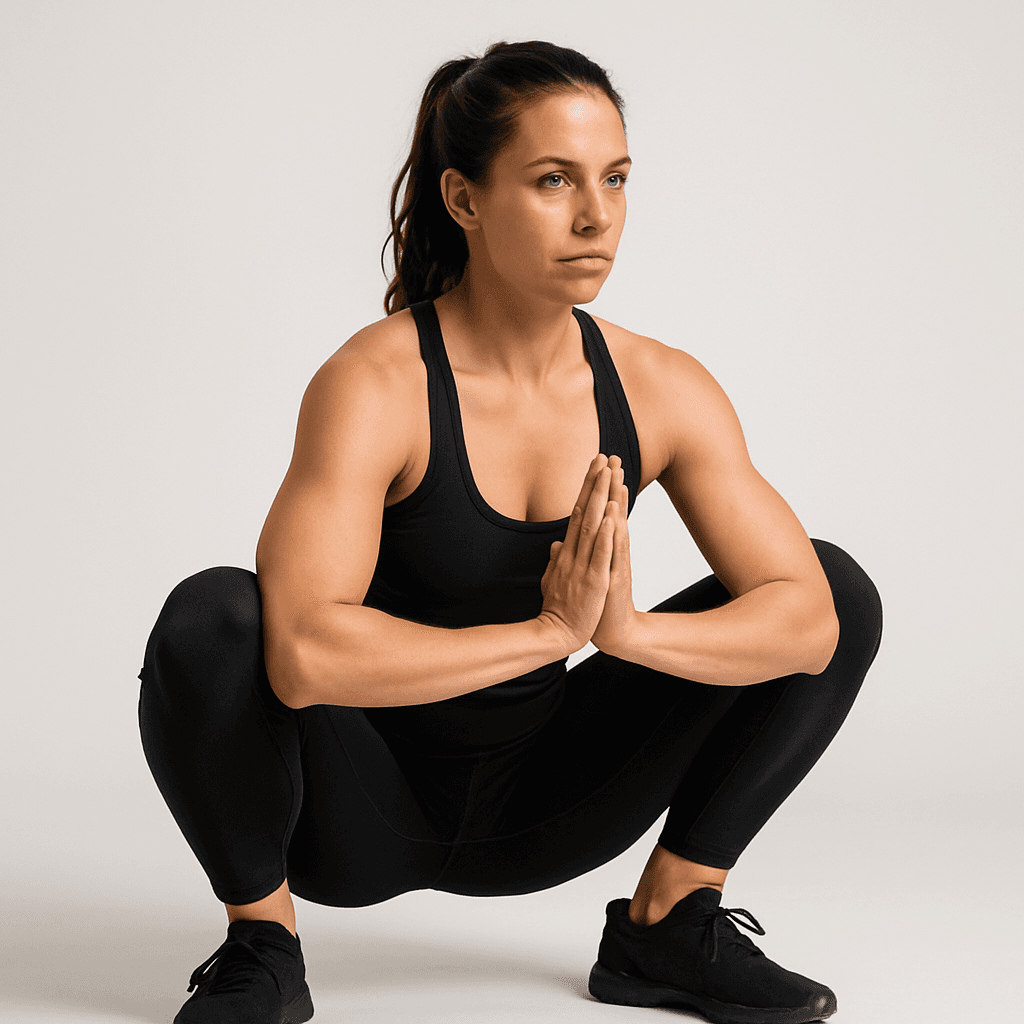
Deep Squat Hold
A full-depth squat hold (heels on floor when possible) with elbows pressing the knees into external rotation, the deep squat position restores ankle dorsiflexion, hip internal rotation, and lumbar flexion mobility simultaneously.
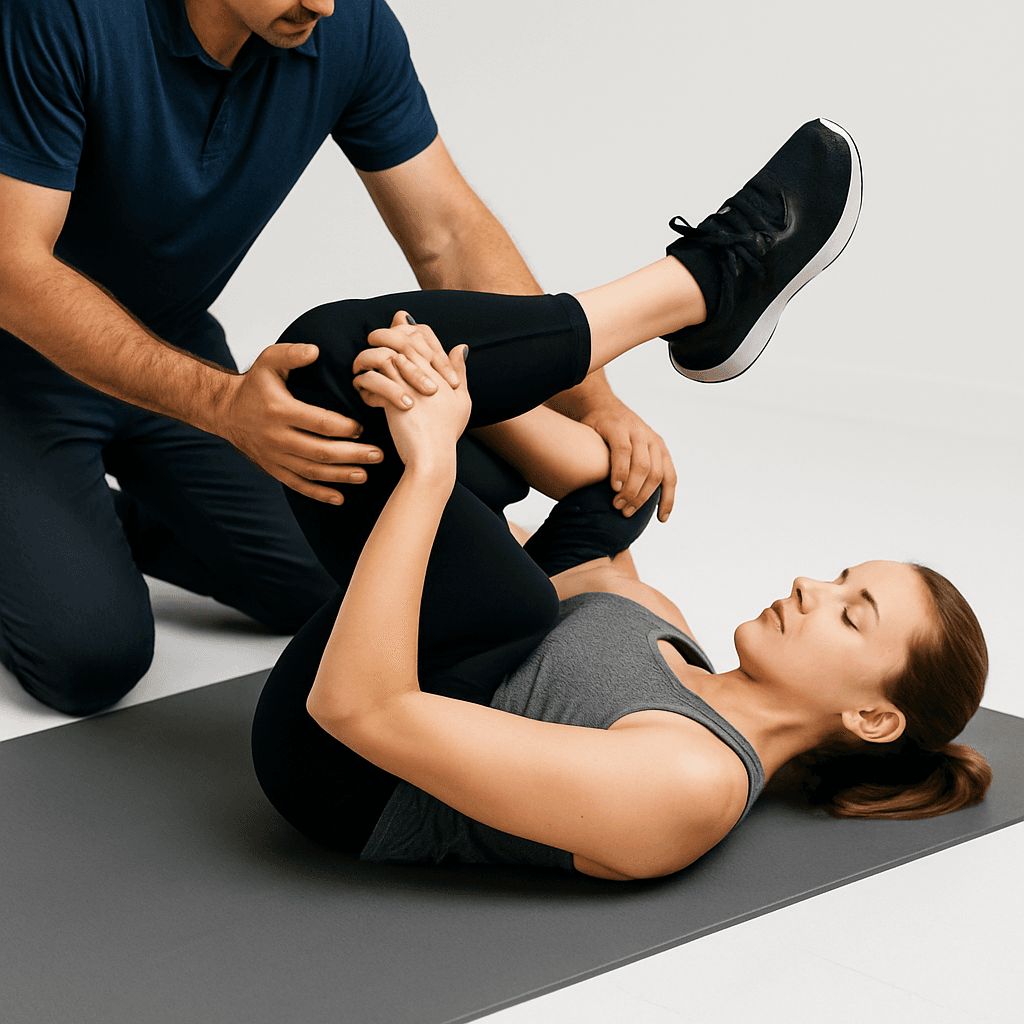
Figure Four Stretch
Lying on your back with one ankle crossed over the opposite knee forming a figure-4 shape, you flex the bottom hip to bring both legs toward your chest, stretching the piriformis and deep external rotators of the crossed leg.
Glute Bridge
A fundamental glute activation exercise that also teaches the hip extension pattern needed to counteract the chronic hip flexor tightness caused by prolonged sitting.
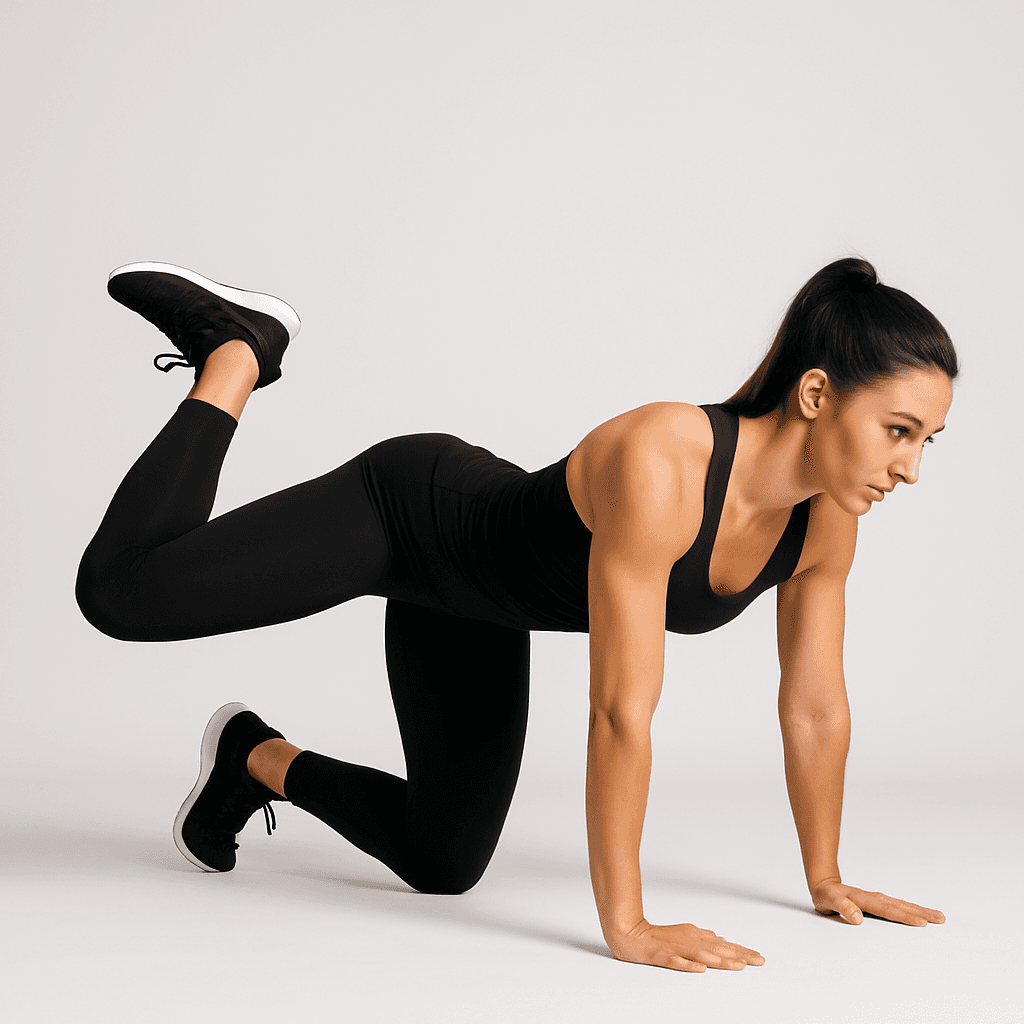
Hip CARs (Controlled Articular Rotations)
Controlled Articular Rotations move the hip through its complete range of motion under tension, simultaneously improving mobility and building strength at end ranges.
Hip Crossover Stretch
A floor exercise that addresses hip rotation imbalances by using a precise crossed-leg position.
Hip Flexor Lunge Stretch
In a kneeling lunge position with the rear knee on the ground, you drive the hips forward and slightly tuck the pelvis to bring the iliopsoas and rectus femoris to end range.
Hip Hinge (Bodyweight Deadhinge)
The most important movement pattern most people have never been properly taught.
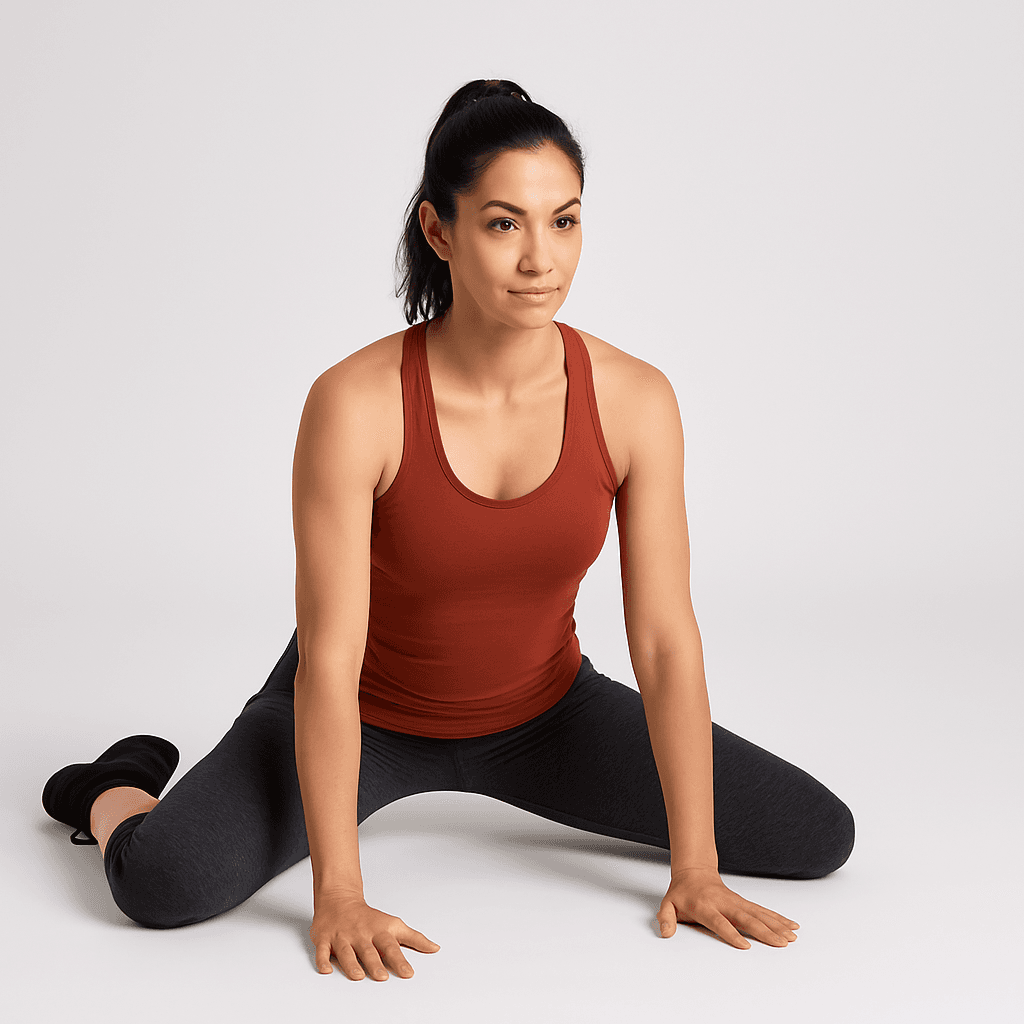
Kneeling Groin Stretch
An adductor and groin release performed in a wide kneeling position.
Kneeling Hip Flexor Stretch
Directly targets the psoas and iliacus — two muscles that get chronically shortened in anyone who sits for long periods.
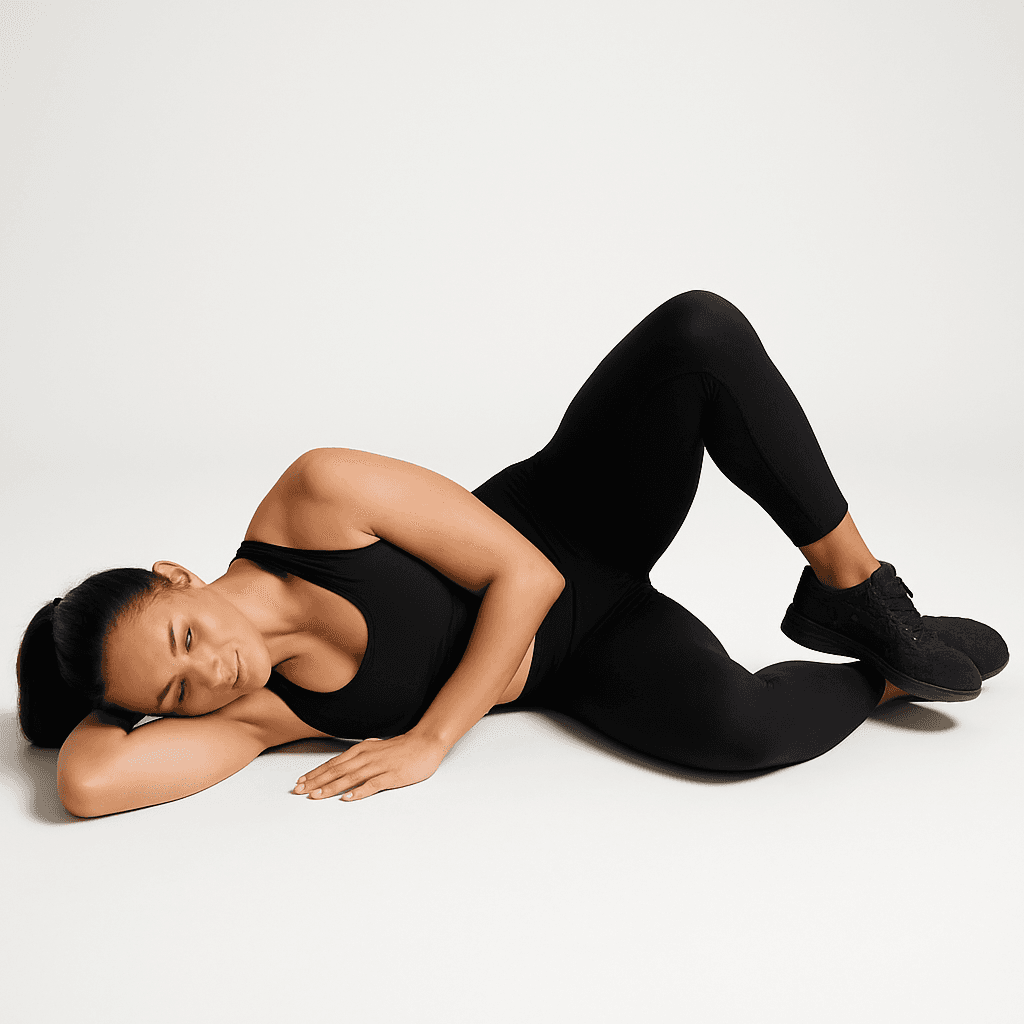
Lateral Hip Opener
In a side-lying position with the top knee bent and resting on a block or folded blanket, you allow the hip to fully externally rotate and open over time.
Legs Elevated Block Squeezes
Performed lying on your back with legs elevated and a block between the knees, this exercise activates the adductors while the hips decompress.
Lunge with Thoracic Rotation
A dynamic exercise that combines lower body stability with thoracic mobility — two of the most commonly restricted areas in people with poor posture.
Overhead Reach with Squat
Standing with feet shoulder-width apart, you reach both arms overhead as you descend into a squat — maintaining a neutral spine, open chest, and arms in line with your ears at the bottom.
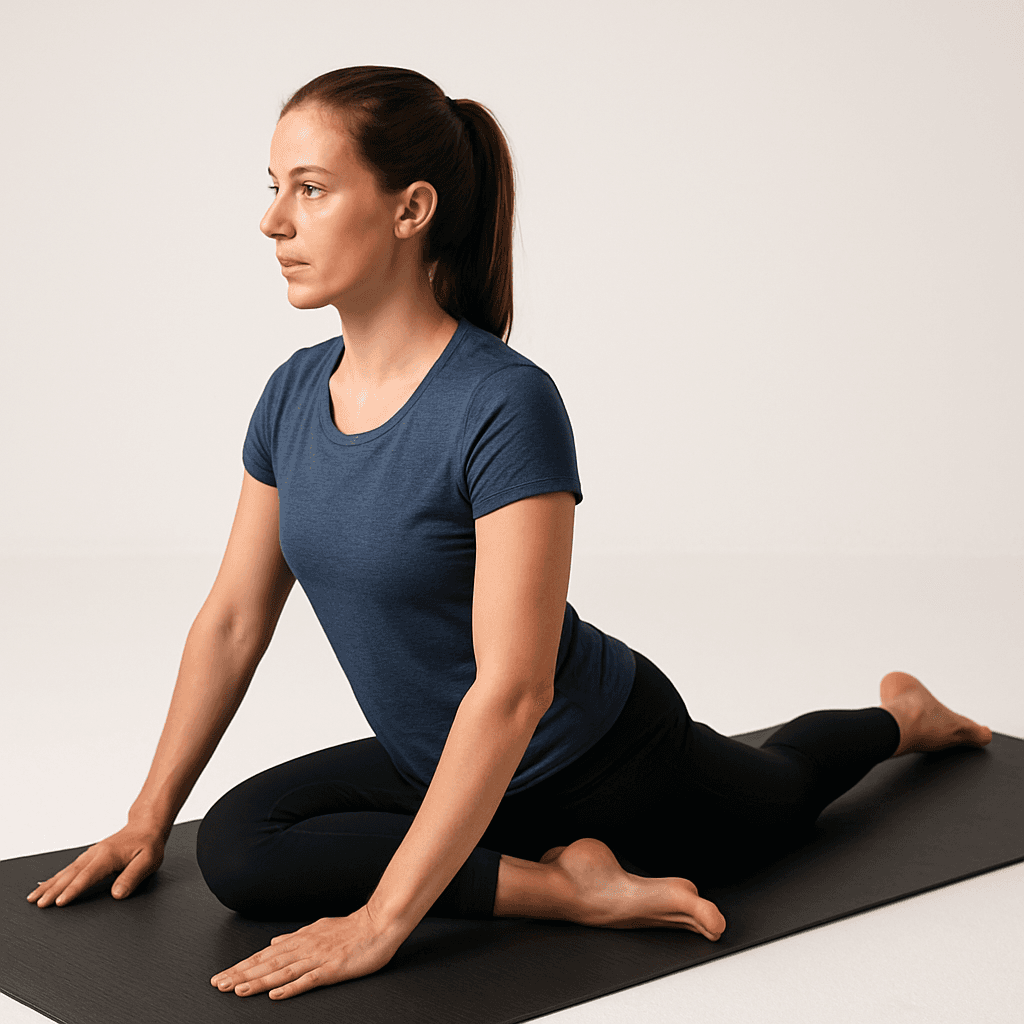
Pigeon Pose (Hip Opener)
A deep hip external rotation stretch from yoga that comprehensively releases the glutes, piriformis, and hip capsule.
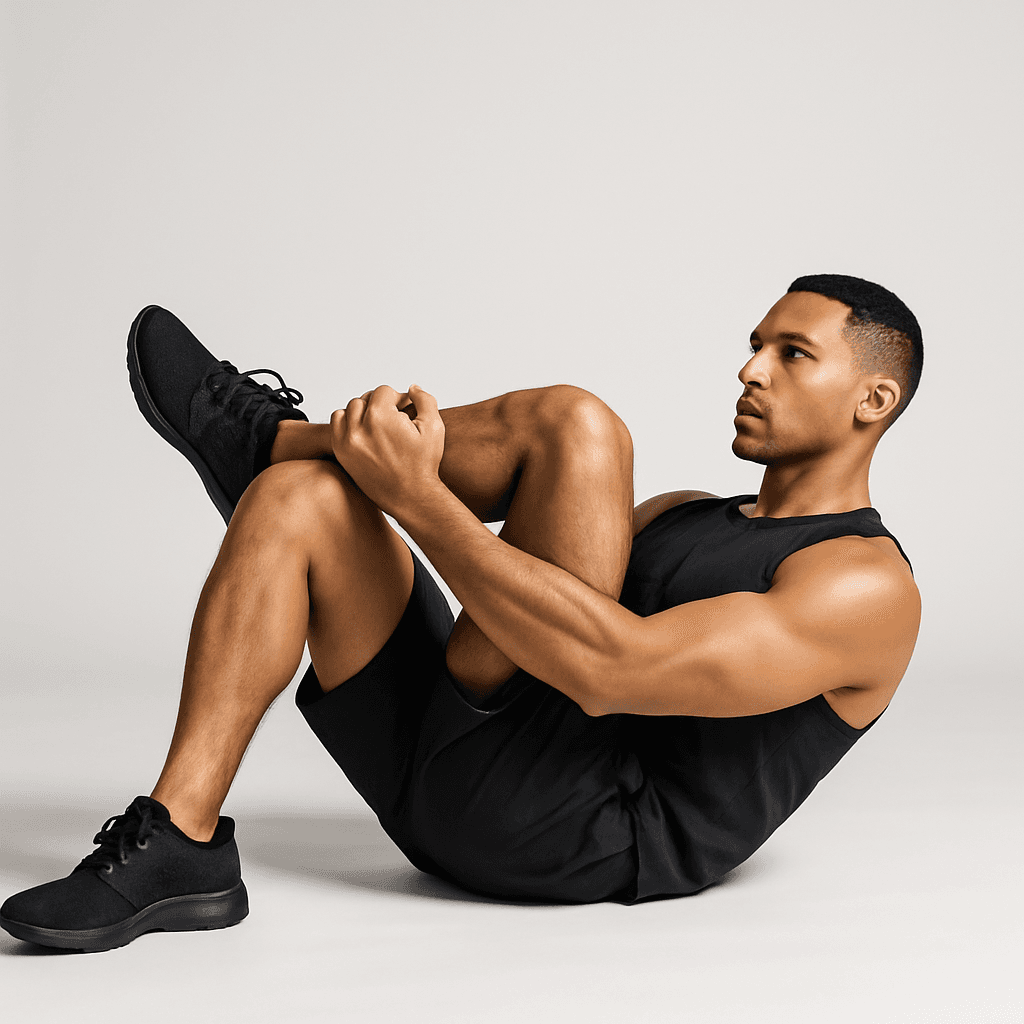
Piriformis Stretch (Figure-Four)
A highly effective stretch for the piriformis and other deep hip external rotators that frequently contribute to sciatic nerve compression and hip pain.
Plank with Hip Extension
From a forearm plank position with the lumbar spine neutral, you slowly lift one leg into hip extension without allowing the pelvis to rotate or the lower back to arch.
Runner's Stretch
A kneeling lunge position that uses gravity over time to restore hip flexor length and pelvic position.
Side Plank
Supported on one forearm and the side of the foot, you hold a lateral body bridge that trains the quadratus lumborum, lateral hip, and obliques to prevent lateral spine bending.
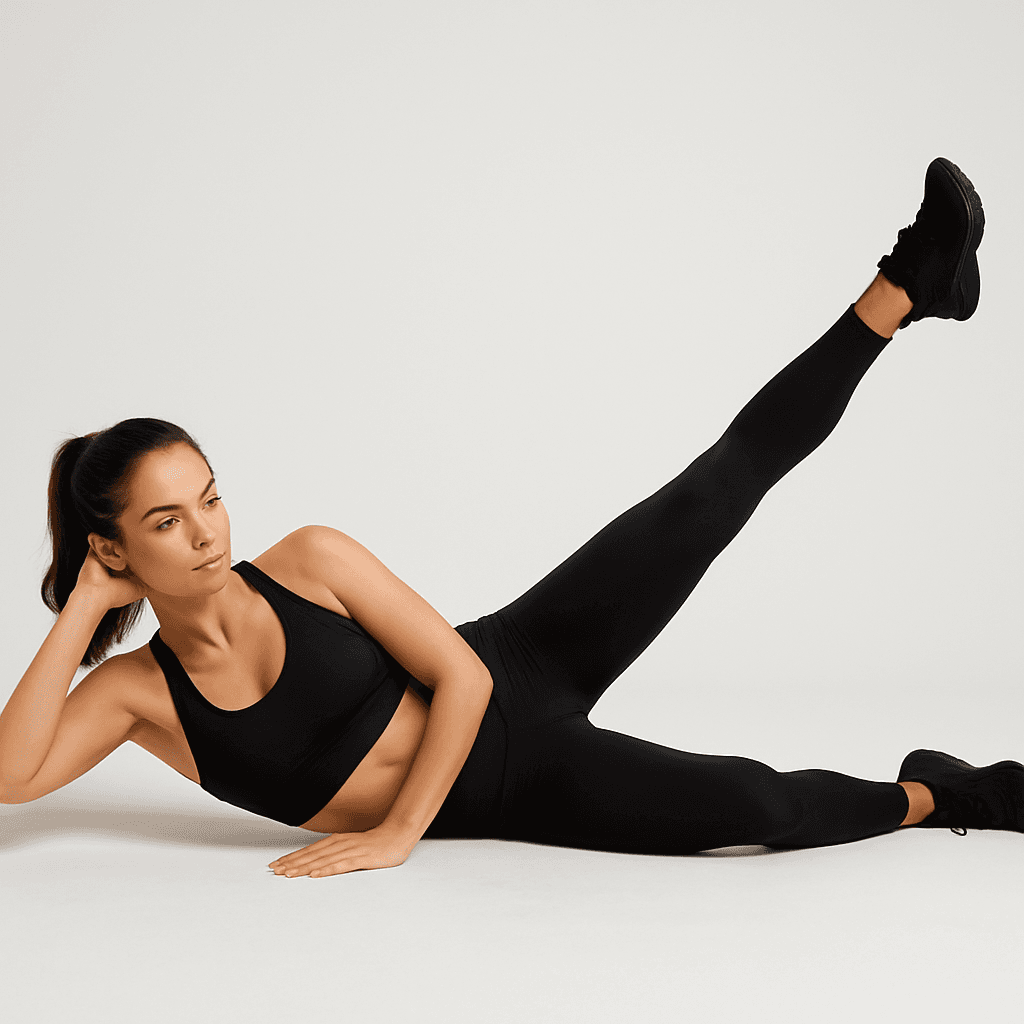
Side-Lying Hip Abduction
A larger range-of-motion hip abduction exercise that recruits the glute med and glute min more completely than clamshells.
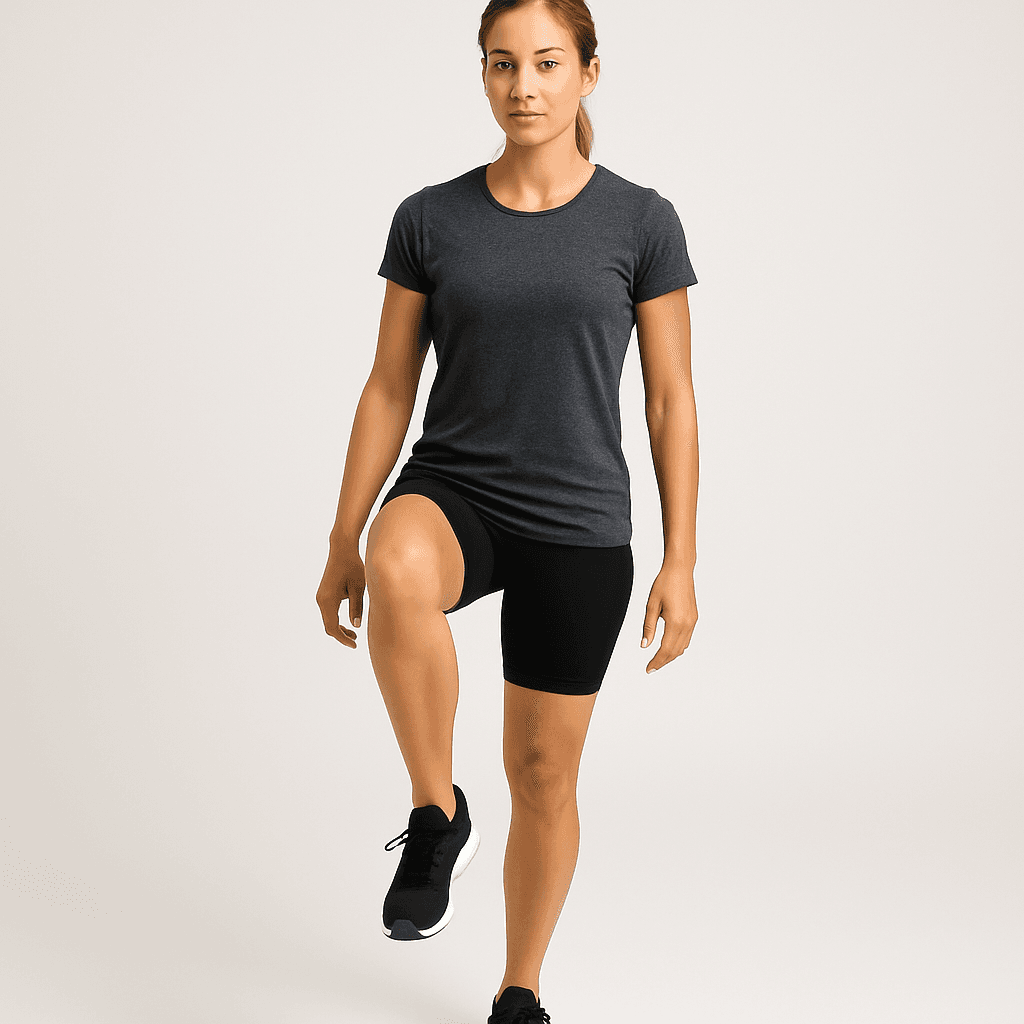
Single-Leg Balance (Eyes Open and Closed)
The simplest and most effective fall prevention exercise available.
Single-Leg Deadlift
A functional balance and posterior chain exercise that combines hip hinge mechanics with single-leg stability demands.
Single-Leg Glute Bridge
A progression of the standard glute bridge that eliminates compensation between sides and dramatically increases the demand on each glute independently.
Sitting Block Squeezes
An exercise performed seated with a block between the knees to activate the adductors and stabilize the pelvis.
Split Squat
In a staggered stance with feet hip-width apart front-to-back, you lower the rear knee toward the floor while keeping the front shin vertical and the torso upright.
Squat to Stand
A dynamic mobility drill that simultaneously works ankle dorsiflexion, hip flexion, hamstring length, and thoracic extension in one flowing movement.
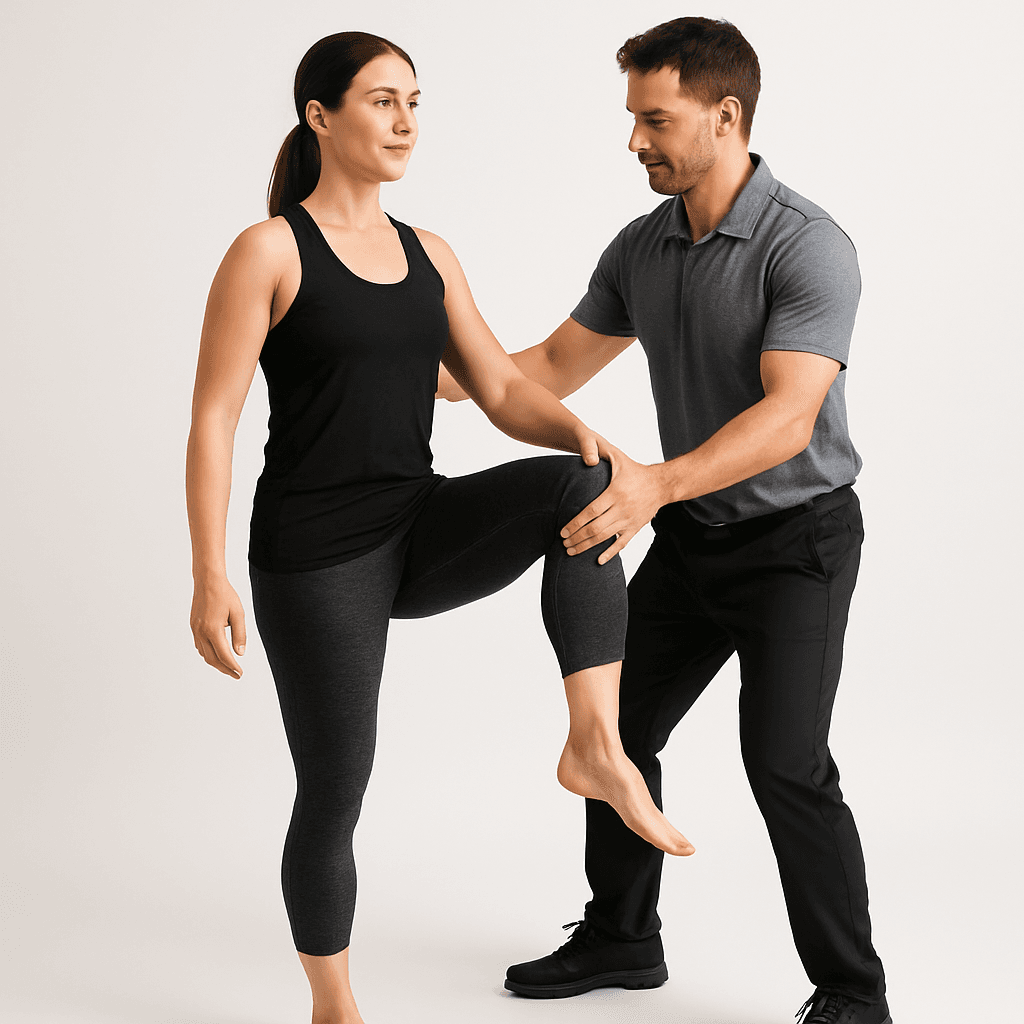
Standing Hip Circle
Standing on one leg, you draw slow, controlled circles with the lifted knee — moving the hip through its full available range of flexion, abduction, extension, and adduction.
Standing Hip Extension (at Wall)
A simple but powerful glute activation exercise that teaches the hip extension pattern in standing — the same pattern that drives walking and prevents the hip flexor dominance of prolonged sitting.
Standing Hip Flexor March
Standing tall with hands at your sides, you alternately drive each knee upward toward your chest in a slow, controlled marching motion — emphasizing hip flexion strength and pelvis stability on the stance leg simultaneously.
Static Back
The foundational reset position: lying on your back with calves resting on a block or chair seat, knees and hips at 90 degrees, arms out to the sides at 45 degrees with palms up.
Static Extension Position (Prone on Elbows)
A prone exercise that reverses thoracic kyphosis and activates the posterior chain by using a sustained extension position on the elbows.
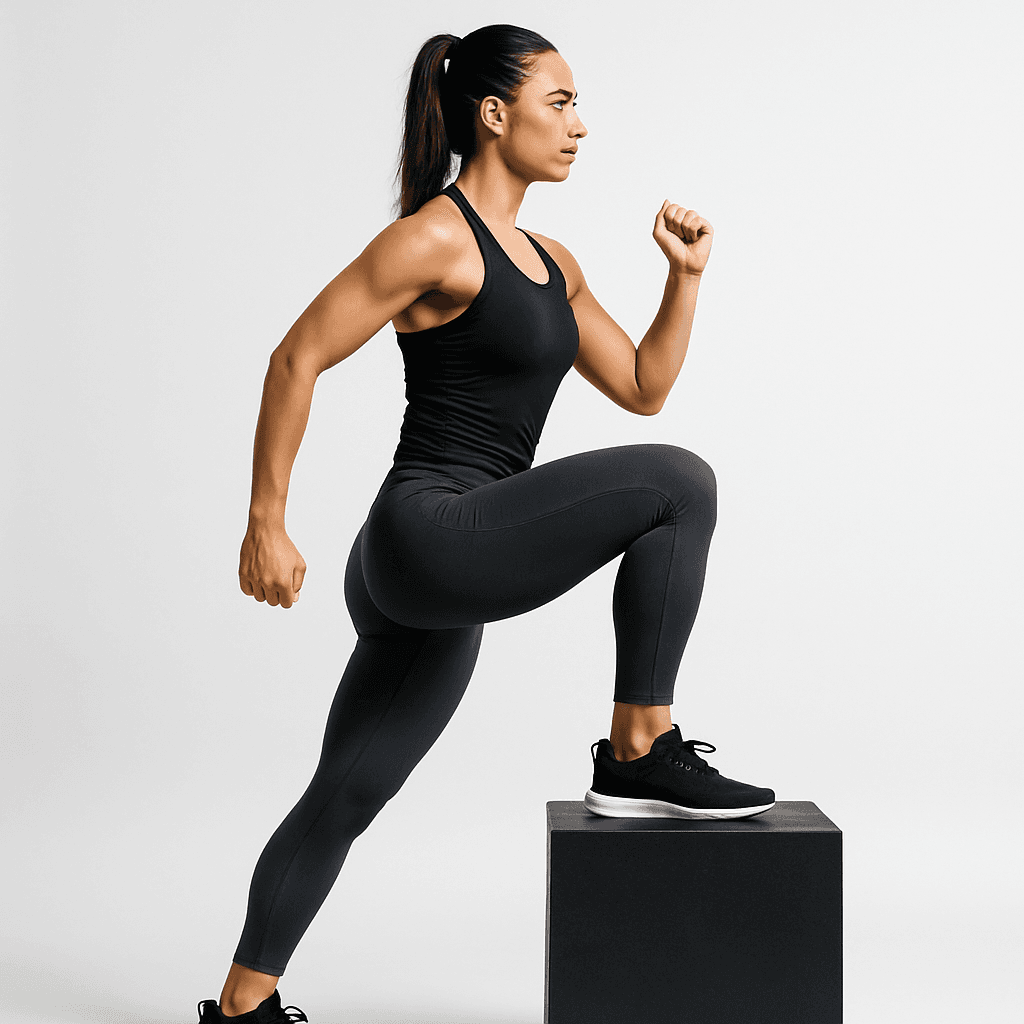
Step-Up (Forward)
A fundamental functional movement that trains the leg muscles and hip extensors through a pattern used constantly in daily life — climbing stairs, stepping onto curbs, and rising from low surfaces.
Supine Groin Progressive
A foundational exercise that uses gravity and time to release the hip flexors and restore pelvic symmetry.
Supine Hip Flexor Release
Lying on your back with one leg extended flat on the floor and the other knee pulled to the chest, the extended leg's hip flexor is placed in a sustained stretch by gravity alone.
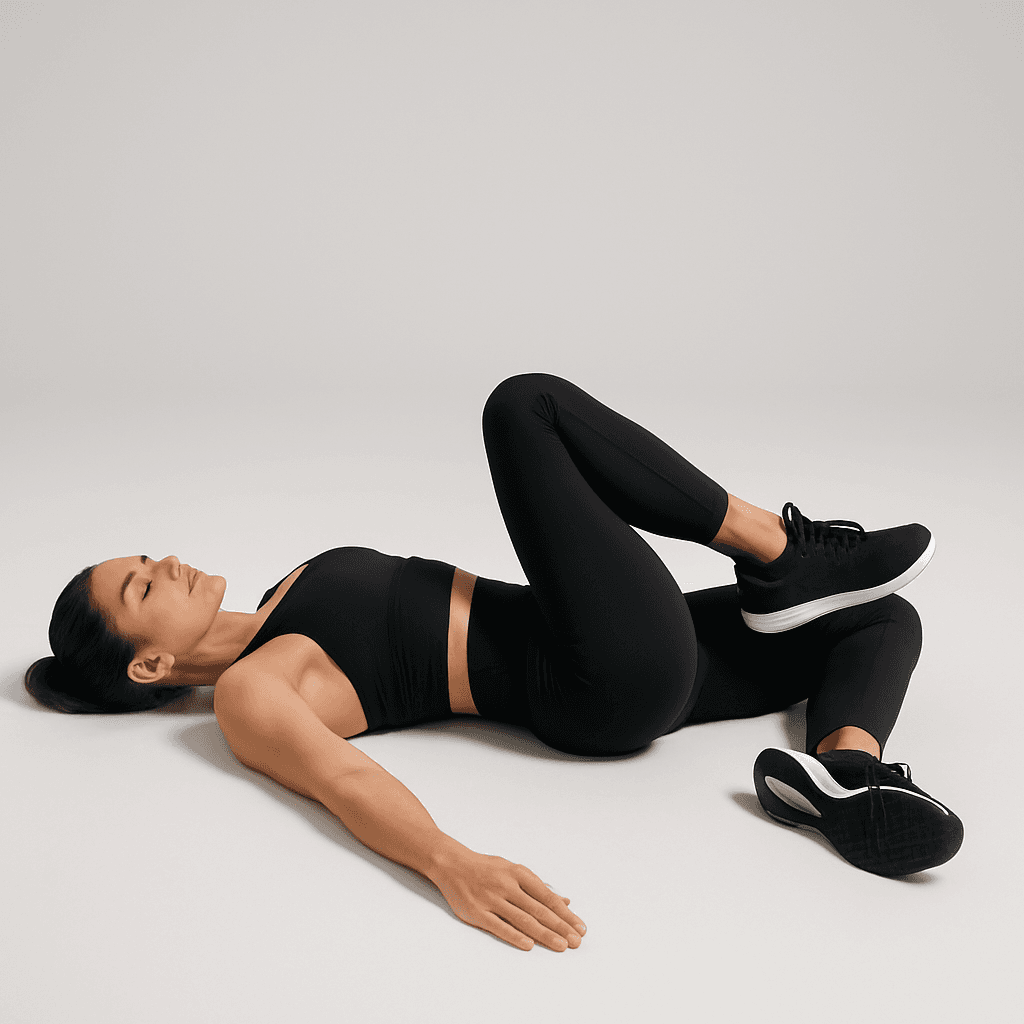
Supine Hip Rotations
A gentle floor exercise that restores internal and external hip rotation in a gravity-eliminated position, making it accessible for anyone with hip pain or significant stiffness.
Supine Hip Stretch (Thread the Needle)
A gentle supine hip and lower back stretch that combines rotation with hip flexion to release the outer hip, glute, and the deep spinal rotators simultaneously.
Triangle Pose
A lateral trunk stretch in a wide-stance position with one hand reaching toward the ankle and the other arm extended to the ceiling.
Knees
12 exercisesAir Bench
A wall exercise that places the hips, knees, and ankles at 90 degrees simultaneously to correct load-joint alignment and reduce knee and lower back pain.
Deep Squat Hold
A full-depth squat hold (heels on floor when possible) with elbows pressing the knees into external rotation, the deep squat position restores ankle dorsiflexion, hip internal rotation, and lumbar flexion mobility simultaneously.
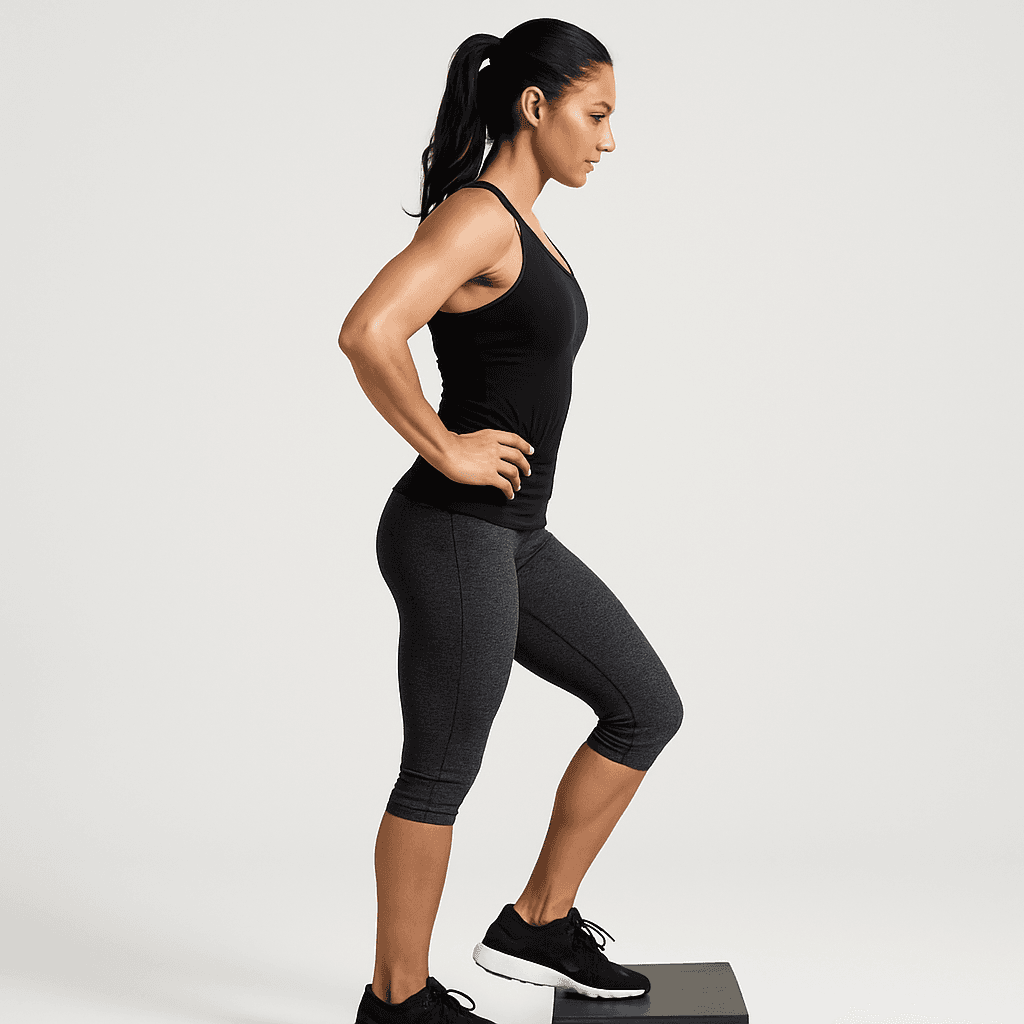
Eccentric Calf Lowering
A targeted rehabilitation exercise for the Achilles tendon and calf complex that uses the eccentric (lowering) phase to build tendon resilience.
Lateral Hip Opener
In a side-lying position with the top knee bent and resting on a block or folded blanket, you allow the hip to fully externally rotate and open over time.
Overhead Reach with Squat
Standing with feet shoulder-width apart, you reach both arms overhead as you descend into a squat — maintaining a neutral spine, open chest, and arms in line with your ears at the bottom.
Single-Leg Balance (Eyes Open and Closed)
The simplest and most effective fall prevention exercise available.
Split Squat
In a staggered stance with feet hip-width apart front-to-back, you lower the rear knee toward the floor while keeping the front shin vertical and the torso upright.
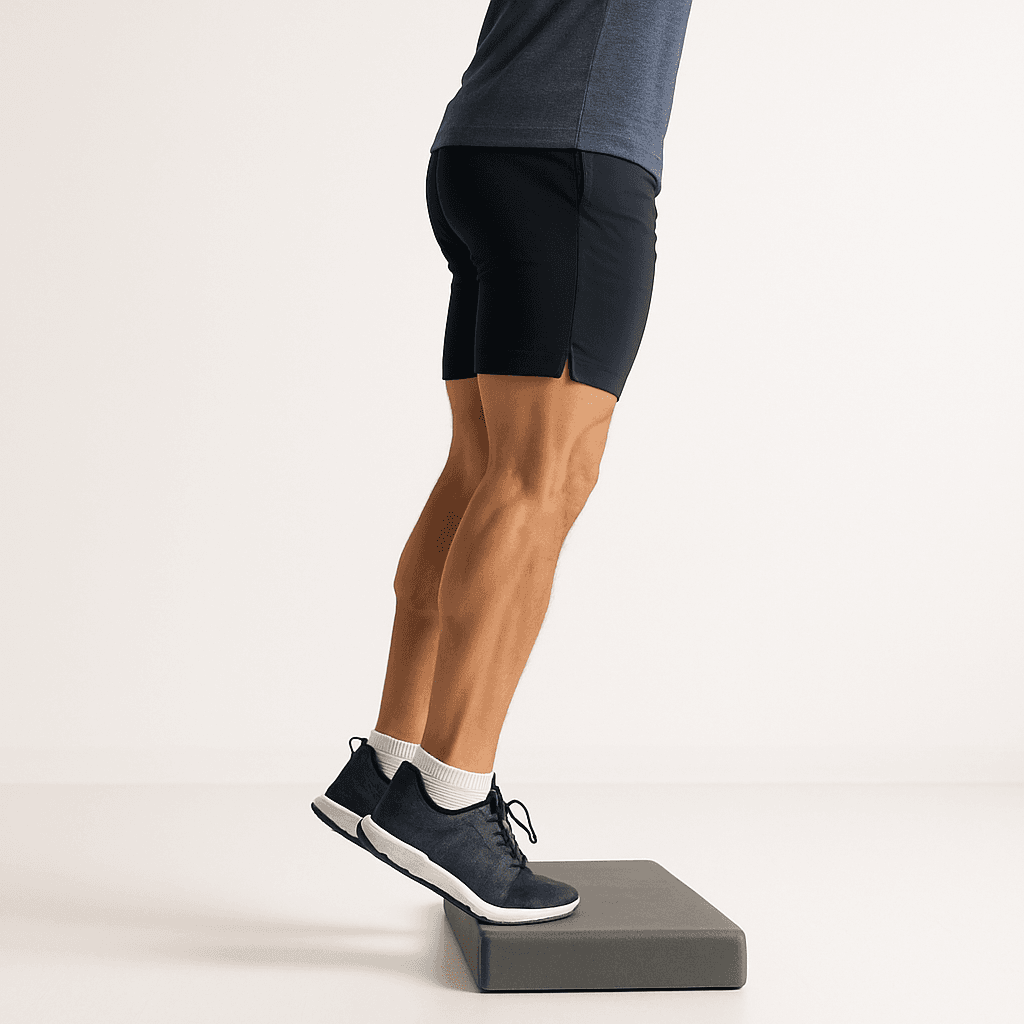
Standing Calf Raises
A simple calf and ankle strengthening exercise performed through the full available range of motion.
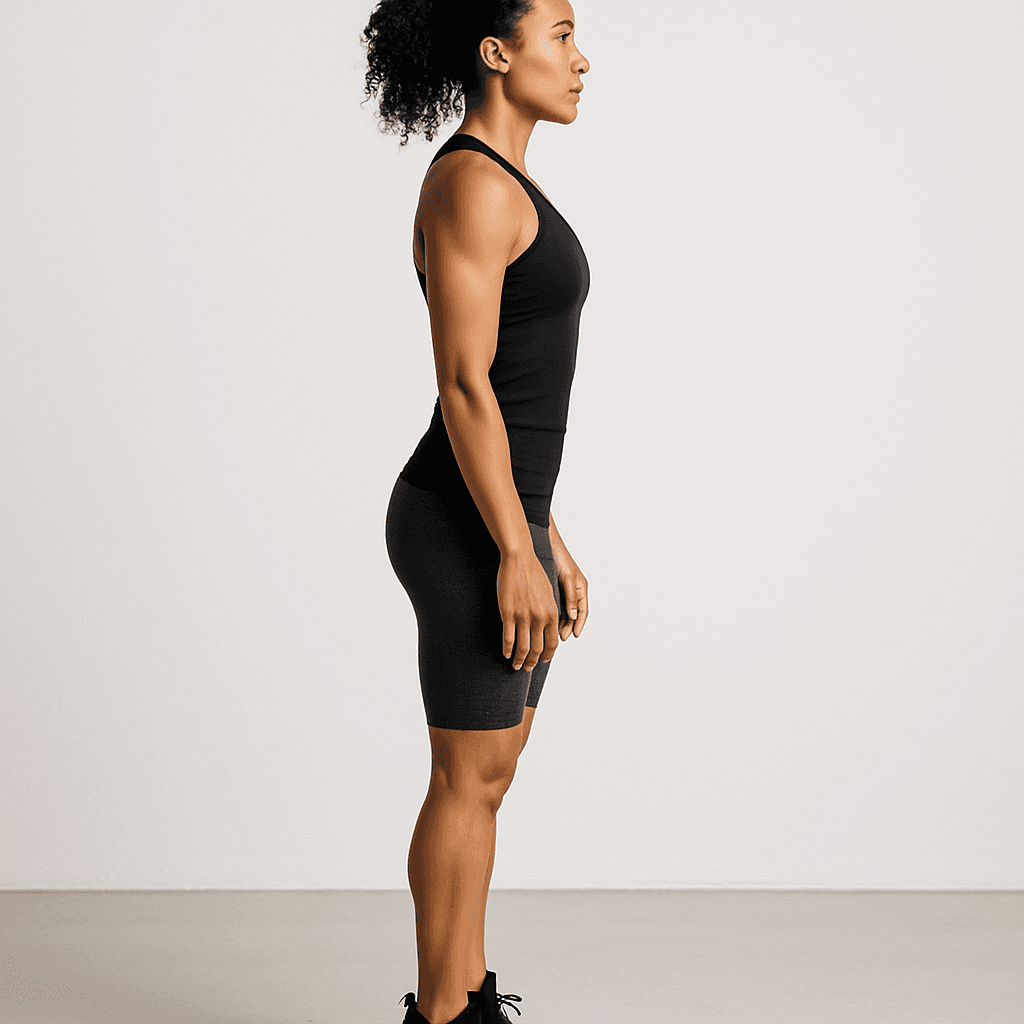
Standing Heel Raises
A simple calf and ankle strengthening exercise that dramatically improves balance, reduces fall risk, and enhances lower leg circulation.
Step-Up (Forward)
A fundamental functional movement that trains the leg muscles and hip extensors through a pattern used constantly in daily life — climbing stairs, stepping onto curbs, and rising from low surfaces.
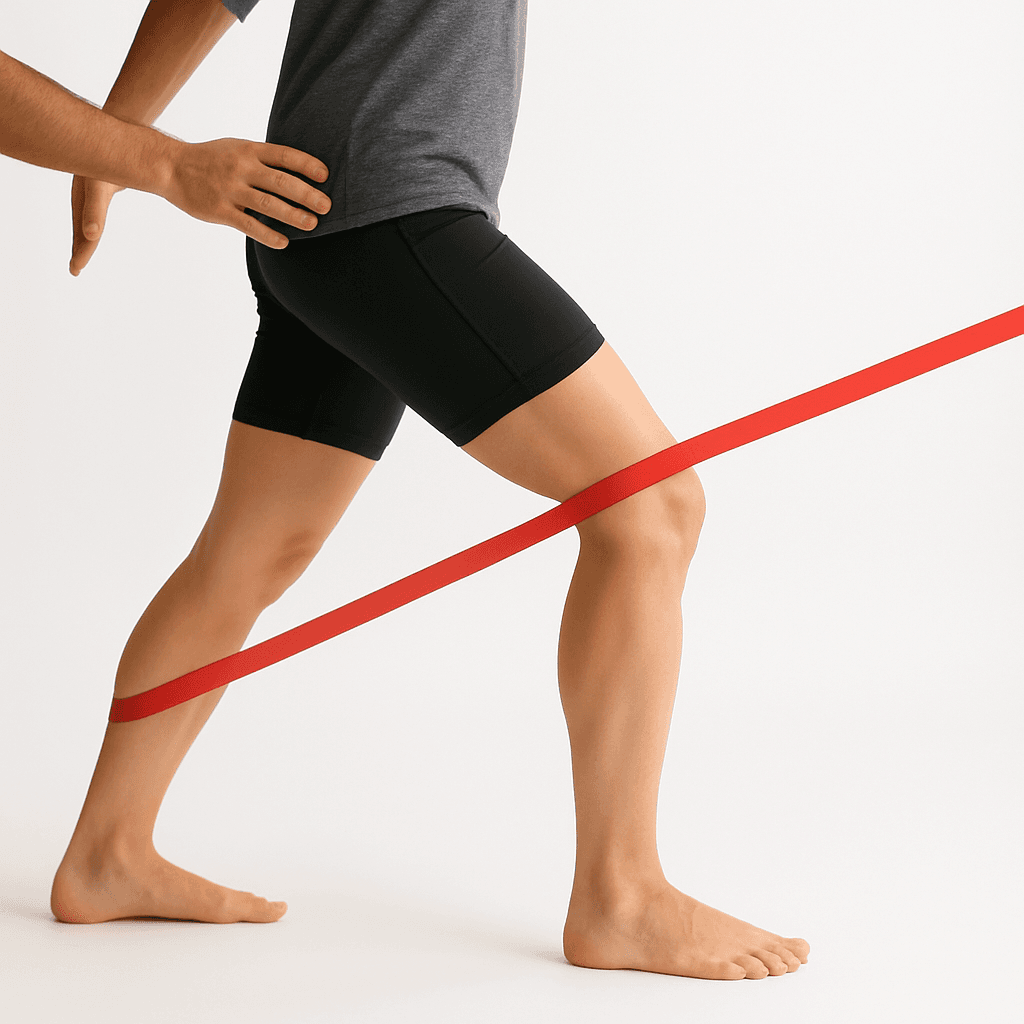
Terminal Knee Extension (TKE)
Activates the VMO — the teardrop-shaped inner quad muscle that is the primary stabilizer of the knee and almost always weakened in people with knee pain.
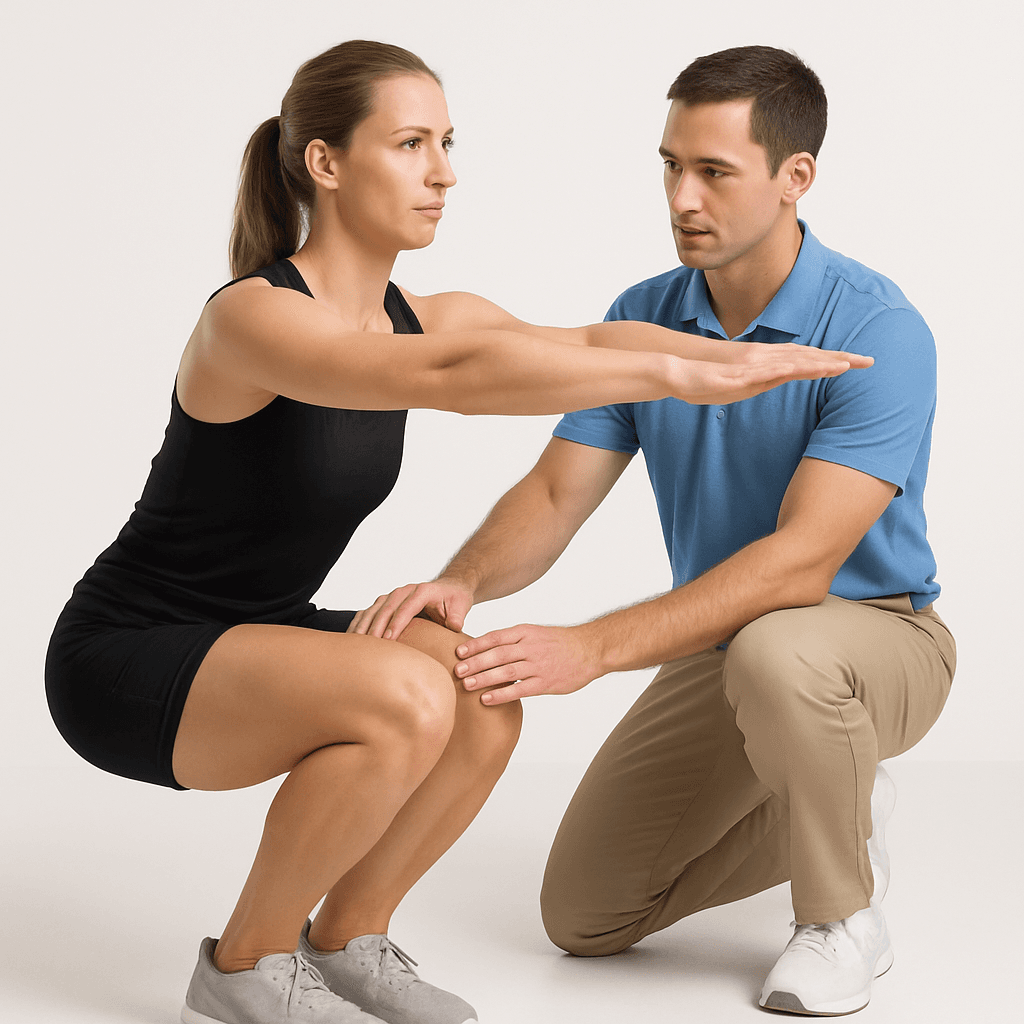
VMO Squat
A narrow-stance squat with toes slightly turned out, emphasizing the final degrees of knee extension to maximally activate the vastus medialis oblique — the teardrop-shaped inner quad that stabilizes the patella and prevents lateral tracking.
Feet & Ankles
11 exercises
Ankle CARs (Controlled Articular Rotations)
Circles performed at the ankle joint with maximum effort through the full available range of motion.
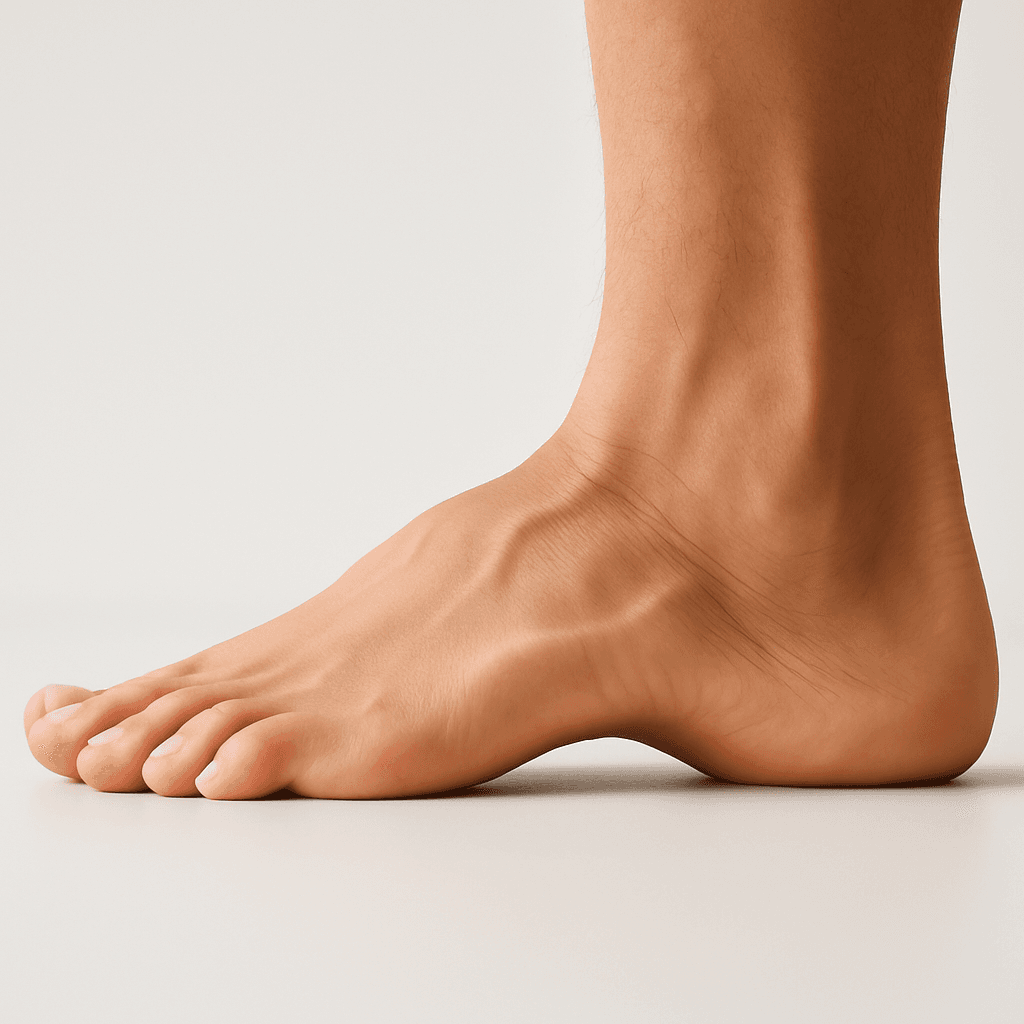
Arch Doming
Similar to the short foot exercise but performed in standing with full body weight, arch doming requires you to create the medial arch without any assistance from the toes — purely through intrinsic muscle contraction.
Deep Squat Hold
A full-depth squat hold (heels on floor when possible) with elbows pressing the knees into external rotation, the deep squat position restores ankle dorsiflexion, hip internal rotation, and lumbar flexion mobility simultaneously.
Eccentric Calf Lowering
A targeted rehabilitation exercise for the Achilles tendon and calf complex that uses the eccentric (lowering) phase to build tendon resilience.
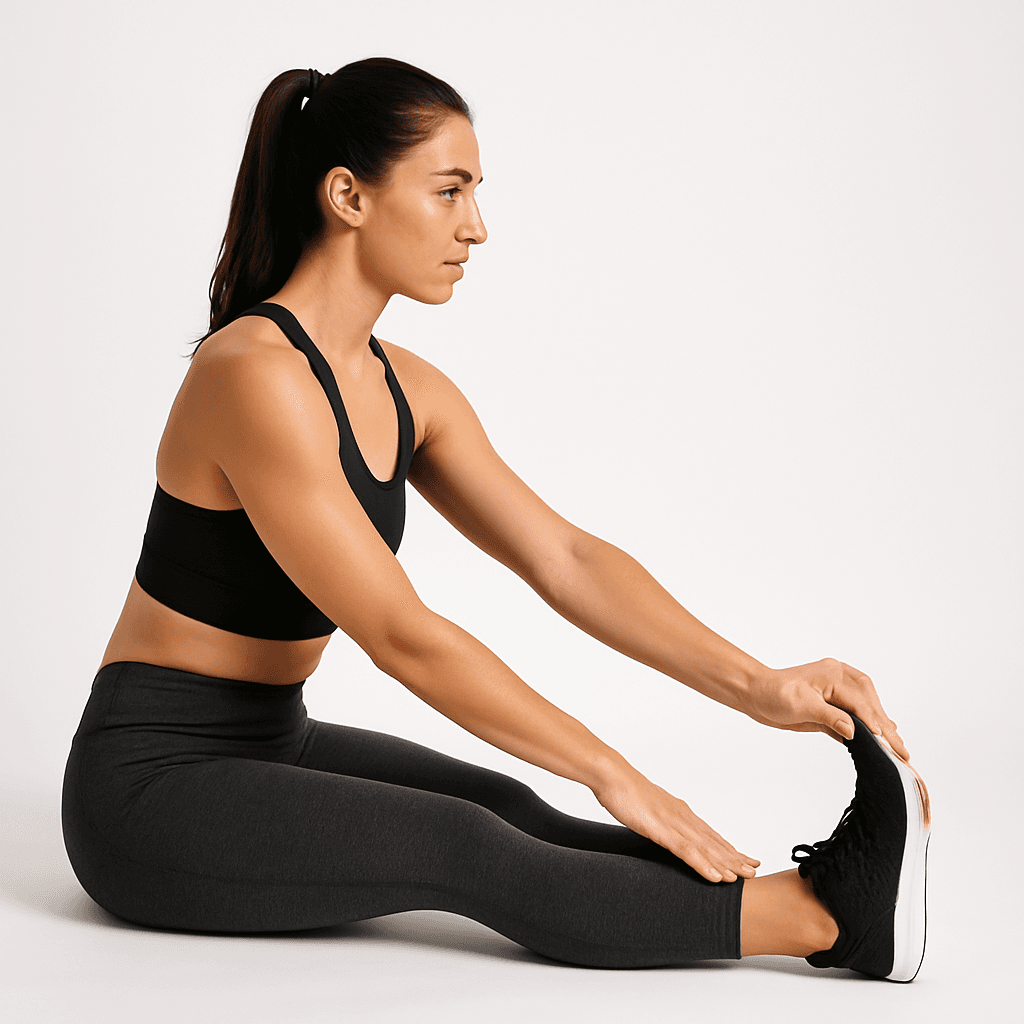
Plantar Fascia Stretch
A gentle stretch targeting the plantar fascia along the bottom of the foot.
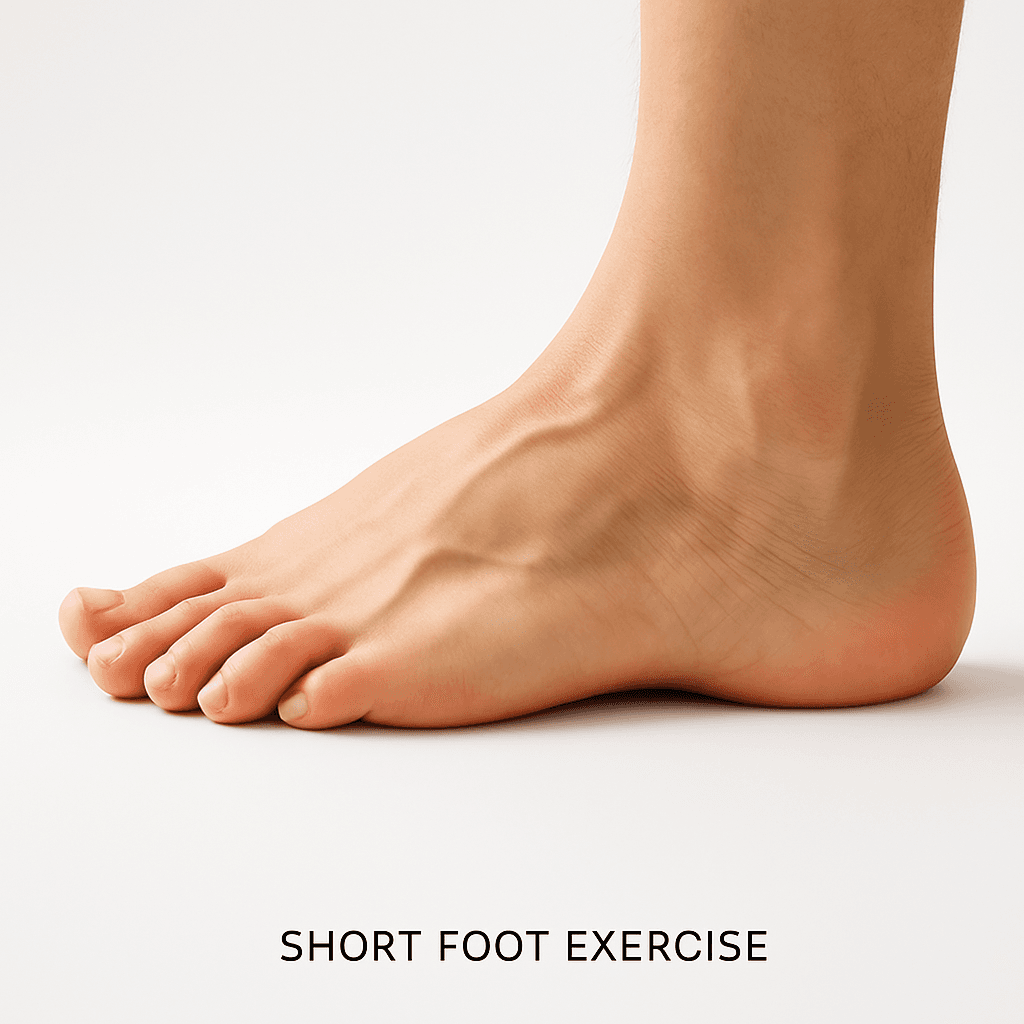
Short Foot Exercise
A neuromotor exercise that activates the intrinsic foot muscles to create a strong, functional arch.
Single-Leg Balance (Eyes Open and Closed)
The simplest and most effective fall prevention exercise available.
Standing Calf Raises
A simple calf and ankle strengthening exercise performed through the full available range of motion.
Standing Heel Raises
A simple calf and ankle strengthening exercise that dramatically improves balance, reduces fall risk, and enhances lower leg circulation.
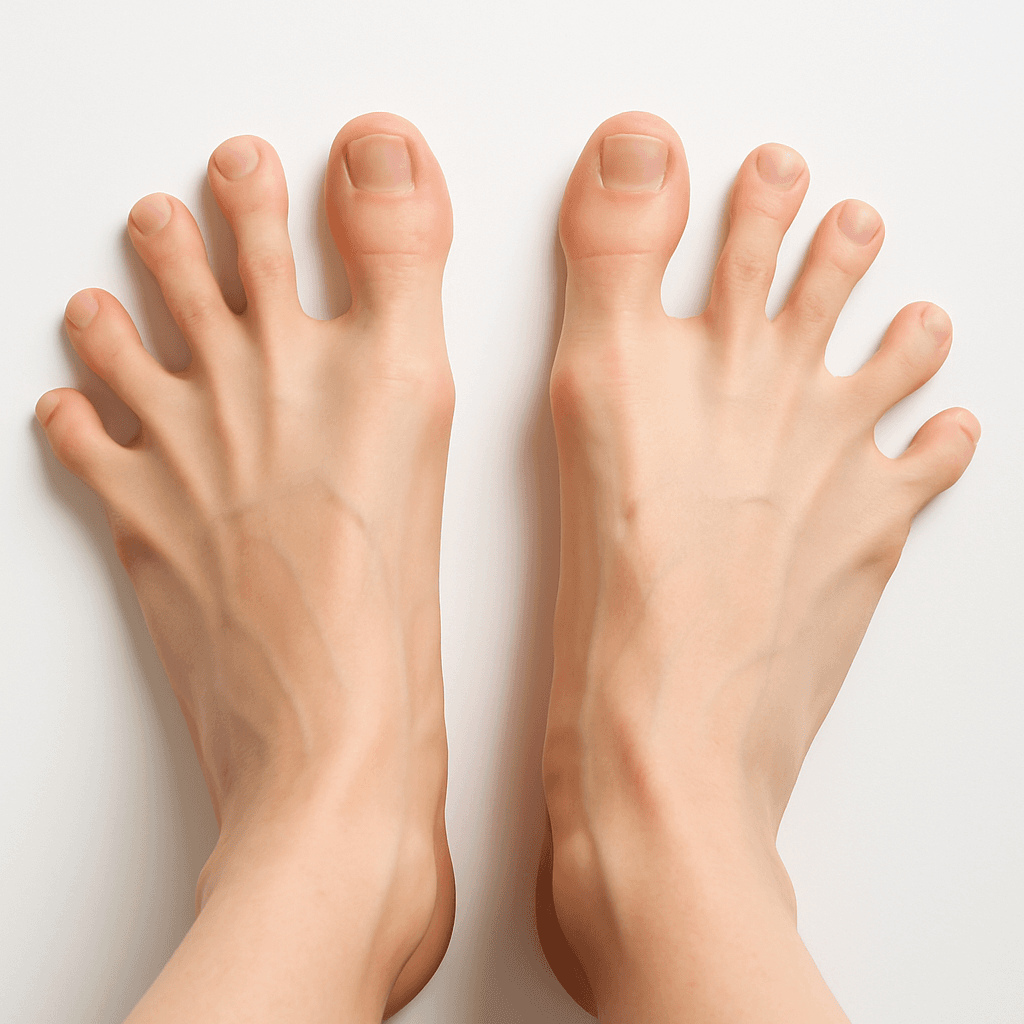
Toe Spreading
Actively spreading all five toes as wide as possible rebuilds the neuromuscular connection to the intrinsic foot muscles that chronic footwear has suppressed.
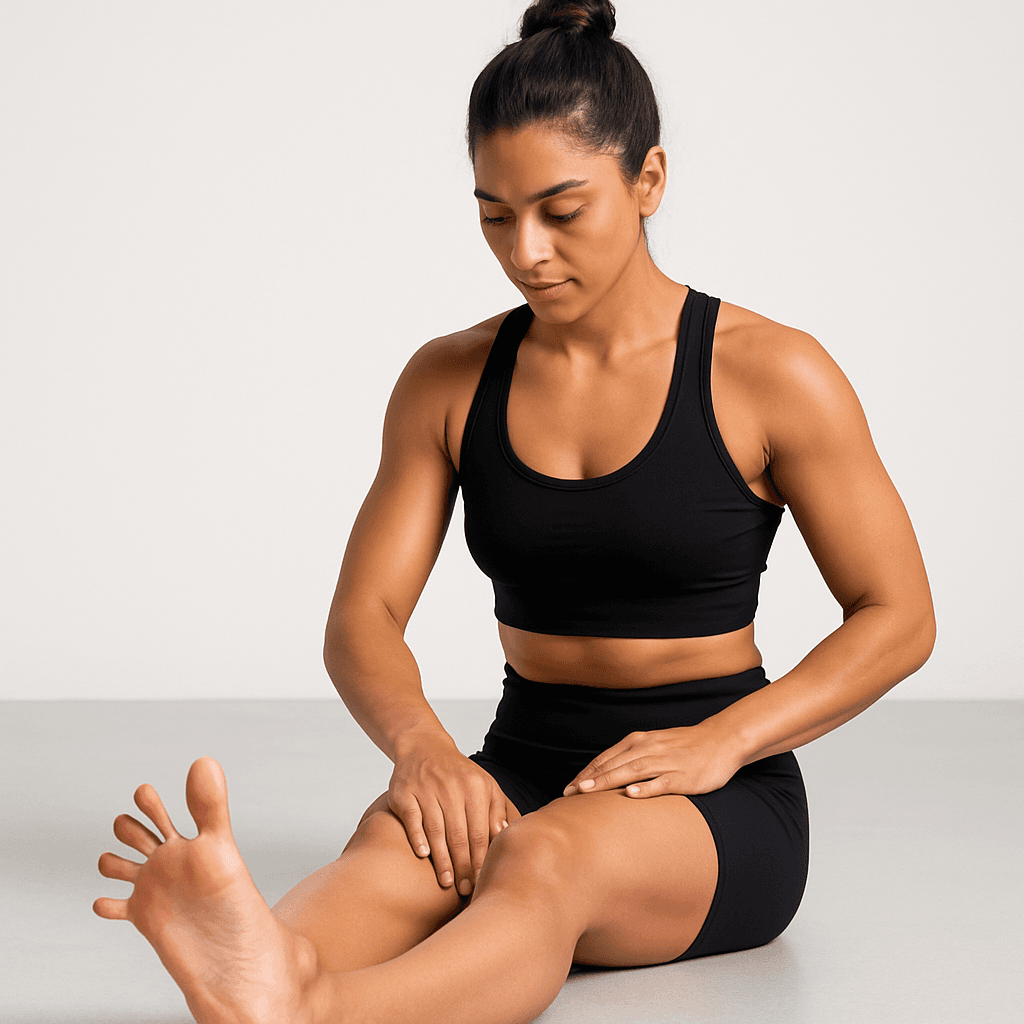
Toe Spreading and Gripping
A foundational foot mobility exercise that restores the independent movement of the toes — lost for most people who wear shoes daily.
Full Body
18 exercisesBear Crawl (Modified)
A developmental movement pattern that trains contralateral coordination, core stability, and shoulder strength simultaneously.
Bear Crawl Position
On all fours with knees hovering just one inch off the floor, you hold the quadruped position — or slowly crawl forward and backward — building deep shoulder stability, hip flexor endurance, and full-body neuromuscular coordination.
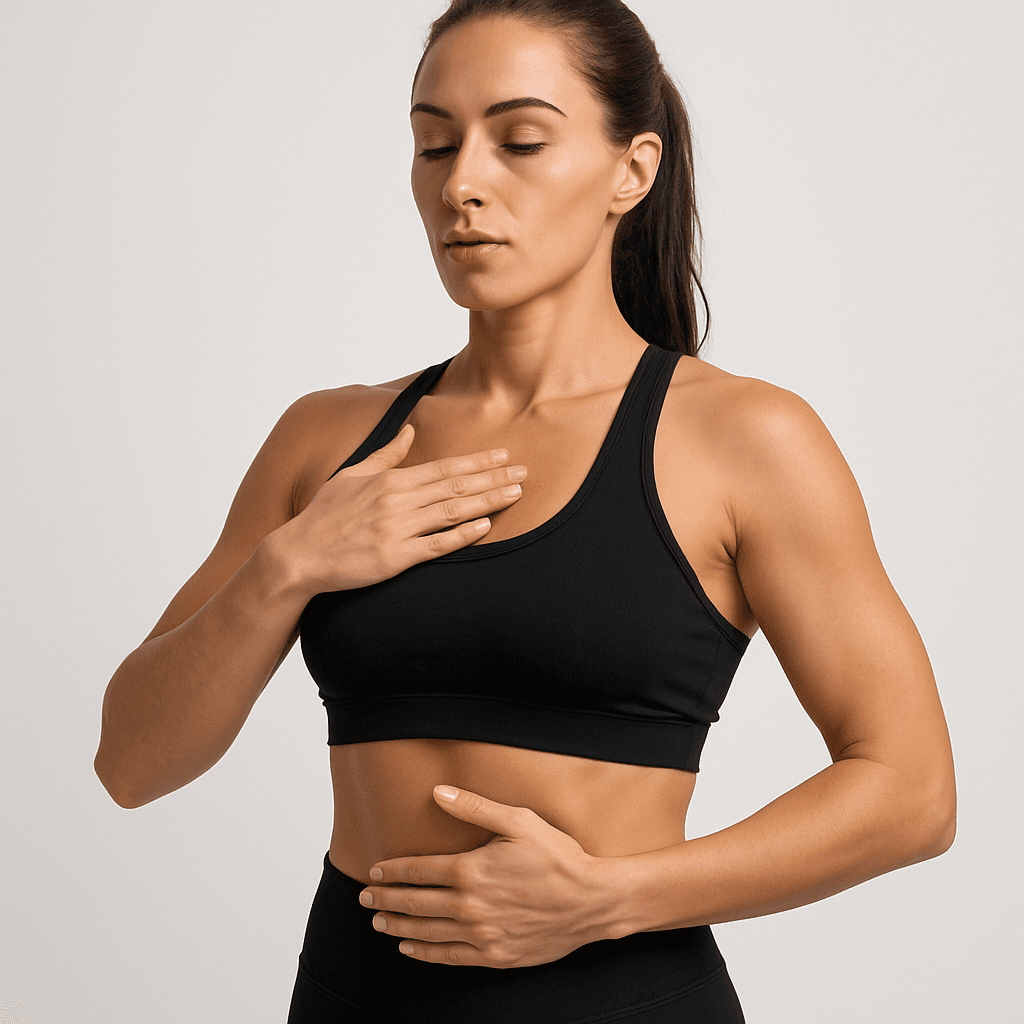
Diaphragmatic Breathing
Most people with chronic pain breathe shallowly into the chest, which keeps the nervous system in a stress state and prevents the deep core from engaging properly.
Farmer's Carry
A fundamental loaded carry exercise that trains the body to maintain postural alignment under real-world loading conditions.
Gravity Drop (Doorway Hang)
A spinal decompression exercise using a doorframe or pull-up bar to allow gravity to gently traction the spine and release the lats, hip flexors, and paraspinals simultaneously.
Lunge with Thoracic Rotation
A dynamic exercise that combines lower body stability with thoracic mobility — two of the most commonly restricted areas in people with poor posture.
Overhead Reach with Squat
Standing with feet shoulder-width apart, you reach both arms overhead as you descend into a squat — maintaining a neutral spine, open chest, and arms in line with your ears at the bottom.
Plank with Hip Extension
From a forearm plank position with the lumbar spine neutral, you slowly lift one leg into hip extension without allowing the pelvis to rotate or the lower back to arch.
Side Plank
Supported on one forearm and the side of the foot, you hold a lateral body bridge that trains the quadratus lumborum, lateral hip, and obliques to prevent lateral spine bending.
Single-Leg Balance (Eyes Open and Closed)
The simplest and most effective fall prevention exercise available.
Single-Leg Deadlift
A functional balance and posterior chain exercise that combines hip hinge mechanics with single-leg stability demands.
Squat to Stand
A dynamic mobility drill that simultaneously works ankle dorsiflexion, hip flexion, hamstring length, and thoracic extension in one flowing movement.
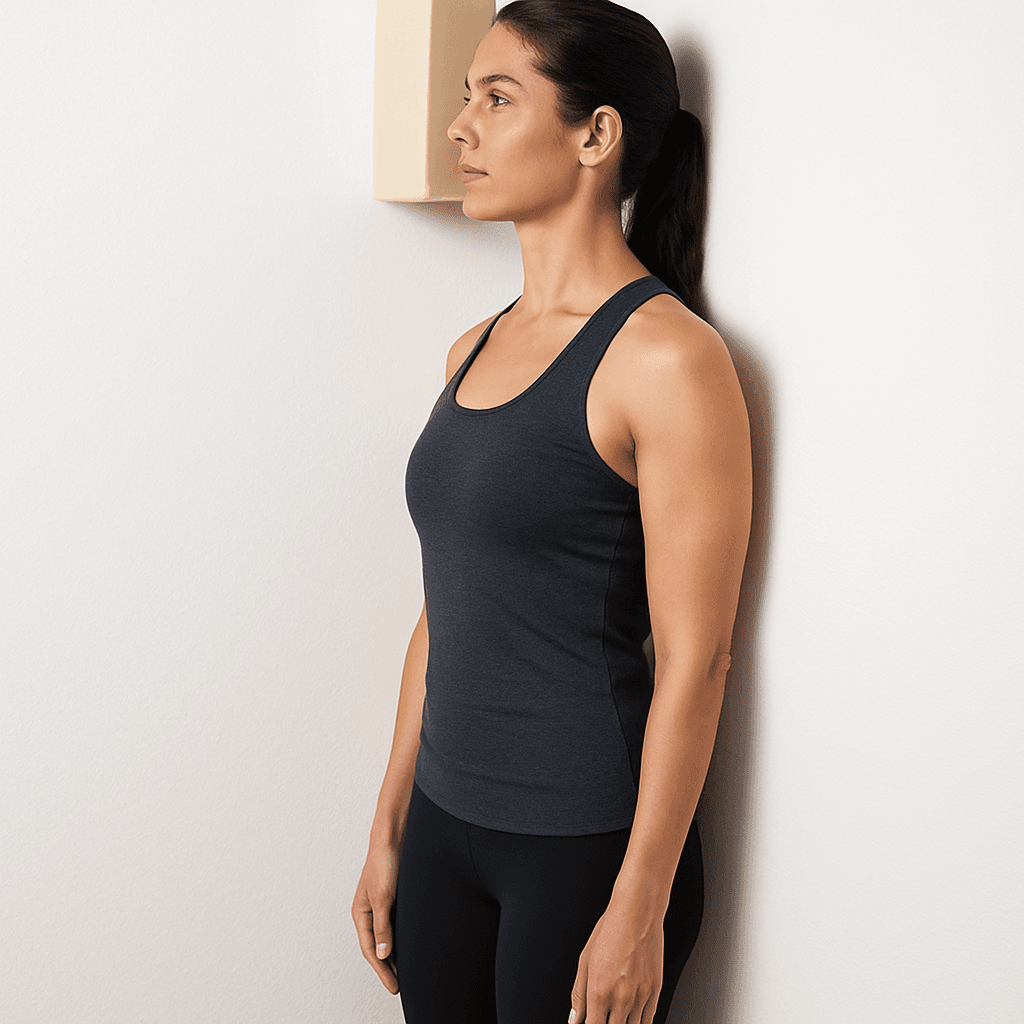
Standing at Wall with Block
A standing exercise using a wall and posture block to reset spinal alignment from top to bottom.
Standing Cat-Cow
Standing with knees slightly bent and hands on thighs, you move through spinal flexion and extension in the same pattern as floor cat-cow but in a loaded, upright position.
Standing Hip Flexor March
Standing tall with hands at your sides, you alternately drive each knee upward toward your chest in a slow, controlled marching motion — emphasizing hip flexion strength and pelvis stability on the stance leg simultaneously.
Static Back
The foundational reset position: lying on your back with calves resting on a block or chair seat, knees and hips at 90 degrees, arms out to the sides at 45 degrees with palms up.
Step-Up (Forward)
A fundamental functional movement that trains the leg muscles and hip extensors through a pattern used constantly in daily life — climbing stairs, stepping onto curbs, and rising from low surfaces.
Triangle Pose
A lateral trunk stretch in a wide-stance position with one hand reaching toward the ankle and the other arm extended to the ceiling.