Single-Leg Balance (Eyes Open and Closed)
Balancing on one leg with eyes closed is a balance exercise that removes vision so the stabilizers in your foot, ankle, knee and hip do the work. Start eyes open beside a wall with 3 holds per leg of 20 to 30 seconds, build toward 60 seconds, then close your eyes once 60 seconds feels easy.
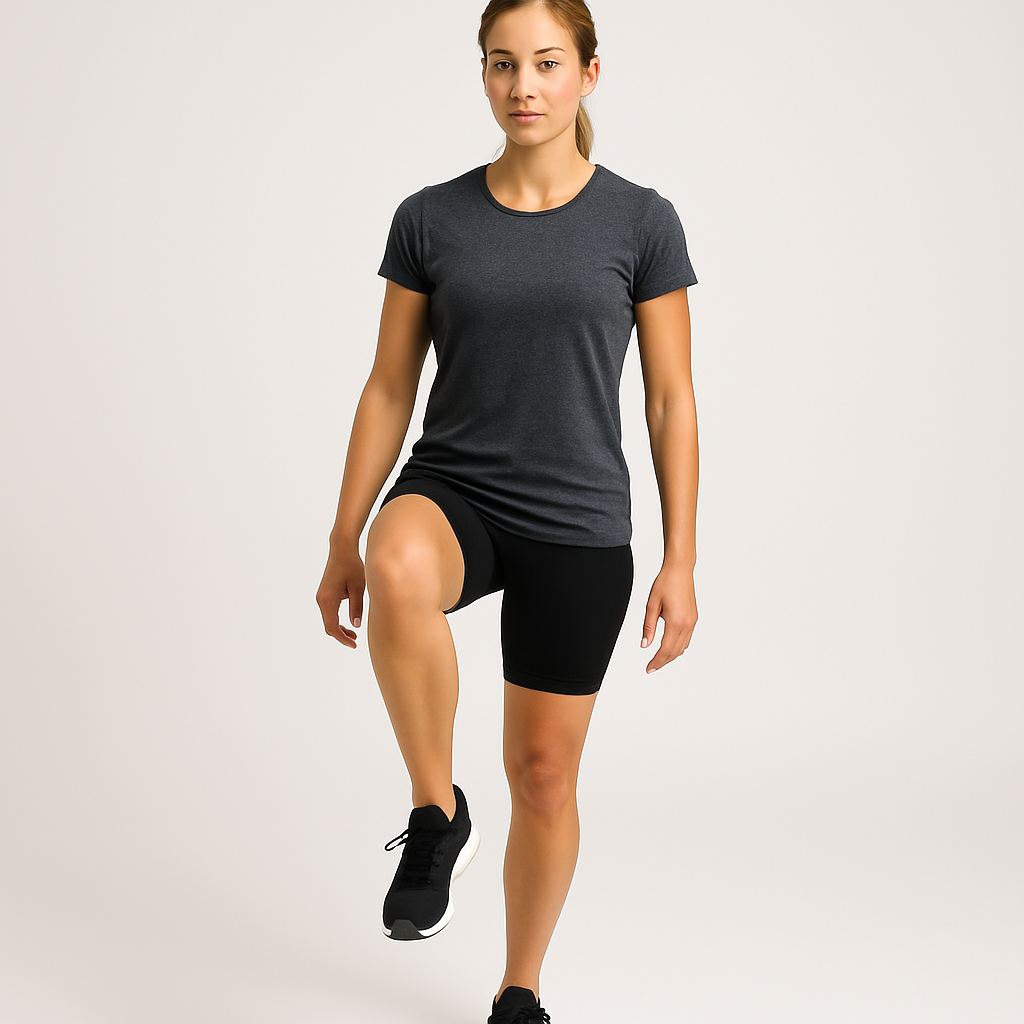
How to do it
- 1
Stand beside a wall or chair in case you need to catch yourself.
- 2
Lift one foot off the floor by bending the knee and hold the single-leg position.
- 3
Start with 20 to 30 seconds eyes open, working toward 60 seconds.
- 4
Once 60 seconds eyes open is easy, close your eyes and repeat, this removes visual input and forces the proprioceptive system to work.
- 5
Switch legs and repeat. The weaker side reveals itself quickly.
Mike's coaching cues
- Shift your weight onto one foot and lift the other just off the ground.
- Micro-bend that standing knee, because locking it straight kills your stability.
- Find a spot on the wall at eye level and fix your gaze there before you ever close your eyes.
- Stay tall through your torso, especially once your eyes are closed and everything gets harder.
- Stand close enough to the wall or chair that you can touch it instantly if you need it.
Easier option
If balancing on one leg feels risky, keep your fingertips lightly on a wall or counter the whole time, and only lift your foot a little. Less support comes with practice.
Benefits
- Dramatically reduces fall risk in older adults with regular practice
- Strengthens the ankle, knee, and hip stabilizers simultaneously
- Improves proprioception and balance reactions throughout the entire postural chain
Common mistakes
- Standing too far from the wall, you should be able to touch it instantly if needed
- Skipping the eyes-closed progression, which provides most of the proprioceptive benefit
- Not practicing daily, balance is a perishable skill that requires consistent challenge
Common questions
Why can't I balance on one foot with my eyes closed?
With your eyes closed your body loses visual input and has to rely on the sensors in your feet, ankles, knees and hips. If those haven't been challenged in a while, you wobble fast. It's a skill you can build with daily practice.
Does standing on one leg with eyes closed improve balance?
Yes. Taking away vision forces your proprioceptive system to work harder, and that's where most of the benefit of this exercise comes from. Practiced regularly, it strengthens your ankle, knee and hip stabilizers at the same time.
How long should you be able to stand on one leg with eyes closed?
Build it in stages. Start with 20 to 30 seconds eyes open and work toward 60 seconds. Once 60 seconds eyes open is easy, close your eyes and repeat the same progression.
How do I practice balancing on one foot with eyes closed safely?
Stand right beside a wall or counter. If it feels risky, keep your fingertips lightly on the wall the whole time and only lift your foot a little. You'll need less support as you practice.
What are the benefits of standing on one leg with eyes closed?
It trains your balance reactions through the whole chain from your foot up through your hip and spine. With regular practice it can lower fall risk, especially for older adults.
How often should I do eyes-closed balance exercises?
Do them daily. Balance is a perishable skill, so it fades if you don't keep challenging it. Do 3 holds on each leg and notice which side is weaker.
Target areas
Good for
Used in these programs
Get the full guided program, with video walkthroughs for every exercise.
Find Your ProgramBrowse all programs →