Deep Squat Hold
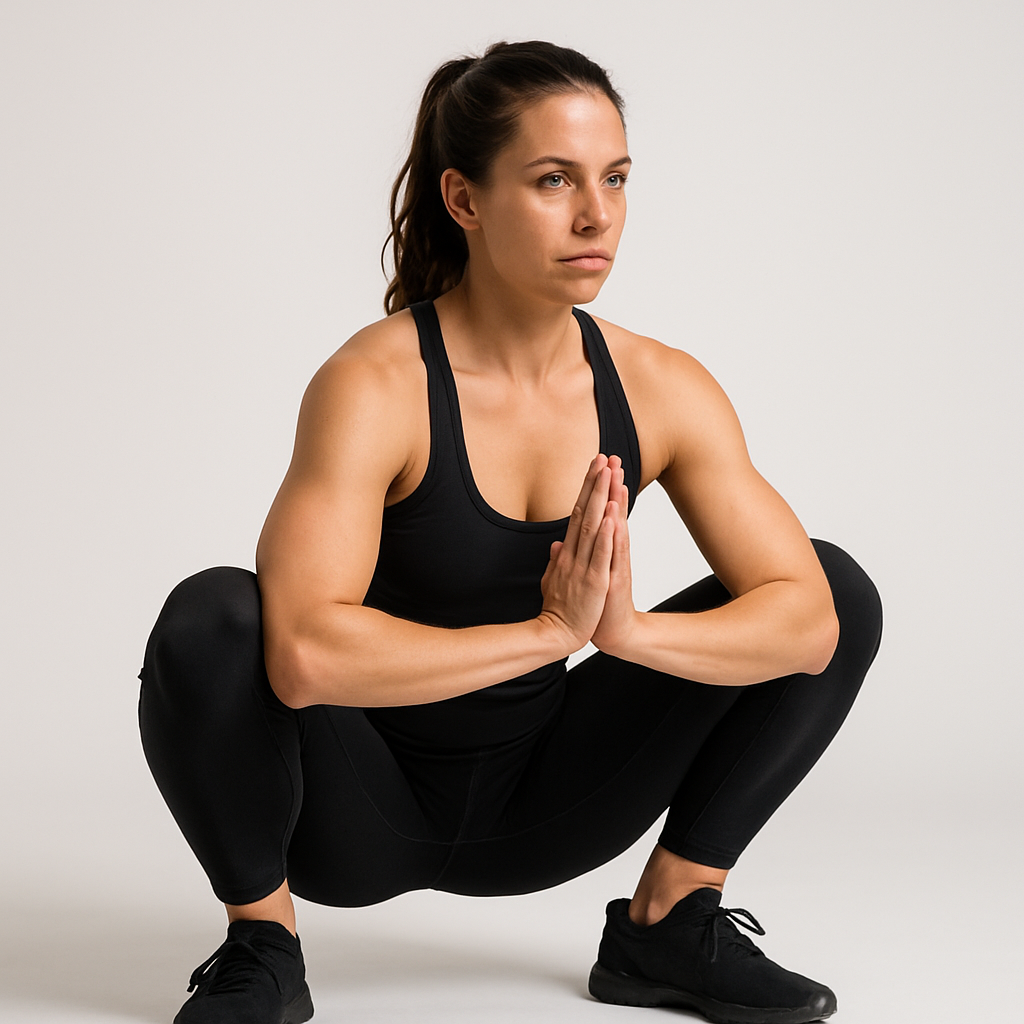
A full-depth squat hold (heels on floor when possible) with elbows pressing the knees into external rotation, the deep squat position restores ankle dorsiflexion, hip internal rotation, and lumbar flexion mobility simultaneously. It is one of the most comprehensive lower-body mobility positions available and was a natural resting position for humans throughout history.
How to do it
- 1
1. Stand with feet shoulder-width apart, then slowly lower your body by bending your knees and hips, descending into a full squat position.
- 2
2. Lower until your hips drop below knee level, keeping your chest upright and your weight distributed through your whole foot (heels on the ground if possible).
- 3
3. Place your elbows on the inside of your knees and gently press your knees outward into external rotation using your arm pressure.
- 4
4. Keep your spine neutral and allow your pelvis to tuck slightly; relax into the position and breathe deeply throughout the hold.
- 5
5. Maintain steady elbow pressure against your knees to deepen the stretch gently without forcing the position.
Easier option
Can't get that low or keep your heels down? Hold onto a doorframe or sturdy post in front of you and let it support your weight as you sink down only as far as comfortable.
Benefits
- Restores ankle dorsiflexion mobility and reduces ankle stiffness from prolonged sitting or heel-wearing.
- Opens hip internal rotation and reduces hip tightness, improving lower back and hip pain.
- Decompresses the lumbar spine and improves spinal mobility by gently stretching the lower back and posterior chain.
Common mistakes
- Allowing heels to lift off the ground early—this reduces ankle mobility gains; focus on pressing heels down or use a slight incline if needed.
- Rounding the lower back excessively instead of maintaining a neutral spine—this shifts stress away from the hips and reduces benefits.
- Using excessive force with elbow pressure on the knees—gentle, sustained pressure is more effective and safer than aggressive pushing.
Target areas
Used in these programs
Get the full guided program, with video walkthroughs for every exercise.
Find Your ProgramBrowse all programs →