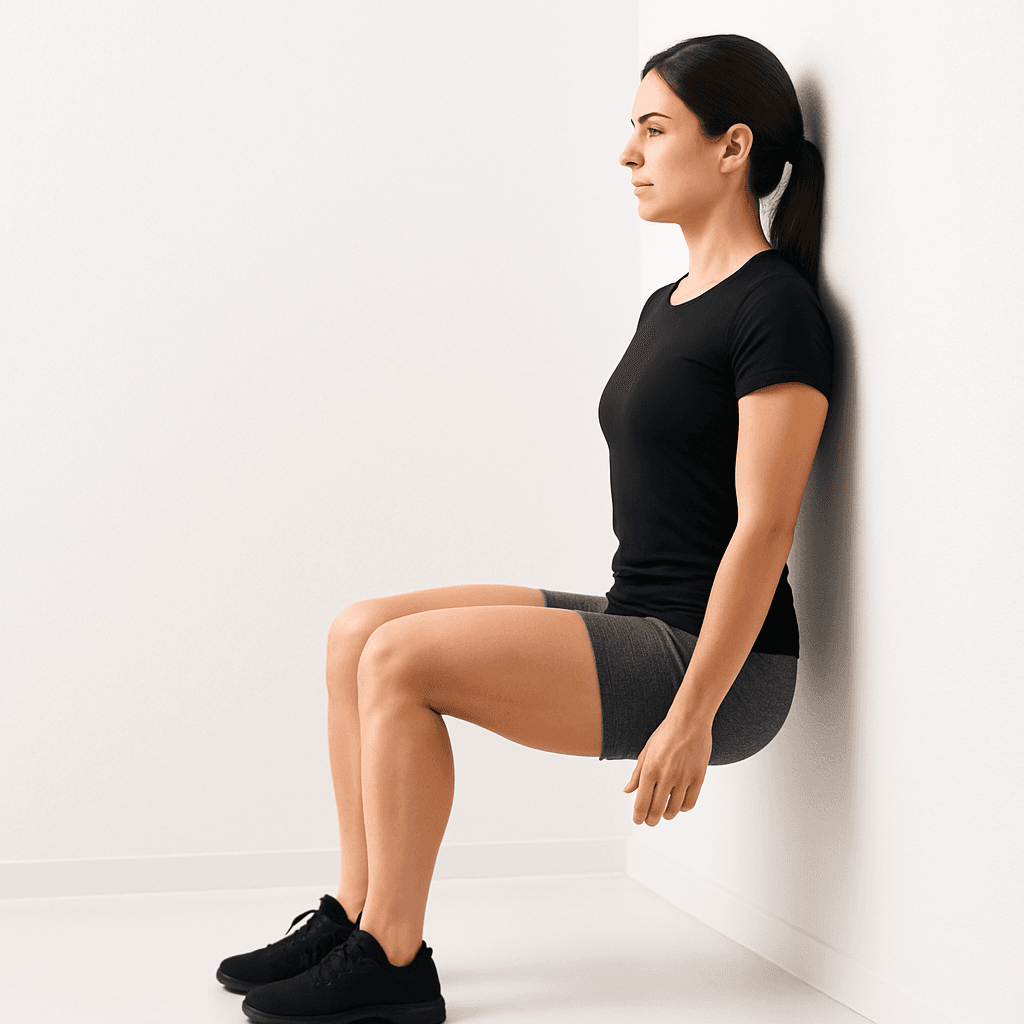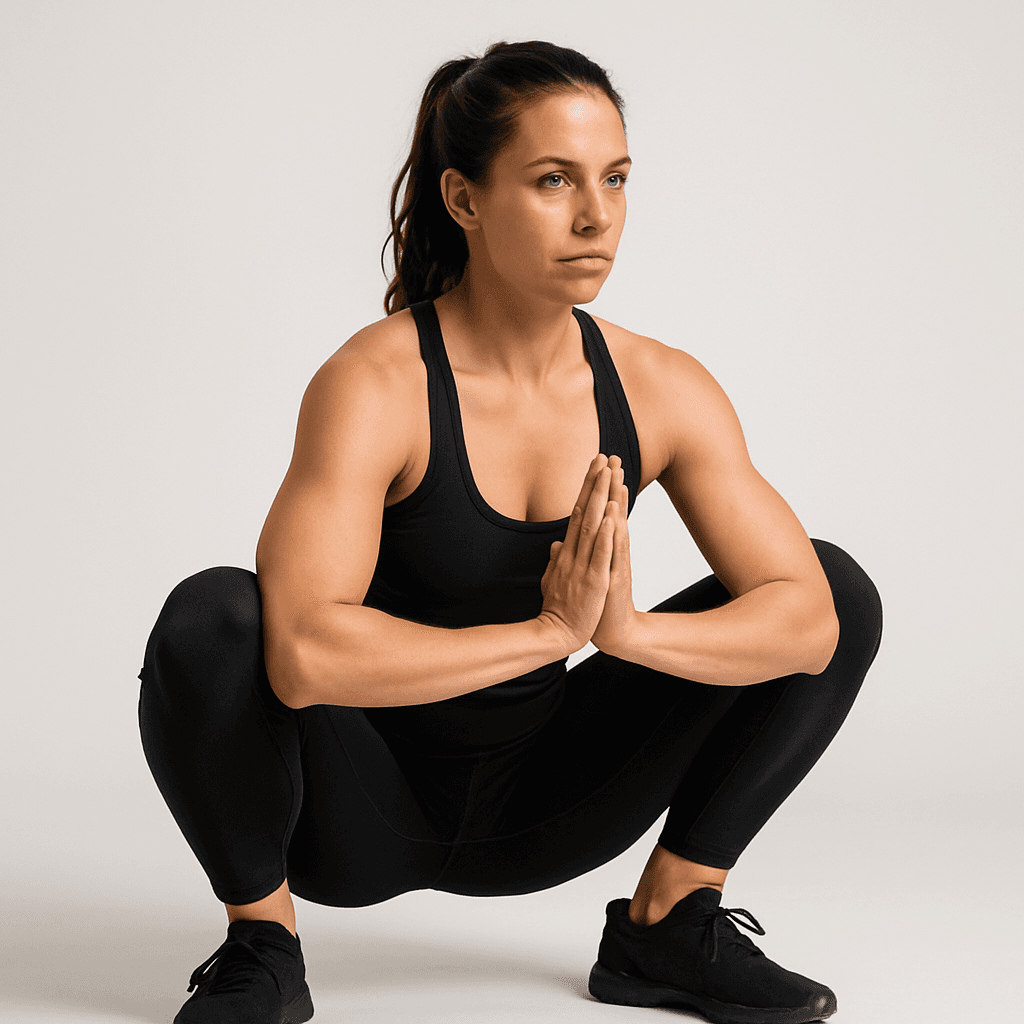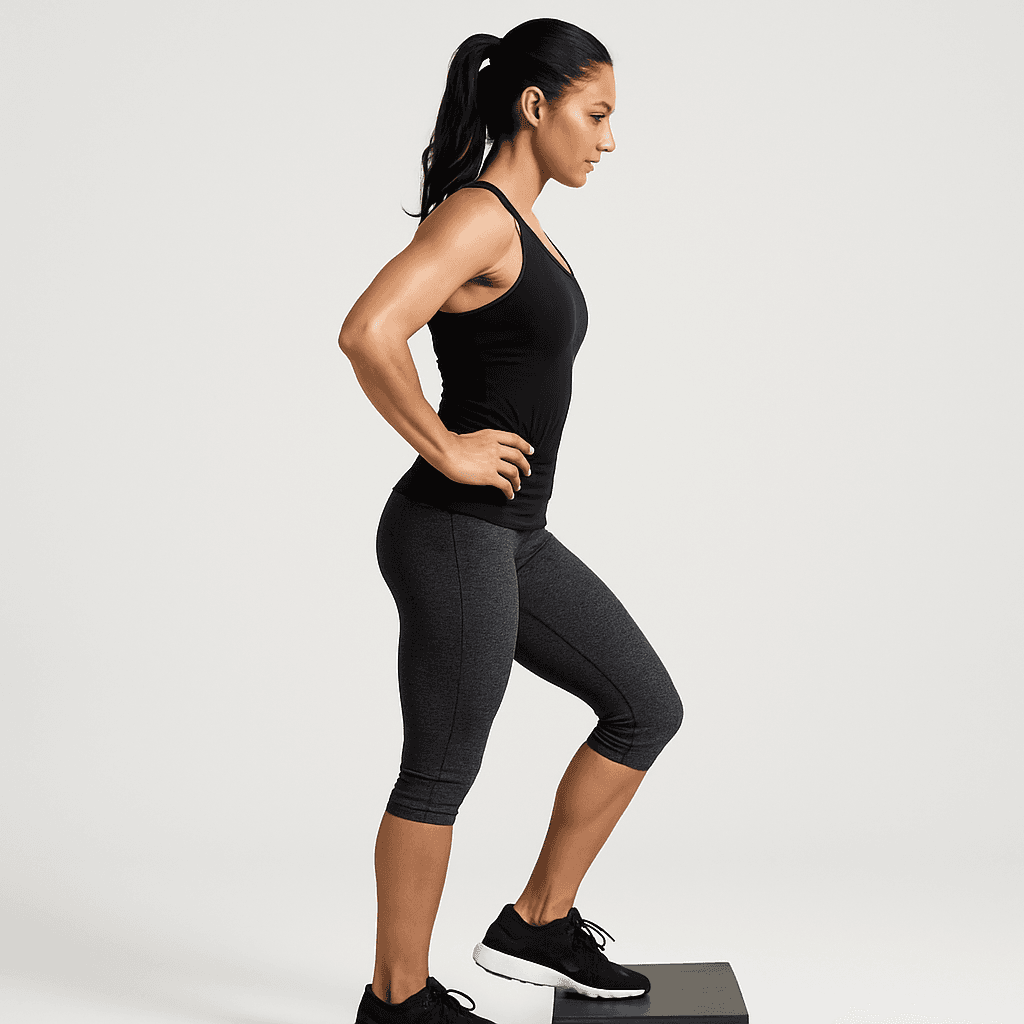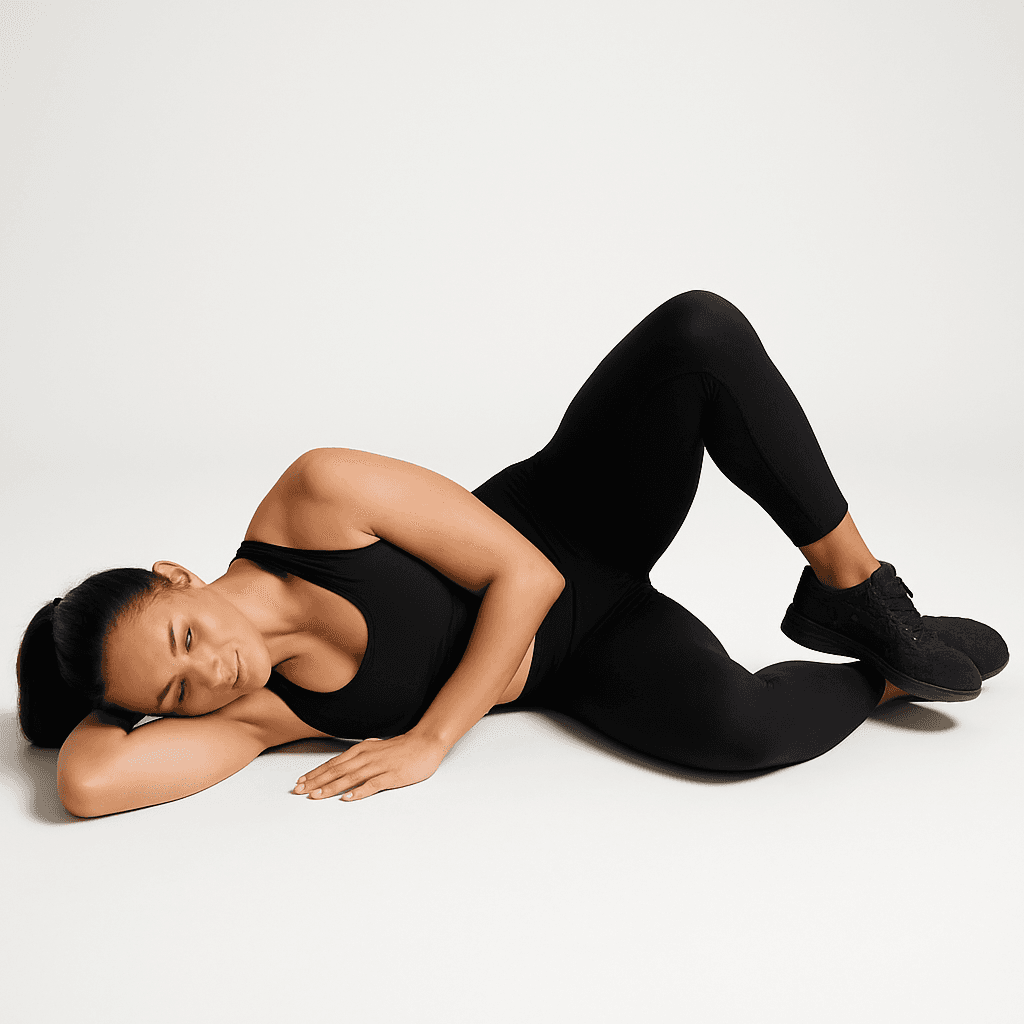
VMO Squat
A narrow-stance squat with toes slightly turned out, emphasizing the final degrees of knee extension to maximally activate the vastus medialis oblique — the teardrop-shaped inner quad that stabilizes the patella and prevents lateral tracking. VMO activation is key to resolving patellofemoral pain and knee clicking.
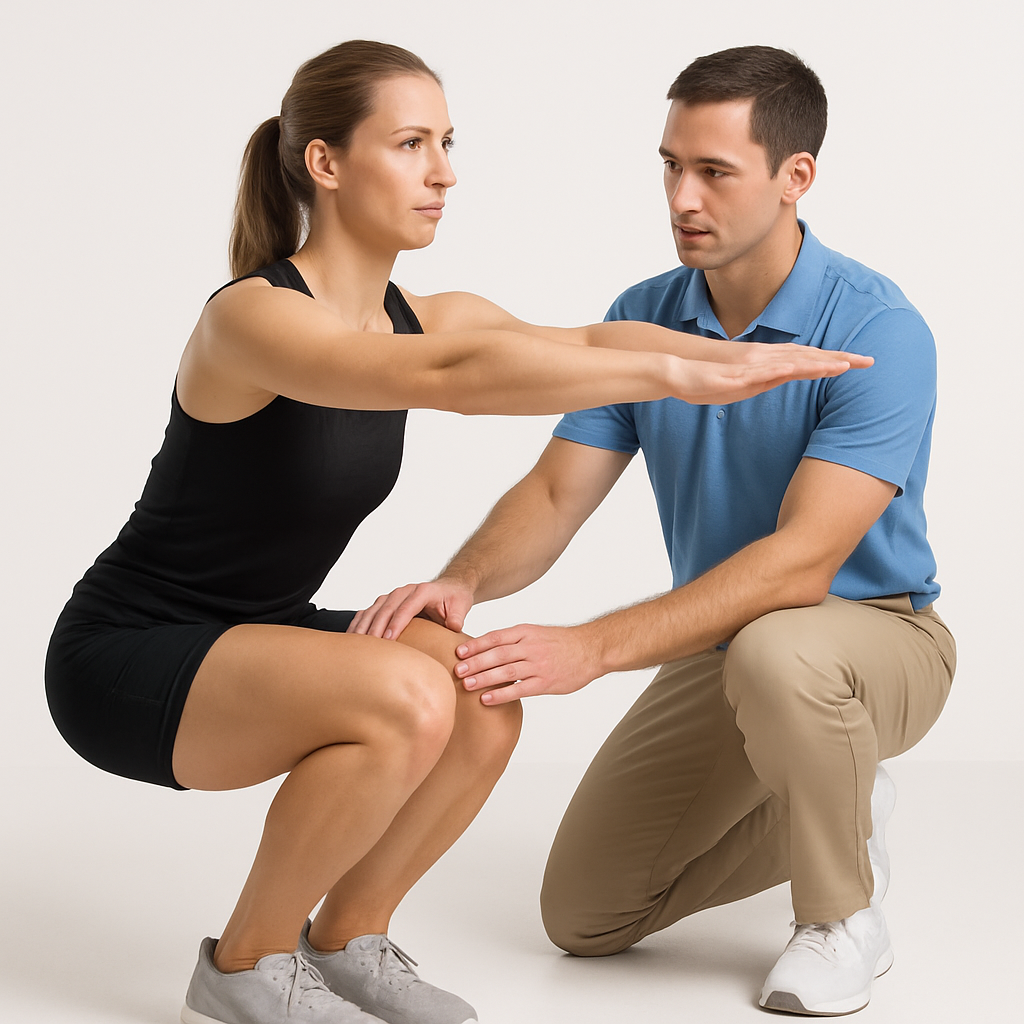
How to do it
- 1
1. Stand with feet hip-width apart or slightly narrower, toes pointed 5–15 degrees outward.
- 2
2. Engage your core and keep your chest upright, shifting weight slightly toward your heels.
- 3
3. Lower into a squat by bending your knees, maintaining an upright torso and neutral spine.
- 4
4. At the bottom position, press through your heels and drive upward, focusing on squeezing your inner quad as you lock out the final 10–15 degrees of knee extension.
- 5
5. Pause briefly at full extension to maximize VMO contraction, then control the descent into your next rep.
Easier option
If a full squat is too deep, hold a chair or counter in front of you and lower only partway, focusing on squeezing that inner quad as you straighten back up.
Benefits
- Strengthens the vastus medialis oblique to stabilize the patella and reduce lateral knee tracking, alleviating patellofemoral pain and knee clicking.
- Improves knee joint stability and proprioception, supporting better postural alignment throughout the kinetic chain.
- Enhances quadriceps balance and muscular endurance, preventing compensatory hip and ankle stress during standing and walking.
Common mistakes
- Allowing the knees to cave inward (valgus collapse) instead of maintaining alignment over the toes—this reduces VMO activation and increases injury risk.
- Failing to achieve full knee extension or rushing through lockout, missing the critical final range where VMO activation peaks.
- Leaning the torso excessively forward or shifting weight to the toes, which reduces glute and quad engagement and places stress on the patella.
Target areas
Used in these programs
Get the full guided program, with video walkthroughs for every exercise.
Find Your ProgramBrowse all programs →