McGill Curl-Up
The McGill curl-up is a sit-up alternative that works your abs while your lower back keeps its natural arch, so your spine stays in a neutral position. Lift your head and shoulders a few inches, hold 10 seconds while breathing normally, and do 3 sets of 8 to 10 reps.

How to do it
- 1
Lie on your back with one knee bent and one leg flat on the floor.
- 2
Place both hands under your lower back to maintain its natural curve, do not flatten it.
- 3
Raise only your head and shoulders a few inches off the floor, keeping the lower back supported.
- 4
Hold 8 to 10 seconds at the top, breathing normally throughout.
- 5
Lower slowly and repeat. The lower back should not move, only the head and shoulders lift.
Mike's coaching cues
- Slide your hands under your lower back and feel that natural arch, because that arch stays put the entire time.
- Brace your core like someone's about to poke your stomach before you lift anything.
- Lift just your head and shoulders two to three inches, no higher, or it turns into a crunch.
- Move your head and shoulders as one unit, like there's a board taped from your skull to your ribs, instead of yanking your chin to your chest.
- Keep breathing through the whole hold, then lower back down slow and controlled.
Easier option
If lifting your head and shoulders strains your neck, lift just an inch and keep the hold short. Even a small, controlled lift trains the right muscles.
Benefits
- Activates the rectus abdominis with minimal lumbar flexion stress
- Safe for people with disc herniations or lower back sensitivity
- Builds anterior core endurance, which protects the spine during daily activities
Common mistakes
- Flattening the lower back into the floor, the hands maintain the natural curve
- Trying to lift too high and turning it into a crunch
- Holding the breath during the hold, breathe normally to truly build endurance
Common questions
What are the benefits of the McGill curl-up?
It builds front core endurance that helps protect your spine during daily activities, without bending your lower back under load. That makes it a better fit than sit-ups or crunches if your lower back is sensitive.
What muscles does the McGill curl-up work?
The main target is the rectus abdominis, your front ab muscle. The goal is to train it to brace and hold your spine still, not to bend it. You should feel your abs, not your neck or hip flexors.
Why is one knee bent and one leg straight?
The bent knee helps keep your pelvis neutral so your lower back does not flatten into the floor. Switch which leg is bent halfway through your sets so both sides get the same work.
Is there a modified McGill curl-up for beginners?
Yes. If lifting your head and shoulders strains your neck, lift just an inch and keep the hold short. Even a small, controlled lift trains the right muscles.
Is the McGill curl-up better than crunches?
For most people with lower back concerns, yes. Crunches flatten and round your lower back over and over, while the curl-up keeps your natural arch and trains your abs to brace instead of bend.
What is Stuart McGill's Big 3?
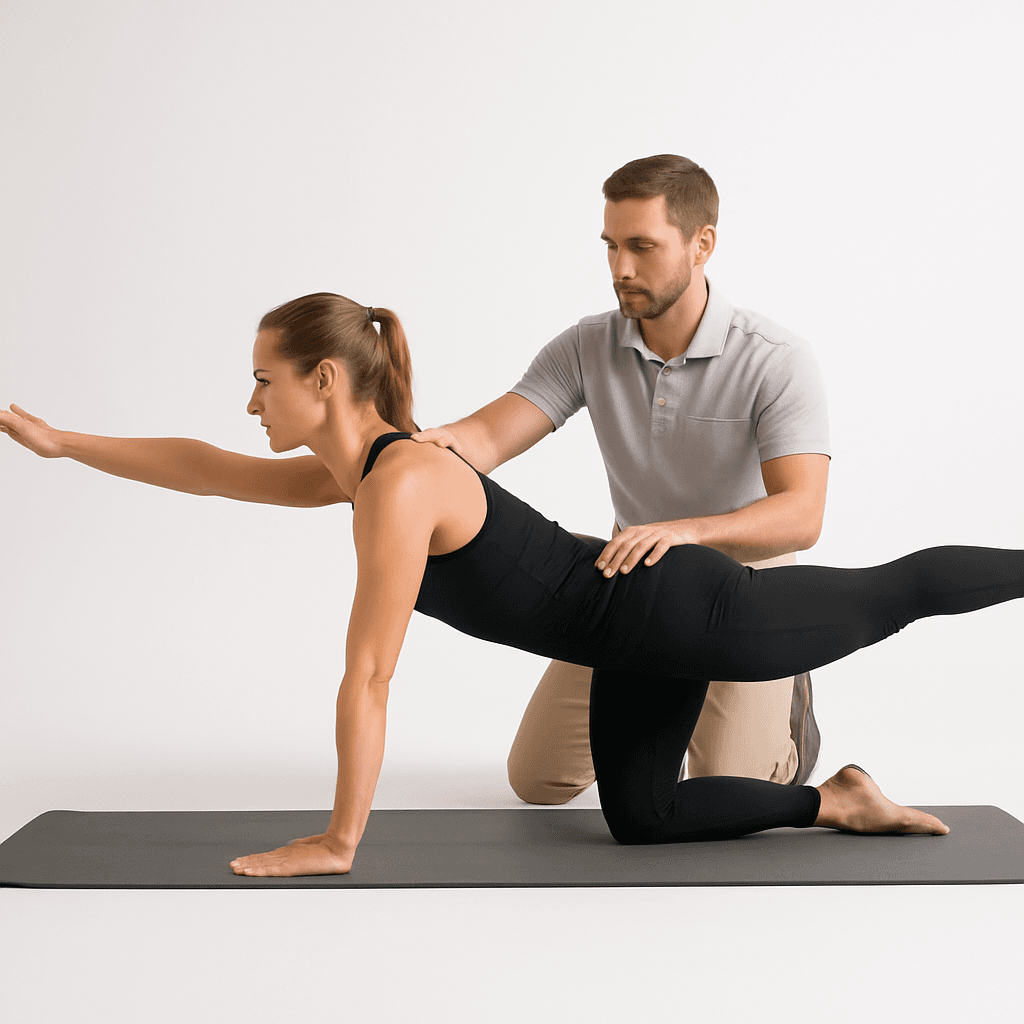
It is a core routine from spine researcher Dr. Stuart McGill: the curl-up, the side plank and the bird dog. Together they train your core from the front, sides and back instead of just the front.
Target areas
Good for
Used in these programs
Get the full guided program, with video walkthroughs for every exercise.
Find Your ProgramBrowse all programs →