Bear Crawl Position
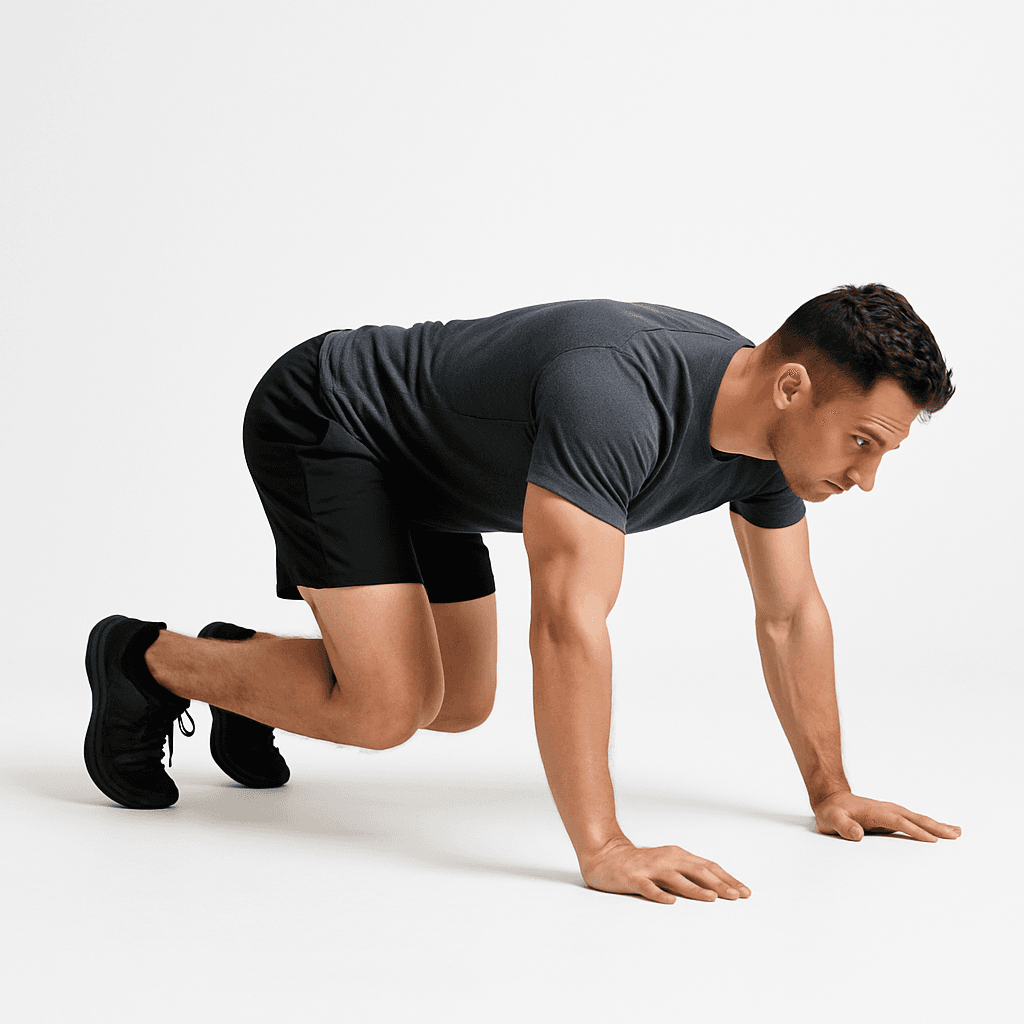
On all fours with knees hovering just one inch off the floor, you hold the quadruped position — or slowly crawl forward and backward — building deep shoulder stability, hip flexor endurance, and full-body neuromuscular coordination. The bear crawl position develops the reflexive spinal stiffness needed for safe, resilient movement in daily life.
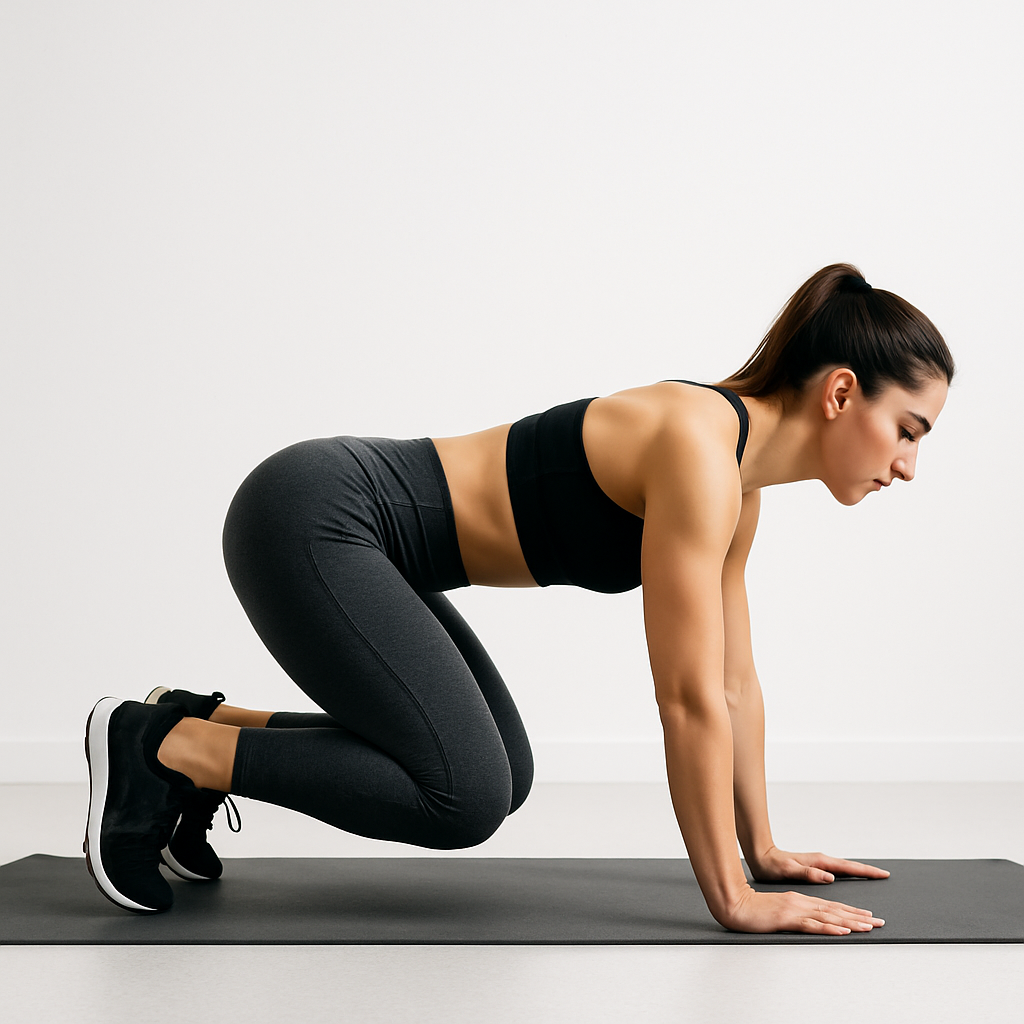
How to do it
- 1
1. Start on your hands and knees with wrists directly under shoulders and knees under hips, maintaining a neutral spine.
- 2
2. Engage your core by drawing your navel toward your spine, then lift your knees one inch off the floor while keeping your back flat.
- 3
3. If holding statically, breathe steadily and maintain tension through your shoulders, core, and hips for the full duration.
- 4
4. If crawling, move your right hand and left leg forward in a controlled manner, then alternate sides in a slow, deliberate pattern.
- 5
5. Keep your head neutral—eyes looking slightly ahead—and avoid letting your hips sag or pike upward.
- 6
6. Lower your knees and rest when you've completed all reps or duration.
Easier option
Wrists bothering you or knees won't lift yet? Hold the all-fours position with knees down and simply brace your core and breathe. That's a real win to start.
Benefits
- Strengthens deep core stabilizers and reflexive spinal stiffness, reducing lower back strain during daily activities
- Builds shoulder stability and scapular control, improving upper-crossed posture and reducing neck tension
- Enhances hip flexor endurance and neuromuscular coordination, promoting balanced pelvic positioning and better gait mechanics
Common mistakes
- Allowing hips to sag downward or pike upward instead of maintaining a rigid plank-like torso alignment
- Holding tension only in the arms while neglecting core engagement, reducing the stabilizing benefit
- Moving too quickly during crawls or not lifting knees high enough, which reduces activation of hip flexors and deep stabilizers
Target areas
Used in these programs
Get the full guided program, with video walkthroughs for every exercise.
Find Your ProgramBrowse all programs →