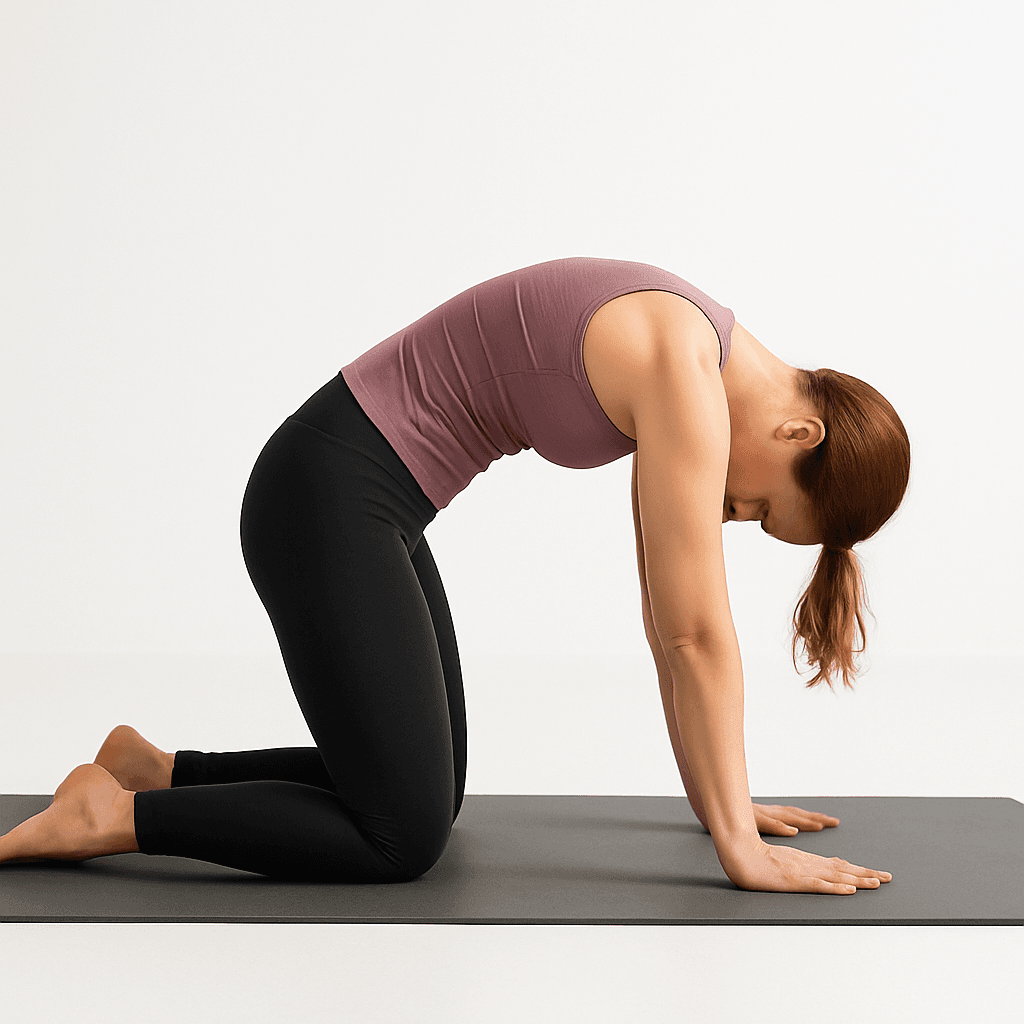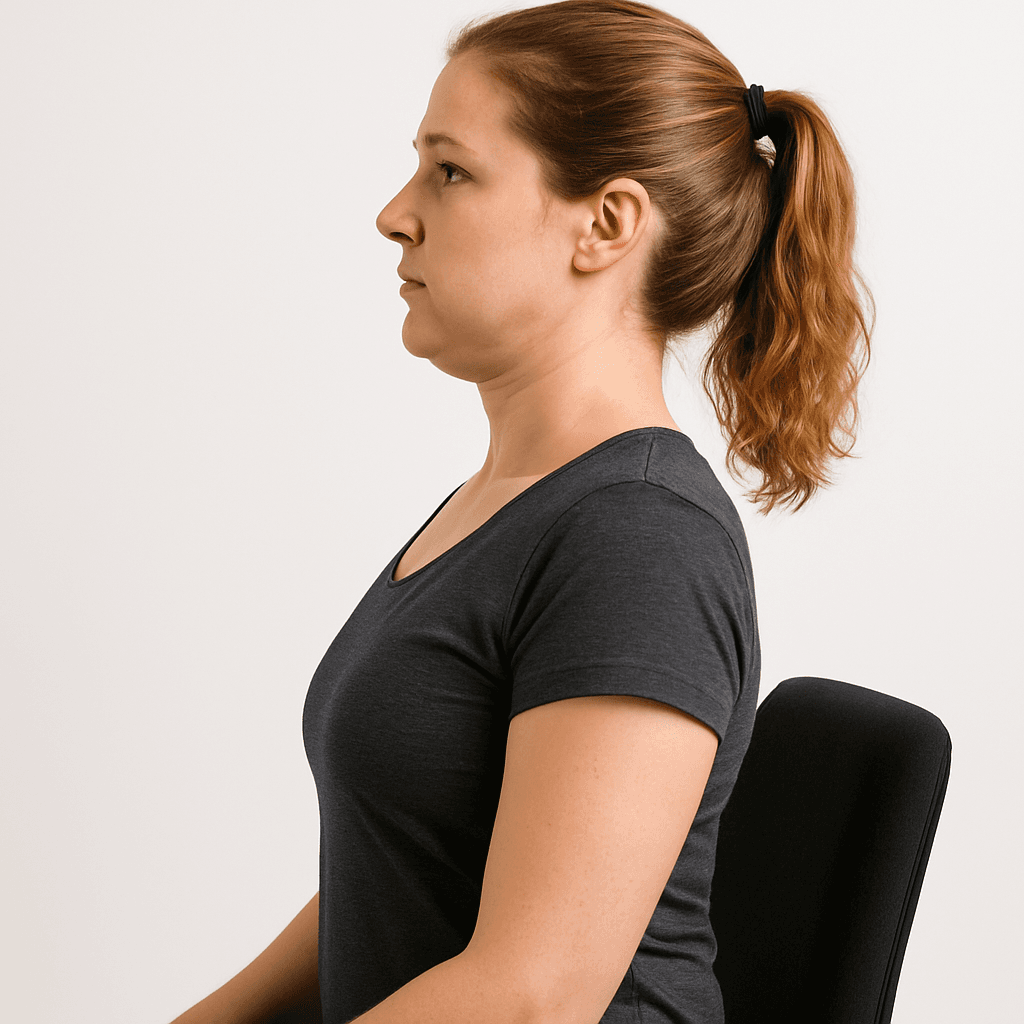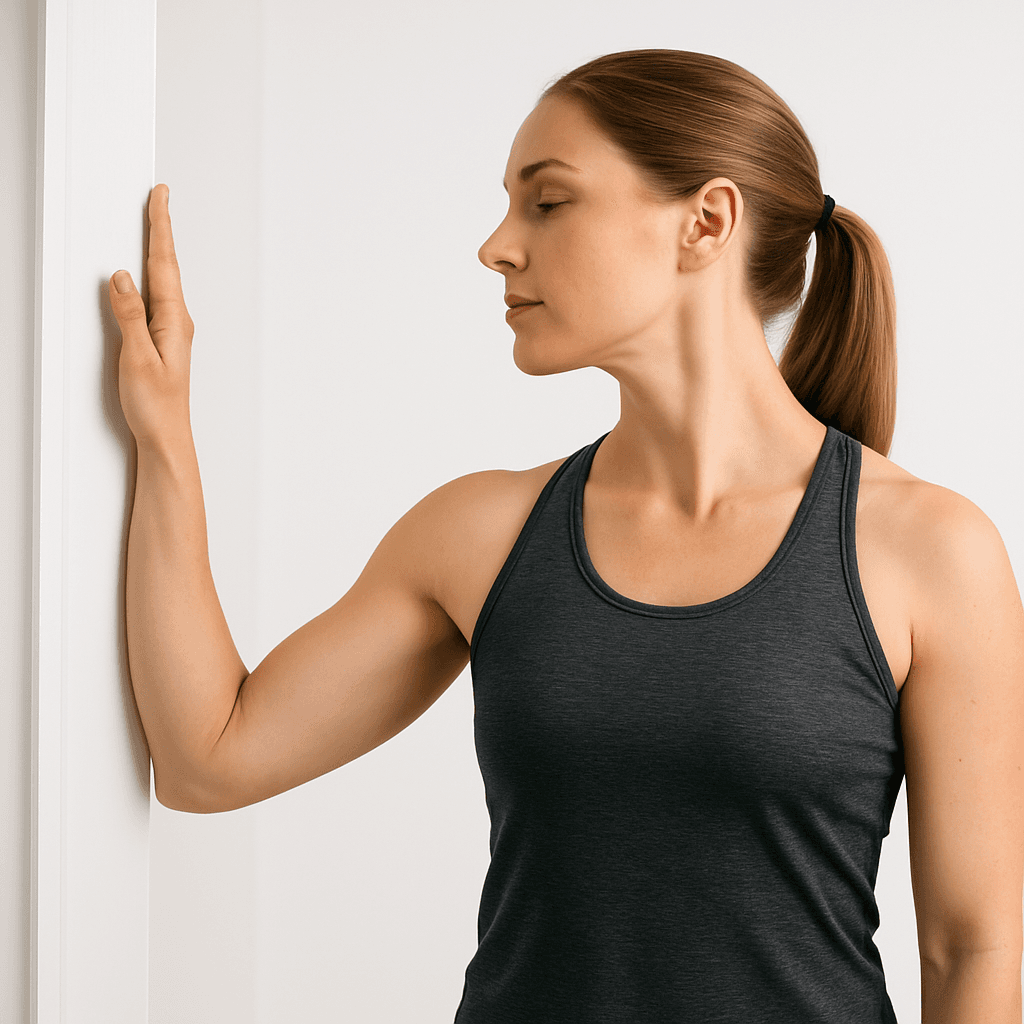
Neck Rotation Mobility
Slow, controlled cervical rotation — turning the head side to side through full pain-free range — lubricates the facet joints, mobilizes the cervical intervertebral discs, and improves proprioceptive signaling so the nervous system can accurately place the head over the shoulders. Ideal as a warm-up or cooldown drill.
How to do it
- 1
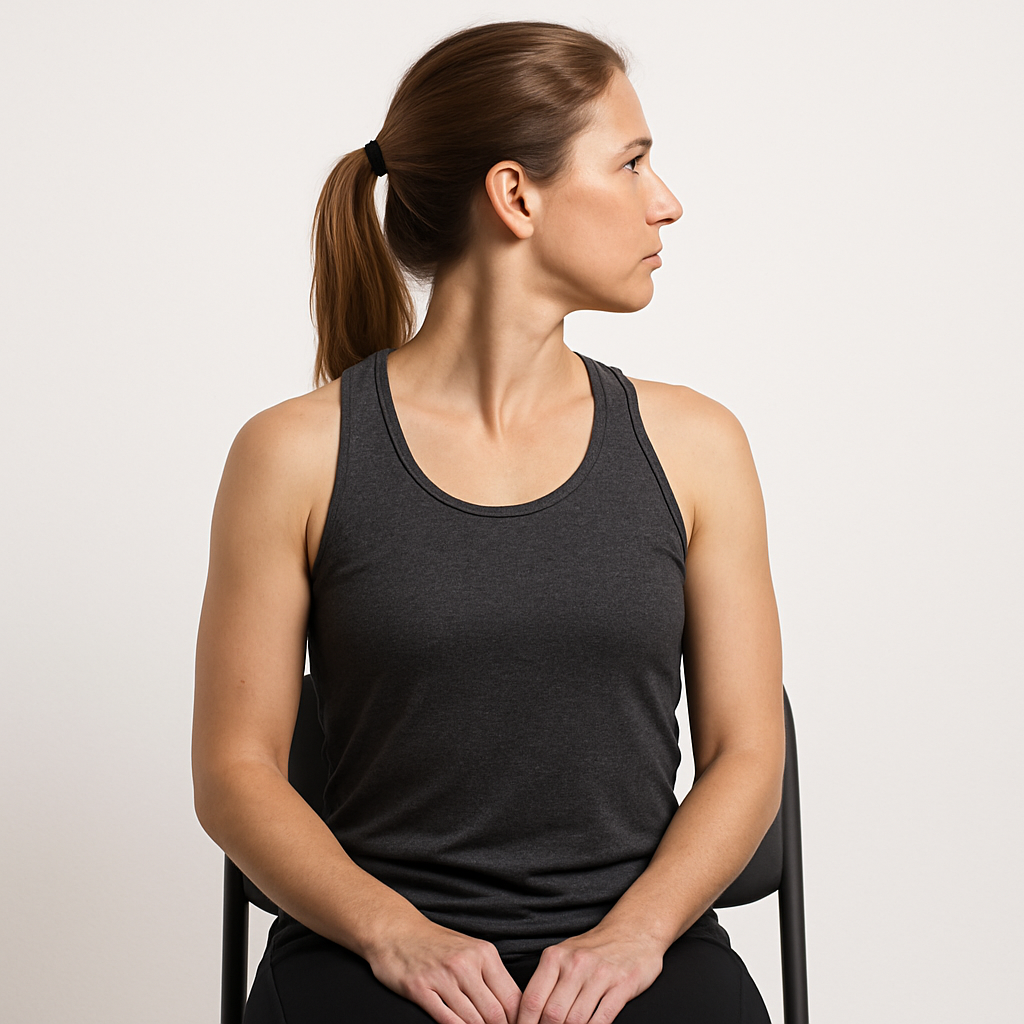
1. Sit or stand with your spine neutral and shoulders relaxed. Keep your gaze level and your chin parallel to the floor.
- 2
2. Slowly turn your head to the right, moving only through the cervical spine. Stop at the point where you feel mild tension—not pain.
- 3
3. Hold this end-range position for 2–3 seconds, then return your head to center in a controlled manner.
- 4
4. Repeat the same movement to the left side, maintaining the same slow, deliberate pace.
- 5
5. Continue alternating sides for the full duration, breathing steadily throughout. Never force beyond your comfortable range.
Benefits
- Lubricates cervical facet joints and hydrates intervertebral discs to reduce stiffness and neck pain
- Restores proprioceptive awareness so your nervous system accurately positions the head over the shoulders, reducing forward head posture
- Improves rotational mobility in the cervical spine, enabling better head positioning during daily activities and computer work
Common mistakes
- Rotating too far or pushing into pain—this triggers protective muscle guarding and defeats the purpose of the drill
- Holding your breath or creating tension in the shoulders and jaw—stay relaxed and breathe steadily throughout
- Moving too quickly—jerky, fast rotations prevent the nervous system from registering the full range and limit synovial fluid distribution
Target areas
Good for
Used in these programs
Get the full guided program, with video walkthroughs for every exercise.
Find Your ProgramBrowse all programs →