Supine Hip Flexor Release
Lying on your back with one leg extended flat on the floor and the other knee pulled to the chest, the extended leg's hip flexor is placed in a sustained stretch by gravity alone. This is a passive hip flexor release — highly effective for people with severe tightness because body weight and time do the work, not effort.
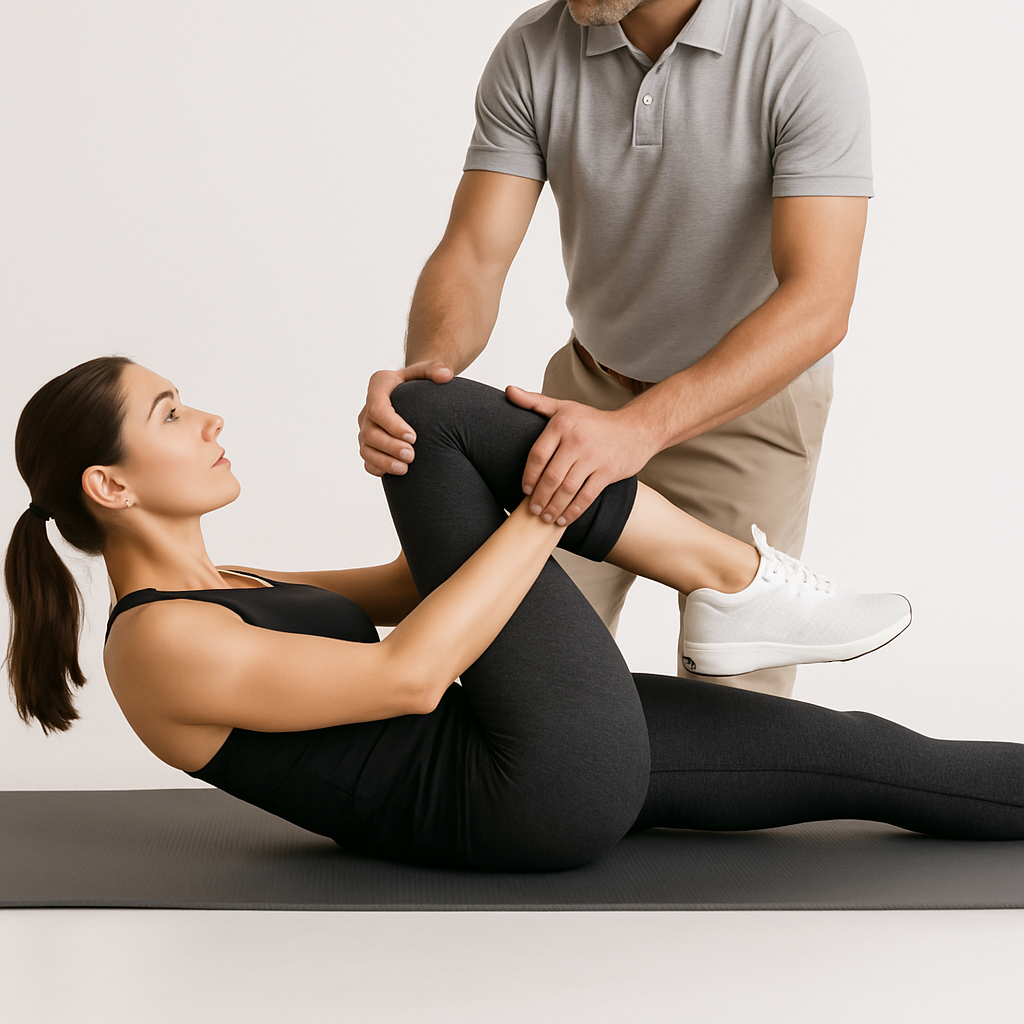
How to do it
- 1
1. Lie flat on your back on a mat or carpet with both legs extended.
- 2
2. Pull one knee toward your chest and wrap your hands around your shin, holding your leg close to your body.
- 3
3. Keep your opposite leg completely relaxed and flat on the floor—this is the leg being stretched.
- 4
4. Relax your head and neck into the floor and breathe deeply, allowing gravity to pull the extended leg's hip flexor into a sustained stretch.
- 5
5. Maintain this position without forcing, letting your body weight do all the work for the full duration.
Easier option
Can't lie on the floor? Do this on a firm bed, or sit in a chair and hug one knee toward your chest while the other foot stays planted, leaning back slightly.
Benefits
- Releases chronically tight hip flexors that pull the pelvis forward and cause excessive lower back curve (lordosis).
- Reduces anterior pelvic tilt and improves neutral spine alignment by lengthening shortened hip flexor muscles.
- Alleviates lower back pain caused by postural imbalance from prolonged sitting and forward hip positioning.
Common mistakes
- Pulling the knee too aggressively or using muscular effort instead of allowing gravity to work—this activates tension rather than releasing it.
- Allowing the extended leg's hip to lift off the floor, which reduces the stretch intensity and prevents proper hip flexor lengthening.
- Arching the lower back or lifting the head, which compensates and reduces the effectiveness of the passive stretch.
Target areas
Good for
Used in these programs
Get the full guided program, with video walkthroughs for every exercise.
Find Your ProgramBrowse all programs →