Prone Y Raise
Lying face down with arms raised diagonally into a Y shape, you lift both arms off the floor by squeezing the lower trapezius and depressing the shoulder blades downward. The lower traps are virtually untrained by most people and are critical for preventing shoulder impingement by maintaining correct scapular upward rotation.
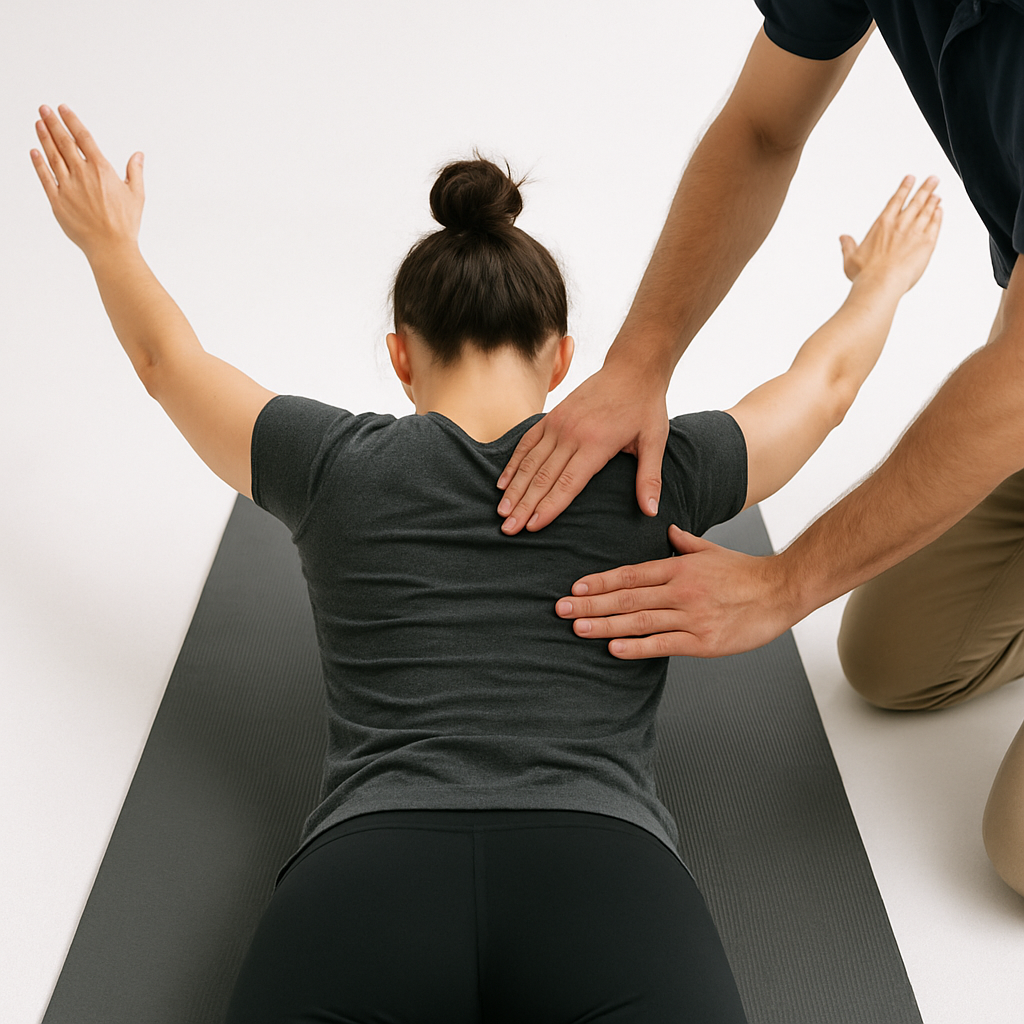
How to do it
- 1
1. Lie face down on a mat with your forehead resting on a small towel or pad to keep your neck neutral.
- 2
2. Position your arms diagonally out from your body into a Y shape, with thumbs pointing upward.
- 3
3. Engage your core and press your pelvis into the floor to stabilize your lower back.
- 4
4. Squeeze your lower trapezius muscles and depress your shoulder blades downward as you lift both arms 4-6 inches off the floor.
- 5
5. Hold the top position briefly, then lower your arms back down with control.
- 6
6. Rest for 1-2 seconds and repeat for the prescribed number of repetitions.
Easier option
Can't lie face down comfortably? Do this standing against a wall, sliding your arms up into a Y shape, or hinge forward and lift your arms into the Y position.
Benefits
- Activates and strengthens the lower trapezius, which is critical for proper scapular upward rotation and preventing shoulder impingement.
- Improves shoulder blade stability and control, reducing strain on rotator cuff muscles and relieving upper back and neck tension.
- Corrects postural imbalances by counteracting excessive upper trapezius dominance from slouching and desk work.
Common mistakes
- Shrugging your shoulders upward instead of depressing the scapulae downward—focus on pulling shoulder blades down and back.
- Lifting your forehead off the pad, which creates unwanted neck extension and reduces core stability.
- Raising arms too high or using momentum rather than controlled muscular contraction—move slowly and deliberately.
Target areas
Used in these programs
Get the full guided program, with video walkthroughs for every exercise.
Find Your ProgramBrowse all programs →