Overhead Reach with Squat
Standing with feet shoulder-width apart, you reach both arms overhead as you descend into a squat — maintaining a neutral spine, open chest, and arms in line with your ears at the bottom. This full-body movement integrates shoulder mobility, thoracic extension, hip hinge, ankle dorsiflexion, and spinal stability in a single functional pattern.
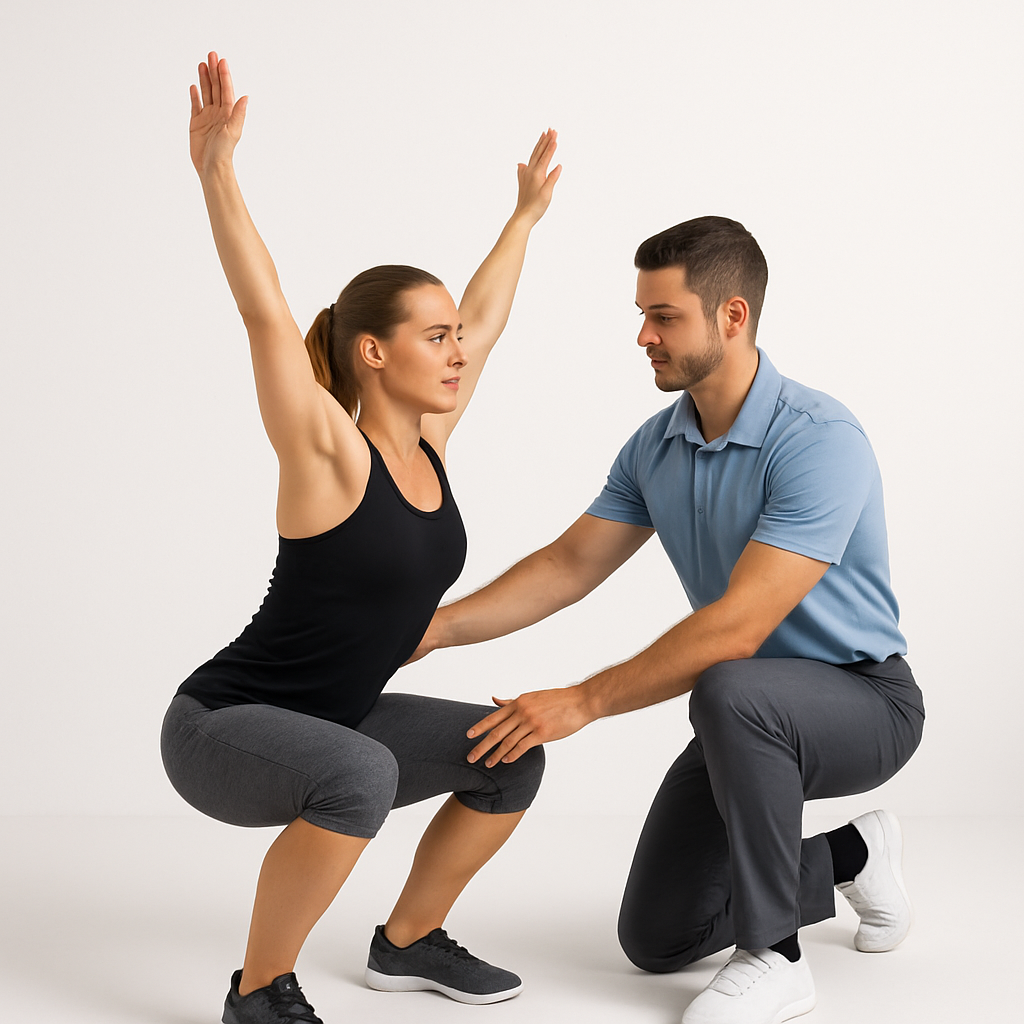
How to do it
- 1
1. Stand with feet shoulder-width apart, arms at your sides, and engage your core by drawing your navel toward your spine.
- 2
2. Inhale and simultaneously raise both arms overhead, keeping them in line with your ears and maintaining an open chest.
- 3
3. As your arms reach overhead, exhale and begin descending into a squat by bending at your hips and knees, tracking knees over toes.
- 4
4. At the bottom of the squat, ensure your spine remains neutral, chest stays open, and arms stay aligned with your ears—weight distributed evenly through your feet.
- 5
5. Inhale and drive through your heels to stand back up, lowering your arms to return to the starting position.
Easier option
If the full squat or overhead reach is too much, sit and stand from a chair while reaching your arms only as high as comfortable. Both ends grow with practice.
Benefits
- Improves thoracic spine extension and shoulder mobility, reversing forward slouch and rounded shoulder posture.
- Strengthens core and postural stabilizers throughout the spine, reducing lower back strain during daily movements.
- Enhances ankle dorsiflexion and hip hinge mechanics, promoting proper alignment from feet to head and reducing compensatory stress on the spine.
Common mistakes
- Allowing arms to drift forward in front of the ears or collapsing the chest inward, which reduces thoracic extension benefits.
- Rounding the lower back or losing neutral spine at the bottom of the squat, compromising spinal stability and defeating the exercise's purpose.
- Letting knees cave inward or shifting weight to the toes instead of maintaining even weight distribution through the entire foot.
Target areas
Used in these programs
Get the full guided program, with video walkthroughs for every exercise.
Find Your ProgramBrowse all programs →