Plank with Hip Extension
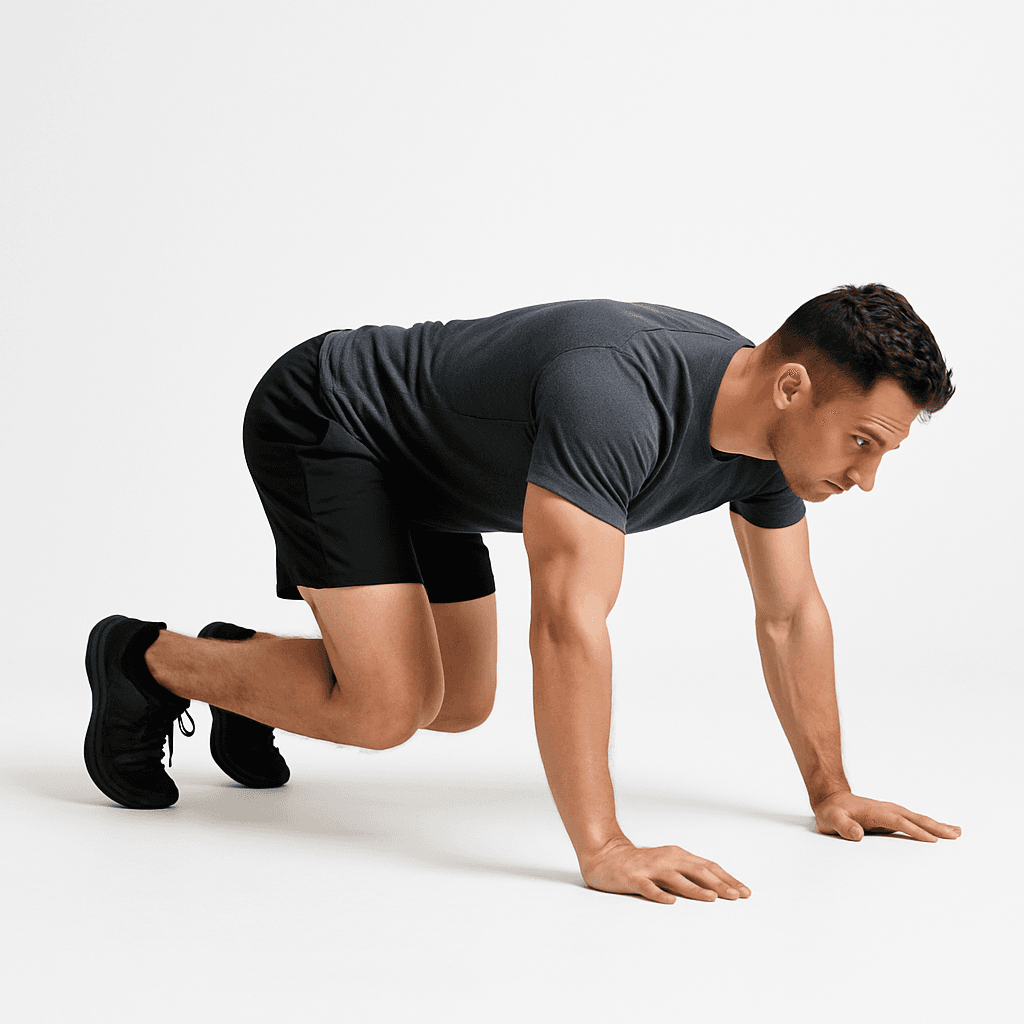
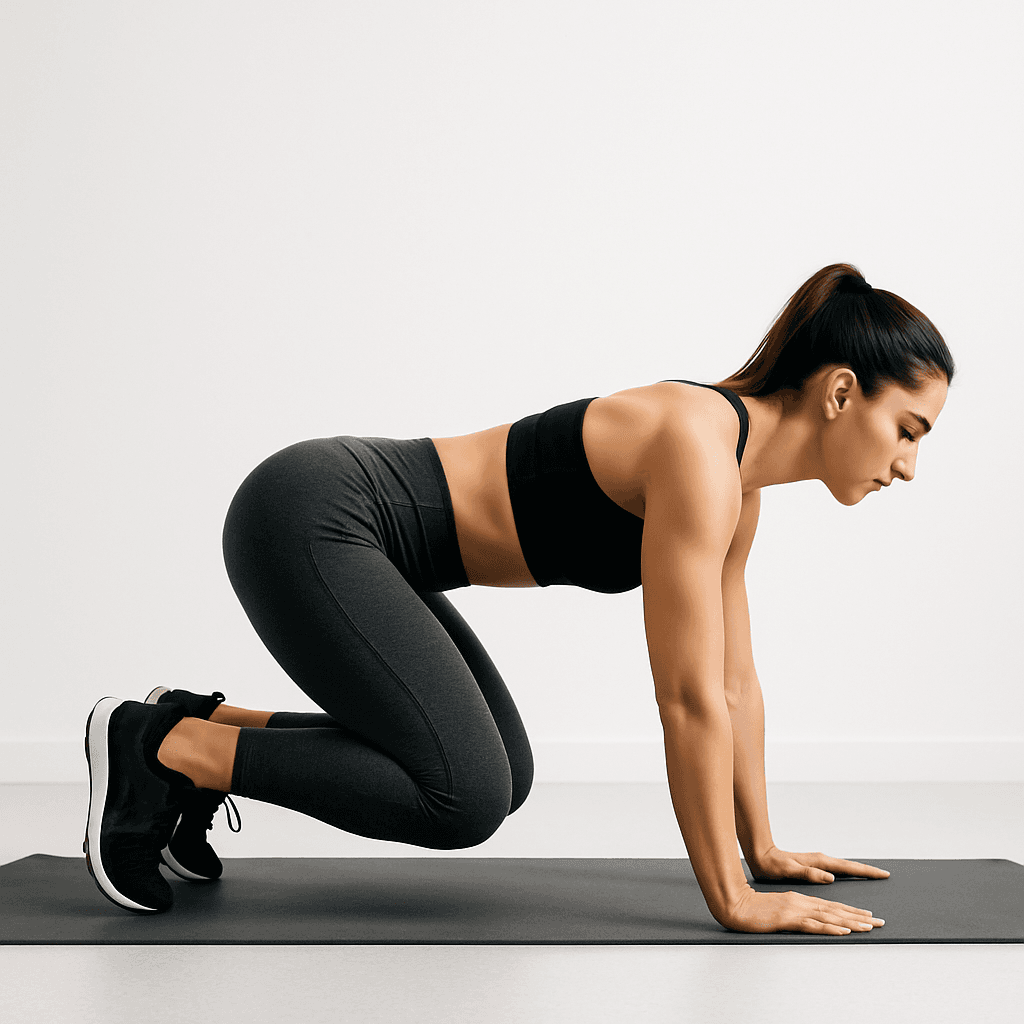
From a forearm plank position with the lumbar spine neutral, you slowly lift one leg into hip extension without allowing the pelvis to rotate or the lower back to arch. This variation adds glute activation to standard anti-extension core training, building the coordination between deep stabilizers and the posterior chain that protects the spine during movement.
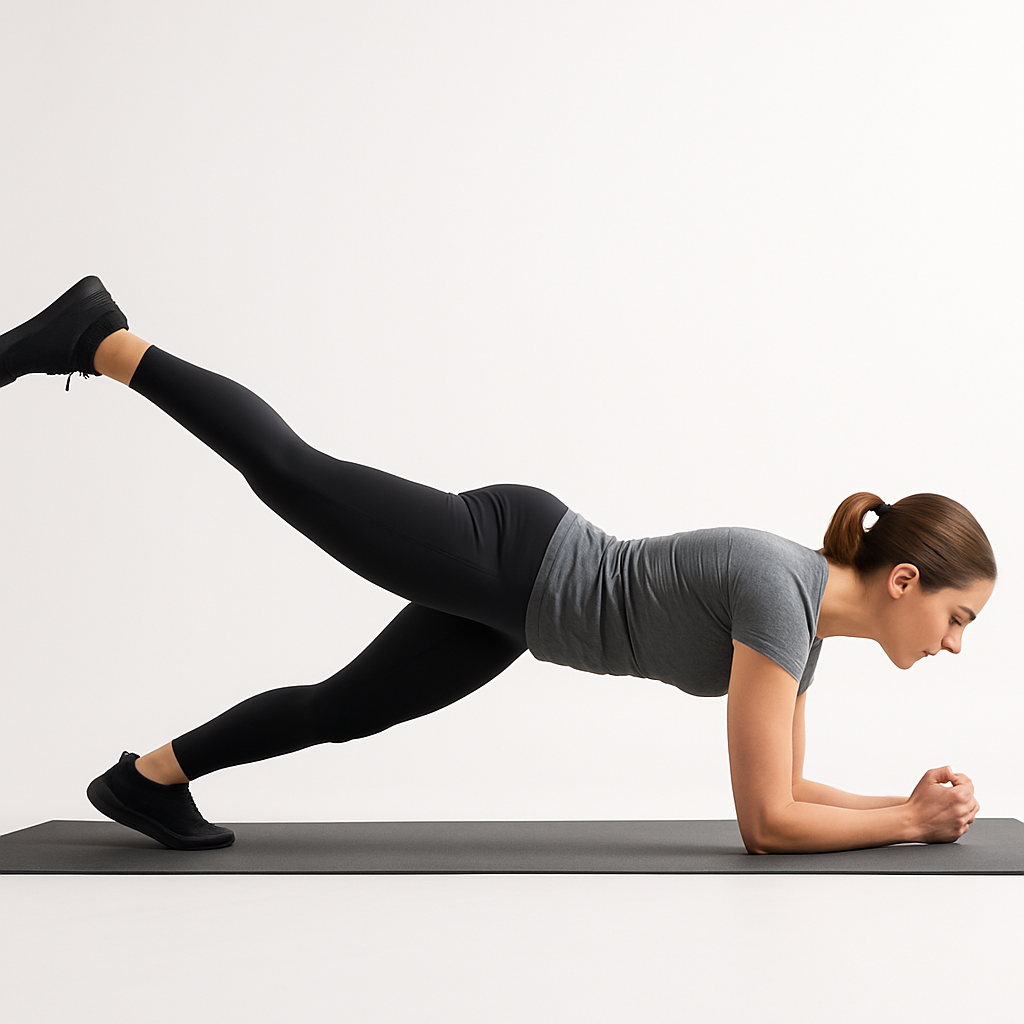
How to do it
- 1
1. Start in a forearm plank position with elbows under shoulders, core engaged, and lumbar spine neutral—imagine a straight line from head to heels.
- 2
2. Press your forearms firmly into the ground and brace your core by drawing your navel toward your spine without holding your breath.
- 3
3. Slowly lift one leg 6-8 inches behind you by engaging your glute, keeping your pelvis level and avoiding any rotation.
- 4
4. Hold the lifted position for 1-2 seconds, then lower your leg with control back to the starting position.
- 5
5. Complete all reps on one side, then switch legs and repeat.
- 6
6. Throughout the movement, maintain a neutral spine—do not arch your lower back or let your hips sag.
Easier option
If the full forearm plank is too much, do this from your knees, or stand and lift one leg straight back against a wall for support. Build the plank over time.
Benefits
- Strengthens glutes and deep core stabilizers to reduce anterior pelvic tilt and lower back strain during daily activities
- Improves neuromuscular coordination between the core and posterior chain, enhancing spinal stability during functional movements
- Builds anti-extension endurance to protect the lumbar spine and correct slouched, forward-flexed postures
Common mistakes
- Allowing the pelvis to rotate or dip toward the lifted side, which reduces glute activation and compromises spinal stability
- Arching the lower back excessively when lifting the leg—this shifts work away from the glutes and increases lumbar strain
- Lifting the leg too high or moving too quickly, causing loss of neutral spine position and reducing core engagement
Target areas
Used in these programs
Get the full guided program, with video walkthroughs for every exercise.
Find Your ProgramBrowse all programs →