T-Spine Rotation
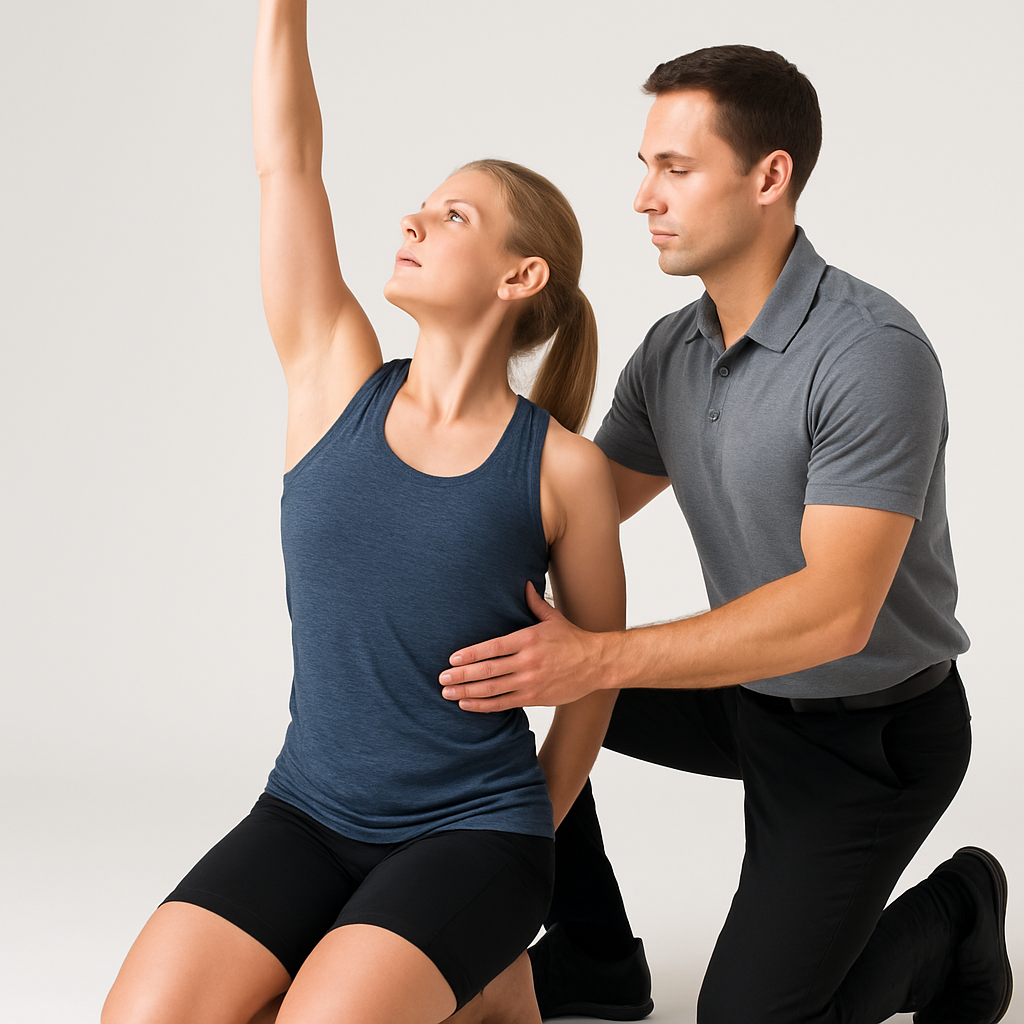
In a half-kneeling or seated position with the hips stable, you rotate the thoracic spine as far as possible in each direction, reaching the far hand toward the ceiling at end range. Restricted thoracic rotation is a central driver of both neck pain and shoulder impingement — the joints above and below compensate when the T-spine cannot rotate.
How to do it
- 1
1. Sit upright or kneel on one knee with your hips square and stable, keeping your lower back neutral.
- 2
2. Place one hand behind your head or across your chest, depending on your mobility level.
- 3
3. Rotate your torso as far as comfortable toward one side, leading with your chest and shoulders while keeping your hips still.
- 4
4. At end range, reach your top hand toward the ceiling to deepen the rotation and open the front of your chest.
- 5
5. Return to center with control and repeat on the opposite side.
- 6
6. Move through the full range without bouncing, maintaining steady breathing throughout.
Easier option
If kneeling is uncomfortable, do this seated in a chair - sit tall, cross your arms or place a hand behind your head, and rotate gently side to side.
Benefits
- Restores thoracic spine mobility to reduce compensatory stress on the neck and shoulders
- Decreases shoulder impingement risk by improving rotational capacity in the mid-back
- Alleviates neck pain by restoring normal movement patterns and reducing upper cervical strain
Common mistakes
- Rotating from the lumbar spine instead of the thoracic spine—keep your hips locked and move only from mid-back
- Failing to reach the top hand toward the ceiling at end range, which limits the stretch and reduces effectiveness
- Moving too quickly or bouncing into rotation, which prevents proper muscle engagement and neuromuscular control
Target areas
Good for
Used in these programs
Get the full guided program, with video walkthroughs for every exercise.
Find Your ProgramBrowse all programs →