
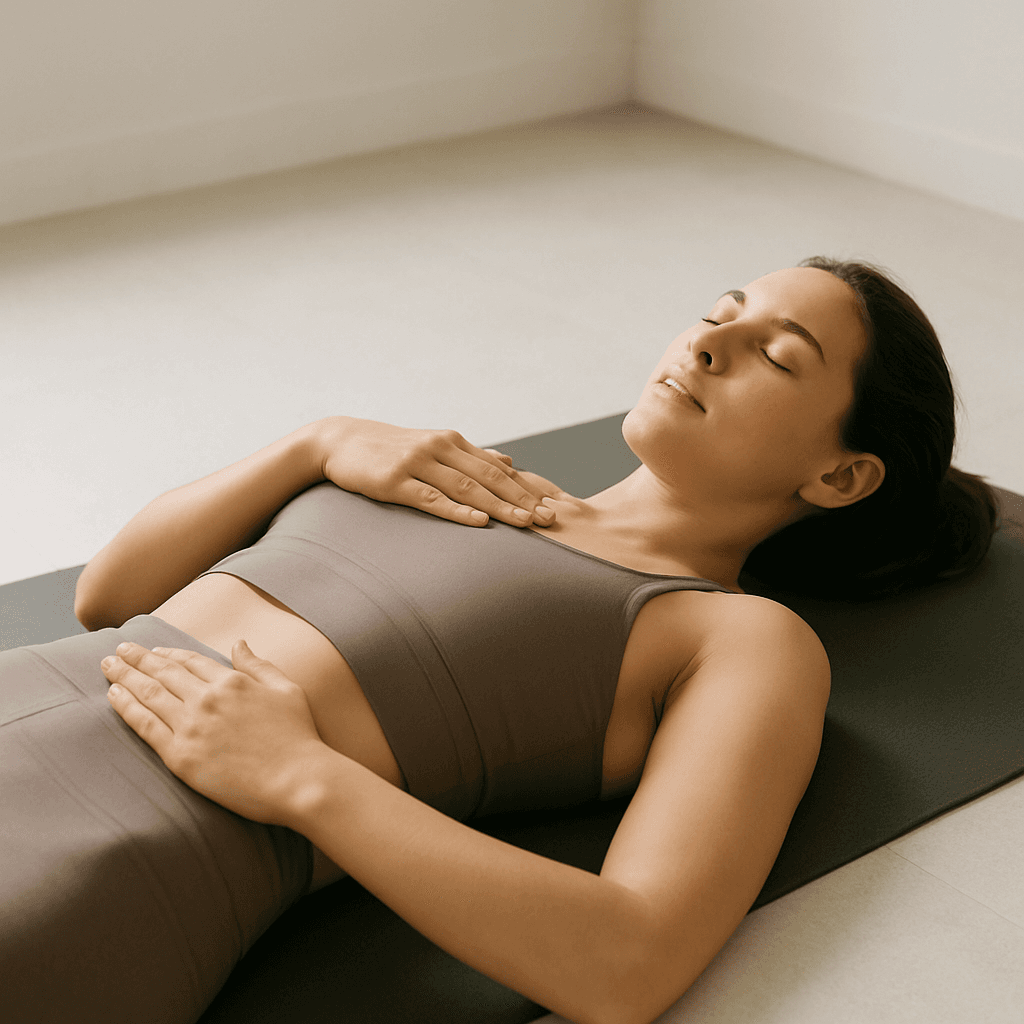
Breathing Is a Structural Function
Breathing is controlled by two systems simultaneously: the neurological system that drives the respiratory rhythm, and the mechanical system that creates the pressure changes that move air. The neurological system is automatic and largely beyond voluntary control. The mechanical system, the thoracic cage and its associated muscles, is entirely dependent on the structural position of the spine.
The diaphragm, the primary breathing muscle, attaches to the lower six ribs, the lumbar spine, and the xiphoid process. When it contracts, it flattens and descends, increasing the vertical dimension of the thoracic cavity and creating the negative pressure that draws air into the lungs. For this to work effectively, the thoracic cage must have the freedom to expand.
When the thoracic spine is rounded into kyphosis, as it is in the majority of adults who sit for work, the anterior rib cage is compressed and the posterior rib cage is expanded. The ribs are angled differently than in a neutral spine, reducing their capacity to elevate laterally during inhalation. The diaphragm's mechanical advantage is reduced because the abdominal contents it descends into are already compressed by the kyphotic posture. The result is smaller tidal volumes, less air per breath, and a compensatory shift toward chest breathing using the accessory respiratory muscles.
The Accessory Breathing Pattern
When the diaphragm cannot work efficiently, the body recruits accessory muscles: the scalenes, sternocleidomastoid, and pectoralis minor. These muscles were designed for occasional high-demand breathing during exercise or stress. In people with thoracic kyphosis and forward head posture, they are recruited for ordinary resting breathing because the diaphragm cannot carry the load alone.
Chronic accessory breathing has several consequences. The scalenes and SCM, working continuously as breathing muscles, become hypertonic, contributing directly to neck pain and headaches. The pectoralis minor, also recruited, tightens the anterior chest further, worsening the thoracic kyphosis that caused the breathing problem in the first place. The upper chest heaves visibly with each breath in people with this pattern, a sign that the primary breathing muscle is not doing its job.
Breathing becomes effortful. Many people with advanced thoracic kyphosis describe feeling short of breath or unable to take a full deep breath, not from a pulmonary cause, but from a mechanical one. The thoracic cage literally cannot expand fully in a kyphotic position.
Studies in patients with chronic thoracic kyphosis show it is independently associated with reduced forced vital capacity, the maximum amount of air a person can exhale after a full inhalation. This association holds even when controlling for other factors, suggesting the structural component of breathing restriction is independently meaningful.
Posture Correction and Breathing Capacity
The relationship between thoracic position and breathing is direct and predictable. When the thoracic spine is extended, the rib cage can expand laterally during inhalation, the diaphragm can descend without anterior compression, and accessory muscle recruitment returns to its appropriate role in high-demand breathing only.
Many people report an immediate improvement in breathing capacity following thoracic extension work. Extending over a foam roller at the mid-thoracic level produces an immediate increase in rib expansion capacity that is perceptible without measurement. This is not a long-term structural change, it is the immediate effect of releasing thoracic extension restriction. But it demonstrates the direct mechanical connection between spinal position and breathing mechanics.
Long-term structural correction of thoracic kyphosis through the Egoscue approach, diaphragmatic breathing retraining combined with thoracic extension restoration, produces durable improvements in breathing capacity. The diaphragm re-establishes its primary breathing role, the accessory muscles reduce their chronic activation, and the neck and shoulder tension associated with accessory breathing typically resolves as a consequence.
For rounded shoulders and thoracic kyphosis, the structural correction is the same whether the presenting complaint is shoulder pain, upper back tension, headaches, or reduced breathing capacity. All of these are expressions of the same structural pattern. The Rounded Shoulders Fix program and Breathing and Posture Reset program apply the specific sequence of anterior release and thoracic extension work that addresses this pattern at its root.

Mike Boshnack
Certified Egoscue Therapist · Posture Guy Mike
Mike Boshnack grew up skateboarding and surfing, trained MMA, and rode road bikes competitively. A shoulder injury put him on a path to discover the Egoscue Method. He has since helped thousands of people fix the structural patterns causing their pain, without surgery or passive treatments.
Keep Reading
Take the next step
Fix the structural root cause, not just the symptom.
Mike's programs apply this corrective method to your specific condition. No gym, no equipment. Just a floor and 15 minutes. Buy once, own forever.
Discussion
Discussion is a Pro member feature. Visit the community for more.