
Where This Approach Comes From
Corrective exercise grew out of frustration with the conventional options for chronic pain. For decades the menu was limited and largely unsatisfying: surgery, passive therapy, and symptom management.
The breakthrough came from studying postural alignment and the relationship between structural position and pain. The core observation: the body is not a collection of independent parts. It is a kinetic chain. When one segment of that chain is misaligned, the segments above and below compensate. Pain appears not at the cause of the misalignment but at the point where the compensating structure breaks down under load.
He developed a system of gentle, specific positioning exercises he called corrective exercises, designed to place the body in positions where the muscles and joints could return to their anatomically correct alignment. The body, he argued, wants to be aligned. Given the right structural conditions, it will self-correct.
The approach spread worldwide through a network of certified practitioners and clinics, and has helped hundreds of thousands of people resolve chronic pain without surgery.
Mike discovered corrective exercise after years of dealing with a shoulder problem that three orthopedic surgeons and a physical therapist could not resolve. What he found changed how he thinks about the human body and became the foundation of everything he teaches.
The Core Premise
Corrective exercise is built on one central idea: the body is a self-correcting system. But it can only correct itself if the structural conditions for correction are present.
Think of it like a car alignment. If a car's wheels are misaligned, the tires wear unevenly, the steering is off, and the suspension takes stress it was not designed to handle. The solution is not to replace the tires every time they wear out. The solution is to realign the wheels. Once the wheels are in the correct position, the car functions as it was designed to.
The human body works the same way. Chronic pain in the lower back, the knee, the shoulder, and the hip is almost never a problem with those structures themselves. It is the predictable result of those structures being loaded in a position the body was not designed for. Fix the position, and the structures can do their jobs again.
How Corrective Exercises Work
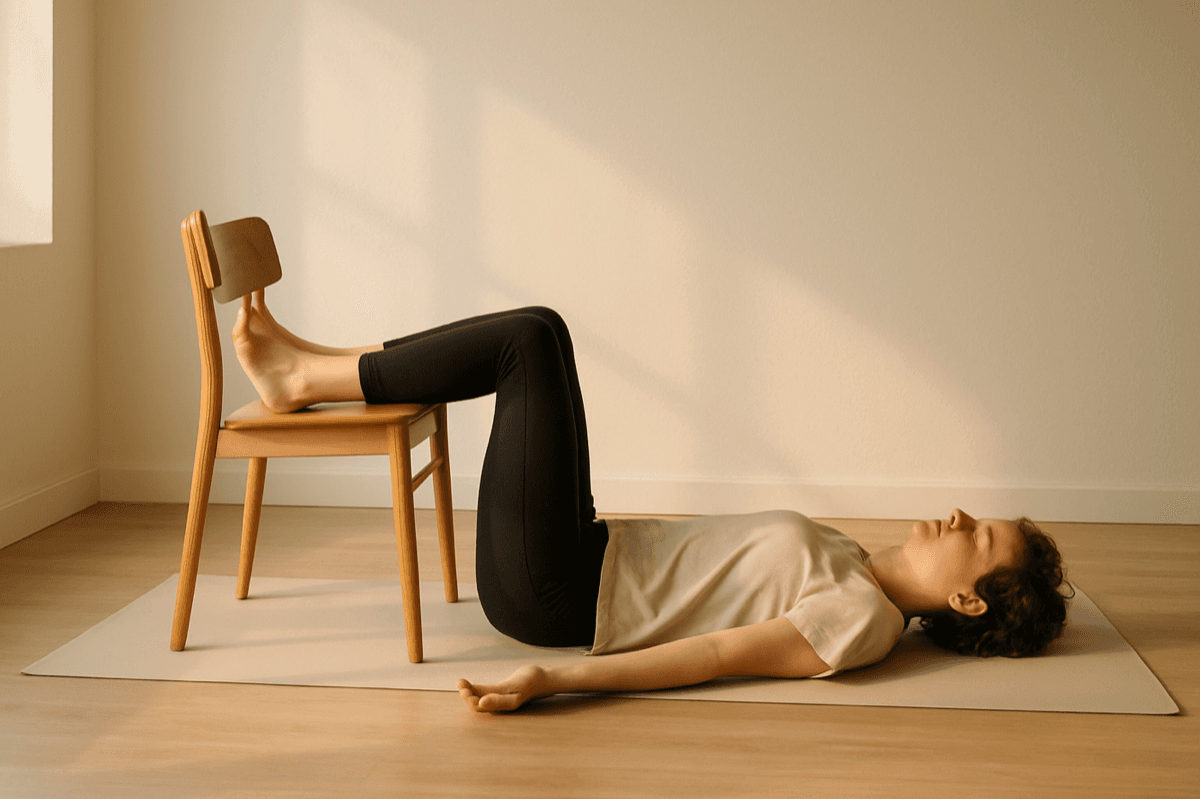
Corrective exercises are almost exclusively passive or low-load. You will not be doing burpees or heavy resistance work. Most exercises involve lying on the floor, standing in specific positions, or gentle movement sequences. Many are held for several minutes.
This is deliberate. The goal is not to strengthen specific muscles in the conventional sense. The goal is to restore the neurological pattern: the body's map of how it should be positioned and how its muscles should be recruited. This requires slow, deliberate input to the nervous system, not explosive loading.
The exercises work by placing the body in positions that:
Remove the compensating load from the structures that are taking it. The hip flexors, for example, often become hypertonic (chronically tight) because they are compensating for inadequate core stability. An exercise like the static back exercise removes the load that activates the compensation, allowing the hip flexors to release.
Re-engage the muscles that have been neurologically inhibited. The glutes are the most common example. When anterior pelvic tilt is present, the glutes are placed in a mechanically disadvantaged position and progressively derecruited by the nervous system. Specific glute activation exercises restore the neurological connection.
Restore range of motion passively. The hip crossover stretch and the supine groin stretch are long-hold passive exercises that allow the nervous system to accept new range of motion without triggering the protective tightening that active stretching often provokes.
Free - 60 seconds
Not sure which program you need?
Take the free posture quiz and get a personalized recommendation based on your pain and goals.
How Corrective Exercise Differs from Chiropractic
Chiropractic works primarily by manual manipulation of the spine, applying force to specific spinal segments to restore joint mobility. Adjustments can provide significant immediate relief from joint restriction and nerve irritation.
The limitation: the adjustment changes the position of a joint at a moment in time. The muscles and soft tissue structures that pulled the joint into that restricted position are still pulling after the adjustment. The spine frequently returns to the restricted position within hours or days, which is why chiropractic often requires regular, ongoing visits.
Corrective exercise does not manipulate any joint. The goal is to change the structural forces acting on the joints by correcting the position of the pelvis, thoracic spine, and shoulder girdle, the major structural segments. When these segments are in correct alignment, the joints above and below can function as designed.
The difference is structural versus symptomatic. Chiropractic addresses the symptom (the restricted joint). Corrective exercise addresses the cause (the structural position that restricted the joint).
How Corrective Exercise Differs from Physical Therapy
Physical therapy is a broad field and a good physical therapist is an excellent clinician. But standard PT often focuses on:
Strengthening the muscles around the injury site. A rotator cuff tear gets rotator cuff strengthening. A knee ACL injury gets quad and hamstring strengthening. This is appropriate for rehabilitation.
Manual therapy and soft tissue work at the injury site.
Symptom-based exercise prescription, meaning exercises designed to reduce pain at the site.
The corrective exercise distinction is the starting point. Corrective exercise practitioners ask first: where in the kinetic chain is the structural misalignment that created the conditions for this injury? Then they address that cause rather than the injury location.
My shoulder issue, the one I mentioned at the top, was diagnosed as a rotator cuff impingement. Three PT programs gave me rotator cuff strengthening, which made it worse because the underlying cause (anterior tilt of the scapula from tight pec minor and weak lower trapezius) was not addressed. A corrective exercise practitioner identified the scapular position problem immediately and prescribed exercises to address it. The impingement resolved in six weeks.
The injury site was the shoulder. The cause was the pec minor and lower trap. Physical therapy treated the shoulder. Corrective exercise treated the cause.
How Corrective Exercise Differs from Yoga
Yoga builds flexibility, body awareness, and some functional strength. A good yoga practice does beneficial things for the body. But yoga is not primarily a postural correction system.
The corrective exercise distinction:
Yoga poses are designed around flexibility and alignment within the pose, not around correcting specific structural dysfunctions outside of the practice. A runner with anterior pelvic tilt doing yoga will do the poses in anterior pelvic tilt, which may or may not address the structural issue.
Corrective exercises are prescribed specifically to a structural assessment. The exercises are designed to address that specific person's specific dysfunction, not to be generally beneficial.
Yoga typically does not assess structural function the way corrective exercise does. There is no equivalent of the postural assessment, the systematic evaluation of where the body is out of position and what compensations are present.
This is not a criticism of yoga. It is a distinction in purpose. Yoga is a practice. It is a corrective system.
Who Corrective Exercise Works Best For
Corrective exercise works best for people with chronic musculoskeletal pain that has not responded to conventional treatment. Lower back pain, hip pain, knee pain, shoulder impingement, neck pain, and plantar fasciitis are the conditions where the structural approach most clearly shows its advantage over symptom-based treatment.
It works especially well for athletes who have developed sport-specific structural imbalances from repeating the same movement thousands of times. Cyclists with hip flexor dominance. Swimmers with pull-pattern shoulder dysfunction. Golfers with thoracic rotation asymmetry.
It also works for office workers, parents, teenagers who spend hours at screens, and anyone who has been living in a body that does not feel right, who has adapted to limitation so completely they have forgotten what normal function feels like.
The question to ask is simple: does the pain or limitation I am experiencing have a structural component? If the answer is yes, if the way your body is positioned is contributing to how it feels, then corrective exercise is worth exploring.
If you want to find out what your specific structural issues are and which exercises address them, the free posture quiz on this site gives you a starting point based on your symptoms and history. From there, the programs address specific conditions with the full corrective sequence.

Mike Boshnack
Corrective Exercise Specialist · Posture Guy Mike
Mike Boshnack grew up skateboarding and surfing, trained MMA, and rode road bikes competitively. A shoulder injury put him on a path to discover corrective exercise. He has since helped thousands of people fix the structural patterns causing their pain, without surgery or passive treatments.
Keep Reading
Corrective Method
Why Your Ankles Are Stiff (And How They're Wrecking Your Squat and Your Posture)
4 min read
Corrective Method
Pigeon Pose for Hip Pain: What It Actually Releases and What It Misses
4 min read
Corrective Method
Side Plank for Posture: Fix the Lateral Weakness Behind Your Hip Shift
4 min read
Free tool
See where your posture stands right now.
Upload a photo and get an instant AI-powered posture analysis with personalized recommendations. Free, no account required.
Try the Free Posture CheckTake the next step
Fix the structural root cause, not just the symptom.
Mike's programs apply this corrective method to your specific condition. No gym, no equipment. Just a floor and 15 minutes. Buy once, own forever.
Discussion
Discussion is a Pro member feature. Visit the community for more.