
What Flat Back Syndrome Is
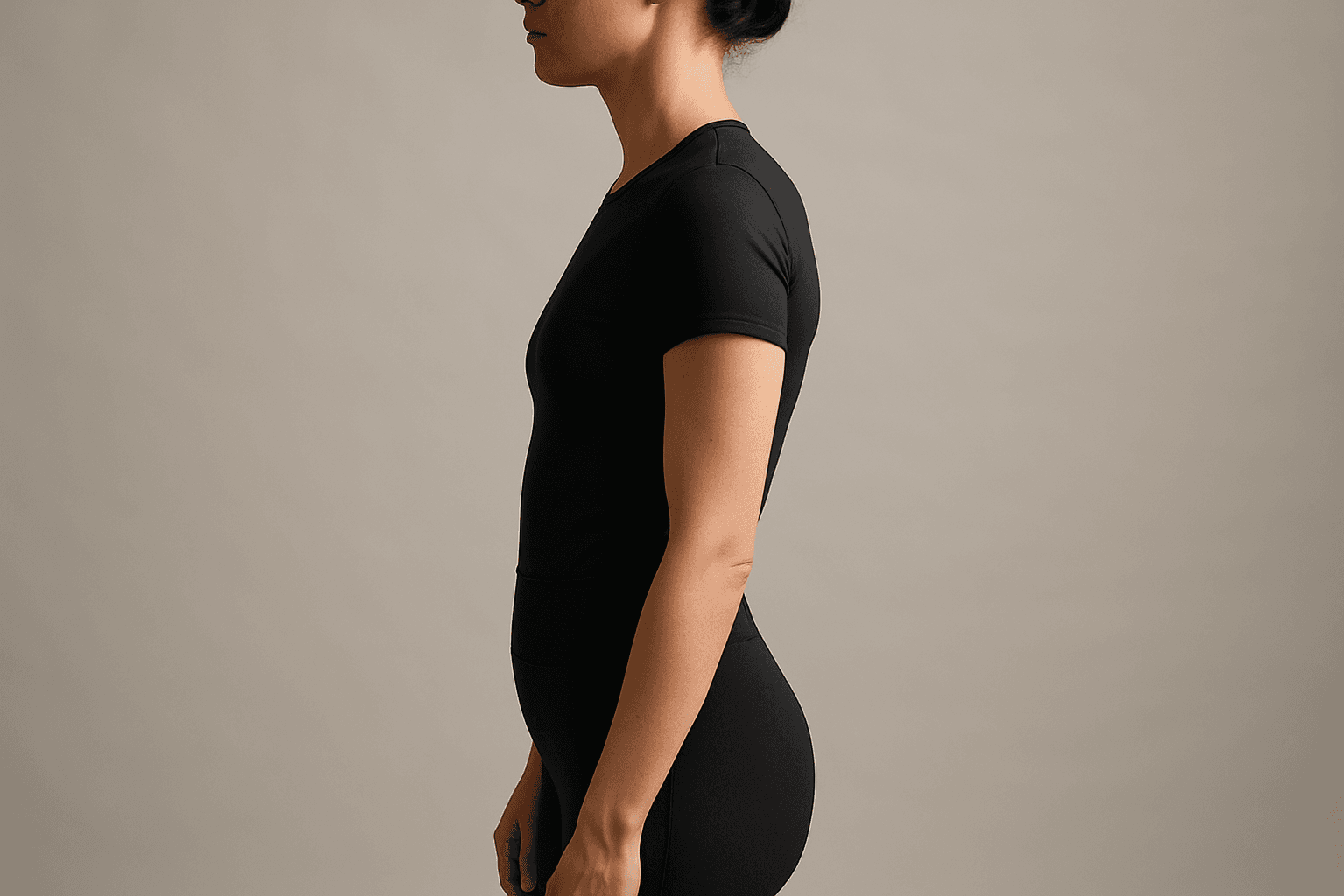
Your spine is not straight. A healthy spine has four curves: the cervical spine (neck) curves inward, the thoracic spine (mid-back) curves outward, the lumbar spine (lower back) curves inward, and the sacrum curves outward. These alternating curves create an S-shape that functions as a spring - absorbing shock, distributing load, and allowing the spine to handle the compressive forces of gravity, walking, running, and lifting.
Flat back syndrome is what happens when the lumbar curve reduces or disappears. The lower back, which should curve gently inward (a curve called lordosis), becomes straight. In some cases it even reverses slightly into a mild outward curve.
This matters more than most people realize. The lumbar curve is not cosmetic. It is structural. Without it, the spine loses its primary shock absorber, and the forces of daily movement that were designed to be distributed across the full disc surface now concentrate on the front of the discs and vertebral bodies.
Why Flat Back Matters
Pain and Stiffness
The most immediate consequence of a flat lumbar spine is chronic lower back pain. Without the natural curve to distribute load, the posterior structures of the spine - the muscles, ligaments, and facet joints - are under constant strain trying to hold you upright. Many people with flat back describe a deep aching in the lower back that worsens as the day goes on and improves when they lie down.
Forward Lean
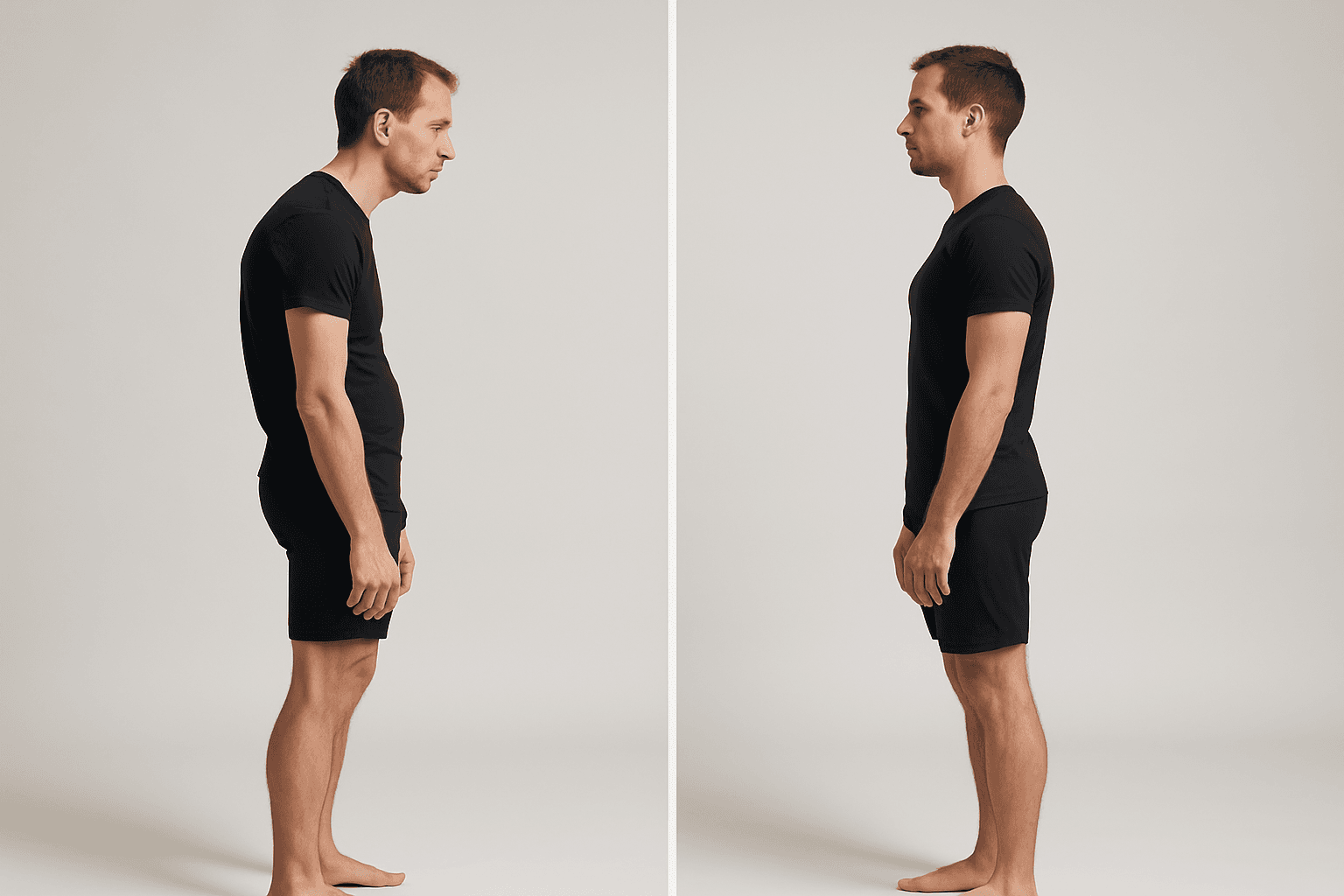
When the lumbar curve flattens, the center of gravity shifts forward. To keep from falling forward, people with flat back syndrome develop a characteristic forward lean at the hips. They stand with their trunk angled slightly forward rather than stacked vertically over the pelvis. This forward lean loads the back muscles continuously, creating fatigue and pain.
Disc Vulnerability
The lumbar discs are designed to be loaded evenly across their surface. When the curve flattens, loading shifts to the front of the disc. Over time, this uneven loading accelerates disc degeneration and increases the risk of disc bulges and herniations, particularly at L4-L5 and L5-S1.
Chain Reactions Up the Spine
A flat lumbar spine changes the curves above it. The thoracic spine often increases its outward curve to compensate (creating more rounding in the upper back), and the cervical spine pushes the head forward to keep the eyes level. Flat back in the lower spine frequently produces kyphosis in the mid-back and forward head posture above.
What Causes Flat Back
Posterior Pelvic Tilt
This is the most common functional cause. Posterior pelvic tilt is when the front of the pelvis tips upward and the bottom of the pelvis tucks under. This rotation directly flattens the lumbar curve because the lumbar spine sits on top of the sacrum, and when the sacrum tilts under, the curve above it flattens.
Posterior pelvic tilt is driven by tight hamstrings pulling the bottom of the pelvis down from behind, tight lower abdominals pulling the front of the pelvis up, and weak or inhibited hip flexors and lumbar extensors that cannot maintain the natural curve.
Prolonged Slouched Sitting
When you slouch in a chair, your pelvis rolls into posterior tilt and your lumbar spine flattens against the seat back. Hours of this daily, across years, trains the muscles around the pelvis to hold the posterior-tilt position. The hamstrings shorten, the hip flexors lengthen and weaken, and the lumbar extensors lose their ability to create and hold the lordotic curve.
This is different from the sitting posture that creates anterior pelvic tilt (the exaggerated arch). It depends on how you sit. Sitting with a heavy slouch, particularly on soft couches and in bucket-style car seats, tends to produce posterior tilt and flat back. Sitting upright in a rigid chair with the hips higher than the knees tends to maintain or even increase the lordosis.
Excessive Abdominal Training
This one surprises people. Crunches, sit-ups, and aggressive "core" work that focuses exclusively on the rectus abdominis (the six-pack muscle) without balancing with lumbar extensor work can pull the pelvis into posterior tilt and flatten the lumbar spine. The abs are powerful flexors of the trunk, and when they are overdeveloped relative to the extensors, they overpower the curve.
This is common in people who do high volumes of crunching without ever training their back extensors. The result is strong abs, weak back, and a flat lumbar spine.
Aging and Disc Degeneration
As discs lose height with age, the lumbar curve naturally reduces. This is a slower process than the muscular causes above, but it contributes, particularly in people over 60. The muscular correction approach still helps by optimizing the curve that remains and reducing the compressive forces on the degenerating discs.
Prior Spinal Surgery
Lumbar fusion surgery, if performed without preserving the natural lordotic angle, can create iatrogenic (medically caused) flat back. This was more common with older surgical techniques and is now better understood, but it remains a cause in some post-surgical patients.
Free - 60 seconds
Not sure which program you need?
Take the free posture quiz and get a personalized recommendation based on your pain and goals.
How to Tell If You Have Flat Back
The Wall Test
Stand with your back against a wall, heels about two inches from the baseboard. Your head, upper back, and buttocks should touch the wall. Now check the space between your lower back and the wall. In a normal lumbar curve, you should be able to slide your flat hand into that space but not your fist. If your lower back is flat against the wall with no space, or barely any space, you likely have a reduced lumbar curve.
The Side-View Photo Test
Have someone take a photo of you from the side while you stand naturally. Look at the curve of your lower back. A healthy posture shows a visible inward curve above the pelvis. A flat back shows a straight or nearly straight line from the mid-back down through the pelvis.
The Sit-to-Stand Test
If you find it difficult to stand upright after sitting for a while, or if you tend to lean forward when standing and have to consciously push yourself upright, that forward lean is characteristic of flat back syndrome. The flattened curve makes it harder to stack the spine vertically over the pelvis.
The Corrective Exercise Approach
Correcting flat back syndrome means restoring the conditions that allow the lumbar curve to return: release the muscles that are pulling the pelvis into posterior tilt, strengthen the muscles that create and maintain the lordotic curve, and retrain the spine to hold its natural position.
Release the Hamstrings
The hamstrings attach from the sit bones (ischial tuberosities) down to below the knee. When they are tight, they pull the bottom of the pelvis downward and backward, directly flattening the lumbar curve.
Supine Hamstring Stretch - Lie on your back, loop a strap or belt around one foot, and straighten the leg toward the ceiling. Keep the opposite leg flat on the floor with a slight bend. Hold 60 seconds each side. The key is to feel the stretch behind the thigh without letting the pelvis tuck under - keep a slight arch in the lower back throughout.
Standing Hamstring Stretch - Place one heel on a low surface (a step or chair seat), keep the standing leg straight, and hinge forward at the hips with a flat back until you feel the stretch behind the elevated thigh. Hold 30 seconds each side. Again, maintain a slight lumbar arch - do not round forward.
Release the Lower Abdominals
This does not mean weakening the abs. It means releasing the chronic tension that is pulling the pelvis into tuck.
Prone Extension - Lie face down on the floor, palms flat beside your shoulders. Gently press up through your hands, lifting your chest while keeping your hips on the floor. This extends the lumbar spine into the curve it has lost and lengthens the chronically shortened abdominal wall. Hold the top position for 5 seconds, lower, repeat 8 to 10 times.
Strengthen the Lumbar Extensors
These are the muscles that create and maintain the lordotic curve. In flat back, they are weak and inhibited.
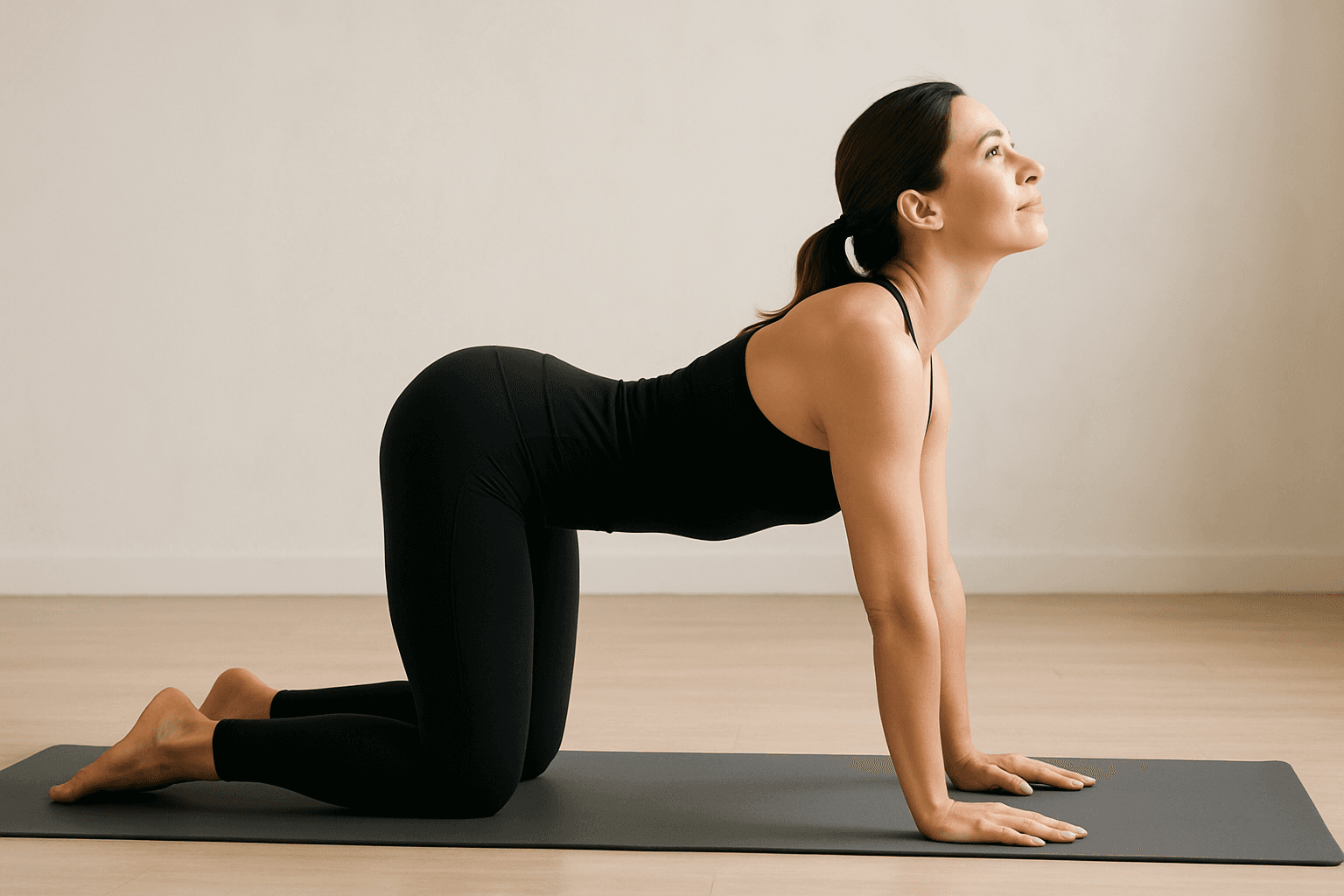
Bird Dog - Start on hands and knees. Extend the right arm forward and left leg back simultaneously, keeping the hips level and maintaining a neutral spine (gently arched, not flat). Hold 5 seconds, return, alternate sides. Do 10 reps per side. This exercise teaches the lumbar extensors to activate while maintaining the curve.
Superman Hold - Lie face down, arms extended overhead. Lift both arms and both legs off the floor simultaneously, creating an extension through the entire spine. Hold 5 seconds, lower, repeat 8 to 10 times. This is a direct strengthener for the erector spinae group that maintains the lumbar curve.
Hip Hinge Practice - Stand with feet hip-width apart, slight bend in the knees. Hinge forward at the hips by pushing your hips back, keeping a slight arch in the lower back throughout the movement. Go forward until you feel a stretch in the hamstrings, then return to standing by driving the hips forward. This retrains the hip hinge pattern with a maintained lumbar curve, which is the functional movement pattern that flat back has disrupted.
Reactivate the Hip Flexors
In flat back with posterior pelvic tilt, the hip flexors are often lengthened and weak. This is the opposite of the more commonly discussed anterior pelvic tilt pattern where the hip flexors are tight.
Standing Psoas March - Stand tall with good posture. Lift one knee toward the chest, hold for 2 seconds at the top, lower with control, alternate. Do 15 reps per side. This re-engages the psoas, the deep hip flexor that attaches to the lumbar spine and helps maintain the lordotic curve when it is functioning properly.
Hanging Knee Raises (Modified) - If you have access to a pull-up bar or captain's chair, hang and lift the knees toward the chest. Despite being marketed as an "ab exercise," this movement strongly activates the psoas. For flat back patients, the psoas activation is the target, and the focus should be on controlling the pelvis position throughout the movement.
Integrate the Curve into Standing and Sitting
Pelvic Tilts in Standing - Stand with feet hip-width apart. Gently rock your pelvis between anterior tilt (arch the lower back) and posterior tilt (tuck under). Find the middle position where there is a slight, natural arch. Practice holding this position for 30-second intervals. The goal is to teach your body what neutral feels like after it has been stuck in the flattened position.
Seated Posture with Lumbar Support - When sitting, place a small rolled towel or lumbar support behind your lower back to cue the lumbar curve. Sit at the front edge of your chair when possible, which naturally encourages the pelvis to tip slightly forward rather than tucking under.
What Not to Do
Do Not Avoid All Extension
Many people with back pain are told to avoid arching their back. For anterior pelvic tilt, this is reasonable advice. For flat back, it is the opposite of what you need. The lumbar spine needs to regain its ability to extend. Avoiding extension keeps it stuck in the flat position.
Do Not Overdo Crunches
If excessive abdominal work contributed to the flat back, adding more crunches will make it worse. This does not mean avoiding core work entirely, but it means balancing flexion exercises with extension exercises and focusing on anti-extension core stability (planks, dead bugs) rather than spinal flexion (crunches, sit-ups).
Do Not Slouch in Soft Chairs
Soft couches, recliners, and bucket-style seats are the worst seating for flat back. They encourage the pelvis to tuck under and the lumbar spine to flatten. If you spend a lot of time sitting, use a firm chair and add lumbar support.
Timeline for Restoring the Lumbar Curve
Week 1 to 2 - Reduced back stiffness and aching. The hamstrings begin to lengthen, and the extension exercises start to restore mobility to the lumbar spine. Many people notice that standing feels less effortful.
Week 3 to 6 - The lumbar extensors begin to strengthen noticeably. The wall test shows more space behind the lower back. The forward lean when standing starts to reduce. Pain that previously worsened throughout the day starts to plateau or improve.
Week 6 to 10 - Visible change in posture. The lumbar curve begins to show on the side-view photo test. Sitting and standing feel more natural in the corrected position. The back muscles that were chronically fatigued are now strong enough to hold the curve without exhaustion.
Month 3 to 4 - The restored curve becomes the default. The body holds the position without conscious effort. The downstream effects, reduced disc loading, better shock absorption during walking, and improved upper back and neck posture, compound over this period.
The Flat Back Posture program guides you through this full corrective sequence with daily follow-along routines. If your flat back is part of a larger compensation pattern that includes upper back rounding, the connection between the two curves means addressing both simultaneously produces faster results - read about lower cross syndrome to understand the full pattern. The free posture quiz identifies your full pattern and recommends where to start.

Mike
Corrective Exercise Specialist · Posture Guy Mike
Mike Boshnack grew up skateboarding and surfing, trained MMA, and rode road bikes competitively. A shoulder injury put him on a path to discover corrective exercise. He has since helped thousands of people fix the structural patterns causing their pain, without surgery or passive treatments.
Keep Reading
Related Conditions
Related Programs
Free tool
See where your posture stands right now.
Upload a photo and get an instant AI-powered posture analysis with personalized recommendations. Free, no account required.
Try the Free Posture CheckTake the next step
Fix the structural root cause, not just the symptom.
Mike's programs apply this corrective method to your specific condition. No gym, no equipment. Just a floor and 15 minutes. Buy once, own forever.
Discussion
Discussion is a Pro member feature. Visit the community for more.