
The Pattern Nobody Explains
Most people with chronic lower back pain have been told their core is weak, their hamstrings are tight, or their posture is bad. These observations may be accurate, but they describe symptoms of an underlying pattern rather than the pattern itself.
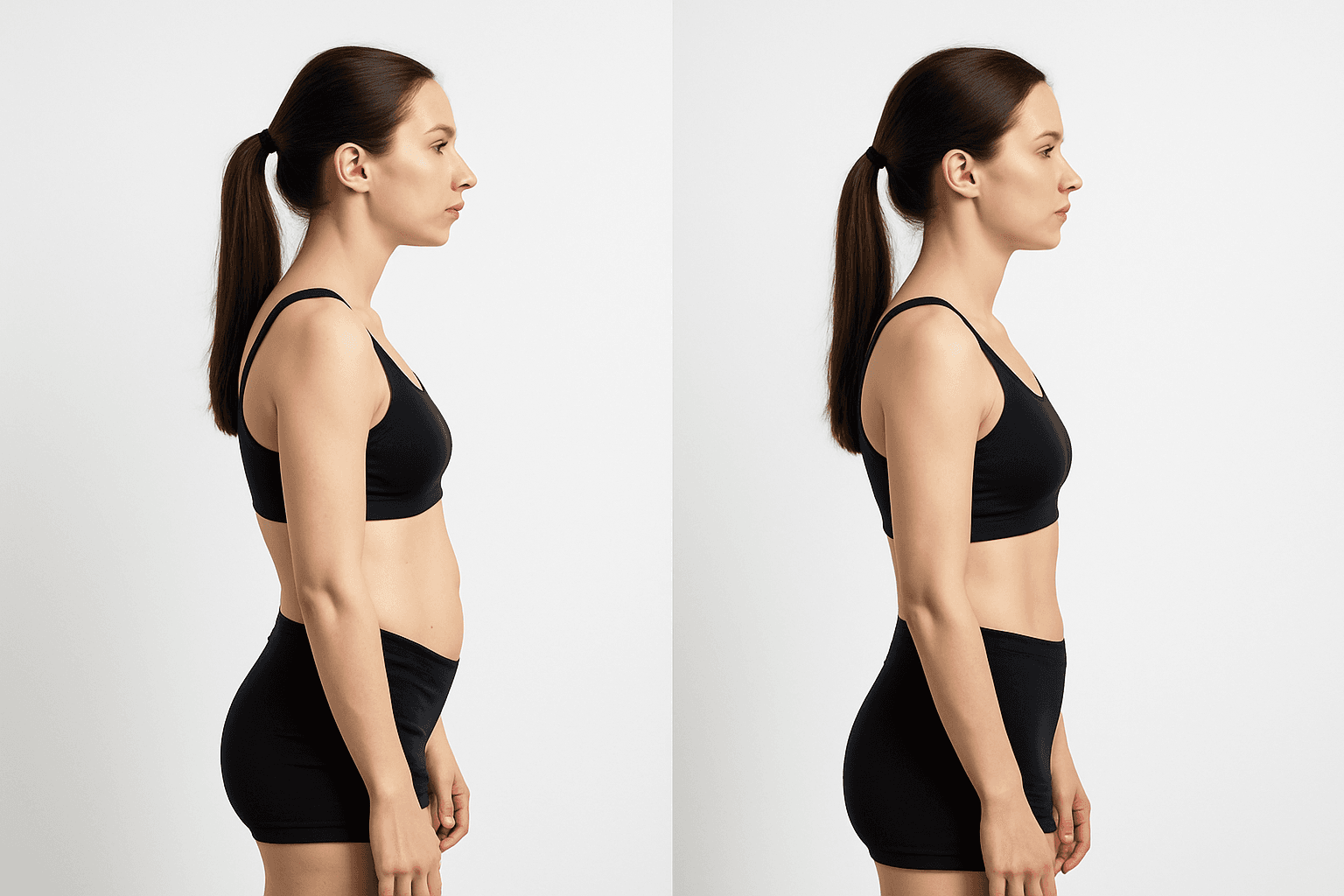
Lower cross syndrome, the second of Vladimir Janda's crossed syndromes, describes the precise muscle imbalance that drives most chronic lower back pain, anterior pelvic tilt, hip impingement, and glute inhibition. Once you understand the pattern, the treatment becomes logical rather than symptomatic.
What Lower Cross Syndrome Is
Like upper cross syndrome, lower cross syndrome describes an X-shaped pattern of muscle imbalance viewed from the side.
One diagonal of the cross: the hip flexor tightnesss (primarily the iliopsoas) and the thoracolumbar extensors (erector spinae, quadratus lumborum) are chronically shortened and overactive.
The other diagonal: the deep abdominals (particularly the transverse abdominis) and the gluteus maximus are chronically inhibited and underactive.
The tight diagonal pulls the pelvis into anterior tilt. The lumbar spine hyperextends to compensate, compressing the posterior elements: the facet joints, the interspinous ligaments, and the lumbar discs. The glutes, which should be the primary hip extensors and the main muscular support for the pelvis, effectively stop working and hand that job to the hip flexors and lumbar extensors, which are already overloaded.
This is the biomechanical chain that explains why sitting all day causes lower back pain. The hip flexors shorten in the seated position. The glutes become inhibited from being compressed and unloaded for hours. When you stand up, the pelvis tips forward, the lumbar spine hyperextends, and you have created exactly the loading pattern that compresses discs and irritates facets.
Who Gets Lower Cross Syndrome
Anyone who sits for more than three to four hours per day is developing some degree of lower cross syndrome. The timeline varies with genetics, activity level, and how much compensatory movement is occurring in daily life, but the direction of change is consistent.
Athletes develop it from sport-specific patterns. Cyclists experience hip flexor shortening from thousands of hours in hip flexion. Runners develop it from hip flexor dominance in the gait cycle combined with insufficient glute activation. Golfers develop it from the rotational demands of the swing combined with hours on range chairs. Weightlifters develop it from squatting and deadlifting with an anterior pelvic tilt that was never corrected.
Free - 60 seconds
Not sure which program you need?
Take the free posture quiz and get a personalized recommendation based on your pain and goals.
The Consequences Beyond Lower Back Pain
Lower cross syndrome does not stay in the lower back. The altered mechanics travel up and down the kinetic chain.
Going up: the lumbar hyperextension shifts the thoracic spine into increased kyphosis to compensate, which drives forward head posture. Many people with lower back pain also have neck and shoulder problems. The root of both is often lower cross syndrome.
Going down: the anterior pelvic tilt changes hip mechanics, loading the anterior hip capsule and increasing impingement in hip flexion. The altered femoral mechanics change knee alignment and loading. Knee pain, IT band syndrome, and patellofemoral syndrome frequently trace back to lower cross syndrome.
Plantar fasciitis has a documented relationship with hip extensor weakness. When the glutes fail to control the pelvis and femur, the foot compensates through overpronation, which loads the plantar fascia.
How to Correct It
Correcting lower cross syndrome requires addressing both ends of the imbalance simultaneously. Stretching the hip flexors alone produces temporary improvement because the nervous system maintains the pattern when the structural conditions have not changed. Strengthening the glutes alone is partially effective but limited by the opposing tension of the shortened hip flexors.
Release the Hip Flexors
Static back, a foundational corrective exercise, uses gravity to passively decompress the hip flexors and lumbar spine simultaneously. Lying on the back with legs at 90 degrees on a chair or couch removes the weight-bearing load from the hip flexors while gravity encourages the lumbar spine to release toward the floor. Five to ten minutes in this position produces measurable hip flexor relaxation.
The kneeling hip flexor stretch targets the iliopsoas directly. The key is maintaining a posterior pelvic tilt throughout the stretch rather than allowing the lumbar spine to arch. Most people perform this stretch while reinforcing the lumbar hyperextension pattern they are trying to correct.
Release the Lumbar Extensors
The quadratus lumborum and erector spinae shorten in response to anterior pelvic tilt, not because of weakness but because of chronic shortening in a compressed position. Hip crossover stretches and supine groin stretches address the lateral and posterior chain contributors to lumbar tension.
Activate the Glutes
Glute bridges performed from a neutral pelvic position, not from an anteriorly tilted starting position, begin to re-establish the neuromuscular connection between the central nervous system and the gluteus maximus. The focus should be on the sensation of glute contraction, which many people with lower cross syndrome cannot feel initially.
Single-leg glute bridges and hip thrusts progress the activation work. The goal is not just muscular strength but neural recruitment: teaching the nervous system to fire the glutes first in hip extension movements rather than defaulting to the hamstrings and lumbar extensors.
Retrain the Deep Core
The transverse abdominis, the deep corset muscle that stabilizes the lumbar spine, becomes inhibited in lower cross syndrome because it is chronically overstretched by the anterior tilt. Abdominal contractions performed in the supine position with a neutral pelvis re-engage the TA without reinforcing the lumbar hyperextension pattern.
The Lower Back Pain program, Anterior Pelvic Tilt Fix, and Hip Alignment Program each address lower cross syndrome from different entry points. Which one is right depends on where your primary symptoms are, but the underlying correction sequence is the same for all three.

Mike Boshnack
Corrective Exercise Specialist · Posture Guy Mike
Mike Boshnack grew up skateboarding and surfing, trained MMA, and rode road bikes competitively. A shoulder injury put him on a path to discover corrective exercise. He has since helped thousands of people fix the structural patterns causing their pain, without surgery or passive treatments.
Keep Reading
Conditions & Pain
Dentists and Hygienists: Your Neck Is Paying for Every Patient You Lean Over
4 min read
Conditions & Pain
Why Your Neck Cracks When You Turn Your Head (And What It's Really Telling You)
4 min read
Conditions & Pain
Levator Scapulae Pain: Why That Knot Between Your Neck and Shoulder Blade Won't Quit
4 min read
Related Conditions
Free tool
See where your posture stands right now.
Upload a photo and get an instant AI-powered posture analysis with personalized recommendations. Free, no account required.
Try the Free Posture CheckTake the next step
Fix the structural root cause, not just the symptom.
Mike's programs apply this corrective method to your specific condition. No gym, no equipment. Just a floor and 15 minutes. Buy once, own forever.
Discussion
Discussion is a Pro member feature. Visit the community for more.