
The Problem With the Standard Approach
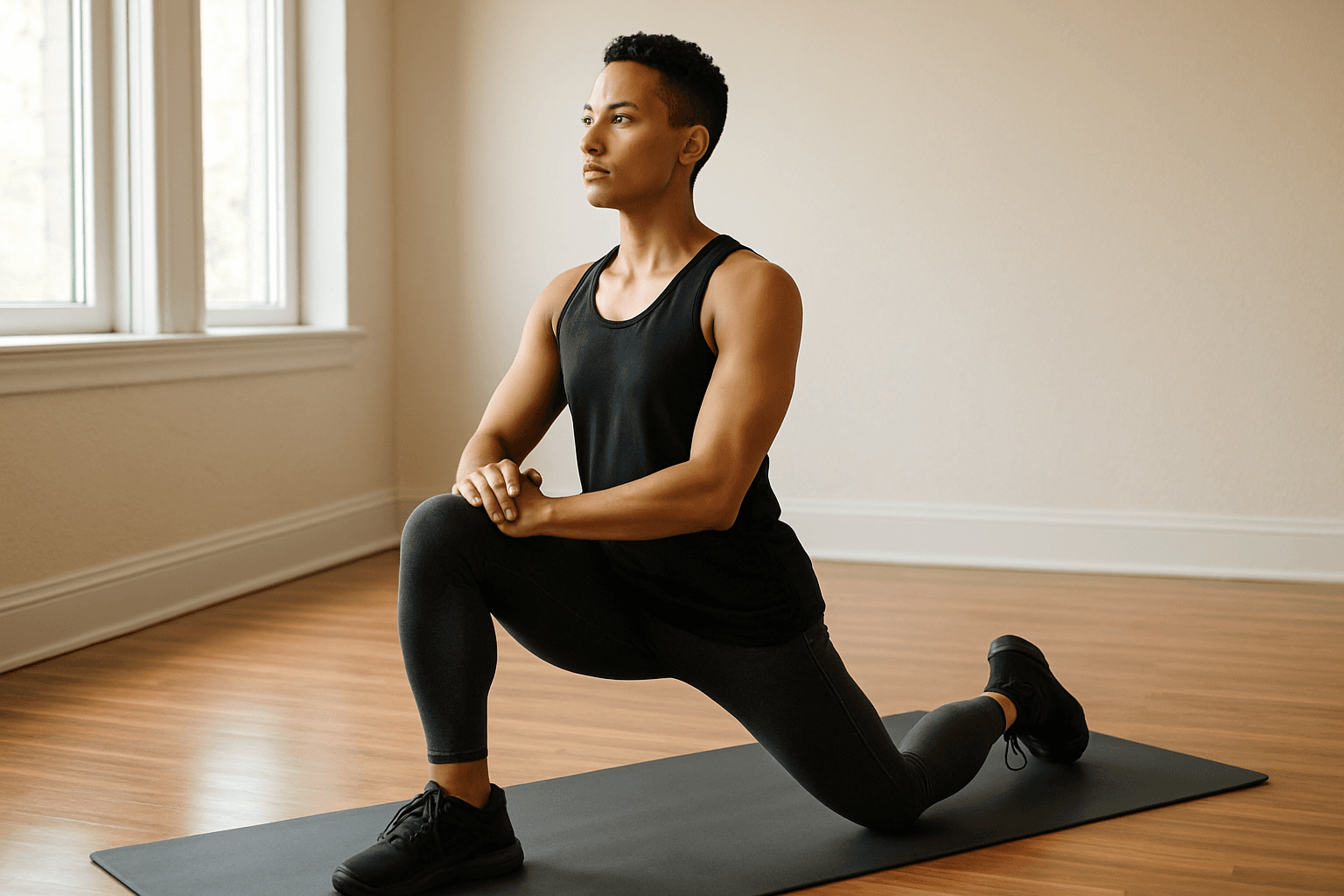
Ask anyone with tight hip flexors what they do about it and the answer is usually the same: lunge stretch, pigeon pose, couch stretch. Maybe a foam roller on the TFL. Maybe yoga.
And then the tightness comes back.
This pattern of brief relief followed by return to baseline is the signal that the intervention is not addressing the cause. The hip flexors are tight for a reason, and that reason is not insufficient stretching.
Why the Hip Flexors Stay Tight
The iliopsoas, the primary hip flexor, attaches from the lumbar vertebrae and the inside of the ilium to the lesser trochanter of the femur. Its primary function is hip flexion, but because it attaches directly to the lumbar spine, it also functions as a lumbar stabilizer. When the deep core stabilizers are inhibited, which is nearly universal in people who sit for extended periods, the iliopsoas takes on a stabilization role it was not designed to hold long-term.
To perform this stabilization function, it maintains a level of background tension. This tension is not a flexibility problem. It is the nervous system maintaining a structural compensation. Stretching reduces the tension temporarily. The nervous system reinstates it because the stability demand has not changed.
This is the key insight: the hip flexors are tight because the body needs them to be tight given the current structural situation. Stretch them without changing the structural situation, and they will return to their previous resting length.
The Structural Situation: Lower Cross Syndrome
The most common structural driver of chronic hip flexor tightness is lower cross syndrome: the combination of inhibited glutes, inhibited deep core, and tight hip flexors and lumbar extensors that develops from chronic sitting.
When the glutes are inhibited, the hip flexors and lumbar extensors compensate for pelvic stability. When the deep core is inhibited, the iliopsoas compensates for lumbar stability. In both cases, the hip flexors become chronically shortened not because of stiffness per se but because the nervous system is using them as stabilizers.
Stretching a muscle the nervous system is actively using as a stabilizer provides temporary relief at best and can produce instability at worst. The body relaxes the stretch in the short term and reinstates the tension within hours.
Free - 60 seconds
Not sure which program you need?
Take the free posture quiz and get a personalized recommendation based on your pain and goals.
What Produces Lasting Change
Step 1: Decompress, Do Not Stretch
The static back position, lying with legs at 90 degrees on a chair or couch, allows the hip flexors to release passively without the nervous system perceiving a threat to stability. The position removes the weight-bearing load on the hip flexors. Gravity gradually encourages the lumbar spine to flatten toward the floor, which mechanically lengthens the iliopsoas without any active effort.
Five to ten minutes in this position consistently produces more lasting hip flexor release than a 90-second stretch because the nervous system is not being asked to release a structure it perceives as necessary for stability.
Step 2: Activate the Glutes
Until the glutes are providing the pelvic stability the hip flexors have been compensating for, lasting change is not possible. Glute bridges performed with a neutral pelvis begin to re-establish the glute activation pattern. The focus should be on quality of contraction rather than load or range.
When the glutes begin to work reliably, the nervous system gradually reduces the stabilization demand on the hip flexors. The hip flexors can then accept a lengthened position because the body has an alternative strategy for stability.
Step 3: Restore Deep Core Function
Abdominal contractions performed in the static back position re-engage the transverse abdominis and deep multifidus without reinforcing the lumbar hyperextension pattern. When the deep core is active, the iliopsoas stabilization demand reduces and the resting tension in the hip flexors decreases.
Step 4: Address Sitting Patterns
No corrective exercise program produces lasting change if the provocative pattern continues for eight hours per day. The hip flexors will return to their shortened resting length if that is the position they spend most of the day in.
This does not mean everyone needs to stop sitting. It means building in regular interruptions. Ten minutes of corrective work for every two hours of sitting is far more effective than a single 30-minute session at the end of the day.
The Anterior Pelvic Tilt Fix program, Lower Back Pain program, and Desk Worker Posture Fix each address hip flexor tightness from the correct structural framework, working on decompression, glute activation, and deep core function together rather than isolating the hip flexors as a tissue problem.

Mike Boshnack
Corrective Exercise Specialist · Posture Guy Mike
Mike Boshnack grew up skateboarding and surfing, trained MMA, and rode road bikes competitively. A shoulder injury put him on a path to discover corrective exercise. He has since helped thousands of people fix the structural patterns causing their pain, without surgery or passive treatments.
Keep Reading
Conditions & Pain
Dentists and Hygienists: Your Neck Is Paying for Every Patient You Lean Over
4 min read
Conditions & Pain
Why Your Neck Cracks When You Turn Your Head (And What It's Really Telling You)
4 min read
Conditions & Pain
Levator Scapulae Pain: Why That Knot Between Your Neck and Shoulder Blade Won't Quit
4 min read
Related Conditions
Free tool
See where your posture stands right now.
Upload a photo and get an instant AI-powered posture analysis with personalized recommendations. Free, no account required.
Try the Free Posture CheckTake the next step
Fix the structural root cause, not just the symptom.
Mike's programs apply this corrective method to your specific condition. No gym, no equipment. Just a floor and 15 minutes. Buy once, own forever.
Discussion
Discussion is a Pro member feature. Visit the community for more.