
What Kyphosis Actually Is
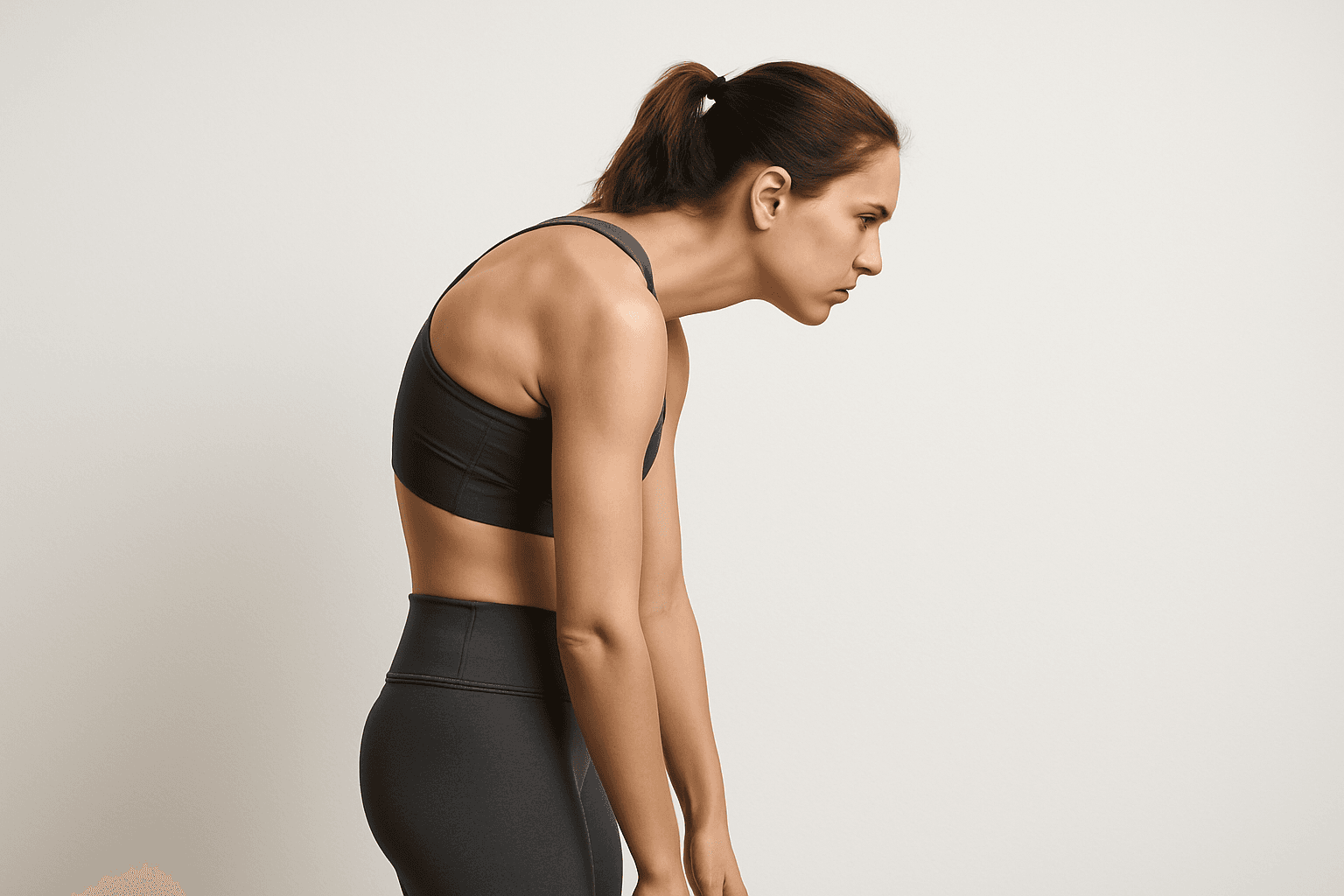
Kyphosis is an excessive forward curve of the thoracic spine, the part of your back between your shoulder blades. From the side, it shows up as the rounded, hunched upper back that most people call a hunchback or, when it sits lower, a dowager's hump at the base of the neck.
A certain amount of thoracic curve is normal. A healthy thoracic spine curves backward somewhere between 20 and 45 degrees. Kyphosis is when that curve pushes past roughly 45 to 50 degrees and the back starts to look visibly rounded.
Here is the most important thing to understand: in the overwhelming majority of adults, kyphosis is postural. The curve is created and held in place by muscle balance and daily habit, not by any deformity of the bones. That distinction matters enormously, because a curve held by muscles is a curve you can change.
The Two Types, and Why It Matters
There are two broad categories of kyphosis, and they have very different outlooks.
Postural kyphosis is by far the most common. The vertebrae are normal. The spine has simply adapted to years of forward-rounded positioning, the muscles on the front of the body shortened, the muscles on the back lengthened and switched off, and the spine settled into a rounded shape. This type responds extremely well to corrective exercise at any age.
Structural kyphosis is less common and involves an actual change in the shape of the vertebrae, most often from Scheuermann's disease in adolescence, where the front of the vertebrae wedge during growth. This type cannot be fully straightened with exercise, but corrective work still reduces pain, slows progression, and improves how upright a person can hold themselves.
If you developed your rounding gradually as an adult from desk work and screen time, you almost certainly have the postural type, the one that responds best.
Why the Curve Develops
Postural kyphosis is a tug-of-war that the front of your body is winning.
The Front Gets Tight
The muscles of your chest, the pectoralis major and the smaller pec minor underneath, shorten from years of forward-reaching posture: typing, driving, scrolling, carrying. As they shorten, they pull the shoulders forward and the upper spine rounds to follow.
The Back Switches Off
At the same time, the muscles that are supposed to hold your thoracic spine upright, the mid and lower trapezius and the thoracic erectors, become lengthened and inhibited. When a muscle is held long and underused for long enough, the nervous system effectively turns down its signal. These muscles are not just weak, they are switched off.
With a tight front pulling forward and a switched-off back failing to pull upright, the spine settles into the path of least resistance. That path is a forward curve.
It Does Not Happen in Isolation
The thoracic spine is the middle of a chain. Below it, anterior pelvic tilt, the forward tipping of the pelvis from prolonged sitting, throws the lower back into an exaggerated arch and pushes the mid-back to round in compensation. Above it, the rounded thoracic spine forces the head forward to keep the eyes level, which is forward head posture.
This is why you cannot fix kyphosis by only working the mid-back. The neck above and the pelvis below are both feeding the curve. Lasting correction addresses the whole chain.
Free - 60 seconds
Not sure which program you need?
Take the free posture quiz and get a personalized recommendation based on your pain and goals.
What Does Not Work
Before the fix, it is worth being honest about what wastes people's time.
Posture braces hold you upright while you wear them, but they change nothing about the underlying muscle balance. Worn for long stretches, they can actually make the postural muscles weaker by doing their job for them. A brace is, at best, a temporary reminder.
Just telling yourself to sit up straight fails because the moment your attention moves elsewhere, the tight front and switched-off back pull you straight back into the curve. You cannot consciously hold a position all day that your muscles are fighting against.
Random stretching of the chest helps a little, but without waking up the posterior muscles to hold the new position, the chest simply tightens again.
The Corrective Approach That Works
Fixing postural kyphosis means winning the tug-of-war: loosen and lengthen the tight front, wake up and strengthen the switched-off back, and restore the spine's ability to extend. Here is the sequence.
Restore Thoracic Extension
Lie back over a foam roller exercises placed horizontally across your mid-back, hands supporting your head, and gently extend over it. Move the roller up and down your thoracic spine two inches at a time, pausing at each stiff segment until it softens.
This is the single most important piece. The thoracic spine has lost its ability to extend, and no amount of strengthening will hold a position the spine cannot physically reach. Restore the range first.
Release the Chest
Stand in a doorway, forearms on the frame, and step through gently to stretch the chest. Hold for 30 to 60 seconds. For the deeper pec minor, a targeted release against a wall or with a ball removes the forward pull on the shoulders.
Reactivate the Posterior Muscles
The prone cobra is the workhorse here. Lie face down, arms at your sides, and lift your chest off the floor while squeezing your shoulder blades down and together, thumbs rotating toward the ceiling. This directly fires the mid and lower trapezius and the thoracic erectors, the exact muscles that have switched off.
Correct the Chain Above and Below
Add cervical retraction (gentle chin tucks) to address the forward head component, and hip flexor release plus glute activation to address the anterior pelvic tilt below. Correcting the ends of the chain is what makes the thoracic correction permanent rather than something that slips back within hours.
Watch: The Daily Hunchback Routine
If you would rather follow along than read, this video is the short daily version. It takes under five minutes and uses three exercises: cat-cow to get the mid-back moving again, the doorway chest stretch to open the chest, and the prone Y raise to build the strength that holds the new position. Do it every day, then work through the full sequence above when you have more time. The complete progression is in the Hunchback and Kyphosis Fix program.
What to Expect
Done consistently, this kind of sequence takes 15 to 20 minutes a day. Most people notice reduced upper back tension and an easier time standing tall within the first one to two weeks.
Visible change, standing taller and more open, the rounding noticeably reduced, typically shows up between 6 and 10 weeks. Full structural correction, where the upright position becomes your default without conscious effort, usually takes 3 to 6 months depending on how long the curve has been there and how consistent you are.
The curve developed over years. It will not reverse in a week. But because postural kyphosis is muscular, it genuinely does reverse when you give the body the right input, day after day.
If you want this built into a structured, follow-along program rather than assembling it yourself, the Neck Hump Correction program walks through the full thoracic-extension and posterior-strengthening sequence in order. You can also read the full kyphosis condition guide for a deeper breakdown of the root cause.

Mike Boshnack
Corrective Exercise Specialist · Posture Guy Mike
Mike Boshnack grew up skateboarding and surfing, trained MMA, and rode road bikes competitively. A shoulder injury put him on a path to discover corrective exercise. He has since helped thousands of people fix the structural patterns causing their pain, without surgery or passive treatments.
Keep Reading
Conditions & Pain
Why You Can't Sit Cross-Legged Comfortably (What Your Hips Are Telling You)
4 min read
Conditions & Pain
Dentists and Hygienists: Your Neck Is Paying for Every Patient You Lean Over
4 min read
Conditions & Pain
Why Your Neck Cracks When You Turn Your Head (And What It's Really Telling You)
4 min read
Related Conditions
Free tool
See where your posture stands right now.
Upload a photo and get an instant AI-powered posture analysis with personalized recommendations. Free, no account required.
Try the Free Posture CheckTake the next step
Fix the structural root cause, not just the symptom.
Mike's programs apply this corrective method to your specific condition. No gym, no equipment. Just a floor and 15 minutes. Buy once, own forever.
Discussion
Discussion is a Pro member feature. Visit the community for more.