
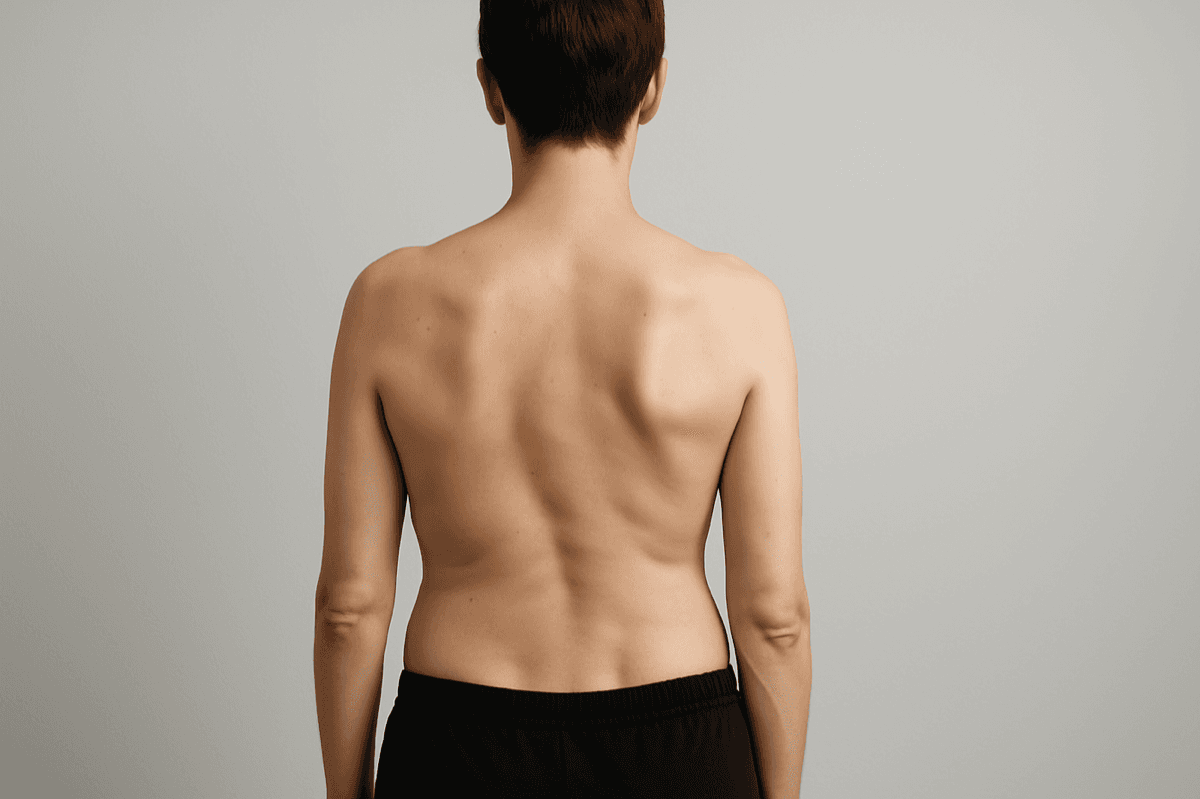
Structural vs. Functional Scoliosis: A Critical Distinction
Scoliosis, a lateral curvature of the spine, is not a single condition. There are two fundamentally different categories, and the treatment implications are completely different.
Structural scoliosis involves a fixed, three-dimensional rotation of the vertebrae. The vertebral bodies are rotated along with the lateral curve, creating the characteristic rib hump visible when the person bends forward. This type is usually idiopathic (without a clear cause) and develops most rapidly during adolescent growth spurts. It cannot be fully corrected by exercise because the bone deformity itself is fixed. The treatment question for structural scoliosis is whether the curve is severe enough to require bracing or surgical intervention, generally curves above forty to fifty degrees in skeletally mature patients, or manageable with conservative care.
Functional scoliosis is a lateral curvature that appears on X-ray but is not accompanied by vertebral rotation. It is driven by muscular imbalance, pelvic asymmetry, leg length discrepancy (real or functional), or postural habits. When the underlying cause is addressed, the curve reduces or resolves. Functional scoliosis is extremely common and is frequently mistaken for structural scoliosis on imaging alone, particularly when the imaging is done standing, in the posture that creates the curve.
The distinction matters enormously because functional scoliosis is directly addressable through postural correction, while structural scoliosis requires management rather than resolution.
What Postural Work Can Do for Structural Curves
For mild to moderate structural scoliosis, postural correction cannot straighten the rotated vertebrae. But it can do several things that are meaningful for quality of life and long-term outcomes.
First, it reduces the muscular compensation patterns that make structural curves symptomatic. A ten-degree structural curve accompanied by severe muscular imbalance, one side overworked, one side inhibited, is far more painful than the same curve in a person with reasonably balanced muscular function. Addressing the muscular imbalance reduces the pain load significantly.
Second, postural work addresses the functional component that is superimposed on the structural curve. Almost everyone with a structural scoliosis also has a functional component, additional curvature from the muscular asymmetry that the structural curve creates. Corrective work can meaningfully reduce the total curve angle by addressing the functional portion.
Third, stabilizing the surrounding muscular system may slow progression in adults. While adult scoliosis does not progress as rapidly as adolescent curves, it does progress during periods of deconditioning or increased spinal loading. A strong, balanced muscular system provides better mechanical stabilization of the spinal column.
The Corrective Approach
For scoliosis of any type, the initial assessment focuses on the pelvic level: identifying whether a leg length discrepancy (real or functional) is contributing to the lateral pelvic tilt that drives or exaggerates the curve. Functional leg length difference from pelvic rotation is correctable through specific corrective exercise.
Hip flexor asymmetry, tighter on one side, is almost always present and contributes directly to pelvic tilt and lateral curvature. Releasing the tight side specifically, rather than doing bilateral hip flexor work equally, is more effective for scoliosis management.
Lateral trunk strengthening on the concave side of the curve and lengthening work on the convex side addresses the muscular component of the curve directly.
The quiz identifies the specific imbalance patterns contributing to your individual presentation. Every scoliosis is different in its specific pattern of compensation, and targeted correction of the specific pattern is more effective than generic scoliosis exercise programs. For complex presentations, combining multiple programs can address the full chain of dysfunction that scoliosis typically creates throughout the body.
Mike Boshnack
Corrective Exercise Specialist · Posture Guy Mike
Mike Boshnack grew up skateboarding and surfing, trained MMA, and rode road bikes competitively. A shoulder injury put him on a path to discover corrective exercise. He has since helped thousands of people fix the structural patterns causing their pain, without surgery or passive treatments.
Keep Reading
Related Programs
Free tool
See where your posture stands right now.
Upload a photo and get an instant AI-powered posture analysis with personalized recommendations. Free, no account required.
Try the Free Posture CheckTake the next step
Fix the structural root cause, not just the symptom.
Mike's programs apply this corrective method to your specific condition. No gym, no equipment. Just a floor and 15 minutes. Buy once, own forever.
Discussion
Discussion is a Pro member feature. Visit the community for more.