
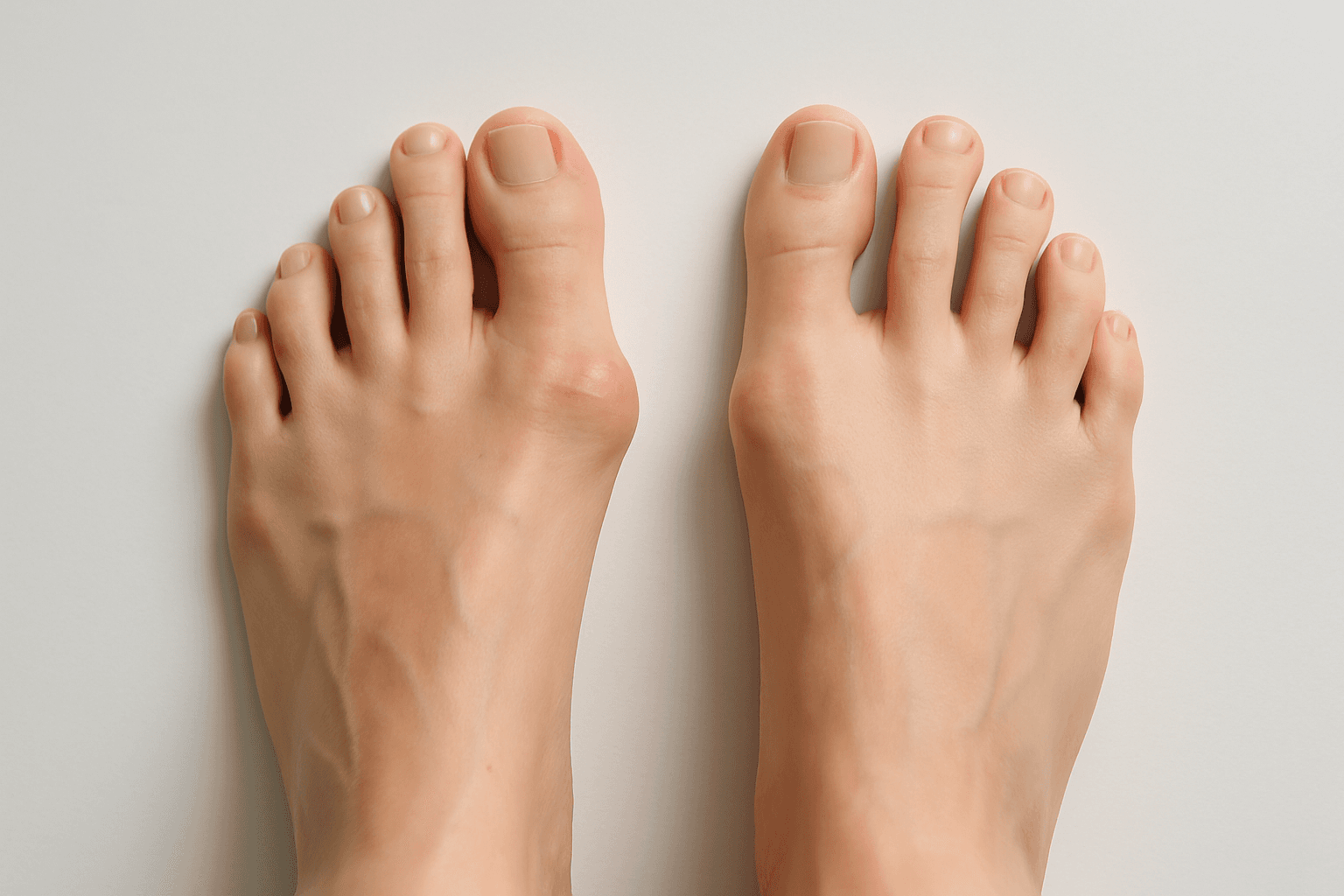
Why Bunions Are Not Just a Shoe Problem
The conventional explanation for bunions is that tight shoes push the big toe inward over time. This is not entirely wrong, but it is incomplete in a way that leads people to solutions that do not work: wider shoes, bunion pads, toe spacers, and eventually surgery.
If tight shoes were the only cause, bunions would be equally common on both feet, would correlate perfectly with shoe style, and would not appear in populations that rarely wear shoes. None of these things are true. Bunions are more common on one foot than the other, they develop in people who wear reasonable footwear, and they occur in barefoot populations, though at lower rates.
The shoe is a contributing factor. The structural alignment of the foot, ankle, knee, and hip is the primary cause. The bunion is where the problem shows up. It is not where the problem starts.
How a Bunion Actually Forms
A bunion (hallux valgus) is a progressive deviation of the first metatarsal bone outward and the big toe inward. The bump you see on the inside of the foot is the head of the metatarsal bone being pushed out of position. Over time, the joint capsule stretches, the surrounding ligaments weaken, and the deviation becomes self-reinforcing.
The force that pushes the metatarsal outward is not the shoe. It is the way the foot loads during walking.
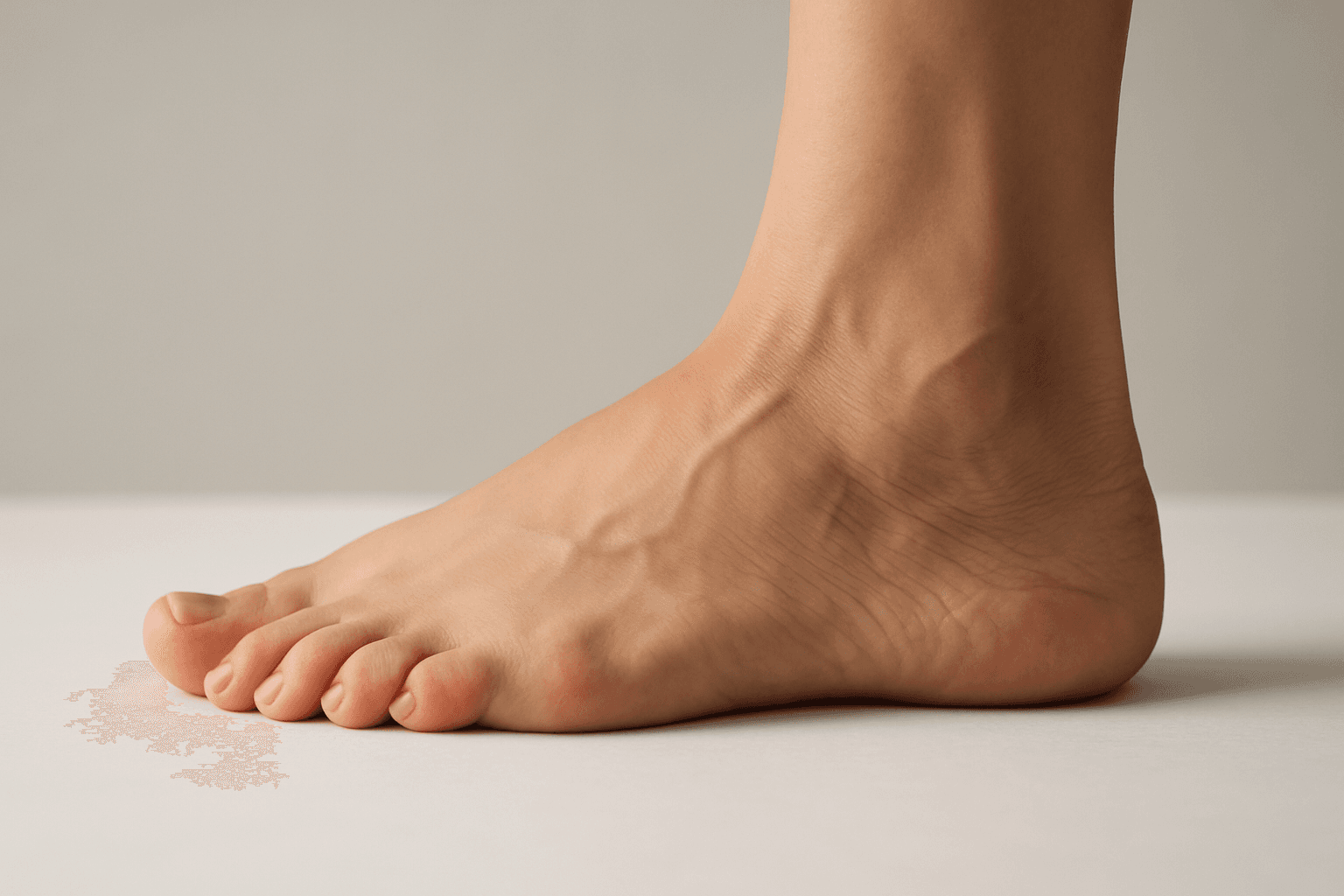
The Pronation Connection
When the foot pronates excessively, meaning the arch collapses inward and the ankle rolls medially, the weight-bearing load shifts to the inside edge of the foot. During the push-off phase of walking, this medial loading creates a lateral force on the first metatarsal: it is being pushed outward by every step.
Multiply this force by the thousands of steps you take daily, across years, and you have the mechanism that creates a bunion. The shoe may compress the toe further once the deviation begins, but the force that initiates and drives the deviation is the pronation pattern.
Why the Hip Matters
Here is the connection most people miss, including most podiatrists: foot pronation is frequently driven by hip weakness and pelvic position.
When the gluteus medius, the primary hip stabilizer, is weak or inhibited, the femur internally rotates during single-leg stance (which is what every step of walking is). Internal femoral rotation pushes the knee inward. The knee going inward forces the ankle to pronate. The pronating ankle loads the medial foot. The medial foot loading pushes the big toe inward.
The bunion is at the bottom of a chain reaction that starts at the hip.
This is why bunions are often worse on one foot: the hip that is weaker or the pelvis that is more tilted creates more internal rotation on that side, more pronation, and more bunion force on that foot.
Anterior Pelvic Tilt Feeds the Pattern
Anterior pelvic tilt, the forward tipping of the pelvis that develops from prolonged sitting, inhibits the glutes through reciprocal inhibition. When the glutes are offline, the hip lacks the stability to control femoral rotation. The entire chain below it compensates, and the foot takes the structural punishment.
This is why bunions and lower back pain frequently coexist. They share a common structural root: anterior pelvic tilt with glute inhibition.
Why Common Treatments Fall Short
Bunion Pads and Sleeves
Pads protect the bunion from friction against the shoe. They manage the symptom. They do nothing about the force that is creating the deviation with every step.
Toe Spacers
Toe spacers hold the big toe in a more aligned position while worn. They can be useful as part of a corrective program. Used alone, they are the foot equivalent of a posture brace: they override the position temporarily but do not change the structural forces that pull the toe out of alignment once the spacer comes off.
Wider Shoes
Wider shoes reduce compression on the bunion. This is sensible and reduces pain. But width alone does not change the pronation pattern or the hip weakness that drives it.
Surgery (Bunionectomy)
Surgery realigns the bone and tightens the joint capsule. For severe, rigid bunions with significant joint degeneration, it may be necessary. But surgery does not change the biomechanical pattern that created the bunion. Without correcting the pronation, hip weakness, and pelvic tilt, recurrence rates after surgery are meaningful: studies report 10 to 25 percent recurrence within ten years.
Free - 60 seconds
Not sure which program you need?
Take the free posture quiz and get a personalized recommendation based on your pain and goals.
The Structural Correction Approach
Correcting a bunion without surgery means changing the forces that are creating it. That requires working the entire chain from hip to foot.
Correct the Pelvis
Static back (five minutes, lying with legs at ninety degrees on a chair) deactivates the hip flexors and allows the pelvis to return to neutral. This is the foundation because anterior pelvic tilt is the upstream driver of glute inhibition and femoral internal rotation.
Reactivate the Glutes
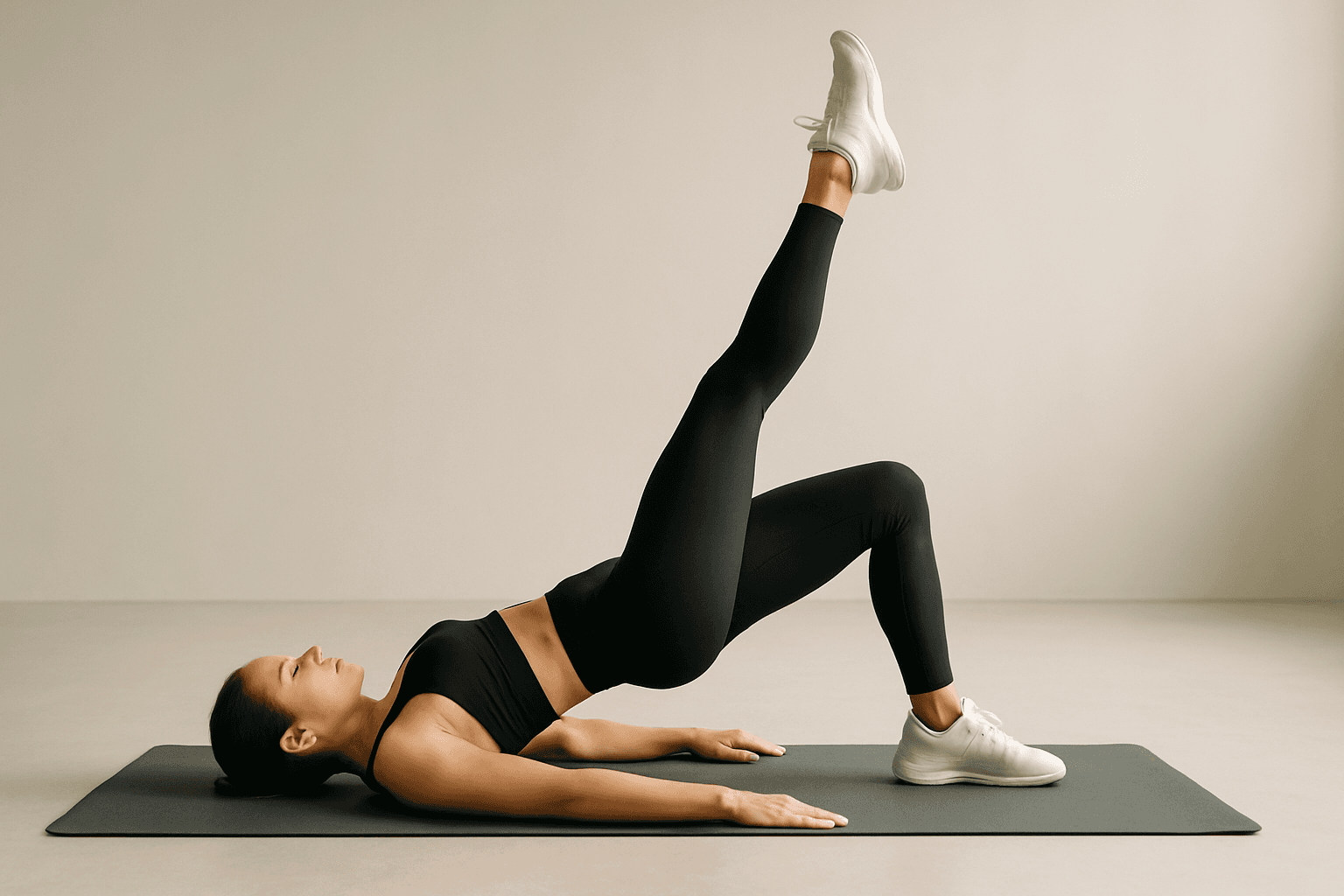
Glute bridges and single-leg glute bridges re-engage the gluteus maximus. Side-lying clamshells target the gluteus medius, the specific muscle that controls femoral rotation during walking. When the glute medius fires, the femur stops internally rotating, the knee stops collapsing inward, and the pronation force at the foot reduces.
Restore Foot and Ankle Alignment
Calf raises with proper alignment (keeping the ankle straight, not rolling inward) strengthen the posterior tibialis, the primary muscle that supports the arch and controls pronation. Towel scrunches and marble pickups with the toes rebuild intrinsic foot muscle strength that has atrophied in shoes.
Short-foot exercises, where you actively lift the arch without curling the toes, retrain the foot's ability to maintain its own arch rather than collapsing under load.
Toe Mobilization
Gentle manual spreading of the toes and big toe abduction exercises (pulling the big toe away from the other toes actively) maintain and improve the joint mobility that bunion progression restricts. Done after the upstream structural work, this directly addresses the toe deviation while the hip and ankle corrections address the force that caused it.
What to Expect
With consistent daily work on the full chain, most people with mild to moderate flexible bunions notice reduced pain within two to four weeks. The bunion pain decreases because the pronation force decreases, not because the bone has moved.
Measurable change in toe alignment typically takes two to three months. The deviation that developed over years will not reverse in days, but the progression halts as soon as the loading pattern changes, and gradual improvement follows.
Severe or rigid bunions where the joint has significant arthritic changes may not fully reverse without surgery. But even in those cases, correcting the structural chain reduces pain, slows progression, and, if surgery is eventually needed, addresses the biomechanical cause so the surgical result holds.
The Foot and Ankle Correction program covers the foot-specific work, and the Hip Alignment program addresses the upstream structural drivers. For a full assessment of where your chain is breaking down, the free posture quiz is the starting point.
If your toes are crowded, turned, or collapsed, the toe alignment and posture guide goes deeper on how your toes affect your entire body.

Mike Boshnack
Corrective Exercise Specialist · Posture Guy Mike
Mike Boshnack grew up skateboarding and surfing, trained MMA, and rode road bikes competitively. A shoulder injury put him on a path to discover corrective exercise. He has since helped thousands of people fix the structural patterns causing their pain, without surgery or passive treatments.
Keep Reading
Conditions & Pain
Why You Can't Sit Cross-Legged Comfortably (What Your Hips Are Telling You)
4 min read
Conditions & Pain
Dentists and Hygienists: Your Neck Is Paying for Every Patient You Lean Over
4 min read
Conditions & Pain
Why Your Neck Cracks When You Turn Your Head (And What It's Really Telling You)
4 min read
Related Conditions
Related Programs
Free tool
See where your posture stands right now.
Upload a photo and get an instant AI-powered posture analysis with personalized recommendations. Free, no account required.
Try the Free Posture CheckTake the next step
Fix the structural root cause, not just the symptom.
Mike's programs apply this corrective method to your specific condition. No gym, no equipment. Just a floor and 15 minutes. Buy once, own forever.
Discussion
Discussion is a Pro member feature. Visit the community for more.