
Condition Guide
Plantar Fasciitis
That first-step morning heel pain has a structural cause that starts at the hip.
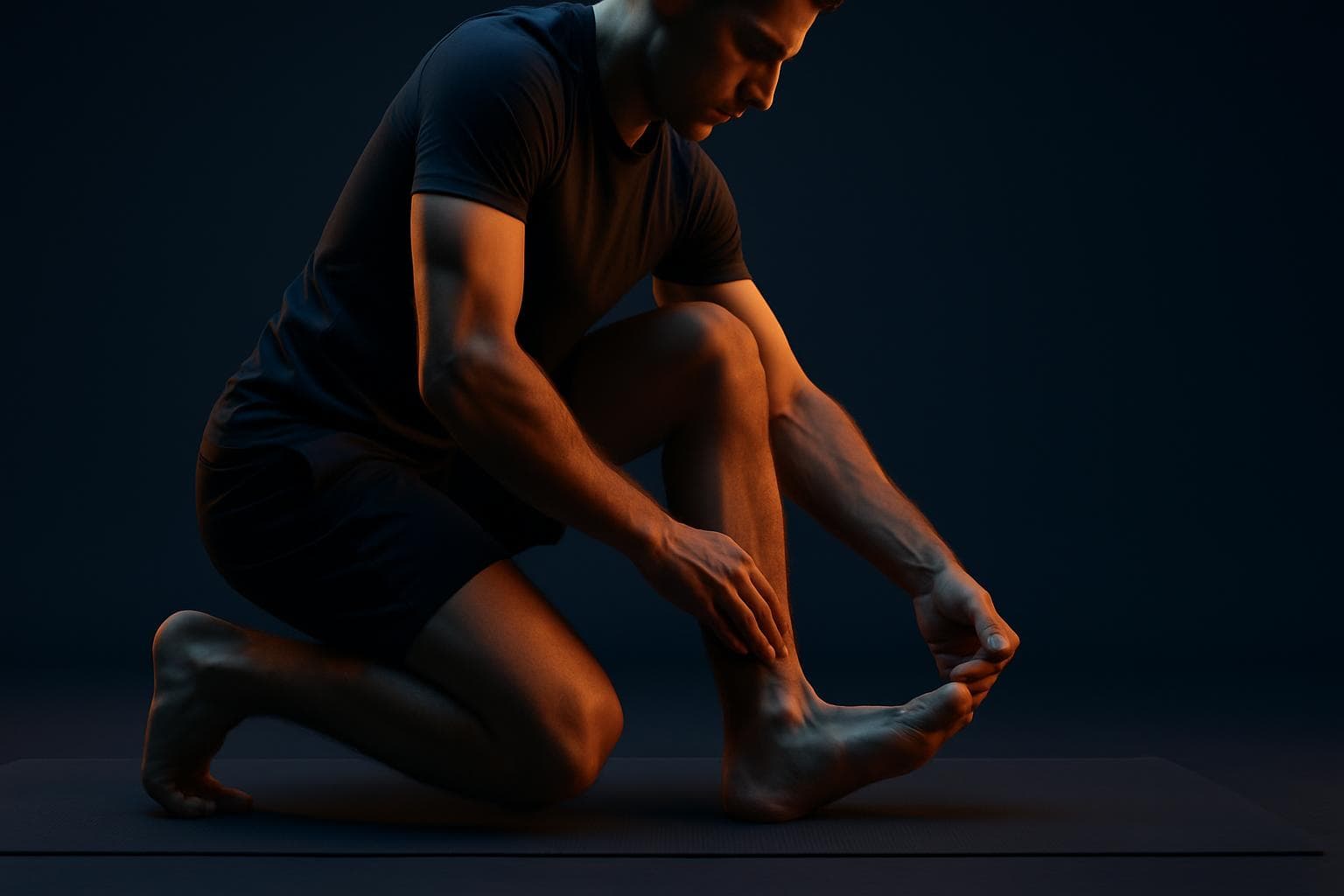
What is Plantar Fasciitis?
Plantar fasciitis is inflammation of the plantar fascia, the thick band of tissue that runs along the sole of the foot from the heel to the toes. It produces the characteristic stabbing heel pain on the first steps in the morning, or after any period of rest. It is one of the most common chronic foot complaints in adults, and the most consistently mismanaged. Treating the foot alone, with orthotics, stretching, cortisone, and rest, provides temporary relief because the structural cause is not in the foot.
Common Symptoms
- Sharp heel pain on the first steps out of bed in the morning
- Pain that improves after walking for a few minutes, then returns
- Heel pain after prolonged standing or on hard surfaces
- Tenderness at the inside of the heel bone (medial calcaneal tubercle)
- Tight, restricted calf and Achilles complex
- Recurring despite orthotics, stretching, or rest
The Real Root Cause
The structural root cause of plantar fasciitis is almost always a combination of ankle pronation and limited hip external rotation. When the hip's external rotators are inhibited (commonly from anterior pelvic tilt), the femur internally rotates, the tibia follows, and the foot pronates, collapsing the arch. The plantar fascia is placed under chronic tensile load every step. Additionally, tight hip flexors and calves reduce ankle dorsiflexion, concentrating every step's load on the heel insertion of the fascia. Orthotics support the collapsed arch without addressing why it collapsed.
How We Fix It
The Plantar Fasciitis Fix addresses the structural chain: restoring hip external rotation and pelvic neutrality to stop the internal rotation that collapses the arch, restoring ankle dorsiflexion through calf and hip flexor release, and reactivating the foot's intrinsic arch-support muscles.
Restore hip external rotation
When the hip's external rotators are working, the femur doesn't internally rotate, the tibia doesn't follow, and the arch doesn't collapse. Hip external rotation is the most important intervention for plantar fasciitis.
Correct pelvic alignment
Anterior pelvic tilt inhibits the glutes and external rotators above the knee. Restoring pelvic neutrality restores the hip's ability to control lower-limb rotation.
Restore ankle dorsiflexion
Tight calves and a limited ankle joint force the foot to pronate during the push-off phase of gait. Ankle mobility work restores the range that prevents this compensation.
Reactivate intrinsic foot muscles
Decades in supportive shoes inhibit the small muscles inside the foot that actively support the arch. Reactivating them reduces the plantar fascia's passive load.
The Fix It Program
Foot, Ankle & Plantar Fasciitis Fix
Everything you need to correct plantar fasciitis, step-by-step video exercises, structured progressions, and the exact sequence Mike uses with clients.
Frequently Asked Questions
Will orthotics fix plantar fasciitis?
Orthotics manage symptoms by supporting the collapsed arch, but they do not address why the arch collapses. Most people who use orthotics for plantar fasciitis continue to need them indefinitely because the structural drivers, hip rotation, pelvic alignment, ankle mobility, have not changed. Corrective exercise that addresses those drivers can resolve plantar fasciitis without permanent orthotic dependence.
Can stretching my calf and plantar fascia fix it?
Calf stretching reduces Achilles tension and can improve ankle dorsiflexion, which helps. But stretching the plantar fascia directly is less effective than addressing the hip alignment that controls arch mechanics from above. Calf stretching alone rarely resolves plantar fasciitis permanently.
Why does plantar fasciitis hurt most in the morning?
During sleep, the plantar fascia shortens to a resting length with the foot in plantarflexion. The first steps forcibly stretch the inflamed tissue from that shortened position, producing the sharp first-step pain. Night splints that hold the ankle in dorsiflexion reduce this by maintaining fascia length overnight, but they don't address the structural cause.
I've had this for 2 years. Is it too late to fix it?
Chronic plantar fasciitis is not irreversible. The structural drivers are still active and addressable regardless of duration. Chronicity makes the fascia more fibrotic and the process longer, but the corrective approach works at any stage. Most people with long-standing plantar fasciitis see significant improvement within 6–8 weeks of consistent structural work.

Written by Mike Boshnack
Corrective Exercise Specialist · Posture Guy Mike
Mike Boshnack grew up skateboarding and surfing, trained MMA, and rode road bikes competitively, before a shoulder injury put him on a path to postural correction. He's since helped thousands of people fix the structural root causes of chronic pain, without surgery or passive treatments.
From the Blog
All articles →Sport & Performance
Runner's Knee Is a Hip Problem: Why Stretching Your IT Band Doesn't Fix It
6 min read
Conditions & Pain
SI Joint Pain: Why It Hurts and Why Nothing Seems to Fix It
3 min read
Conditions & Pain
Bunion Correction Without Surgery: The Postural Approach Most People Miss
10 min read
Conditions & Pain
Flat Feet and Fallen Arches: Why the Fix Starts at Your Hips
4 min read