
The Standard Advice Is Wrong
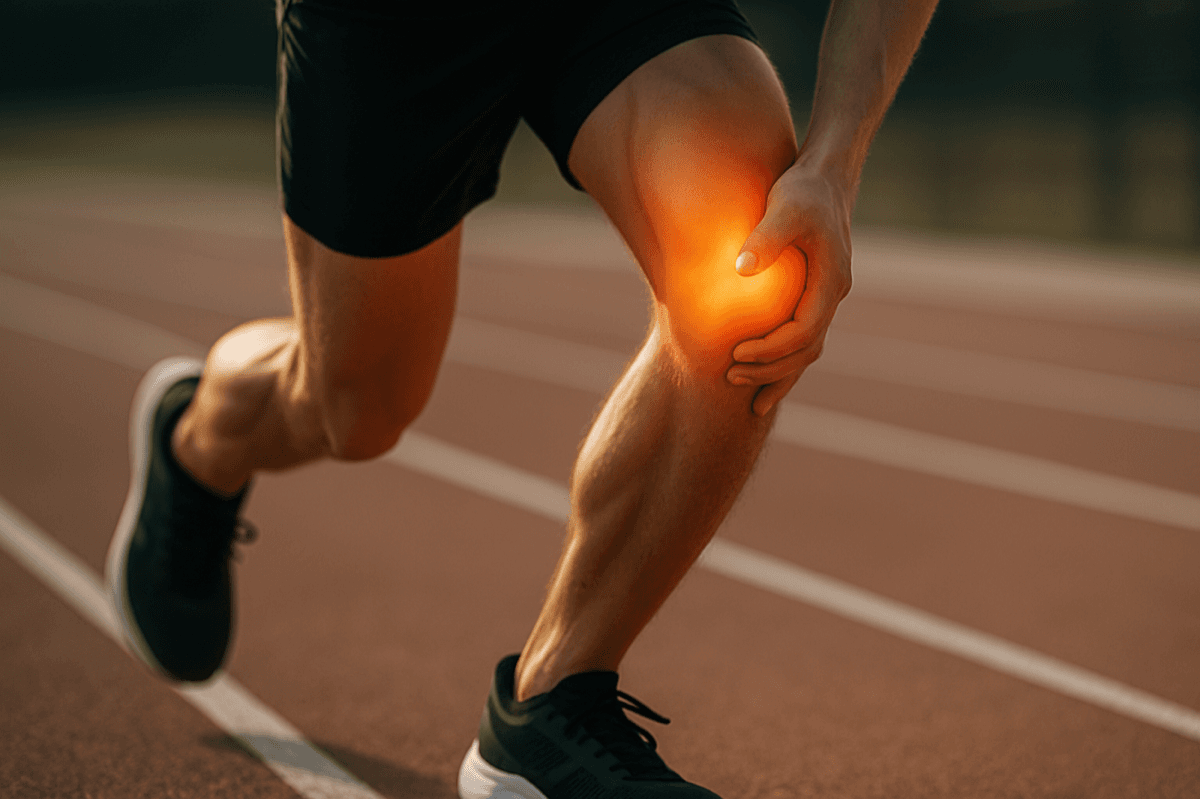
If you have runner's knee, pain at or around the outside or front of the kneecap that is typically worse going downstairs or after runs, you have probably been told to foam roll your IT band. Maybe stretch your quads. Maybe take time off. Maybe ice it.
These approaches manage the symptom. They do not address the cause. Which is why runner's knee keeps coming back every training cycle.
The knee is not the problem. The hip is the problem.
What Runner's Knee Actually Is
"Runner's knee" typically refers to patellofemoral pain syndrome, specifically pain at the interface between the patella (kneecap) and the femur (thigh bone). The patella sits in a groove on the front of the femur and tracks up and down that groove with knee flexion and extension.
When the patella tracks centrally in its groove, the contact forces are distributed evenly and the joint moves without irritation. When the patella tracks laterally, toward the outside of the knee, the lateral facet takes concentrated pressure and the tissue around it becomes inflamed.
Lateral patellar tracking is the mechanical problem. Everything downstream of the actual cause is a symptom.
Why the IT Band Gets Blamed
The iliotibial band, the thick band of connective tissue that runs from the iliac crest of the pelvis down the outside of the thigh to the tibia just below the knee, connects to the lateral retinaculum, which is part of the capsule that holds the patella. When the IT band is tight, it pulls the lateral retinaculum, which pulls the patella laterally.
So the IT band is a legitimate link in the chain. Foam rolling it does temporarily reduce this lateral pull. Which is why foam rolling provides temporary relief.
But why is the IT band tight in the first place?
Free - 60 seconds
Not sure which program you need?
Take the free posture quiz and get a personalized recommendation based on your pain and goals.
The Actual Cause: Glute Med Inhibition and Anterior Pelvic Tilt
The IT band does not tighten on its own. It tightens as a compensation for inadequate hip abductor function, specifically the gluteus medius.
The gluteus medius is the primary hip abductor. On every running stride, when the foot strikes the ground and the weight-bearing leg is loaded, the glute med must contract to keep the pelvis level. If the glute med is not doing this job adequately, the pelvis drops on the opposite side (called contralateral pelvic drop, or Trendelenburg gait) and the knee collapses inward into what is called valgus.
Valgus loading at the knee, meaning the knee caving inward during single-leg stance, is the direct mechanical cause of lateral patellar compression and patellofemoral pain syndrome.
So the question becomes: why is the glute med not doing its job?
Anterior Pelvic Tilt Inhibits the Glute Med
Here is the mechanism. anterior pelvic tilt, which is rampant in runners due to high-volume hip flexor loading combined with sitting, places the pelvis in a position that neurologically downregulates the glutes. When the hip flexors are tight and the pelvis is tipped forward, the nervous system treats the glutes as already lengthened and reduces their resting activation.
This is the same reciprocal inhibition that causes the glutes to shut down in people with chronic lower back pain. It applies to the glute medius as much as the glute maximus.
A runner with anterior pelvic tilt from tight hip flexors has inhibited glutes. Inhibited glutes mean inadequate hip abductor function on landing. The pelvis drops. The knee collapses. The IT band tightens as a secondary stabilizer. The patella tracks laterally. Runner's knee develops.
Foam Rolling the IT Band Does Not Fix the Cause
Foam rolling the IT band addresses the tightness in the IT band. It does not restore glute med function. It does not address anterior pelvic tilt. It does not lengthen the hip flexors.
Within a few runs, the IT band tightens again because the underlying mechanism, inadequate hip abductor control creating lateral knee loading, has not changed.
This is why runner's knee recurs. The symptom is managed, not resolved.
The Structural Fix
The approach has to address the root causes in sequence: release the hip flexors, restore pelvic position, re-engage the glutes, build hip abductor function under load.
Static Back (5 minutes)
The starting point. Deactivates the hip flexors, allows the pelvis to level. Do this before any other exercise in the sequence.
Supine Groin Stretch (5 minutes each side)
Restores hip flexor length passively. The extended leg's hip flexor lengthens while the pelvis is in the static back position. This addresses the structural cause of anterior pelvic tilt more directly than any active quad or hip flexor stretch.
Glute Bridge
Lying on your back, knees bent, feet flat on the floor. Drive through the heels to lift the hips. Squeeze the glutes at the top and do not let the hamstrings take over. Hold 5 seconds, lower slowly, repeat 15 times.
The glute bridge is a glute activation exercise first and a strength exercise second. Many runners with runner's knee discover they cannot isolate the glute at the top of the bridge. The hamstring fires instead. This is the inhibition right there.
Clamshell (Hip Abductor Activation)
Lying on your side, hips stacked, knees bent at 45 degrees, feet together. Lift the top knee without rotating the pelvis or lower back. Hold 3 seconds at the top, lower slowly. Three sets of 15 each side.
The clamshell specifically targets the glute medius in isolation. Done slowly and deliberately, it begins to restore the neuromuscular pattern that controls lateral knee stability on running landing.
Single-Leg Glute Bridge
Progression from the standard bridge. Same setup, but one foot elevated off the floor. The standing leg must stabilize the pelvis without lateral drop. This is functional glute med loading. If the pelvis drops significantly on the lifted side, that is where the weakness is.
Start with 10 reps each side, progress to 15.
Hip Crossover Stretch
Lying on your back, knees bent. Let both knees fall to one side, hold, return, repeat to the other side. This restores hip rotation mobility and releases the deep rotators that contribute to IT band tension.
What to Expect
Most runners see significant reduction in knee pain within 3 to 4 weeks of daily work on this sequence. The pattern to watch for is that knee pain reduces on easier runs first, then on longer or harder efforts.
The recurrence rate drops because the structural cause is being addressed, not the symptom. The IT band tightens less because the glute med is doing its job. The patella tracks more centrally because the knee is not collapsing inward.
If this is a persistent issue and you want a structured program built around running biomechanics, including anterior pelvic tilt, hip flexor length, glute activation, and single-leg stability, the Running Posture Fix program covers the full corrective sequence.

Mike Boshnack
Corrective Exercise Specialist · Posture Guy Mike
Mike Boshnack grew up skateboarding and surfing, trained MMA, and rode road bikes competitively. A shoulder injury put him on a path to discover corrective exercise. He has since helped thousands of people fix the structural patterns causing their pain, without surgery or passive treatments.
Keep Reading
Related Conditions
Free tool
See where your posture stands right now.
Upload a photo and get an instant AI-powered posture analysis with personalized recommendations. Free, no account required.
Try the Free Posture CheckTake the next step
Fix the structural root cause, not just the symptom.
Mike's programs apply this corrective method to your specific condition. No gym, no equipment. Just a floor and 15 minutes. Buy once, own forever.
Discussion
Discussion is a Pro member feature. Visit the community for more.