
I Learned This From Riding, Not Reading
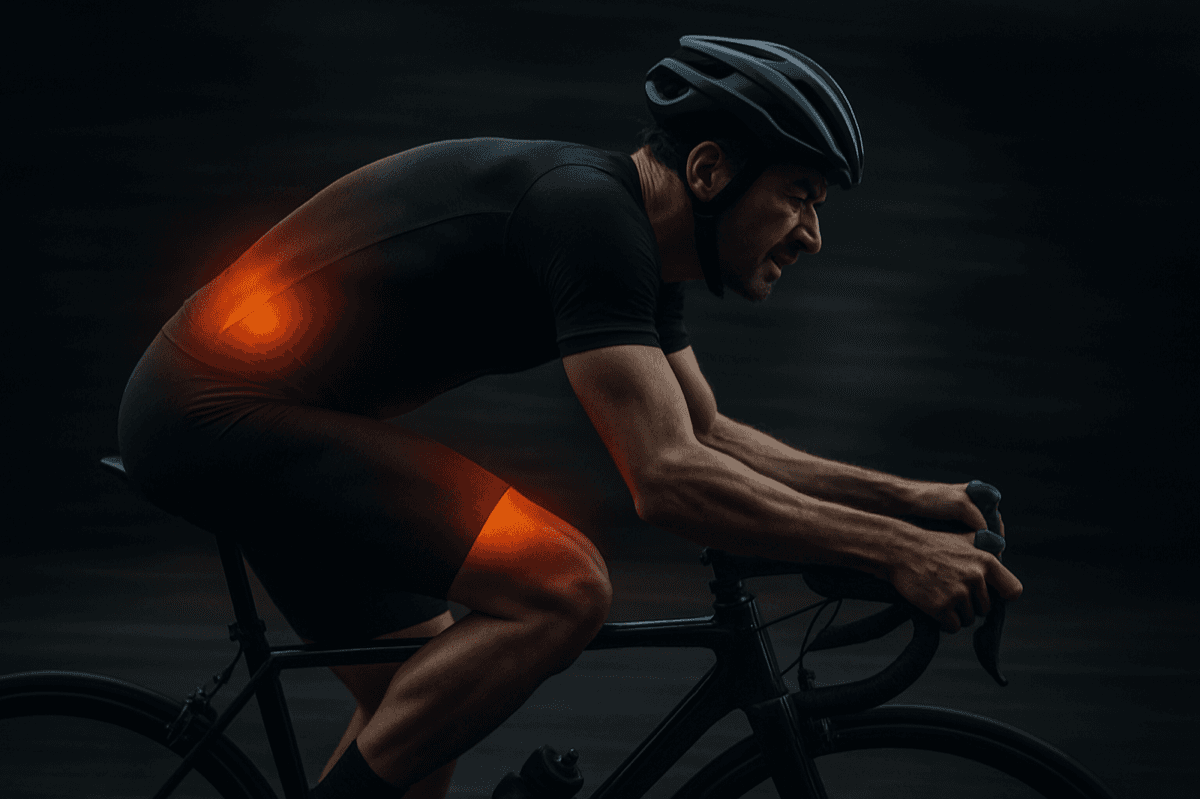
I rode road bikes competitively for years. I know what a 4-hour ride at tempo feels like from the inside. By the end of long days in the saddle, my lower back was always the limiting factor, not my legs, not my lungs. My back would seize up and I would spend the last 30 minutes trying to find a position that did not hurt.
For a long time I assumed it was about fitness. More miles, stronger core, problem solved. That was wrong.
The problem was not the miles. The problem was the position, and what it does to the hip flexors, thoracic spine, and cervical alignment when held for hours at a time.
The Mechanics of the Road Bike Position
The road bike position is, structurally, the opposite of healthy alignment. Let me walk through exactly what happens.
Hip Flexors Shortened to the Length of Your Bike Fit
Your bike fit determines the angle of your hip at the bottom of your pedal stroke. Most road bikes have this in a range of roughly 70 to 80 degrees of hip flexion at the bottom position. Your hip flexors, the iliopsoas and rectus femoris, hold this position through thousands of pedal revolutions per hour.
The body is efficient. After enough repetitions at a given length, the hip flexors adapt: that shortened length becomes their resting length. After a long ride, your hip flexors are not just tired. They are literally shorter than they were before you got on the bike. And after months and years of daily riding, that shortened state becomes permanent unless you actively counteract it.
Off the bike, shortened hip flexors tip the pelvis forward (anterior pelvic tilt) and arch the lumbar spine. Every hour you are not on the bike, your lower back is carrying a compensating load that should not be there. Add in the 8 hours of sitting most people do at work and the hip flexors never get a chance to return to functional length.
Thoracic Spine Locked in Kyphosis
The road bike requires you to reach forward to the handlebars. In an aggressive setup with aero bars and slammed stem, the thoracic spine is held in significant forward flexion for the entire ride. The thoracic extensors (the muscles that hold the thoracic spine in its natural upright position) spend hours in a lengthened, weakened state. The anterior chest muscles, including the pec minor, pec major, and anterior deltoid, adapt to the shortened riding position and tighten.
Over years of riding, the thoracic spine progressively loses its ability to extend. This is measurable and visible. Cyclists in their 40s and 50s who have been riding for a decade often have significantly less thoracic extension than age-matched non-cyclists. The kyphosis follows them off the bike. Their natural standing position is rounded.
Cervical Spine Shear
Here is the combination that causes the most damage: the thoracic spine is in flexion (rounded forward), but you need to see the road. So the cervical spine extends, lifting the head up out of the rounded thoracic position. This creates a shear force between the lower cervical and upper thoracic vertebrae: one segment is in flexion, the adjacent segment is in extension. Sustained for hours, this causes exactly the kind of cervical disc irritation and suboccipital tightness that so many cyclists experience.
The longer the ride and the more aggressive the position, the more significant this shear becomes.
How the Pattern Follows You Off the Bike
The hip flexors carry their shortened state off the bike. The pelvis stays tipped forward. The lumbar stays in hyperlordosis. The thoracic stays rounded. The head stays forward.
When you stand up from the bike after a four-hour ride and try to stand tall, you are fighting four hours of structural adaptation. The body has been trained, for those four hours, to hold a specific posture. Getting off the bike does not reset it. That takes deliberate corrective work.
The lumbar pain after cycling is not from exertion. It is from carrying a chronically misaligned pelvis and lumbar spine through all the hours you are not on the bike. The riding confirms and deepens the pattern. Everything else pays the price.
Free - 60 seconds
Not sure which program you need?
Take the free posture quiz and get a personalized recommendation based on your pain and goals.
The Fix
The approach here has to address each structural element the bike position degrades.
Static Back (5 to 10 minutes post-ride)
The single best thing you can do immediately after a long ride. Lying on your back, legs at 90 degrees on a chair. This deactivates the hip flexors from below and allows the pelvis and lumbar spine to level. Done while the hip flexors are freshly shortened from a ride, this is when it is most effective.
I do this on the floor of the garage while still in my kit. It takes 5 minutes and the difference in how I feel the next morning is significant.
Supine Groin Stretch (5 minutes each side)
One leg extended flat on the floor, the other bent. The extended leg's hip flexor lengthens passively. Post-ride, the hip flexors are fatigued and more receptive to length change than they are cold. Hold each side for 5 minutes and use the time to decompress mentally from the ride.
Thoracic Extension Over a Foam Roller
Horizontal roller across the mid-thoracic spine at the shoulder blade level. Extend gently over the roller, arms crossed or behind the head. Move two inches up and down the thoracic spine, spending 30 to 60 seconds at each point.
This directly counters the thoracic kyphosis the riding position builds. Done after every long ride, it prevents the progressive stiffening that turns cycling posture into everyday posture.
Pec Minor Doorway Stretch
Stand in a doorway, forearm at 90 degrees against the door frame, elbow at shoulder height. Step forward until you feel the chest and anterior shoulder stretch. Hold 60 seconds each side. The pec minor is one of the primary structures that drives the rounded shoulder pattern of cycling, and stretching it directly is not optional.
Hip Extension Over a Bolster
Lying face down over a rolled towel or small bolster positioned under the hip flexors (anterior pelvis), allow the pelvis to gently sag toward the floor. This is a passive hip extension that counteracts the hip flexion position of riding. Hold for 3 to 5 minutes. It is uncomfortable initially. That discomfort is the hip flexors being asked to lengthen beyond their adapted riding length.
What Consistent Work Looks Like
Cyclists who do this sequence daily, or at minimum on every training day, notice improved standing posture within 2 to 3 weeks. Lower back pain typically reduces significantly within 4 to 6 weeks. Riding power often improves as well, because shortened hip flexors reduce gluteal activation, and the glutes are the primary power generators on the bike.
The investment is 15 to 20 minutes after riding. Against 10, 15, or 20 weekly hours in the saddle, that is reasonable math.
If you want a structured daily program built around the specific demands cycling places on the body, the Cycling Posture Fix program covers every structural element, including hip flexors, thoracic extension, pec minor, and cervical alignment, in a 20-video sequence.

Mike Boshnack
Corrective Exercise Specialist · Posture Guy Mike
Mike Boshnack grew up skateboarding and surfing, trained MMA, and rode road bikes competitively. A shoulder injury put him on a path to discover corrective exercise. He has since helped thousands of people fix the structural patterns causing their pain, without surgery or passive treatments.
Keep Reading
Free tool
See where your posture stands right now.
Upload a photo and get an instant AI-powered posture analysis with personalized recommendations. Free, no account required.
Try the Free Posture CheckTake the next step
Fix the structural root cause, not just the symptom.
Mike's programs apply this corrective method to your specific condition. No gym, no equipment. Just a floor and 15 minutes. Buy once, own forever.
Discussion
Discussion is a Pro member feature. Visit the community for more.