
Why Neck Pain Exercises Usually Underperform
The standard neck pain exercise list looks like this: cervical rotations, chin tuck exercises, upper trapezius stretches, levator scapulae stretches, maybe some isometric resistance work. If the person is seeing a physical therapist, maybe some scapular exercises.
These exercises are not wrong, but they are insufficient when applied to the neck in isolation. They treat the neck as if it were a standalone structure rather than the top of a postural chain whose function depends entirely on what is happening below it.
The reason most neck pain programs produce temporary improvement and then plateau is that they address the neck without changing the structural conditions that are stressing it.
What Is Actually Causing Neck Pain
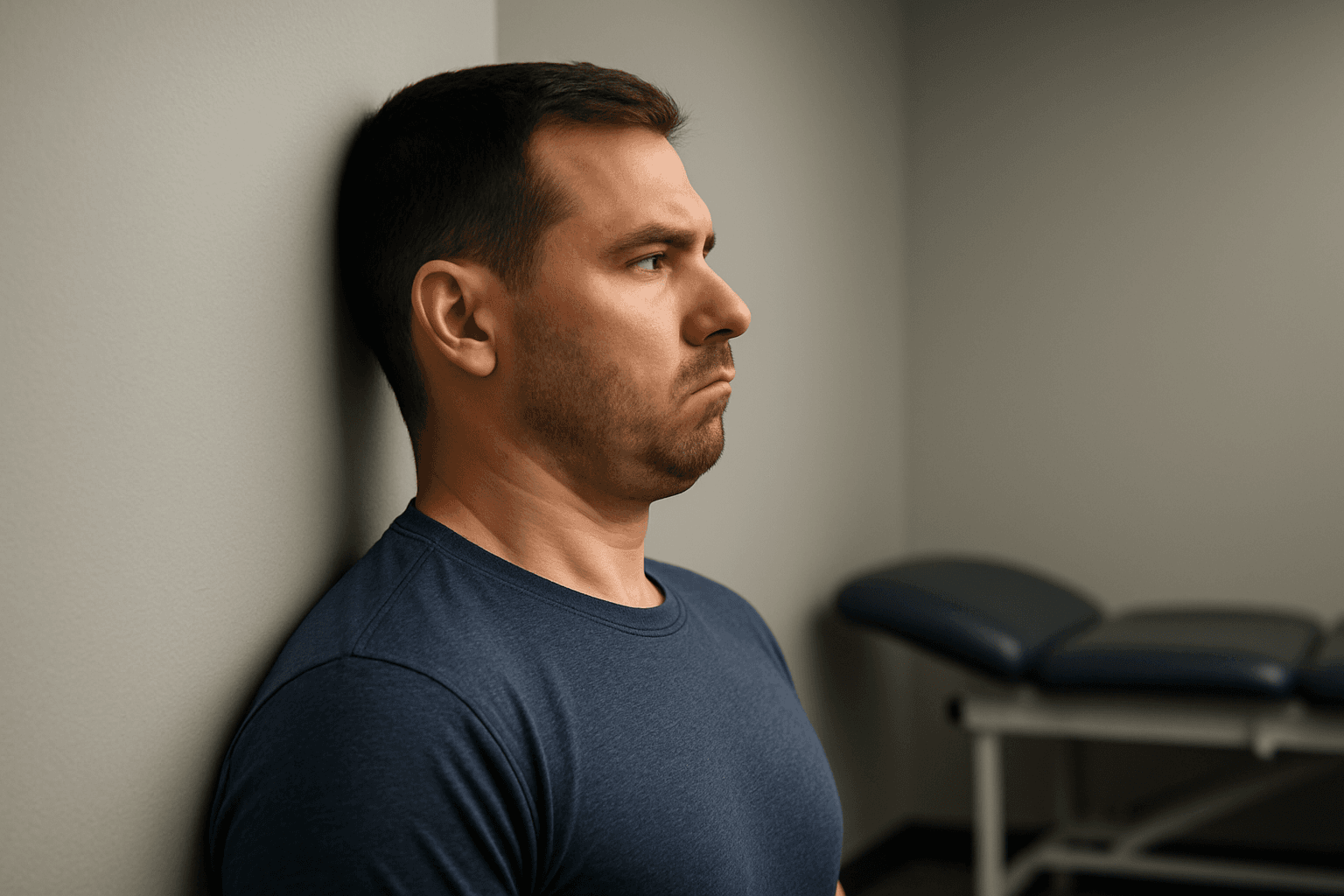
Chronic neck pain in adults who have not had a traumatic injury is almost always a structural compression problem. The head is forward of the shoulders, the upper cervical spine is hyperextended, the lower cervical spine is compressed, and the muscles surrounding the cervical spine are chronically activated to prevent the head from falling further forward.
The force driving this pattern is not in the neck. The force driving this pattern is thoracic kyphosis below and hip flexor tightness below that. The thoracic spine rounds forward, the head compensates by moving forward to keep the eyes level, and the cervical spine is left managing a head that weighs 10 to 12 pounds in neutral but effectively weighs 30 to 60 pounds in the forward position.
Doing neck stretches in this context is like treating a symptom while the cause continues. The neck tightens up again within hours because the structural load has not changed.
The Exercises That Help
Thoracic Extension Over a Foam Roller
This is the single most effective exercise for chronic neck pain and it has nothing to do with the neck directly. Thoracic extension over a foam roller, performed at the mid-thoracic level (T4 to T8), directly reduces the kyphosis that forces the head forward. When the thoracic spine can extend, the head moves back toward the shoulders and the cervical compression reduces.
Position the foam roller horizontally across the mid-thoracic spine. Cross the arms over the chest. Extend gently over the roller for 30 to 60 seconds, then move the roller one to two vertebral levels and repeat. Work progressively from T8 upward to T4.
Static Back
Static back addresses the hip flexor shortening that creates the lumbar and thoracic cascade driving cervical compression from below. Lying on the back with legs at 90 degrees on a chair, in silence, for five to ten minutes allows the lumbar spine and thoracic spine to decompress through gravity. Many people feel their neck relax within two minutes of entering this position, even though there is no neck intervention involved.
Deep Cervical Flexor Activation (Chin Tuck)
With the thoracic spine releasing and the hip flexors decompressing, the cervical spine can begin to reorganize. Cervical retraction performed against a wall re-engages the deep cervical flexors that are inhibited in forward head posture. The movement is a horizontal glide backward, not a downward chin tuck. Hold five seconds, release, repeat ten times.
This exercise activates the muscles that are chronically underused in neck pain and begins to reduce the load on the suboccipital and posterior cervical muscles that are chronically overused.
Prone Cobra
Lying face down, lift the chest and head slightly from the ground with the arms at the sides, thumbs pointing outward. This strengthens the thoracic extensors and the deep cervical extensors in a gravity-assisted position where the anterior chain cannot compensate. Hold five seconds, release, repeat ten times.
The prone cobra addresses the thoracic extensor weakness that perpetuates kyphosis and the cervical extensor weakness that perpetuates forward head posture simultaneously.
Free - 60 seconds
Not sure which program you need?
Take the free posture quiz and get a personalized recommendation based on your pain and goals.
The Exercises That Often Make It Worse
Neck Rotations and Circles
Full cervical range-of-motion exercises performed repeatedly on a cervical spine under compressive load can increase irritation. If the facet joints are already compressed and the surrounding muscles are in protective spasm, moving through full range forces the compressed joints to articulate. Many people with acute neck pain find these exercises increase rather than decrease their symptoms.
The better approach is decompression through static back and thoracic release before introducing any cervical movement.
Aggressive Upper Trap Stretching
Pulling the head laterally to stretch the upper trapezius on the opposite side loads the cervical spine laterally and can irritate the facet joints on the compressed side. It provides temporary muscle relief but reinforces the idea that the neck is the problem rather than the thoracic spine and hips below it.
Resistance Machine Neck Work
Neck extension and flexion against resistance is counterproductive in the presence of cervical compression. Strengthening muscles that are already in protective hypercontraction around a compressed structure increases the compression.
The Forward Head Posture Fix program, Text Neck Fix program, and Headache and Tension Relief program apply neck pain correction in the correct structural sequence: thoracic release, hip decompression, then cervical-specific work. The order matters as much as the exercises themselves.

Mike Boshnack
Corrective Exercise Specialist · Posture Guy Mike
Mike Boshnack grew up skateboarding and surfing, trained MMA, and rode road bikes competitively. A shoulder injury put him on a path to discover corrective exercise. He has since helped thousands of people fix the structural patterns causing their pain, without surgery or passive treatments.
Keep Reading
Conditions & Pain
Dentists and Hygienists: Your Neck Is Paying for Every Patient You Lean Over
4 min read
Conditions & Pain
Why Your Neck Cracks When You Turn Your Head (And What It's Really Telling You)
4 min read
Conditions & Pain
Levator Scapulae Pain: Why That Knot Between Your Neck and Shoulder Blade Won't Quit
4 min read
Free tool
See where your posture stands right now.
Upload a photo and get an instant AI-powered posture analysis with personalized recommendations. Free, no account required.
Try the Free Posture CheckTake the next step
Fix the structural root cause, not just the symptom.
Mike's programs apply this corrective method to your specific condition. No gym, no equipment. Just a floor and 15 minutes. Buy once, own forever.
Discussion
Discussion is a Pro member feature. Visit the community for more.