
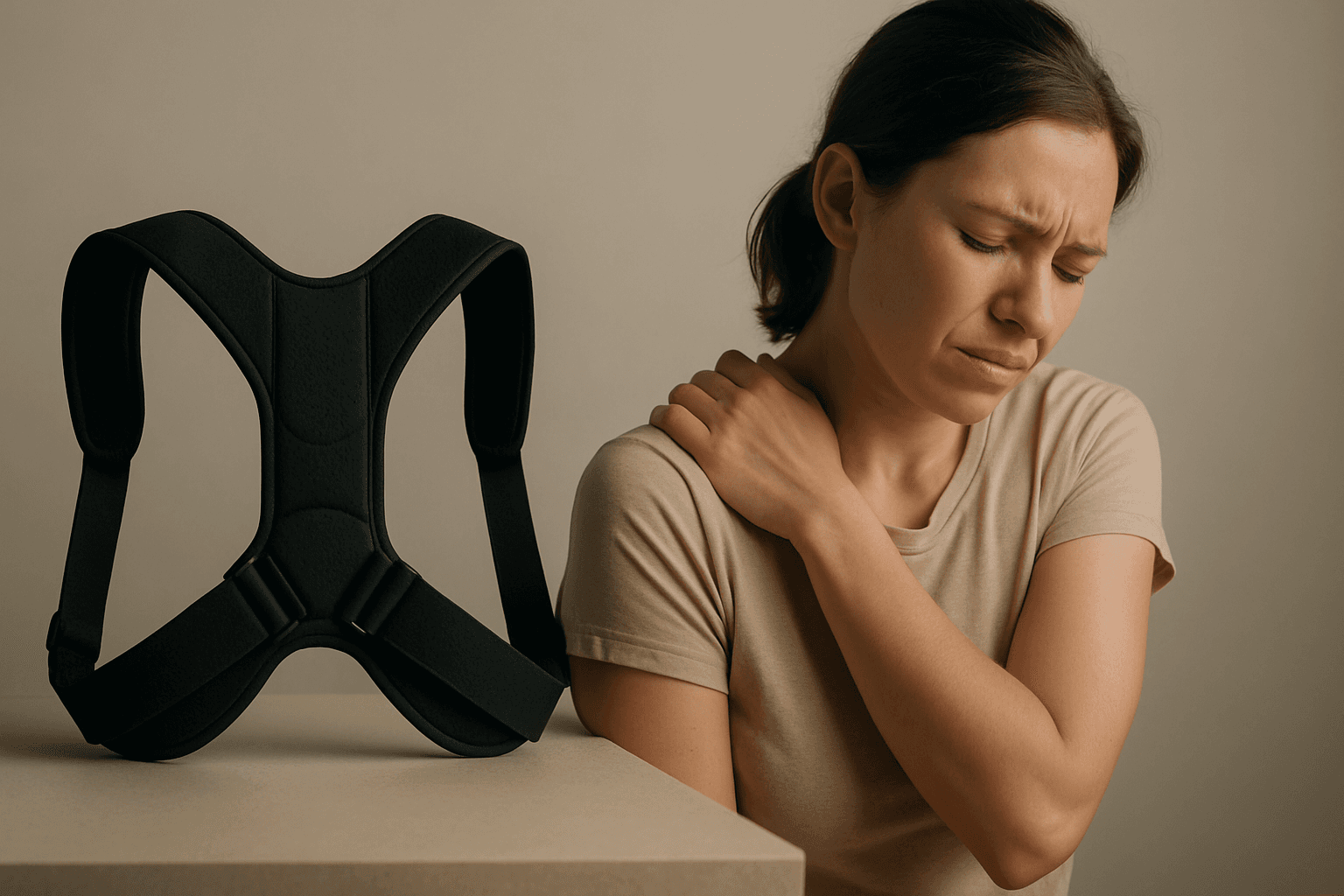
Why Posture Correctors Feel Like They Work
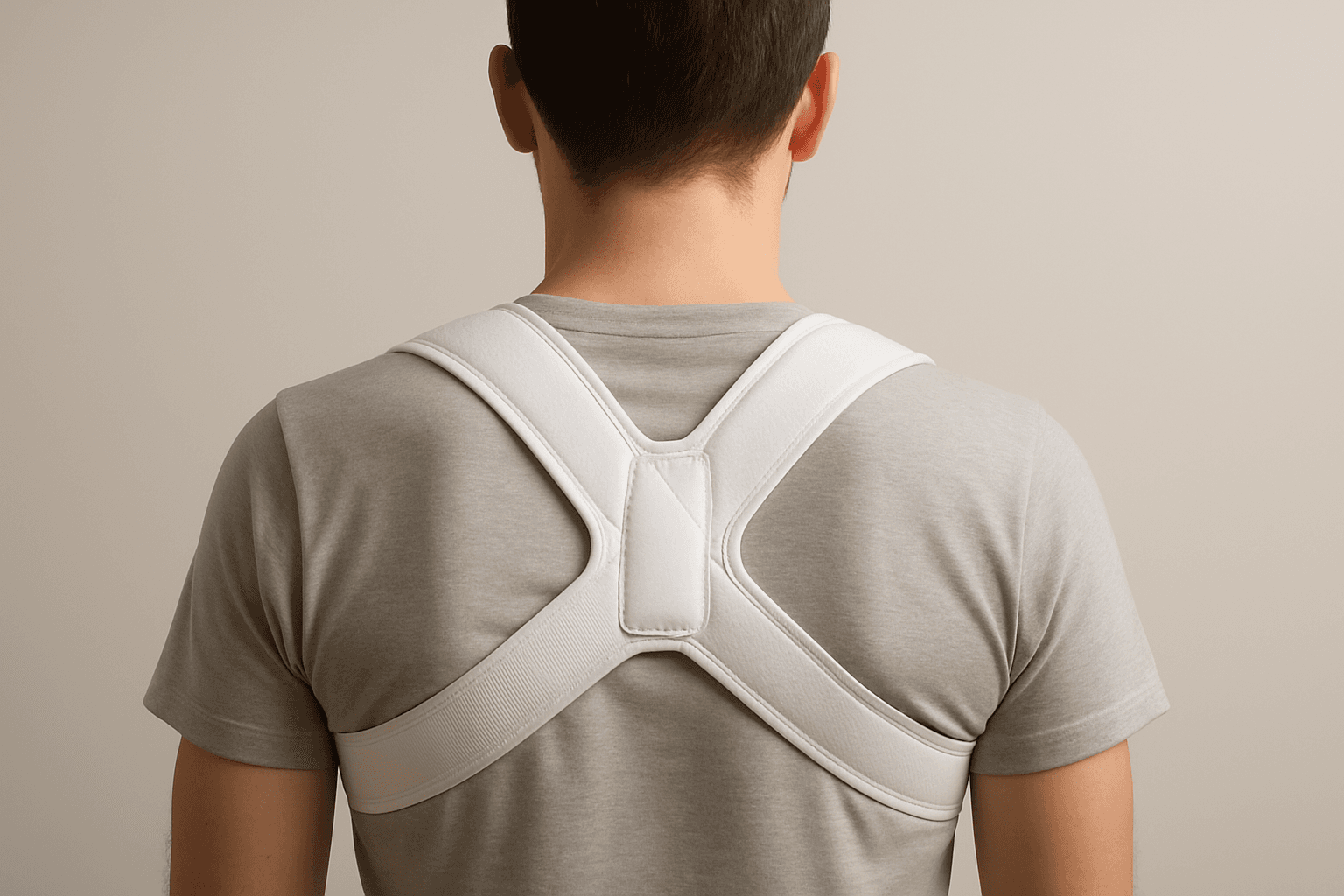
A posture corrector, whether it is a figure-eight strap across the shoulders or a wider posture belt, does one thing well: while you wear it, it physically pulls your shoulders back and holds you in a more upright position. You put it on, you stand taller, and it feels like progress.
That immediate feedback is exactly why these devices sell so well, and it is also why the downside is easy to miss. Standing upright because a strap is forcing you there is not the same as standing upright because your muscles are doing it. The brace is doing the work your body should be doing, and over time that distinction turns into real side effects.
The 7 Side Effects of Wearing a Posture Corrector
1. Muscle Weakening and Dependency
This is the most serious side effect. The muscles that hold you upright - the mid and lower trapezius, the rhomboids, and the deep postural muscles of the spine - get stronger by working against gravity all day. When a brace holds your shoulders back for you, those muscles stop being asked to do their job.
A muscle that is not used gets weaker. The longer you wear the corrector, the less your own muscles work, and the more you need the corrector to feel upright. That is dependency: the device creates the very weakness that makes you feel like you need the device. People often notice that when they take the brace off, their posture is actually worse than before, because the supporting muscles have quietly switched off.
2. It Does Not Address the Root Cause
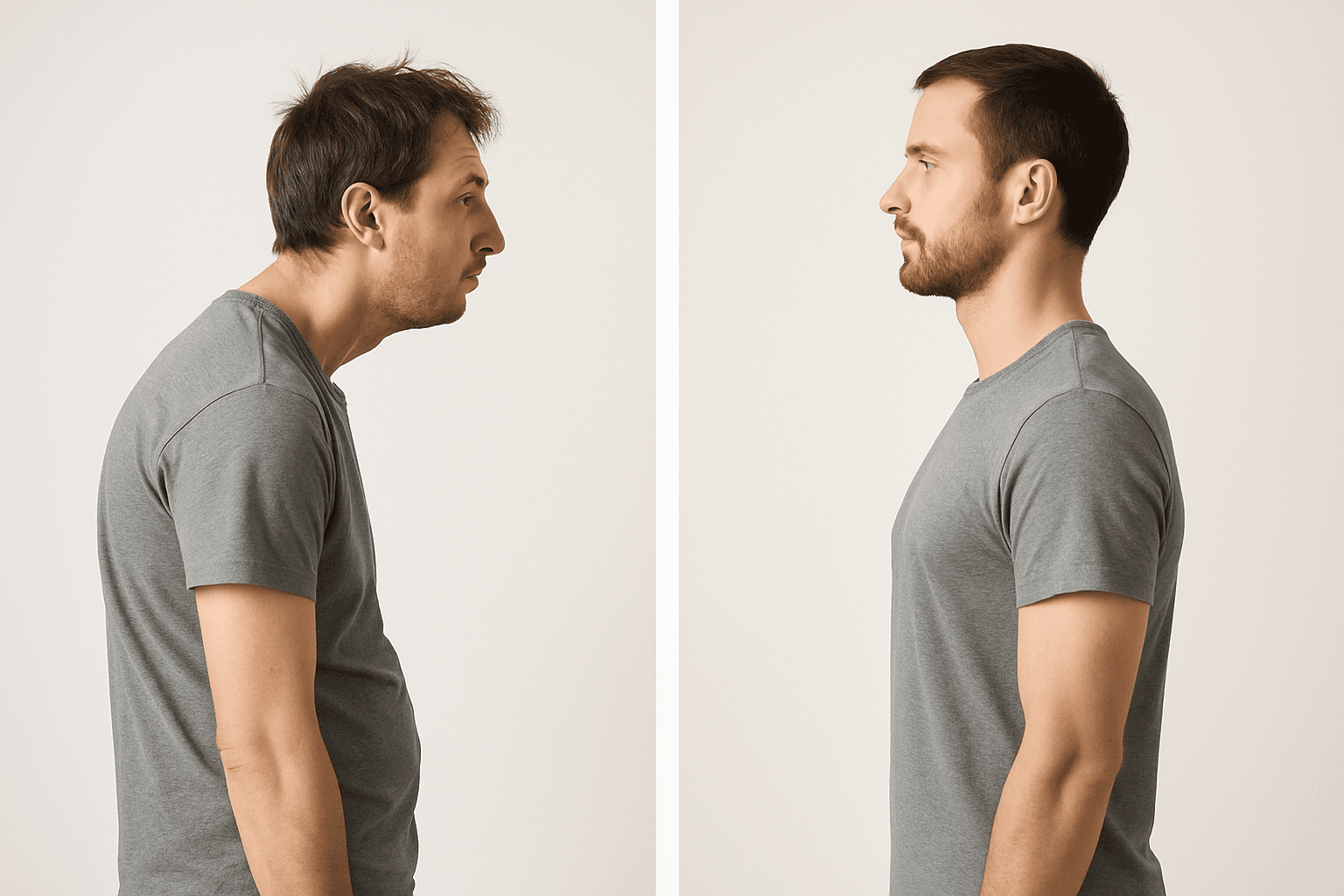
Forward rounding is usually driven by tight muscles on the front of the body - the chest and the hip flexors - pulling you out of alignment, combined with weak, switched-off muscles on the back failing to pull you upright. A posture corrector pulls your shoulders back against that tightness but changes none of it. The tight chest stays tight. The weak back stays weak. The moment the brace comes off, the original imbalance pulls you right back into the same posture.
This is the fundamental problem with every external posture device: it overrides the symptom without touching the cause.
3. Skin Irritation, Chafing, and Pressure Sores
Straps that sit against bare skin or thin clothing for hours create friction. The areas under the armpits, across the shoulder blades, and along the edges of wider belts are prone to chafing, redness, and in some cases open sores. People with sensitive skin or those who wear correctors during exercise are most affected. The irritation tends to worsen over weeks of daily use as the same contact points are loaded repeatedly.
4. Nerve Compression and Tingling
Straps that run across the front of the shoulders and under the armpits can compress the brachial plexus, the bundle of nerves and blood vessels that passes through that area. The result is tingling, numbness, or aching that radiates down the arms if the brace is worn too tightly or for extended periods. This is especially common with figure-eight style correctors that cross at the upper back and loop under both arms.
5. Restricted Breathing
This side effect gets overlooked. A snug belt or strap around the upper body restricts the ribcage from expanding fully during inhalation. Good posture and good breathing are mechanically linked: the ribcage needs to expand laterally and anteriorly for a full, deep breath. A device that limits that expansion while claiming to improve your posture is working against itself. People who wear posture belts during exercise or physical work are most likely to notice this.
6. Spinal Pressure from Poor Fit
Most posture correctors are designed as one-size-fits-most. When the fit is wrong, or when the brace shifts during movement, it can apply pressure unevenly across the spine. Rather than distributing load across the postural muscles, a poorly fitted brace concentrates force at specific vertebral levels. This does not correct posture. It compresses the spine in a slightly different misalignment than the one you started with.
7. A False Sense of Progress
Perhaps the most costly side effect is the months people spend believing they are fixing their posture when they are only propping it up. Time spent relying on a brace is time not spent doing the corrective work that actually changes the underlying structure. The brace feels like it is working because you stand taller while wearing it. But the moment it comes off, nothing has changed.
Are Posture Correctors Ever Useful?
There is a narrow, legitimate role for them. Worn for short periods - fifteen to thirty minutes - a posture corrector can act as a tactile reminder, a nudge that cues you to notice when you have slumped so you can correct it yourself. Used that way, briefly and as a prompt rather than a crutch, it is not doing your muscles' work for them.
The problem is almost nobody uses them that way. They are marketed and worn as an all-day fix, and that is precisely the use that causes the side effects above. If you do use one, treat it as a short reminder, not as the thing holding you up.
Free - 60 seconds
Not sure which program you need?
Take the free posture quiz and get a personalized recommendation based on your pain and goals.
What Actually Fixes Posture
The reason corrective exercise works where a brace does not is that it changes the underlying muscle balance instead of overriding it. The approach targets the three structural problems a brace ignores:
Release what is tight. Open the chest and the hip flexors that are pulling you forward, so your body is no longer fighting to round. Doorway pec stretches, thoracic extension over a foam roller, and supine groin stretches directly address the tight anterior chain.
Strengthen what is weak. Wake up and build the mid-back, the lower traps, and the deep postural muscles so they hold you upright on their own, all day, with no strap required. Prone cobras, band pull-aparts, and wall angels target the exact muscles a brace replaces.
Restore the movement you have lost. Rebuild the thoracic spine's ability to extend so the upright position is one your body can actually reach and hold. Most people with rounded posture have lost thoracic extension range from years of sitting. No brace restores that range.
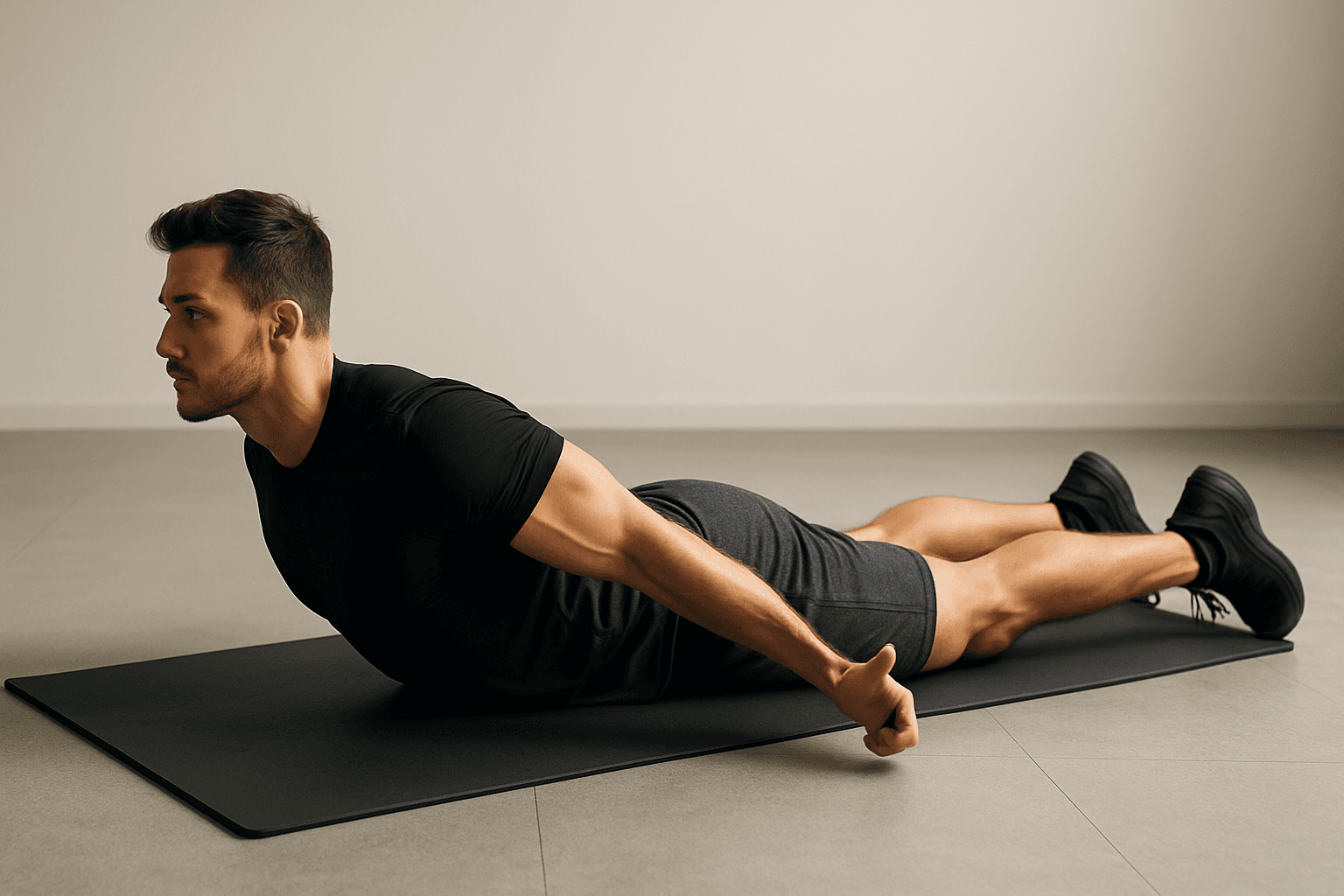
Done consistently for fifteen to twenty minutes a day, this is what makes good posture your default rather than something you have to wear. The Rounded Shoulders Fix and Forward Head Posture Fix programs walk through the exact release-and-strengthen sequence. You can also read the do posture correctors work breakdown for a deeper look at why the strap alone never sticks.
The Bottom Line
A posture corrector is not dangerous in small doses, but worn as a long-term fix it tends to create the weakness, skin problems, and dependency it was supposed to solve, while leaving the real cause of your rounding untouched. The lasting fix is not a device that holds you up. It is the corrective work that teaches your own body to hold itself up.
Take the free posture quiz to find out exactly which structural patterns are driving your posture, and which exercises address them.

Mike Boshnack
Corrective Exercise Specialist · Posture Guy Mike
Mike Boshnack grew up skateboarding and surfing, trained MMA, and rode road bikes competitively. A shoulder injury put him on a path to discover corrective exercise. He has since helped thousands of people fix the structural patterns causing their pain, without surgery or passive treatments.
Keep Reading
Free tool
See where your posture stands right now.
Upload a photo and get an instant AI-powered posture analysis with personalized recommendations. Free, no account required.
Try the Free Posture CheckTake the next step
Fix the structural root cause, not just the symptom.
Mike's programs apply this corrective method to your specific condition. No gym, no equipment. Just a floor and 15 minutes. Buy once, own forever.
Discussion
Discussion is a Pro member feature. Visit the community for more.