
What Posture Correctors Do
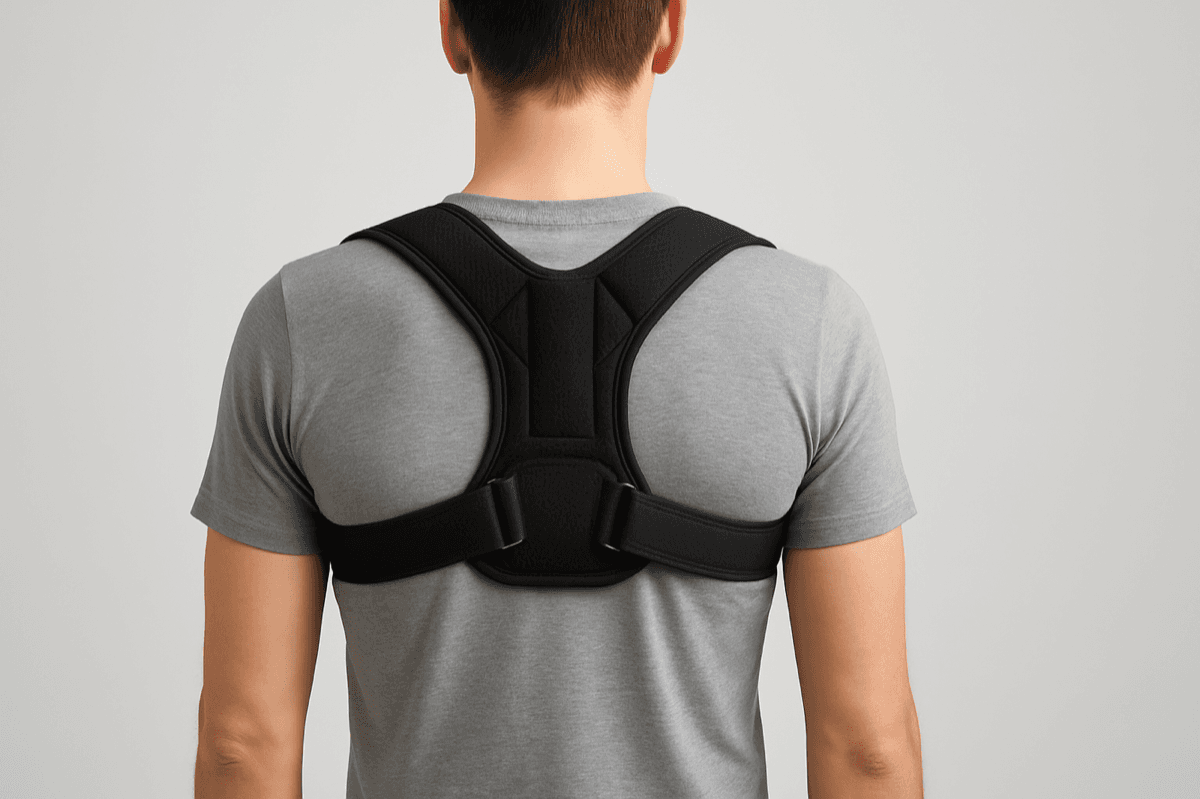
Posture correctors, shoulder braces, posture shirts, electronic reminders that buzz when you slouch, are designed to either passively hold the body in a more upright position or actively remind you to adopt one. Some are physical devices that mechanically pull the shoulders back. Others use biofeedback, vibrating when sensors detect slouching. Both approaches operate on the same premise: that the primary obstacle to good posture is not knowing what correct posture feels like, or not being reminded to maintain it.
This premise is partly correct and mostly wrong.
For someone who has genuinely never experienced correct shoulder position and wants to understand what it feels like, a posture corrector can be a useful educational tool in the short term. Knowing the target state is helpful when you have no reference for it. In that narrow context, a device that briefly pulls the shoulders into retraction has legitimate utility.
The problem is everything that follows.
The Passive Support Problem
When a brace or shirt holds your shoulders in a retracted position, the muscles that would otherwise be responsible for holding that position, primarily the lower trapezius and rhomboids, are not doing the work. They are along for the ride. The external support substitutes for muscular function.
This is the same mechanism that makes orthopedic braces counterproductive over long periods: the supported structure adapts to not working and becomes less capable of functioning without support. Studies on bracing for various joints consistently show that prolonged external support leads to muscular inhibition in the supported area. The brace creates dependence.
For posture correctors specifically, wearing a shoulder retraction device does not strengthen the lower trapezius or release the pectoralis minor tightness that is pulling the shoulders forward. When you take the brace off, the structural imbalance is unchanged, and the shoulders return to their forward position, possibly in a weaker state than before. The corrector has not corrected anything structurally. It has temporarily rearranged the symptom.
Are Posture Correctors Bad for You?
This is the question I get most often. The honest answer: they're not dangerous for short-term use, but they can be counterproductive if you rely on them.
Here's the breakdown:
- Short-term use (under 30 minutes per day for a week or two): Mostly harmless. Can help you feel what retracted shoulders are supposed to feel like. Think of it like training wheels - useful for the first day, a crutch by week three.
- Daily extended wear (hours at a time): This is where problems start. The muscles that should hold your shoulders back get progressively weaker because the brace is doing their job. You're training your body to need the device.
- Skin and comfort issues: Straps that dig into the armpits and around the shoulders can cause irritation, restrict breathing, and create discomfort that makes you associate upright posture with pain. Not helpful.
- False sense of progress: This is the biggest risk. You feel upright while wearing it, you think you're fixing the problem, and you skip the actual corrective work that would produce lasting change. Months later, nothing has changed structurally.
The corrector isn't bad for you in the way a harmful substance would be. It's bad for you in the way a crutch is bad for a healed leg - it prevents the thing from doing what it needs to do to get strong.
Free - 60 seconds
Not sure which program you need?
Take the free posture quiz and get a personalized recommendation based on your pain and goals.
The Reminder Approach
Electronic reminder devices avoid the passive support problem by not providing physical assistance - they just notify you when your posture deviates from a baseline and ask you to self-correct. This is more defensible, because at least you are doing the muscular work each time you respond to a buzz.
The limitation is that self-correction without structural change is effort-dependent. If the thoracic spine cannot extend because the thoracic extensors are inhibited and the anterior chest is shortened, you cannot sustain an upright position through willpower alone. The body returns to the position its structure dictates. More reminders produce more corrections, but the corrections are increasingly effortful and temporary.
Think of it this way: if someone has a tight hip flexor pulling their pelvis forward, no amount of reminding them to stand up straight will change the hip flexor length. The muscle is physically short. The pelvis tips forward because the structure demands it. Same principle applies to rounded shoulders. The pec minor is short and the lower trap is inhibited. Reminders don't change tissue length or muscle activation patterns.
What Posture Correctors Get Right
I don't want to be entirely dismissive. Two things are legitimately useful:
1. Awareness. Many people have no idea how far forward their shoulders sit. A corrector or a reminder device makes the problem tangible. You feel the pull. You feel the buzz. You become aware. Awareness is the first step, and for that purpose, even one day of wearing a corrector can be valuable.
2. Motivation. For some people, buying a device is what gets them to start paying attention to their posture at all. If a brace is what gets you in the door and then you graduate to actual corrective exercise, the brace served its purpose.
The key word is graduate. Use it to understand the problem, then put it away and do the work.
What Actually Works Instead
The structural approach addresses the reason the shoulders are forward in the first place. For rounded shoulders, the driver is almost always a combination of pec minor and subscapularis tightness pulling the shoulder into anterior position and internal rotation, and lower trapezius inhibition failing to hold the scapula retracted and depressed. Both are addressable through targeted corrective exercise.
Releasing the anterior chain and activating the posterior stabilizers changes the resting position of the shoulder structurally, meaning the shoulder sits back without effort, because the muscular balance supporting that position has been restored. No brace required.
Here's a simple test: stand against a wall with your heels, butt, upper back, and head touching it. Can you get the back of your head to the wall without your chin jutting up? Can your shoulders touch without your ribs flaring? If either is difficult, you have structural restrictions that no corrector will fix. You need to release what's tight and activate what's dormant.
This is what posture correctors cannot do: change the muscular balance that determines resting shoulder position. They can temporarily change the position. They cannot change the balance that determines the default position.
The Corrective Exercise Alternative
Instead of a brace, here are three exercises that address the actual problem:
Doorway pec stretch. Stand in a doorway with your forearm on the frame, elbow at shoulder height. Step through until you feel a stretch across the front of your chest and shoulder. Hold 30 seconds each side. This lengthens the pec minor that's pulling your shoulder forward.
Prone Y raise. Lie face down, arms overhead in a Y position, thumbs up. Lift your arms toward the ceiling by squeezing your lower traps. Hold 5 seconds, 10 reps. This activates the muscles that hold your shoulder blades down and back - the exact muscles the brace was substituting for.
Wall angels. Stand with your back against a wall. Arms up in a goalpost position. Slide them up and down while keeping your hands, elbows, and lower back against the wall. 10 slow reps. This trains scapular control through a full range of motion.
Do these three exercises daily for two weeks and you'll have more lasting change than months of wearing a corrector.
For rounded shoulder correction that addresses the structural root, the Forward Head Posture Fix and Rounded Shoulders Fix programs work the anterior release and posterior activation sequence that posture correctors skip entirely.

Mike Boshnack
Corrective Exercise Specialist · Posture Guy Mike
Mike Boshnack grew up skateboarding and surfing, trained MMA, and rode road bikes competitively. A shoulder injury put him on a path to discover corrective exercise. He has since helped thousands of people fix the structural patterns causing their pain, without surgery or passive treatments.
Keep Reading
Related Conditions
Related Programs
Free tool
See where your posture stands right now.
Upload a photo and get an instant AI-powered posture analysis with personalized recommendations. Free, no account required.
Try the Free Posture CheckTake the next step
Fix the structural root cause, not just the symptom.
Mike's programs apply this corrective method to your specific condition. No gym, no equipment. Just a floor and 15 minutes. Buy once, own forever.
Discussion
Discussion is a Pro member feature. Visit the community for more.