What Wall Angels Actually Are
Wall angels are one of the few exercises that are simultaneously diagnostic and corrective. Stand with your back against a wall, arms in a goalpost position, and slide your arms up and down while maintaining full contact with the wall. Simple in concept. Revealing in practice.
Most people cannot do them correctly the first time they try. The arms drift off the wall. The lower back arches away. The ribs flare. Every one of those compensations tells a story about what is tight, what is weak, and what has stopped working.
That is what makes wall angels valuable. They do not just strengthen the right muscles. They expose the structural restrictions that need attention.
The Muscles Wall Angels Train
Serratus Anterior
The serratus anterior wraps around the ribcage from the shoulder blade to the ribs. Its job is to protract the scapula and, critically, to hold the scapula flat against the ribcage during overhead movement. When it is weak, the shoulder blade wings out (scapular winging) and the shoulder cannot stabilize overhead.
Desk work, phone use, and any forward-reaching posture inhibit the serratus anterior over time. Wall angels are one of the most direct ways to reactivate it.
Lower Trapezius
The lower traps pull the shoulder blades downward and inward. They are the direct antagonist to the upper traps, which tend to become dominant in people with poor posture. When the lower traps are offline, the shoulders ride up toward the ears and the upper back rounds to compensate.
During wall angels, the lower traps work through the entire range to keep the shoulder blades depressed as the arms move overhead.
External Rotators
The infraspinatus and teres minor externally rotate the shoulder. In the wall angel position, maintaining arm contact with the wall requires sustained external rotation. This directly counters the internal rotation pattern that develops from typing, driving, and scrolling.
Why Wall Angels Are Diagnostic
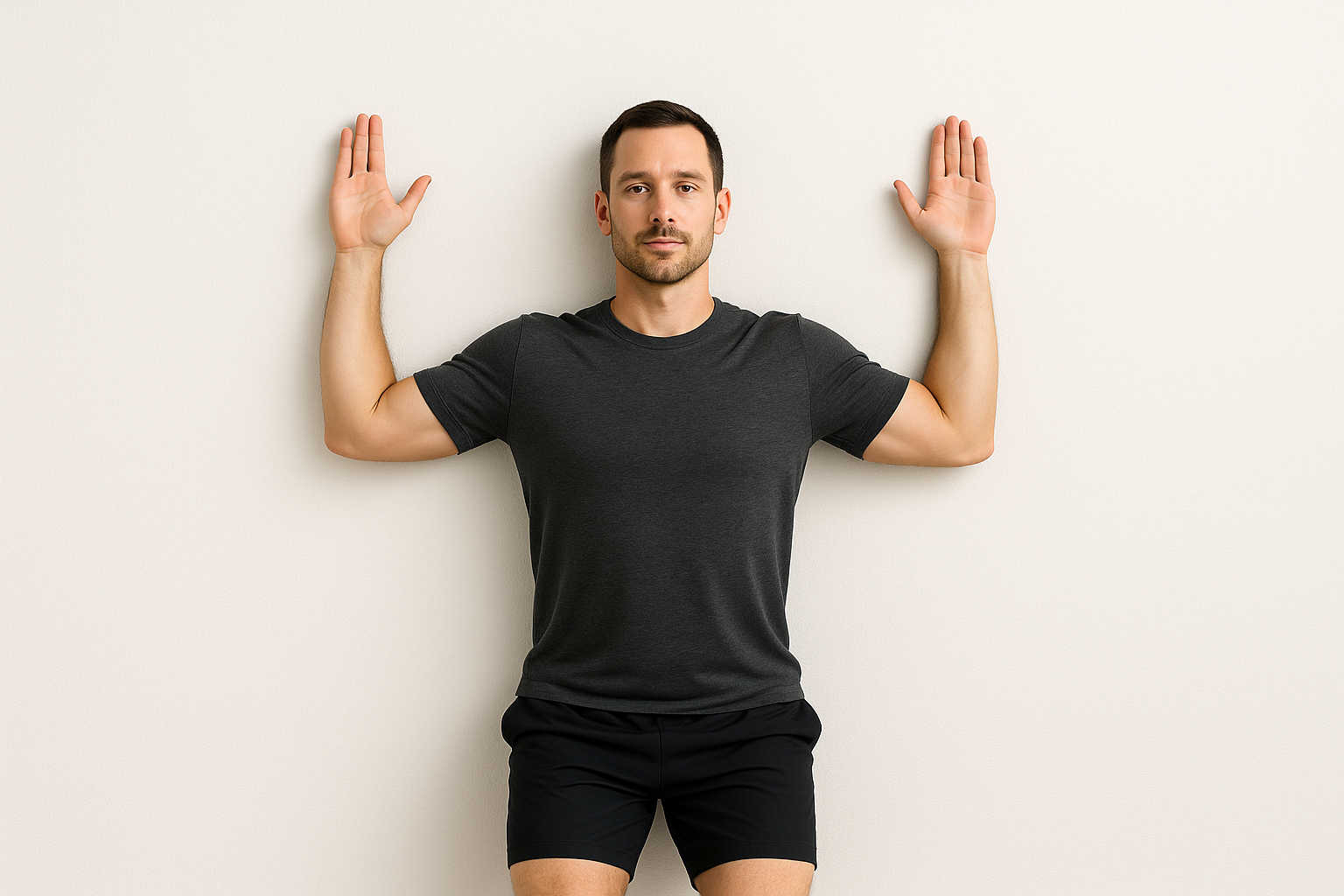
Here is the test. Stand with your back, head, and buttocks against a wall. Place your arms in a goalpost position - elbows at 90 degrees, upper arms parallel to the floor. Now try to press your entire arm, from elbow to wrist to the back of your hand, flat against the wall.
If you cannot do this without your lower back arching off the wall, your pec minor is shortened and your thoracic spine has lost extension range.
If your elbows lift off the wall as you slide your arms up, your latissimus dorsi is restricting overhead movement and your lower traps are not strong enough to override the pull.
If your ribs flare forward, your core is not stabilizing the spine and your diaphragm position is compromised.
Each of these compensations points to a specific structural issue. You are not just doing an exercise. You are reading your body's current state. If you want a broader picture of where your posture is breaking down, the free posture check gives you a full assessment.
How to Do Wall Angels Correctly
Setup
Stand with your back against a wall. Your heels should be about 4 to 6 inches from the baseboard. Press your lower back, upper back, and the back of your head against the wall. If your head does not touch without forcing it, you have forward head posture - do the exercise with your head as close to the wall as possible without straining.
Starting Position
Raise your arms to a goalpost position: elbows bent at 90 degrees, upper arms parallel to the floor, forearms pointing straight up. Press the backs of your hands, wrists, forearms, and elbows against the wall. Maintain this contact throughout the entire movement.
The Movement
Slowly slide your arms up along the wall, extending toward a fully overhead position. Go only as far as you can while keeping every point of contact on the wall - lower back, upper back, elbows, wrists, and hands. Then slowly slide back down to the goalpost position.
One rep should take 4 to 5 seconds total. Do not rush. The slow speed is what forces the stabilizers to work.
Reps and Sets
Start with 2 to 3 sets of 8 to 10 reps. Perform once or twice daily. As form improves and range increases, work toward 3 sets of 12 to 15 reps with full overhead extension.
Common Mistakes
Arching the Lower Back
The most common compensation. When the pec minor and lats are tight, the body tries to gain overhead range by extending the lumbar spine. This takes the load off the shoulder stabilizers and puts it on the lower back. Keep your lower back pressed firmly into the wall. If you cannot maintain arm contact without arching, reduce the range of motion until your mobility improves.
Shrugging the Shoulders
If the upper traps take over, the shoulders ride up toward the ears as the arms move overhead. This means the lower traps are not doing their job. Focus on pulling the shoulder blades down and together before initiating the upward slide. The shoulders should stay depressed throughout.
Speeding Through Reps
Wall angels are a motor control exercise, not a cardio exercise. Fast reps allow momentum to bypass the stabilizers. Slow, controlled movement is the entire point.
Arms Drifting Off the Wall
If you cannot maintain contact, do not force it by arching or shrugging. Reduce the range of motion. Work within the range where full wall contact is possible and gradually expand it over weeks.
Progressions
Level 1: Reduced Range
Start in the goalpost position and slide up only 4 to 6 inches, maintaining full wall contact. This is appropriate for anyone whose arms immediately lift off the wall during the full movement.
Level 2: Full Range Wall Angels
Slide from the goalpost position to full overhead extension with complete wall contact. Most people reach this level within 2 to 4 weeks of daily practice.
Level 3: Floor Angels
Perform the same movement lying face up on the floor. Gravity makes this harder because it presses the arms toward the floor through the entire range. The floor also provides better feedback since you can feel exactly where contact is lost.
Level 4: Banded Wall Angels
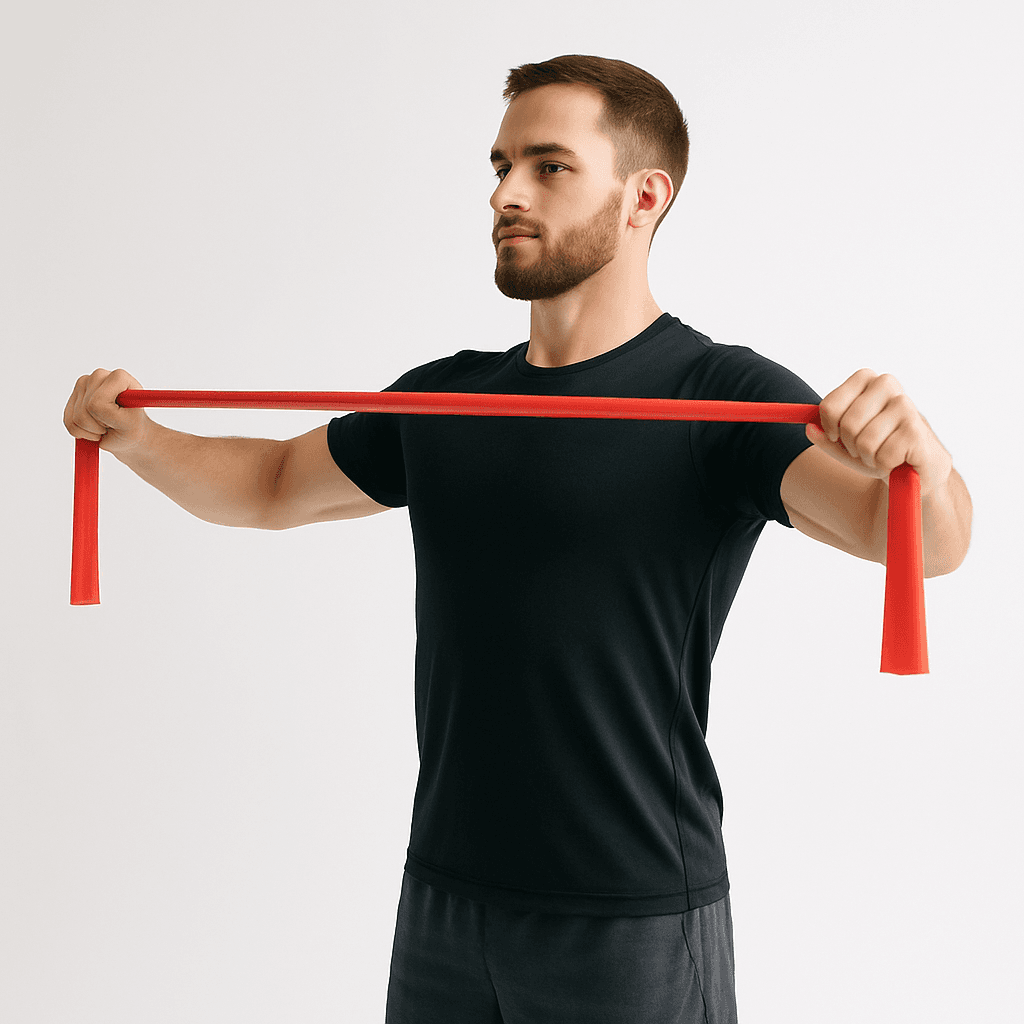
Add a light resistance band around the wrists. The band pulls the arms inward, requiring more external rotation and lower trap activation to maintain the movement path.
Who Benefits Most
**Desk workers** - prolonged sitting with forward-reaching arms creates the exact pattern wall angels correct. The pecs shorten, the thoracic spine rounds, the serratus and lower traps shut off. Wall angels are one of the best movements to reverse this pattern. The Desk Worker Posture Fix program includes wall angels as a core component.
**People with rounded shoulders** - the Rounded Shoulders program addresses the full structural pattern, and wall angels are a key exercise in the activation phase. They directly target the muscles that pull the shoulders back into position.
**Anyone with forward head posture** - the head comes forward because the thoracic spine rounds. Wall angels restore thoracic extension and scapular control, which gives the head a reason to sit back over the shoulders. Combined with chin tucks, they address the upper body chain comprehensively.
**Overhead athletes and lifters** - anyone who presses or reaches overhead benefits from the scapular stability that wall angels build. Stable scapulae mean safer and stronger overhead positions.
Fitting Wall Angels Into a Corrective Routine
Wall angels work best after you have released the tight structures that restrict the movement. A chest release (doorway stretch or pec minor release) and thoracic extension over a foam roller before wall angels means more range of motion and better muscle activation during the exercise.
In a full corrective sequence, wall angels fit in the activation phase - after release work and before integration exercises like the prone cobra or glute bridge.
If you are not sure where to start with your shoulder and upper back correction, take the free posture quiz to identify your specific pattern.

Mike Boshnack
Corrective Exercise Specialist · Posture Guy Mike
Mike Boshnack grew up skateboarding and surfing, trained MMA, and rode road bikes competitively. A shoulder injury put him on a path to discover corrective exercise. He has since helped thousands of people fix the structural patterns causing their pain, without surgery or passive treatments.
Keep Reading
Related Conditions
Related Programs
Free tool
See where your posture stands right now.
Upload a photo and get an instant AI-powered posture analysis with personalized recommendations. Free, no account required.
Try the Free Posture CheckTake the next step
Fix the structural root cause, not just the symptom.
Mike's programs apply this corrective method to your specific condition. No gym, no equipment. Just a floor and 15 minutes. Buy once, own forever.
Discussion
Discussion is a Pro member feature. Visit the community for more.