
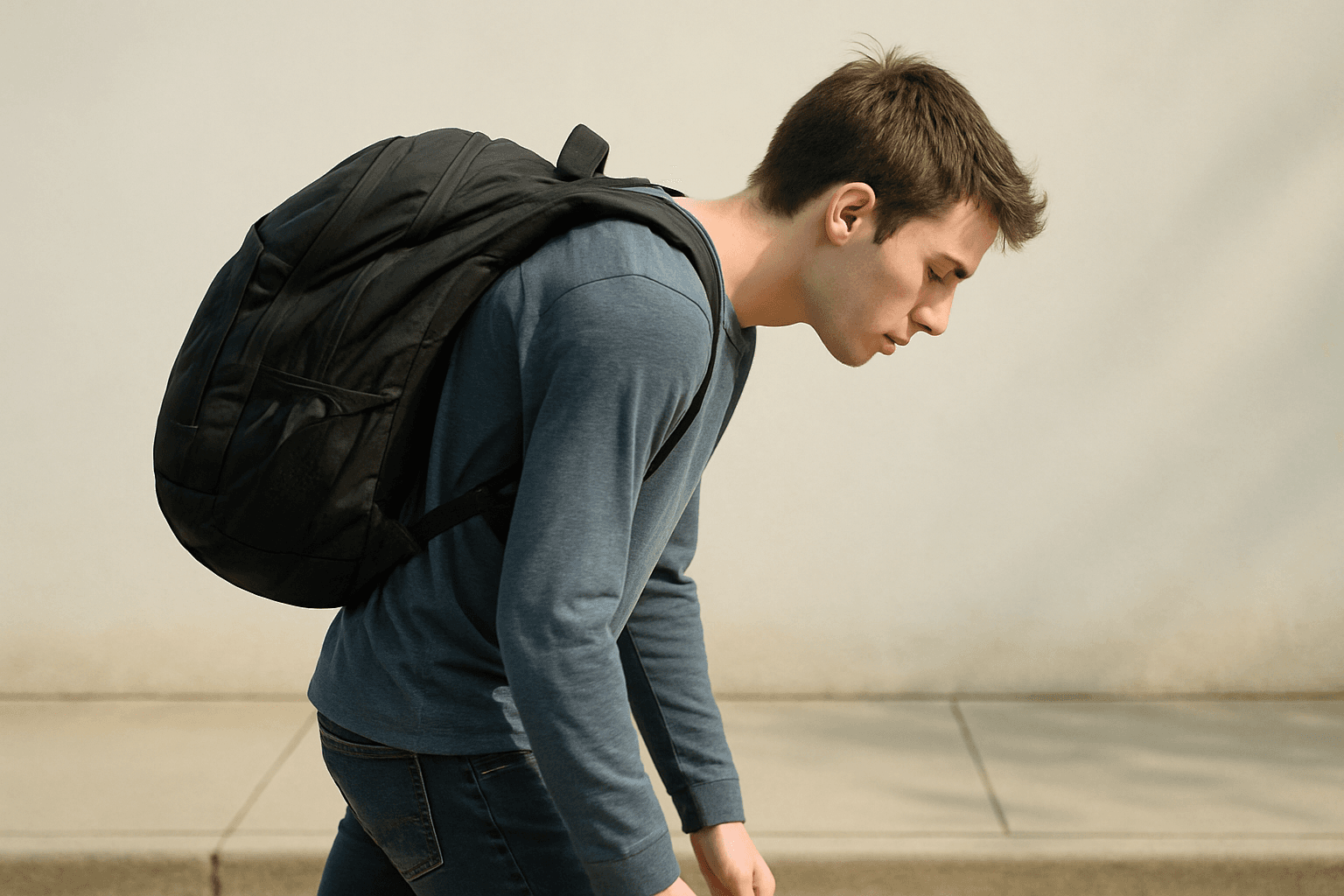
The Real Problem Is Not the Backpack
Every fall, parents search for the right backpack to protect their kid's back. Every semester, college students wonder why their shoulders ache after a day of classes. Commuters, hikers, and travelers deal with the same issue year-round.
The standard advice is predictable: lighten the load, use both straps, buy the one with lumbar padding. That advice is not wrong, but it misses the actual mechanism. The backpack is not the root cause. The body the backpack is sitting on is the root cause.
A person with good spinal alignment, balanced hip position, and strong postural muscles can carry a heavy pack without pain. A person with anterior pelvic tilt, thoracic kyphosis, and inhibited glutes will hurt after carrying almost anything on their back for more than thirty minutes. The pack is the trigger. The posture is the cause.
What a Backpack Actually Does to Your Spine
The Forward Lean Compensation
A loaded backpack shifts your center of gravity backward. The body compensates immediately: you lean forward at the hips to keep your balance. This forward lean increases the load on the lumbar spine, compresses the intervertebral discs, and tightens the already-tight hip flexors.
In someone who already has anterior pelvic tilt from sitting, this forward lean deepens the existing lumbar curve. The lower back, already carrying excess load from the tilted pelvis, now has to manage the pack weight on top of it.
The Thoracic Rounding
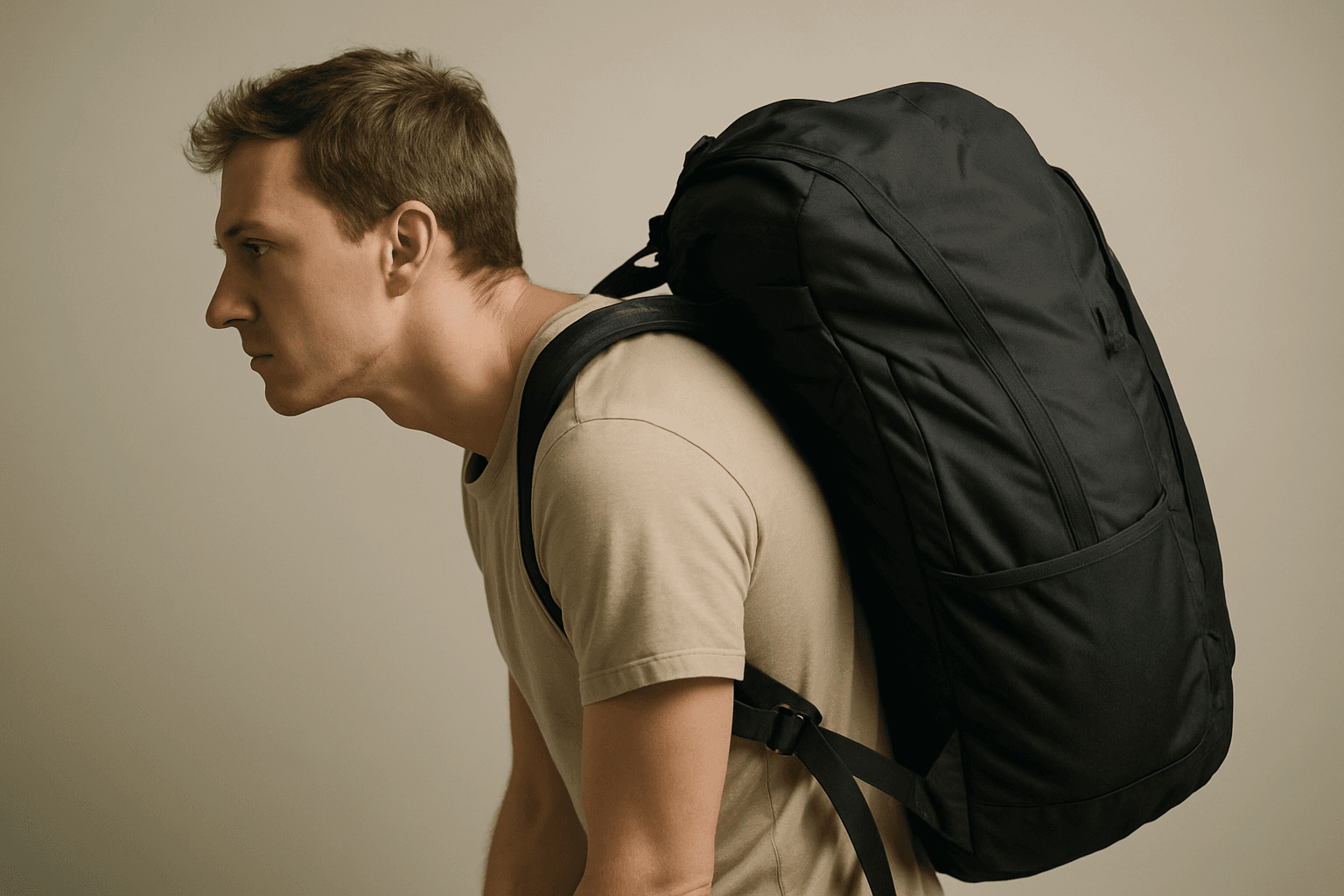
The shoulder straps pull the shoulders down and forward. The weight of the pack compresses the thoracic spine into flexion. If you watch someone put on a heavy backpack, their upper back rounds visibly within the first minute.
For someone who already has thoracic kyphosis from desk work, screen time, or driving, the backpack deepens the rounding that is already there. The thoracic extensors, the muscles that should resist this rounding, are already weakened and switched off. They fatigue quickly under load, and the spine rounds further.
The Head Comes Forward
As the thoracic spine rounds under the pack weight, the head compensates by extending forward to keep the eyes level. This is the same forward head posture mechanism that develops from desk work, but accelerated by the added load. Every inch the head moves forward adds approximately ten pounds of effective load to the cervical spine.
One Strap Makes It Worse
Carrying a backpack on one shoulder forces the body to compensate asymmetrically. The loaded shoulder elevates, the spine laterally flexes toward the opposite side, and the hip on the loaded side drops. Over time, this creates lateral curvature, uneven shoulder height, and one-sided muscle tightness that persists even without the pack.
Why Kids and Students Are Most Affected
Children and teenagers are carrying heavy packs during the years their spines are still developing. Studies consistently show that 50 to 80 percent of students report back pain associated with backpack use. The combination of heavy loads, underdeveloped postural muscles, and the hours of sitting that school requires creates the conditions for early structural dysfunction.
The problem compounds because the sitting posture students adopt at desks, with hip flexors shortened and thoracic spine rounded, is the exact posture a heavy backpack worsens. School creates the dysfunction. The backpack loads it.
Free - 60 seconds
Not sure which program you need?
Take the free posture quiz and get a personalized recommendation based on your pain and goals.
How to Wear a Backpack Correctly
The carrying advice matters, even though it is not the whole solution.
Use both straps, always. Single-strap carry is the fastest path to asymmetrical loading.
Tighten the straps so the pack sits high. The bottom of the pack should rest at your waist, not hanging below your hips. A low-hanging pack increases the lever arm on your spine and forces more forward lean.
Pack heavy items closest to your back. This keeps the center of gravity closer to your spine and reduces the torque the pack creates.
Keep pack weight under 10 to 15 percent of body weight. This is the standard guideline, and it is reasonable. But a person with good postural alignment will handle 15 percent easily, while a person with existing dysfunction may hurt at 10 percent.
Use the chest strap and hip belt if available. These distribute load to the hips and prevent the shoulder straps from pulling the shoulders forward.
The Structural Fix
Carrying advice reduces the trigger but does not fix the vulnerability. The structural fix addresses the body's ability to handle load without compensating.
Release the Hip Flexors
Static back (five minutes, lying with legs at ninety degrees on a chair) deactivates the hip flexors and allows the pelvis and lumbar spine to return to neutral. Done daily, this reverses the anterior pelvic tilt that makes the lower back vulnerable to pack loading.
Restore Thoracic Extension
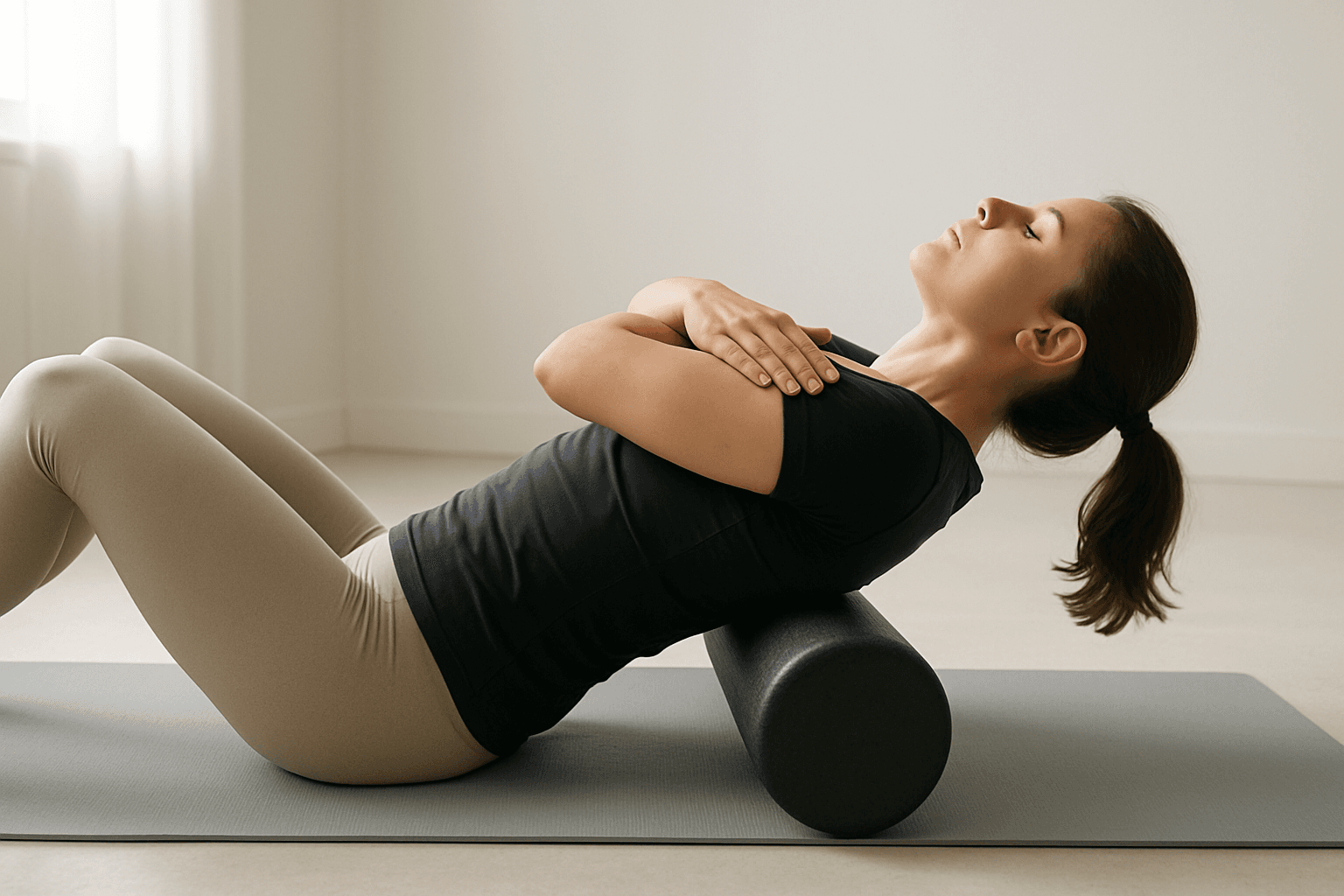
Thoracic extension over a foam roller, moving along the mid-back two inches at a time, restores the extension range the thoracic spine has lost. When the thoracic spine can extend, it resists the rounding force of a pack instead of collapsing under it.
Activate the Posterior Chain
Prone cobras and glute bridges re-engage the muscles that hold the spine upright under load. These muscles are the ones a backpack needs to be working. If they are switched off from disuse, the spine takes the load directly.
Correct Head Position
Cervical retraction (chin tucks against a wall) strengthens the deep cervical flexors and pulls the head back over the shoulders, reversing the forward head position that backpack loading worsens.
What to Expect
The carrying adjustments help immediately. Shortening the straps and centering the load reduces the compensating forward lean within the first wear.
The structural work takes two to four weeks of daily practice to produce noticeable change. The hip flexors begin to release, the thoracic spine regains extension range, and the posterior chain begins to support load instead of collapsing under it. Most people find that a pack they used to dread carrying becomes comfortable once the structural base improves.
If your back pain goes beyond what a pack triggers, the underlying posture is likely the priority. The free posture quiz identifies which structural patterns are driving your symptoms, and programs like the Lower Back Pain Fix, Forward Head Posture Fix, and Desk Worker Posture Guide address the root causes directly.

Mike Boshnack
Corrective Exercise Specialist · Posture Guy Mike
Mike Boshnack grew up skateboarding and surfing, trained MMA, and rode road bikes competitively. A shoulder injury put him on a path to discover corrective exercise. He has since helped thousands of people fix the structural patterns causing their pain, without surgery or passive treatments.
Keep Reading
Related Programs
Free tool
See where your posture stands right now.
Upload a photo and get an instant AI-powered posture analysis with personalized recommendations. Free, no account required.
Try the Free Posture CheckTake the next step
Fix the structural root cause, not just the symptom.
Mike's programs apply this corrective method to your specific condition. No gym, no equipment. Just a floor and 15 minutes. Buy once, own forever.
Discussion
Discussion is a Pro member feature. Visit the community for more.