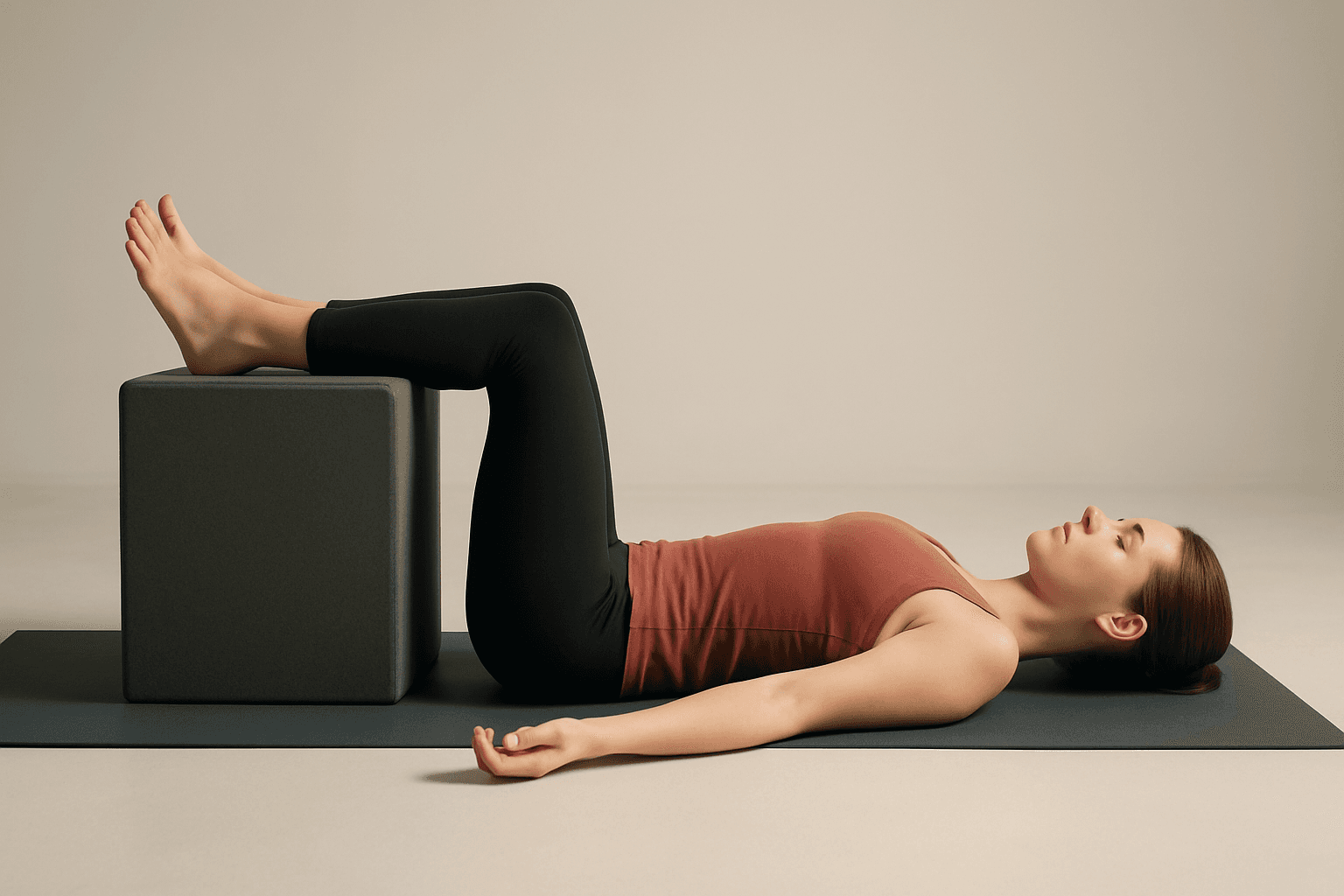
What a Posture Block Is
A posture block is a dense, supportive foam block used to position part of your body during corrective and restorative postures. Unlike a soft cushion, it is firm enough to hold its shape under your weight, which is the whole point: it props a body part at a specific height and angle and holds it there long enough for the body to relax and adapt around that position.
You will see large foam blocks used this way in corrective methods built around static positions, where the body is placed in a precise shape and held there for several minutes so gravity and time can do the work. The block is what makes those positions repeatable and stable.
What It Does
The value of a posture block comes from passive, supported positioning held over time.
**It supports a position so you can relax into it.** Holding a corrective position with muscle effort is tiring and usually inaccurate. A block holds the position for you, so the muscles that have been overworking can finally switch off and the body can settle toward neutral.
**It uses gravity and time.** Many postural distortions are held in place by chronically tight muscles. Place the body in a supported position that gently lengthens those muscles and hold it for a few minutes, and the nervous system slowly lets the tension go. The block makes that hold sustainable.
**It is repeatable.** Because the block sets a consistent height and angle, you get the same position every time, which is what lets a routine actually retrain the body rather than being slightly different on every attempt.
Posture Block vs Posture Board
These two tools get confused because the names are similar, but they do different jobs.
A posture board is an inclined platform you stand on to reset your feet and shift your weight to your heels. It is about standing alignment from the ground up.
A posture block is a firm foam block used to position the body, often lying down or in a static hold, so tight muscles can release under gravity. It is about supported, passive correction rather than standing.
Many people end up using both: the board to reset standing alignment, the block to support the restorative positions that release the muscles holding the distortion in place.
What It Is Not
Like any posture tool, a block positions you but does not by itself strengthen anything. Passive release work opens the door by letting tight muscles let go, but the new range has to be reinforced with active corrective exercise or the body drifts back to its old pattern.
So a posture block is best understood as the release-and-position half of corrective work. It gets the body into a better shape and lets the chronic tension drain out. The strengthening and reactivation work is what keeps it there.
How to Use One
Use a posture block to support the restorative positions in a corrective routine, holding each for several minutes and breathing into the position rather than forcing it. Then follow the release with active work that strengthens the muscles meant to hold your improved alignment.
Posture Block Exercises
Here are three exercises that use a posture block to release tension, restore rotation, and retrain pelvic alignment.
If your distortion sits in the upper body, the thoracic-extension and posterior-strengthening sequence in the Neck Hump Correction and Forward Head Posture Fix programs pairs naturally with supported release work. The block opens the position. The corrective exercise makes it stick. Take the free posture quiz to find out which corrective program fits your body.

Mike Boshnack
Corrective Exercise Specialist · Posture Guy Mike
Mike Boshnack grew up skateboarding and surfing, trained MMA, and rode road bikes competitively. A shoulder injury put him on a path to discover corrective exercise. He has since helped thousands of people fix the structural patterns causing their pain, without surgery or passive treatments.
Keep Reading
Free tool
See where your posture stands right now.
Upload a photo and get an instant AI-powered posture analysis with personalized recommendations. Free, no account required.
Try the Free Posture CheckTake the next step
Fix the structural root cause, not just the symptom.
Mike's programs apply this corrective method to your specific condition. No gym, no equipment. Just a floor and 15 minutes. Buy once, own forever.
Discussion
Discussion is a Pro member feature. Visit the community for more.