
CrossFit & Lifting & Posture
Thoracic extension, overhead positioning, hip mobility
Updated May 2025
What CrossFit & Lifting Does to Your Body
CrossFit and Olympic weightlifting demand structural integrity that most athletes don't have before they start loading. A kyphotic thoracic spine cannot safely support an overhead snatch. Anterior pelvic tilt limits squat depth. Tight hip flexors reduce power output at every rep. The program builds the postural foundation that makes high-intensity training safe and effective.
The Specific Structural Changes
Overhead positions expose thoracic restriction
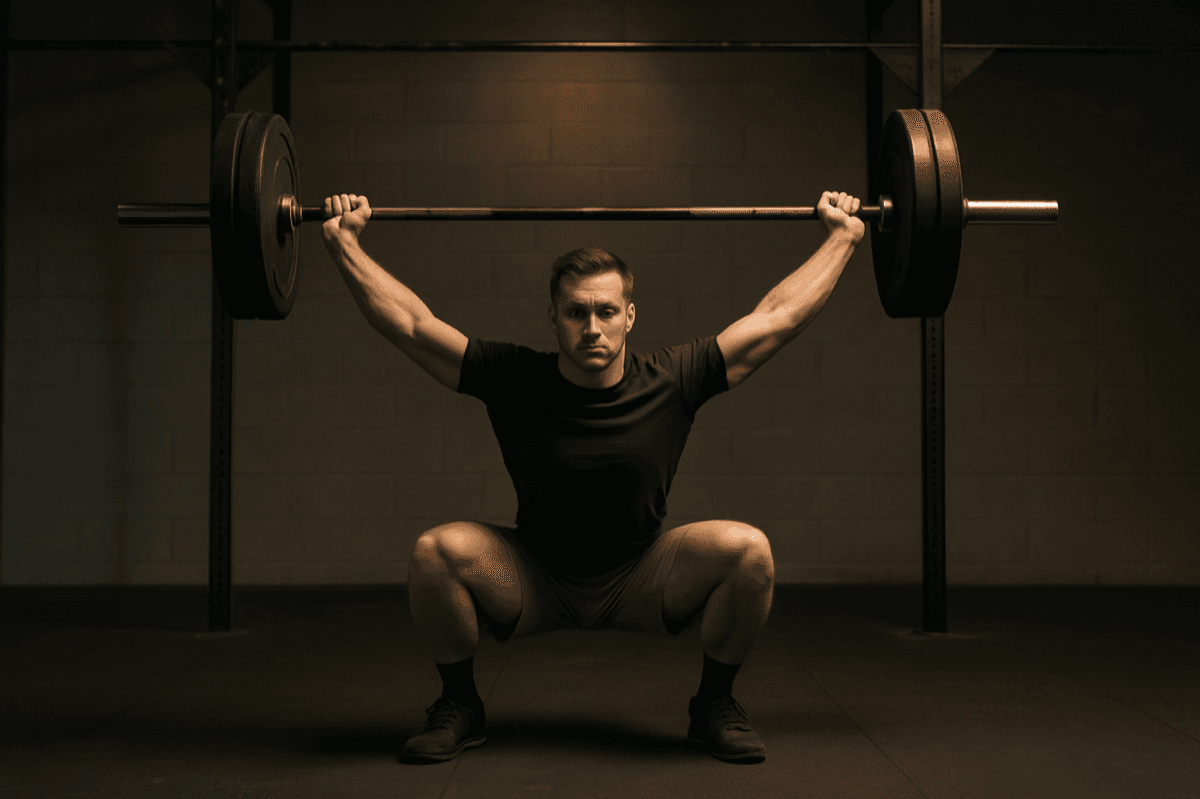
The snatch, overhead squat, and kipping pull-up all require thoracic extension you can't fake. When the T-spine is kyphotic, the bar drifts forward, the lumbar compensates, and every overhead movement becomes a lower back problem. Most CrossFit lower back injuries have a thoracic component.
High volume squatting without hip mobility causes knee dive
Tight hip flexors and limited hip external rotation cause the knees to cave on squats, a movement fault that concentrates stress on the medial knee ligaments. The mobility is the fix, not the cue.
Kipping and gymnastics movements stress the shoulder
The kipping pull-up and muscle-up place the shoulder in extreme end-range positions at high speed. Without adequate shoulder external rotation and scapular control, these movements create anterior shoulder instability over time.
Common Injuries in CrossFit & Lifting
These aren't random injuries. They're the predictable result of the structural patterns crossfit & lifting creates.
- Lower back disc injuries from loaded flexion
- Shoulder impingement and labral tears
- Knee ligament stress from valgus collapse
- Wrist pain from front rack position
- Achilles and calf injuries from high box jump volume
Why posture matters for performance
In CrossFit, the weight you can safely lift is limited by the structural position you can achieve. A cleaner thoracic extension means a safer overhead position. Better hip mobility means more depth with less lumbar compensation. Posture is the ceiling of your performance.
The CrossFit & Lifting Program
The CrossFit & Weightlifter's Posture program builds thoracic extension for overhead positions, hip mobility for squat depth, and shoulder stability for gymnastics movements, the three structural requirements that limit most CrossFit athletes.
What CrossFit & Lifting Athletes Actually Deal With
These are the injuries and pain patterns that come up in every crossfit & liftingforum, group ride conversation, and training camp. Here's how each one connects back to structural alignment, and what you can do about it.
"Kipping shoulder", rotator cuff from kipping pull-ups
Kipping pull-ups generate forces on the shoulder that strict pull-ups don't, the shoulder goes from full flexion to full extension explosively, loaded with bodyweight. The kip's swing creates momentum that the rotator cuff must then decelerate repeatedly. Shoulder pain in CrossFitters who kip is so common that "kipping shoulder" has become a recognized pattern in the community.
Posture connection: Shoulder integrity in kipping movements depends heavily on scapular stability and thoracic extension. When the thoracic spine can't extend through the kip, the shoulder compensates, placing the rotator cuff in a compromised position at the top of each rep. Thoracic extension capacity is the baseline structural requirement for shoulder safety in kipping movements.
Lower back injury from deadlifts with anterior pelvic tilt
The CrossFit community lifts heavy frequently. When anterior pelvic tilt is present, which it is in most desk workers and sedentary people who come to CrossFit, the lumbar spine goes into hyperextension under load in the deadlift starting position. This compresses the posterior elements of the spine. Heavy deadlifts with this pattern are how most CrossFit back injuries happen.
Posture connection: Deadlift technique cues alone don't fix the underlying pelvic position problem. Anterior pelvic tilt must be addressed structurally before heavy lifting, which means hip flexor work and glute reactivation, not just coaching the hinge pattern. Athletes who address the structural position first can be coached effectively; those who don't will revert to compensated patterns under load.
Wrist pain from overhead positions (snatch, HSPU)
Overhead movements in CrossFit require wrist extension that many people don't have the mobility for. The snatch catch and handstand push-up specifically demand wrist extension combined with load, a range many wrists can't achieve without compensating at the elbow or shoulder. Wrist pain in the snatch is a clear signal of this mobility deficit.
Posture connection: Wrist extension range is influenced by thoracic extension, when the thoracic spine is rounded, the shoulder is internally rotated, which changes the forearm mechanics that determine wrist position overhead. Thoracic extension work changes the shoulder alignment that determines how much wrist extension is actually required to achieve the overhead position.
Questions from the CrossFit & Lifting Community
Why do I always hurt my back during deadlift PRs?
PR attempts involve maximum load in a position where form naturally degrades. If anterior pelvic tilt is your default pelvic position, maximum load will push the lumbar spine into hyperextension at the start of the pull. Addressing the structural pelvic position, not just the deadlift technique, is what protects the back under maximal loads.
My shoulders feel fine until I add kipping. What's happening?
Kipping adds dynamic forces to a shoulder that strict movements don't, the deceleration demand at the top of the kip and the shoulder impingement risk at the bottom are specific to kipping. If your thoracic extension is limited, the shoulder compensates for both. Most kipping shoulder problems resolve with thoracic mobility work.
I have good mobility for everyday life but fail mobility tests for CrossFit movements. Why?
Functional mobility and sports-specific mobility are different ranges. The overhead squat demands more thoracic extension and hip external rotation than walking requires. Structural work that addresses the specific ranges CrossFit demands, overhead position, bottom of squat, hip hinge, targets the deficits that daily life doesn't challenge.
Frequently Asked Questions
Should I do this before or after WODs?
The thoracic and hip work is best done before, as part of a warm-up that builds the positions you need for the workout. A full session can be done on rest days.
I have a herniated disc. Is this appropriate?
The program is decompressive, not loading. The static back and cat-cow work is appropriate for most disc injuries, but consult your physio for specific guidance.

Written by Mike Boshnack
Corrective Exercise Specialist · Posture Guy Mike
Mike Boshnack grew up skateboarding and surfing, trained MMA, and rode road bikes competitively, before a shoulder injury put him on a path to postural correction. He's since helped thousands of athletes fix the specific postural patterns their sport creates, without surgery or passive treatments.
The mobile app is here.
Do your program on your phone, anywhere. Download free on iPhone or Android, or keep using it in your browser.
Related Conditions