
Pickleball & Posture
Knee, hip, cervical, and shoulder, the fastest-growing sport in America
Updated May 2025
What Pickleball Does to Your Body
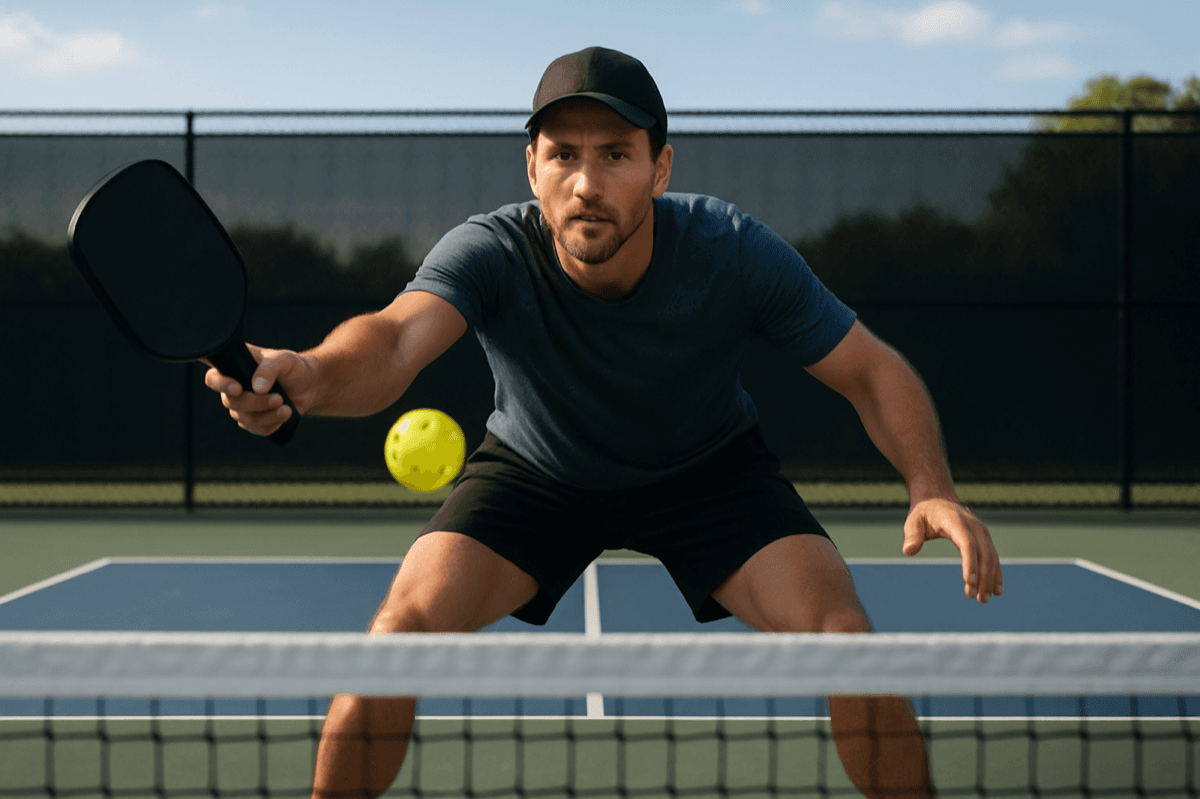
Pickleball is the fastest-growing sport in America, and it's bringing a wave of injuries with it. The sport's rapid direction changes, forward-lean ready position, overhead reaching, and quick cervical rotation create a specific set of structural demands that most players are not prepared for, particularly those coming to the sport later in life.
The Specific Structural Changes
Direction changes stress knees and hips
Pickleball's small court size means players are constantly decelerating and accelerating in different directions. Without adequate hip stability and ankle mobility, this load transfers to the knee, explaining the high rate of knee injuries in pickleball players.
Forward-lean ready position compresses the lumbar
The ready position, hips slightly flexed, knees bent, leaning forward, is a sustained lumbar load. Players who hold this position for extended rallies are essentially training their lower backs to operate in a compressed pattern.
Cervical rotation strain from tracking the ball
The fast pace of pickleball requires rapid head turning to track a ball hit at close range. This cervical rotation happens hundreds of times per session, creating accumulative strain on the cervical facet joints, particularly for players with pre-existing cervical tightness.
Common Injuries in Pickleball
These aren't random injuries. They're the predictable result of the structural patterns pickleball creates.
- Knee pain (meniscus, patellofemoral)
- Lower back pain
- Shoulder impingement from overhead shots
- Tennis/pickleball elbow
- Achilles and calf strains
- Cervical neck pain
Why posture matters for performance
Pickleball longevity depends on structural health. The players who stay on the court longest are the ones who balance the demands the sport creates with targeted corrective work. A 15-minute daily practice extends your playing years significantly.
The Pickleball Program
The Pickleball Player's Posture Fix addresses the knee and hip stability, cervical health, lumbar decompression, and shoulder positioning that pickleball specifically demands.
What Pickleball Athletes Actually Deal With
These are the injuries and pain patterns that come up in every pickleballforum, group ride conversation, and training camp. Here's how each one connects back to structural alignment, and what you can do about it.
"Pickleball elbow" (lateral epicondylitis)
Pickleball elbow has become so prevalent that it has its own name in the sport's community. The dink shot, requiring fine wrist control at the net, loads the forearm extensors in a way that tennis doesn't. Combined with the explosive drives that pickleball requires, the lateral epicondyle accumulates stress faster than many players expect, especially those coming from tennis who think their arms are conditioned for racket sports.
Posture connection: Lateral epicondylitis in pickleball, like tennis elbow, is significantly influenced by shoulder and thoracic alignment. When the thoracic spine is rounded and the shoulder internally rotated, the backhand mechanics change and the lateral elbow absorbs more stress. Thoracic extension is the upstream fix.
Achilles tendon rupture in 40+ players
Pickleball has a disproportionately high Achilles rupture rate because of who plays it, primarily 40-70 year old athletes who move explosively but have tendons with reduced collagen quality. The sudden push-off to the non-volley zone, the lateral shuffle to the sideline, these are the movements that load the Achilles at its rupture threshold.
Posture connection: Achilles tendon load is significantly increased by forward trunk lean and hip flexor tightness. When the pelvis is anteriorly tilted and hip extension is limited, the calf and Achilles compensate for reduced glute contribution on push-off. Structural work that restores hip extension and neutral pelvic position reduces Achilles stress.
Knee meniscus injuries from lateral movement
The repetitive lateral shuffle and split-step landing of pickleball loads the knee meniscus through compression and rotation simultaneously. This is especially problematic when the hip isn't stabilizing the pelvis on lateral movements, the knee then takes the rotational force the hip should absorb.
Posture connection: Meniscus stress in lateral movements is a hip control problem. When the gluteus medius isn't holding the pelvis stable through the lateral shuffle, the femur adducts and internally rotates, twisting the meniscus with each step. Hip stability work that specifically targets lateral movement patterns protects the meniscus.
Questions from the Pickleball Community
Why do so many pickleball players get elbow problems?
Pickleball requires more forearm wrist control than most racket sports, the dink demands it, and many players come from backgrounds (tennis, golf) where the elbow is already loaded. Combined with the high repetition volume that social pickleball generates, the lateral epicondyle accumulates stress faster than players expect. Thoracic and shoulder alignment work changes the mechanical environment.
How do I prevent Achilles injuries in pickleball?
The Achilles rupture pattern in pickleball is typically sudden push-off from a standing position, the tendon loaded from rest. This is different from a running sport where the tendon is pre-loaded through movement. Structural work that restores hip extension and reduces Achilles overload, combined with Achilles-specific loading (eccentric heel drops), is the evidence-based approach.
Frequently Asked Questions
I'm older and play 4–5 days a week. Is this appropriate?
This program is designed exactly for high-frequency recreational players. The exercises are gentle enough to do daily without adding to the load from playing.
Will this help my knee pain?
Knee pain in pickleball is almost always a hip stability and alignment problem. The glute bridge and single-leg work directly address this.

Written by Mike Boshnack
Corrective Exercise Specialist · Posture Guy Mike
Mike Boshnack grew up skateboarding and surfing, trained MMA, and rode road bikes competitively, before a shoulder injury put him on a path to postural correction. He's since helped thousands of athletes fix the specific postural patterns their sport creates, without surgery or passive treatments.
The mobile app is here.
Do your program on your phone, anywhere. Download free on iPhone or Android, or keep using it in your browser.
Related Conditions