
Rock Climbing & Posture
Pull-dominant thoracic kyphosis, rounded shoulders, internal rotation
Updated May 2025
What Rock Climbing Does to Your Body
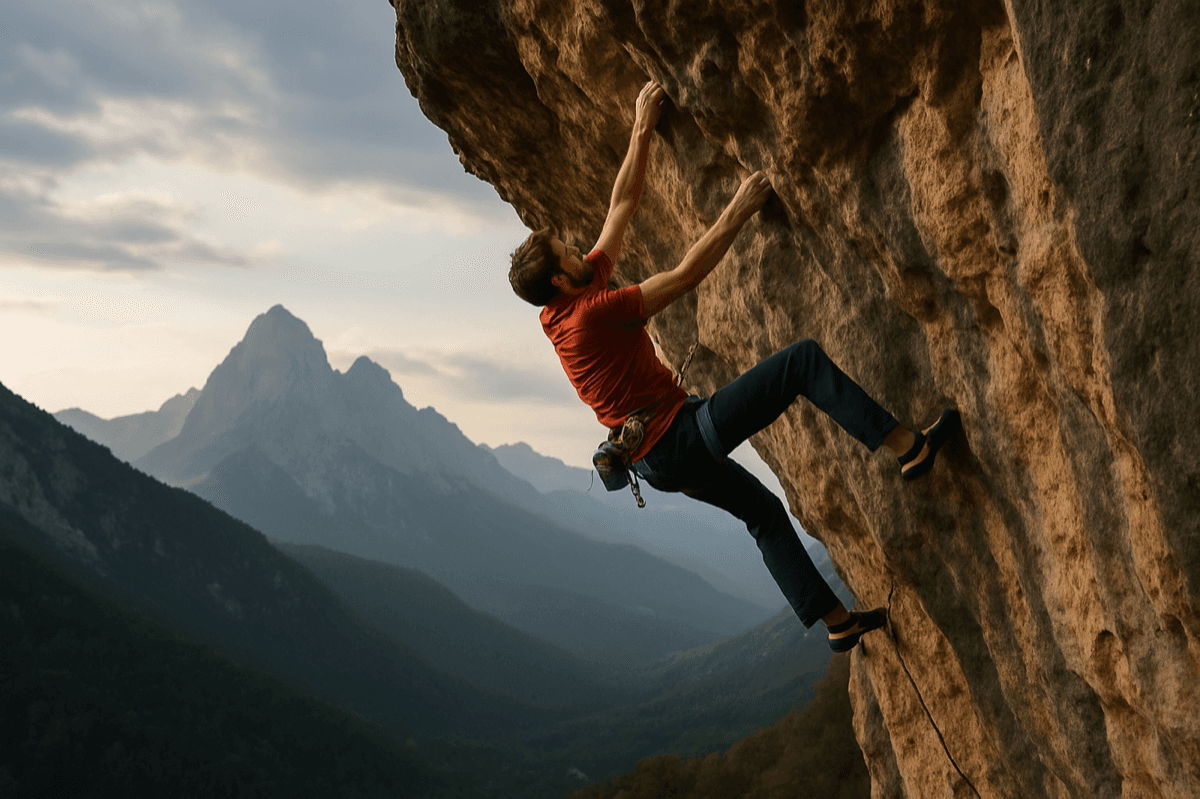
Rock climbing builds incredible pulling strength, and a postural pattern that, without correction, progressively damages the shoulder, thoracic spine, and hip complex. The sport is almost entirely a pulling motion, training the anterior chain at the expense of everything that opposes it.
The Specific Structural Changes
Pulling dominance builds thoracic kyphosis
Every climb trains lats, biceps, and subscapularis. These muscles, when strong and short, pull the shoulders forward and down, flatten the thoracic spine into kyphosis, and create the characteristic hunched posture of experienced climbers. The harder you climb, the more pronounced the pattern.
Finger flexor dominance affects the entire upper extremity
The grip required for climbing trains the finger and wrist flexors into dominance over the extensors. This creates a forearm imbalance that contributes to elbow tendinitis and, through the kinetic chain, affects shoulder positioning.
Hip flexors from steep route positioning
On steep or overhanging routes, the hip flexors work hard to keep the feet on the wall. On friction slabs, different hip demands apply. Over time, these positional demands create hip mobility restrictions that affect standing posture and gait.
Common Injuries in Rock Climbing
These aren't random injuries. They're the predictable result of the structural patterns rock climbing creates.
- Finger pulley tears
- Shoulder impingement and labral tears
- Elbow tendinitis (golfer's and tennis elbow)
- Thoracic outlet syndrome
- Lower back pain from hip flexor tightness
Why posture matters for performance
A climber with better thoracic extension can reach higher on every move. Better shoulder external rotation means the rotator cuff lasts longer at high volume. The climbers who push grades the longest are those who actively address what climbing builds against them.
The Rock Climbing Program
The Rock Climber's Posture Fix specifically balances the pull-dominant pattern: thoracic extension, chest opening, scapular retraction, and the posterior chain work that climbing never provides.
What Rock Climbing Athletes Actually Deal With
These are the injuries and pain patterns that come up in every rock climbingforum, group ride conversation, and training camp. Here's how each one connects back to structural alignment, and what you can do about it.
"Climber's finger", A2 pulley tears, the defining climbing injury
The A2 pulley tear is the injury that every serious climber knows about and fears. The A2 pulley is the tendon sheath that holds the flexor tendons close to the bone in the finger, and it's under enormous tension during the crimp grip. Climbers describe the pop and immediate loss of grip strength. Recovery takes months, and returning to the same grade often takes a full year. It's the most common serious injury in sport climbing.
Posture connection: A2 pulley tears are primarily driven by excess finger flexor load relative to capacity, but structural positioning upstream influences how much force reaches the finger. When the shoulder is in internal rotation and the thoracic spine is kyphotic, the shoulder and elbow mechanics place the finger flexors in a mechanically disadvantaged position, increasing the peak force required for the same move. Restoring thoracic extension and shoulder external rotation reduces the upstream contribution to finger tendon loading.
"Climber's elbow", medial epicondylitis from gripping and pulling
Climber's elbow is the medial epicondylitis (golfer's elbow) variant that develops from the combination of grip strength demands and pulling mechanics that climbing requires. It's the inside-of-the-elbow ache that climbers dismiss for months before it becomes the injury that forces rest. Unlike tennis elbow (lateral), climber's elbow affects the wrist flexors and pronators, the muscles doing the most work in every pulling move.
Posture connection: Medial epicondylitis in climbers is a pull-chain imbalance problem. The finger and wrist flexors are enormously strong from climbing, while the extensors are comparatively undertrained. This creates constant tensile load on the medial epicondyle. Additionally, thoracic kyphosis and shoulder internal rotation put the elbow into a mechanically loaded position during pulling that increases medial stress. Thoracic extension and posterior shoulder work reduces the upstream mechanical disadvantage that amplifies medial epicondyle stress.
Shoulder impingement from overhanging routes and pulling volume
Shoulder impingement in climbers has a specific presentation: pain at the front or top of the shoulder that gets worse on steeper routes and when reaching high for a hold. It develops progressively from the pull-dominant training of climbing, which builds the anterior shoulder muscles at the expense of the posterior rotator cuff. Many climbers notice it first as "shoulder tightness" on overhang problems before it becomes frank impingement.
Posture connection: Climber's shoulder impingement is the textbook pull-dominance pattern: pec minor shortening and subscapularis dominance have pulled the humeral head forward, narrowing the subacromial space. When this is combined with the thoracic kyphosis that climbing also creates, the shoulder is in maximum impingement position during every move. Thoracic extension restores the scapula to its correct position on the thorax, and external rotation work restores posterior shoulder balance, together, they decompress the subacromial space.
Lower back pain from overhanging route hip flexor demands
On steep overhang problems, particularly those requiring high-footwork or heel hooks, the hip flexors work at extreme contraction to keep the feet on the wall. This sustained hip flexor demand, combined with the pulling position of the upper body, creates a unique lumbar loading pattern. Climbers who project steep overhang routes for extended sessions often develop lower back pain that they associate with the climbing position but don't know how to address.
Posture connection: Lower back pain from overhang climbing comes from the combination of maximum hip flexor contraction (pulling the pelvis into anterior tilt) and the arm-overhead position (which extends the lumbar spine). This creates a pinching effect in the lumbar that, over a long session, compresses the posterior disc margins. hip flexor lengthening work done post-climbing sessions specifically counters the hip flexor shortening that overhang climbing intensifies.
Thoracic outlet syndrome from kyphotic pulling posture
Thoracic outlet syndrome (TOS) in climbers is the compression of the brachial plexus and subclavian vessels as they pass through the thoracic outlet, the space between the clavicle, first rib, and scalene muscles. Climbers with TOS describe forearm numbness, arm fatigue out of proportion to effort, and sometimes cold fingers on extended climbing sessions. It's less dramatic than a pulley tear but can be career-limiting when severe.
Posture connection: TOS in climbers is directly caused by the thoracic kyphosis and forward shoulder position that pulling dominance creates. When the thoracic spine is kyphotic and the shoulders are internally rotated, the thoracic outlet narrows, compressing the neurovascular bundle that supplies the arm. Every hour of climbing in this position further compresses the outlet. Thoracic extension work specifically widens the thoracic outlet by restoring the chest's three-dimensional volume.
Questions from the Rock Climbing Community
Why do climbers get finger injuries so much more than other athletes?
Climbing places more tensile load on the finger flexor tendons and their pulleys than virtually any other human activity. The crimp grip position maximizes A2 pulley load at the exact time the finger is at its most mechanical disadvantage. Climbers develop incredible finger strength rapidly, often outpacing the tendons' capacity to adapt, because tendons adapt more slowly than muscles. Structural upstream work doesn't prevent all finger injuries but reduces the load reaching the finger on every move.
Is the hunched posture I have after climbing days normal?
It's extremely common in climbers, but it's not normal or harmless. The thoracic kyphosis and rounded shoulders that climbing builds are structural adaptations to pull-dominant training. Left unaddressed, they become permanent and affect quality of life well beyond the climbing gym. Post-climbing thoracic extension work is what prevents these training adaptations from becoming permanent structural changes.
My elbow hurts on the inside. Is it climber's elbow and what should I do?
Medial elbow pain in climbers (inside of the elbow, worse with gripping) is almost certainly medial epicondylitis, the inflammation of the wrist flexor and pronator attachment from the dominant pulling and gripping of climbing. The conventional approach is rest and ice; the structural approach is addressing the thoracic and shoulder mechanics that put the elbow in a mechanically disadvantaged position during climbing.
Will posture work help me climb harder grades?
Thoracic extension and shoulder external rotation work directly improve the overhead reach position on high moves, the lock-off strength available when the shoulder is properly positioned, and the hip flexibility needed for high-stepping on overhang. These are not marginal improvements, they change what positions are structurally available on the wall. Climbers who address their pulling-dominance posture consistently report reaching higher and more confidently on hard sequences.
Why do my fingers go numb on long climbing sessions?
Finger numbness during climbing is thoracic outlet compression, the brachial plexus being pinched between the clavicle and first rib as the shoulder rolls forward during fatigue. The more kyphotic the thoracic spine, the earlier TOS symptoms appear in a session. Thoracic extension work widens the thoracic outlet and delays or eliminates the onset of the numbness.
Frequently Asked Questions
When is the best time to do this, before or after climbing?
After is ideal. The thoracic extension and chest work directly counters what climbing just trained, and is most effective while the muscles are warm.
Will this help my shoulder impingement?
Most climber's shoulder impingement is a posterior capsule tightness and pec minor shortening problem. The program directly addresses both.

Written by Mike Boshnack
Corrective Exercise Specialist · Posture Guy Mike
Mike Boshnack grew up skateboarding and surfing, trained MMA, and rode road bikes competitively, before a shoulder injury put him on a path to postural correction. He's since helped thousands of athletes fix the specific postural patterns their sport creates, without surgery or passive treatments.
The mobile app is here.
Do your program on your phone, anywhere. Download free on iPhone or Android, or keep using it in your browser.
Related Conditions