
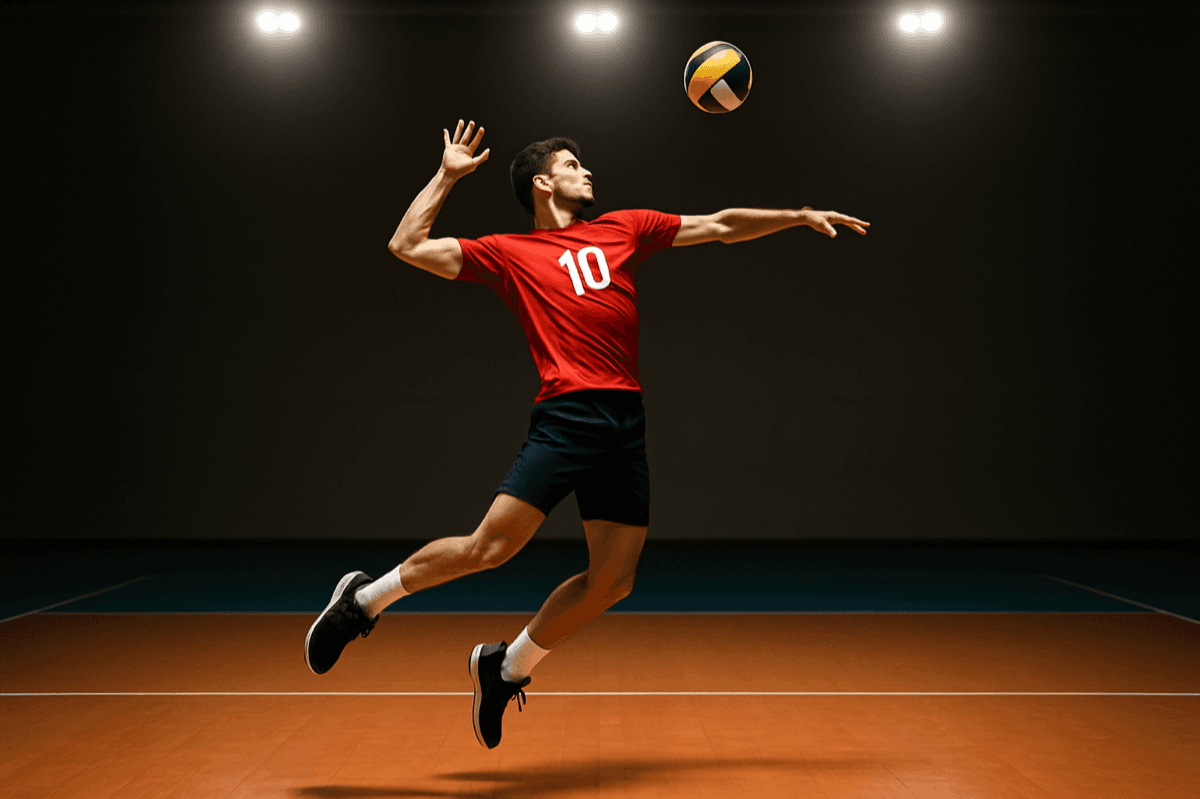
Volleyball & Posture
Shoulder dominance, cervical extension strain, hip loading
Updated May 2025
What Volleyball Does to Your Body
Volleyball players spend significant time with their arms overhead and their cervical spine in extension, tracking a fast-moving ball. The spike, serve, and block create one-sided shoulder imbalances while constant jumping loads the hips and ankles. The combination creates a specific pattern that affects all players, from recreational to elite.
The Specific Structural Changes
Overhead dominance builds shoulder asymmetry
The dominant arm drives most spikes and serves, creating the same asymmetrical shoulder development that tennis players and baseball pitchers experience. The non-dominant shoulder is comparatively underdeveloped and sometimes hypermobile from constant opposition work.
Looking up constantly strains the cervical spine
Tracking a ball overhead repeatedly extends the cervical spine. At practice frequency, this creates cumulative strain on the cervical facet joints and upper cervical muscles, explaining why neck pain is extremely common among competitive volleyball players.
Jumping loads the hip flexors and patellar tendon
Volleyball involves hundreds of jumps per practice. The approach jump loads the hip flexors in the final step. The landing loads the patellar tendon eccentrically. Over a season, this creates patellar tendinitis (jumper's knee) in athletes who don't specifically manage the loading.
Common Injuries in Volleyball
These aren't random injuries. They're the predictable result of the structural patterns volleyball creates.
- Jumper's knee (patellar tendinitis)
- Shoulder impingement
- Finger injuries from blocking
- Ankle sprains
- Cervical neck pain
- Lower back pain from hip flexor tightness
Why posture matters for performance
Jump height is hip power. Spike velocity is thoracic rotation combined with shoulder stability. Cervical health determines how long you track the ball accurately under fatigue. Posture underpins every athletic quality the sport demands.
The Volleyball Program
The Volleyball Player's Posture Fix addresses shoulder asymmetry, cervical strain, patellar tendon load management, and the hip stability that explosive jumping requires.
What Volleyball Athletes Actually Deal With
These are the injuries and pain patterns that come up in every volleyballforum, group ride conversation, and training camp. Here's how each one connects back to structural alignment, and what you can do about it.
Jumper's knee from repetitive approach and blocking
Patellar tendinopathy is volleyball's career management challenge. The repetitive approach-jump-land cycle of hitting, done dozens of times per practice session, creates cumulative patellar tendon stress that eventually exceeds recovery capacity. Elite volleyball players often manage tendinopathy for years rather than curing it, because reducing training volume is rarely an option in season.
Posture connection: Patellar tendon stress is modifiable through pelvic position. Anterior pelvic tilt increases quadriceps dominance in the landing pattern, overloading the patellar tendon with each landing. Neutral pelvis and gluteal activation in the landing pattern reduces tendon stress measurably and is the primary structural intervention.
Shoulder impingement from overhead hitting and serving
The volleyball attack swing places the shoulder in maximum external rotation then explosively drives it into internal rotation, a massive rotator cuff demand done repeatedly in every practice and match. Combined with the overhead serving motion, the rotator cuff and subacromial structures are under constant high-demand loading in volleyball players.
Posture connection: The overhead positions in volleyball require full thoracic extension and scapular upward rotation to maintain subacromial space. When the thoracic spine is rounded, the scapula tips forward and the subacromial space narrows, compressing the cuff on every overhead. Thoracic extension is the structural baseline for shoulder health in volleyball.
Questions from the Volleyball Community
Is knee pain from volleyball something I just have to manage, or can it actually be fixed?
Patellar tendinopathy in volleyball is rarely "fixed" without addressing the structural factors that drive it, specifically pelvic position in the approach and landing. Tendon loading protocols (eccentric work) help the tendon adapt, but without changing the pelvic alignment that causes quad dominance in landing, the tendon continues to be overloaded. Both elements are necessary.
Frequently Asked Questions
I have jumper's knee. Will this help?
Jumper's knee is primarily a hip flexor and anterior pelvic tilt problem that overloads the quad and patellar tendon. The hip work in this program directly addresses the structural root.

Written by Mike Boshnack
Corrective Exercise Specialist · Posture Guy Mike
Mike Boshnack grew up skateboarding and surfing, trained MMA, and rode road bikes competitively, before a shoulder injury put him on a path to postural correction. He's since helped thousands of athletes fix the specific postural patterns their sport creates, without surgery or passive treatments.
The mobile app is here.
Do your program on your phone, anywhere. Download free on iPhone or Android, or keep using it in your browser.
Related Conditions