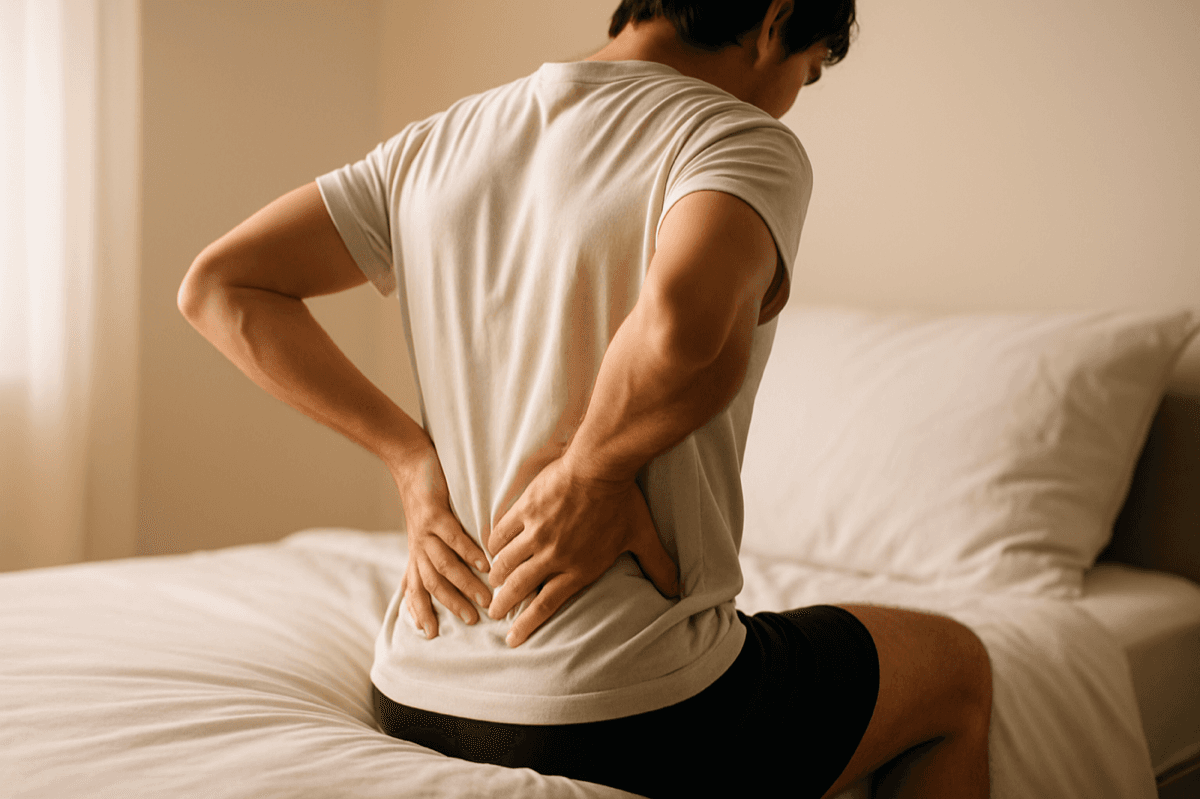
The Biology of Morning Stiffness
Morning stiffness is nearly universal among adults over forty, and common in younger people with chronic postural dysfunction. The experience is familiar: the first steps out of bed are painful or restricted, everything feels locked up, and thirty to sixty minutes of moving around is required before the body feels functional. Many people assume this is aging and accept it.
It is not inevitable, and understanding why it happens points directly toward what to do about it.
During sleep, the body is relatively still for six to eight hours. Several biological processes occur during this period that are relevant to morning stiffness.
Synovial fluid, the lubricating fluid in joint capsules, pools and thickens when joints are not being moved. Synovial fluid is designed to be in motion: it distributes nutrients to joint cartilage and reduces friction during movement. Extended stillness concentrates the fluid and reduces its effectiveness. The first movements of the morning pump the fluid back into distribution, which is why stiffness tends to resolve with activity.
The intervertebral discs also rehydrate overnight. During the day, spinal loading compresses the discs and expresses water from them. At night, the reduced load allows the discs to rehydrate, actually gaining height. This is why people are measurably taller in the morning than in the evening. The rehydrated discs, combined with a spine that has been in a fixed position for hours, contribute to the sensation of stiffness with the first movements of the day.
Most relevant to chronic morning stiffness: tight and shortened muscles reach their restricted end range with the first movements after sleep. If the hip flexors are chronically shortened from sitting during the day, the first movement requiring hip extension in the morning will immediately hit that restriction. This is the stiffness that is not normal, it is the postural dysfunction of the previous day expressing itself at the start of the next.
Why Sleep Position Matters Less Than You Think
The standard advice for morning stiffness focuses on sleep position: get a better mattress, sleep with a pillow between your knees, avoid sleeping on your stomach. Sleep position does matter, but it is largely downstream of the structural state you bring to bed.
If you sleep with an anteriorly tilted pelvis and shortened hip flexors from the day's sitting, the hip flexors are in their shortened position all night, and they wake up tighter than they went to sleep. The structural state of your body at bedtime determines how much the sleep position matters. A structurally balanced body sleeps well in a range of positions and wakes up relatively mobile. A structurally imbalanced body has stiffness that sleep position can moderate but cannot eliminate.
The Morning Reset That Actually Works
The 15-minute morning routine that addresses morning stiffness directly works with the biology rather than against it.
The sequence starts supine, which allows gravity to assist the first restoration of pelvic neutrality without loading the spine. Static back decompresses the lumbar joints and begins lengthening the hip flexors while you are warm and horizontal. Hip crossovers address the rotational stiffness that contributes to the locking sensation at the low back and SI joint. Cats and dogs restore spinal segmental motion from the floor, where each segment can be moved individually.
The specific sequence matters: decompression before loading, passive before active, floor-based before standing. This sequence works with how the body wakes up rather than demanding it perform before it is ready.
Chronic morning stiffness that persists despite consistent morning work, particularly stiffness in a single region that does not improve with movement, may reflect structural dysfunction that requires more targeted correction. The Lower Back Pain Relief program addresses the most common structural driver of severe morning lumbar stiffness.

Mike Boshnack
Corrective Exercise Specialist · Posture Guy Mike
Mike Boshnack grew up skateboarding and surfing, trained MMA, and rode road bikes competitively. A shoulder injury put him on a path to discover corrective exercise. He has since helped thousands of people fix the structural patterns causing their pain, without surgery or passive treatments.
Keep Reading
Related Conditions
Free tool
See where your posture stands right now.
Upload a photo and get an instant AI-powered posture analysis with personalized recommendations. Free, no account required.
Try the Free Posture CheckTake the next step
Fix the structural root cause, not just the symptom.
Mike's programs apply this corrective method to your specific condition. No gym, no equipment. Just a floor and 15 minutes. Buy once, own forever.
Discussion
Discussion is a Pro member feature. Visit the community for more.